


A realistic 45+ routine that thrives under LED consistency
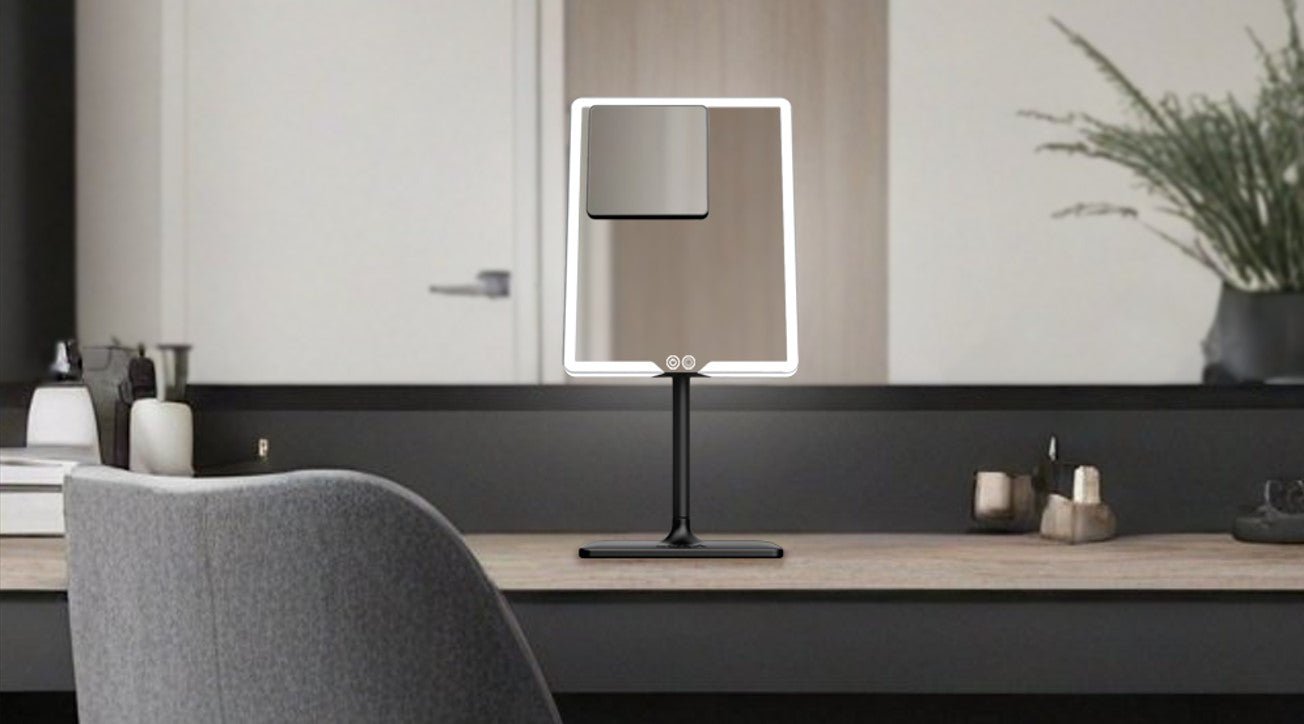
Midlife skin often needs more help with radiance and morning puffiness, yet bathroom lighting can hide what matters. A controllable LED vanity mirror removes guesswork: it keeps brightness and colour temperature consistent so you can see whether products improve glow, smooth texture and reduce under-eye pooling. Set up once, then repeat daily. If you want a larger, stable viewing area for routine checks, ORBIT is the right scale for bathrooms and dressing corners, while ECLIPSE and COMPACT 2.0 cover travel and top-up moments.
⚡ PRO INSIGHT: Pick one “routine mode” and stick to it for two weeks: medium brightness, neutral white (~4500–5000K), mirror at the same distance. Consistency is how you tell if a serum helps or just looks good under warmer bulbs.
Why LED clarity matters for midlife skin
Small differences tell the truth: micro-flaking at the corners of the mouth, SPF streaks along the hairline, uneven cheek glow. Neutral LEDs make these visible without exaggerating them. That helps you avoid two common traps — over-correcting with heavy layers, and judging results under flattering, amber lighting that hides texture indoors but fails outdoors. For broader skin-health guidance as your skin changes through 40s and 50s, see the American Academy of Dermatology’s everyday care pages, and Harvard Health’s overview on caring for ageing skin, which prioritises hydration, sun protection and gentle actives. Read more at Harvard Health.
AM routine: five efficient steps
- Gentle cleanse: Low-foam, no tightness. Under LED, look around the nose and hairline for residue.
- Hydration layer: Essence or light humectant serum. You want plumpness, not shine.
- Antioxidant step: Vitamin C or a polyphenol blend to brighten dull tone. Examine temples and jawline for even spread.
- Moisturiser: Thin layer first, then spot-add to cheek centres if texture still looks rough under light.
- SPF 30–50: Stripe, then smooth. LEDs help catch missed edges at ears, neck and hairline.
PM routine: alternate repair and soothe
- Cleanse: Double cleanse on makeup days; single gel on light days.
- Targeted active on “repair” nights: A gentle retinoid two to four times a week. Check for hot-spots of redness under the same lighting.
- Eye gel + de-puff strokes: Ten slow sweeps from inner corner to temple, then down along the cheek’s drainage path.
- Barrier cream on “soothe” nights: Ceramides, glycerin and cholesterol based creams help lock in comfort.
LED settings that flatter 45+ skin (start here)
Use this cheat-sheet as a baseline, then adjust by feel. Keep to a neutral white so colours and texture don’t lie.
⚡ PRO INSIGHT: Warm, dim bulbs hide SPF streaks and dryness. Make decisions under neutral LEDs, then check results in daylight near a window to confirm.
De-puffing that you can actually see working
How to test products without fooling yourself
Don’t change five variables at once. If you add a vitamin C, keep lighting, distance to the mirror and camera angle constant for 14 days. Log the same three checkpoints each time: side of nose, under-eye and cheek centre. For precision tasks or travel, ECLIPSE gives magnification control; for bag-side checks, COMPACT 2.0 is the pocket option. Keep your main comparisons on ORBIT for fairness.
Two-week planner (copy and keep)
Expert view: what midlife routines get wrong
“Not wearing sunscreen daily and over-exfoliating are two habits that speed up visible ageing. Keep routines simple: cleanser, moisturiser, sunscreen, and add actives carefully.”
— Camila Antia, MD, Board-certified Dermatologist, quoted in AARP Health (2024)
For eye-area puffiness that lingers, ophthalmology and dermatology specialists suggest cold compresses, adequate sleep, salt reduction and allergy management. If swelling persists beyond 24–48 hours or is painful, seek medical care. Cleveland Clinic notes that persistent swelling warrants a professional check, and the AAD’s menopause guidance reiterates SPF and gentle habits as core foundations.
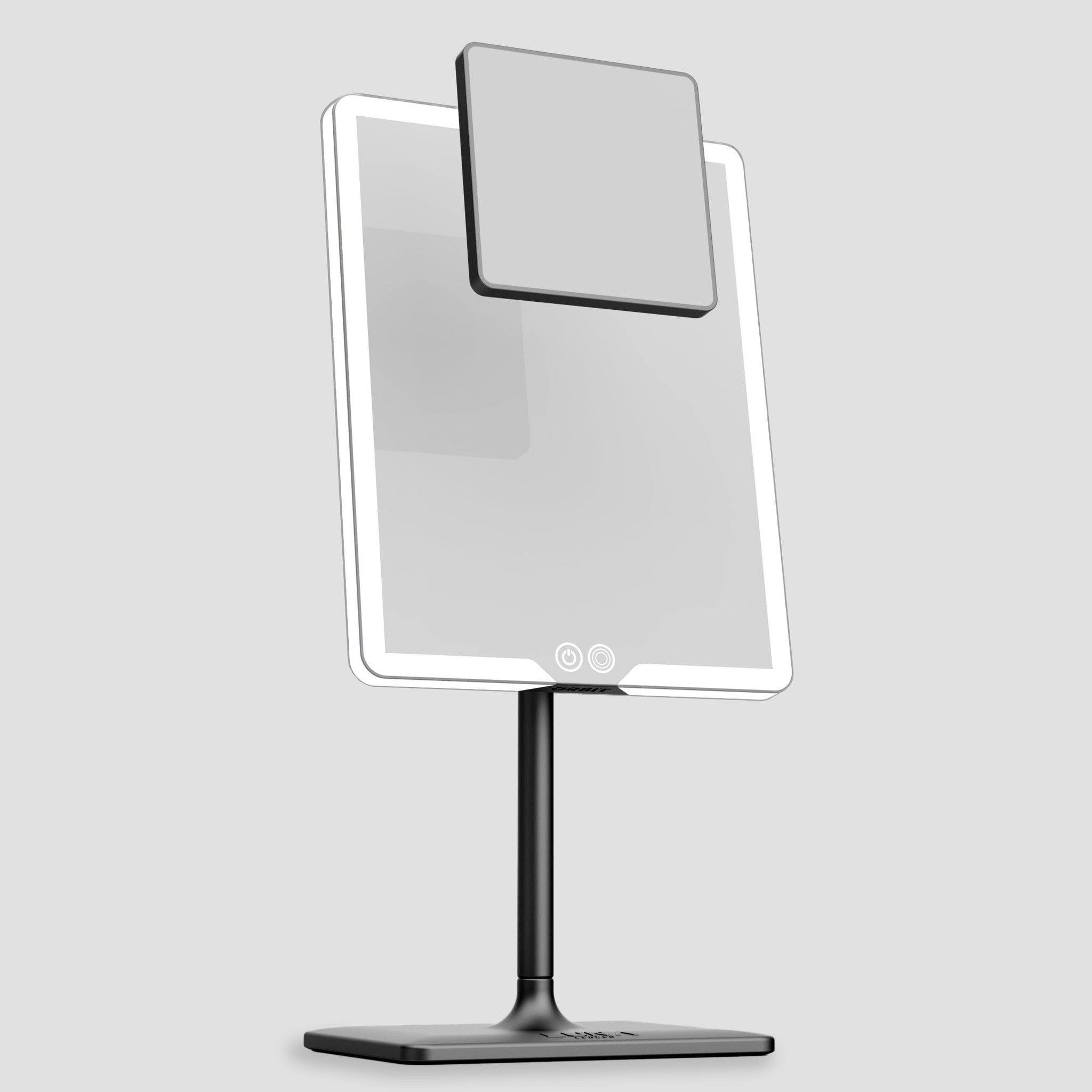
See texture clearly, morning and night
Consistent LEDs and a generous viewing area make it easier to judge small changes in glow, dryness and puffiness. Pair your AM/PM routine with repeatable lighting and fewer surprises outside.
Explore ORBIT finishes →FAQs
What colour temperature works best for judging dullness?
A neutral white around 4500–5000K keeps tones honest. Very warm bulbs can hide texture; very cool light can look harsh.
Is there a quick fix for under-eye puffiness?
Cold compresses, sleeping slightly elevated and moderating salt can help, along with gentle massage under neutral lighting. If swelling persists for 24–48 hours, seek medical advice.
How often should I use a retinoid in my 40s and 50s?
Start low and slow, two to four nights per week depending on tolerance, and keep your lighting and checkpoints consistent so you can see how your skin responds.
Related links
- ORBIT Phantom Black
- ECLIPSE Matte Black
- COMPACT 2.0 Matte Black
- AAD: Basic skin care guides
- Harvard Health: Skin care for ageing skin


Leave a comment
This site is protected by hCaptcha and the hCaptcha Privacy Policy and Terms of Service apply.