
Last updated: 25 April 2026
What to Use Instead of Dry Shampoo When Roots Look Oily
Running out of dry shampoo is rarely a calm discovery. It usually happens when your roots look flat, your fringe has separated, and you have about six minutes before work, dinner, school drop-off, or a video call.
The lazy answer is “use cornflour”. The better answer is slightly more careful. Dry shampoo works by absorbing oil, but dermatologists are clear that it does not actually clean the hair or scalp. The American Academy of Dermatology explains that regular shampoo and water are still needed to remove oil, dead skin cells, microorganisms, and product buildup. So your emergency oily roots fix should buy you time, not pretend to be a wash.
That is the useful mindset: absorb what you can, disturb the roots as little as possible, then change the shape of the hair so shine is less obvious. If you are already doing a quick face refresh, the same “remove before you add” logic applies. It is similar to the approach in our 10-minute desk to dinner makeup refresh: blot first, add only where needed, then check the final result in decent light.

In a hurry? The fastest oily roots fix
- Best quick fix: blot the hairline and parting, then use a tiny amount of talc-free loose powder or cornflour on a brush.
- Best no-powder fix: rinse only the front hairline, blow-dry the roots, then move your parting slightly.
- Best style cover: a low bun, claw clip twist, half-up style, or brushed-back ponytail.
- Worst ideas: perfume, baking soda, deodorant, talcum powder clouds, or heavy oil on greasy roots.
- Best mirror check: look at the parting, temples, fringe, and crown under even light before you leave.
The emergency dry shampoo substitute table
| What you have | How to use it | Best for | Watch out for |
|---|---|---|---|
| Blotting paper or tissue | Press at the parting, temples, and fringe. Do not rub. | Light oil and separated fringe pieces | It removes shine but will not add much lift. |
| Talc-free loose face powder | Tap onto a fluffy brush, dust lightly at roots, wait 60 seconds, then brush out. | Quick hairline and parting refresh | Too much can look chalky, especially on dark hair. |
| Cornflour or arrowroot powder | Use the smallest amount with a brush, never pour straight onto the scalp. | True emergency use at home | Can clump, show, or feel gritty if overused. |
| Cool blow-dryer setting | Lift sections at the root and dry upward for 30 to 60 seconds. | Flat roots with mild oil | Heat can make sweat and oil feel worse, so keep it cool. |
| A clean hairbrush | Brush from underneath, then lift the crown with fingers. | Redistributing oil away from the hairline | A dirty brush will make roots greasier. |
⚡ PRO INSIGHT: Apply any powder with a makeup brush, not your fingers. Fingers press oil into the root area, while a brush lets you place product lightly and buff away the visible cast.
The 5-minute alternative to dry shampoo routine
Minute 1: Blot before you add anything
Start with the least risky step. Press tissue, blotting paper, or a clean microfibre towel along the parting, hairline, temples, and fringe. Oily roots often look worse because the front pieces separate into little strings. If you remove some surface oil first, you need less powder afterwards.
Do not scrub. Rubbing roughs up the hair, spreads oil down the lengths, and makes the hairline look fuzzy. Press, lift, move to the next section.
Minute 2: Add powder only where the eye notices grease
If blotting is not enough, use a small fluffy makeup brush with a tiny amount of talc-free loose face powder, cornflour, or arrowroot powder. Tap most of it off. Touch the brush to the oiliest root areas, wait for about a minute, then brush or shake through with your fingers.
The point is not to mattify your entire scalp. It is to soften the greasy look at the visible zones: parting, fringe, crown, and around the ears. The AAD’s dry shampoo advice is a useful caution here: apply a small amount only where hair feels greasy, because too much can make hair dry, stiff, gritty, or visibly powdery.
Minute 3: Lift the roots, then change the parting
Once the oil is slightly absorbed, flip your head forward for a few seconds, then lift at the crown with fingers. If you have a dryer nearby, use a cool shot at the roots. Then move your parting a centimetre to the left or right. It sounds too simple, but it exposes cleaner hair underneath and breaks the flat shine line that makes oily roots obvious.
Minute 4: Choose a style that works with oil, not against it

Trying to make greasy roots look freshly washed is usually the wrong battle. Go for polish instead. A low bun, smooth ponytail, claw clip twist, or half-up style makes the root area look intentional. Add a little water to the hairline if needed, then brush backward into shape.
If your makeup also needs a fast clean-up, keep the routine minimal. Our 3-product minimalist makeup routine pairs well with this kind of hair rescue because it stops the whole morning from becoming a full reset.
Minute 5: Check the crown and hairline in proper light
Bad bathroom lighting hides powder cast. Phone cameras exaggerate shine. For a final check, look at the parting, temples, fringe, and crown under even, front-facing light. If you use a compact mirror with lights, such as COMPACT 2.0, check the hairline in 1x first, then use 7x only for tiny residue spots around the parting or fringe. The trap is zooming in too long and “fixing” things nobody else can see.
⚡ PRO INSIGHT: Do the final hair check from conversation distance first. If the roots look fine at arm’s length, stop. Close-up mirrors are for spotting obvious powder residue, not inventing new problems.
What not to use instead of dry shampoo
Some hacks are popular because they sound clever, not because they are good for your scalp.
| Avoid | Why it is a bad trade | Use instead |
|---|---|---|
| Baking soda | It can feel gritty and harsh, especially if left sitting on the scalp. | Blot first, then use a tiny amount of loose powder. |
| Perfume or body spray | It masks smell but does not absorb oil, and fragrance can irritate some scalps. | Refresh the hairline with water and restyle. |
| Talcum powder clouds | The FDA notes ongoing concerns around talc and possible asbestos contamination, so it is not the smartest beauty shortcut. | Choose talc-free face powder if you need an emergency powder. |
| Heavy serum or oil | It can make the root area look wetter and flatter. | Use serum only on dry ends, never the roots. |
“No, it just absorbs the oil.”
— Paradi Mirmirani, MD, FAAD, Board-Certified Dermatologist, American Academy of Dermatology (2024)
When the better fix is a quick wash
There is a point where substitution stops helping. If the scalp feels itchy, sweaty, tender, flaky, or smells like old product, wash it. The American Academy of Dermatology’s healthy hair guidance says people with straight hair and oily scalps may want to shampoo every day, while dry, curly, textured, or thick hair often needs a different rhythm. There is no universal rule that makes everyone’s scalp behave.
Cleveland Clinic dermatologist Shilpi Khetarpal, MD, also advises focusing shampoo on the roots to clean the scalp and remove excess oil, rather than roughing up the lengths every time. That matters if your roots get oily but your ends feel dry. You can read the full guidance on how often to wash your hair.
The practical version: use the emergency fix once, then wash properly later. Do not stack powder over powder for days and call it a routine.
Watch: a quick no-wash oily roots refresh
Use this as the visual bit before the mirror check section. It gives the reader a quick technique break without dragging the article away from the dry shampoo substitute intent.
The mirror check most people skip
Oily roots are not only a hair issue. They change how the whole face reads. A shiny hairline can make skin look oilier, flatten the shape of the face, and make a minimal makeup look feel less polished. That is why the final check matters.
At home, ORBIT is useful because the large 11-inch mirror face lets you check hair shape, parting, and overall balance without walking between mirrors. Its 7x magnetic attachment is there for small detail checks, like powder residue near the hairline, not for judging your entire hairstyle. If you travel often or refresh after work, ECLIPSE gives portable lighting without magnification, which is often enough for a quick hair and makeup scan in hotel or office lighting.
For a deeper lighting setup, this light up mirrors for makeup guide explains why brightness alone is not the same as accuracy.
Need to check oily roots properly? Use the mirror that fits the moment.
A dry shampoo substitute only works if you can see the residue, shine, and hairline properly. These are the most useful LUNA options for quick root checks, travel refreshes, and polished at-home routines.
| Mirror | Best for | Key features | Why it works for this routine |
|---|---|---|---|
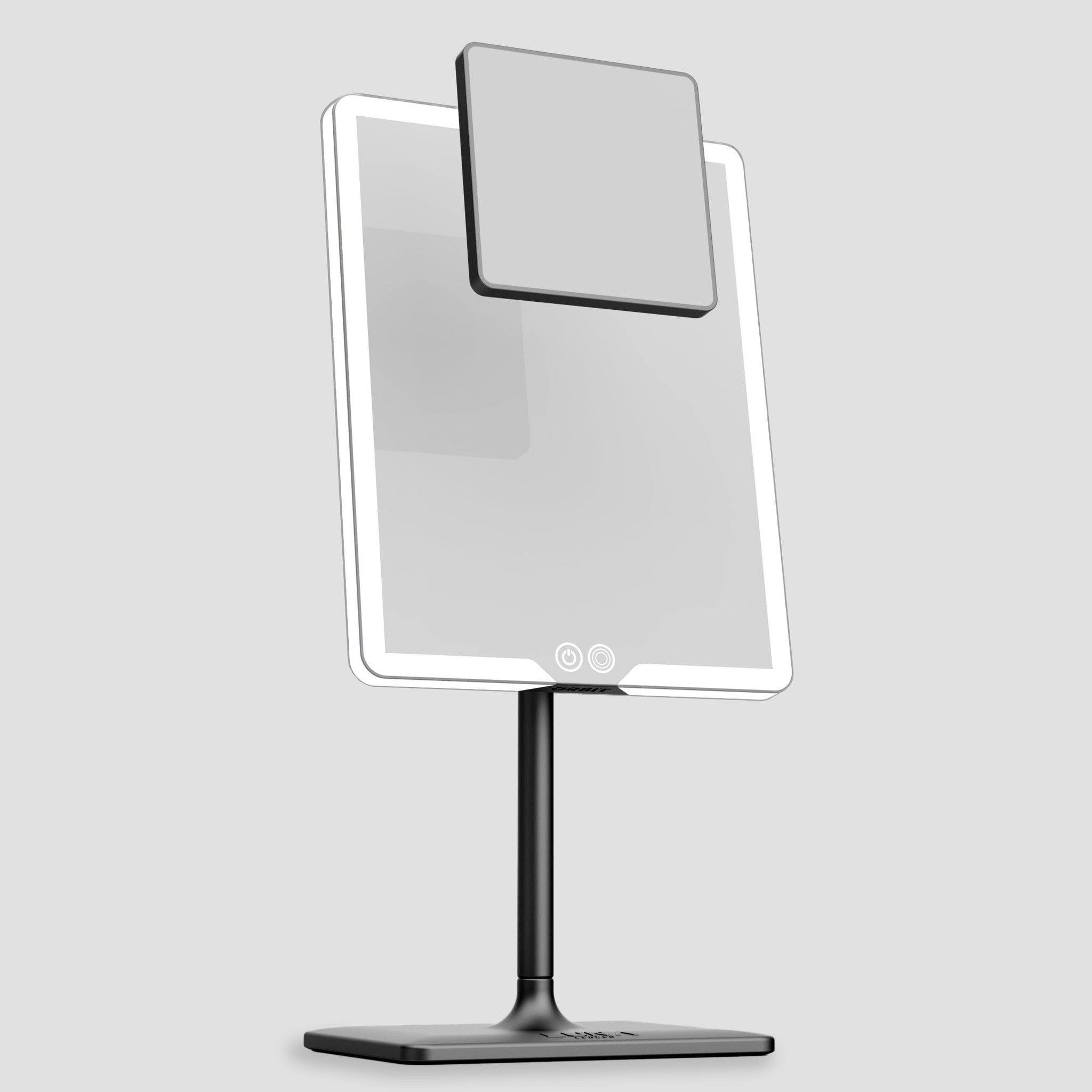 |
ORBIT At-home root, parting, crown, and full-face checks before leaving. |
Large 11-inch mirror face, 3 dimmable light modes, rechargeable design, 7x magnetic attachment for detail checks. | Best when you need to see the whole shape of the hair, not just one greasy patch. Use the 1x mirror first, then the 7x attachment only for powder residue at the hairline. Explore ORBIT |
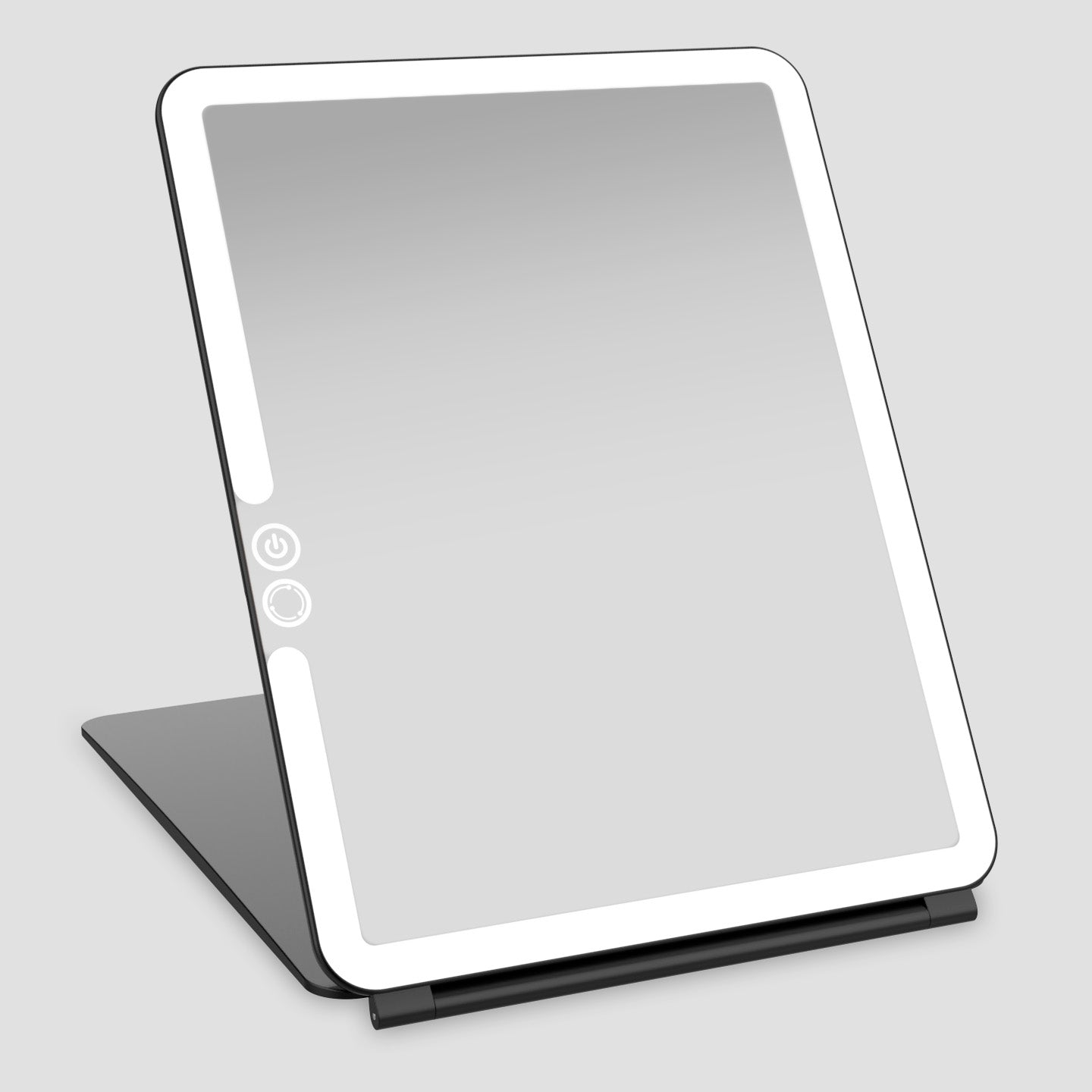 |
ECLIPSE Travel, work bags, hotel bathrooms, and fast lighting checks without magnification. |
Portable fold-flat design, rechargeable power, 3 dimmable light modes, no magnification. | Ideal when the problem is bad lighting, not tiny detail work. It helps you catch shine at the hairline and parting before a meeting, dinner, or flight. Explore ECLIPSE |
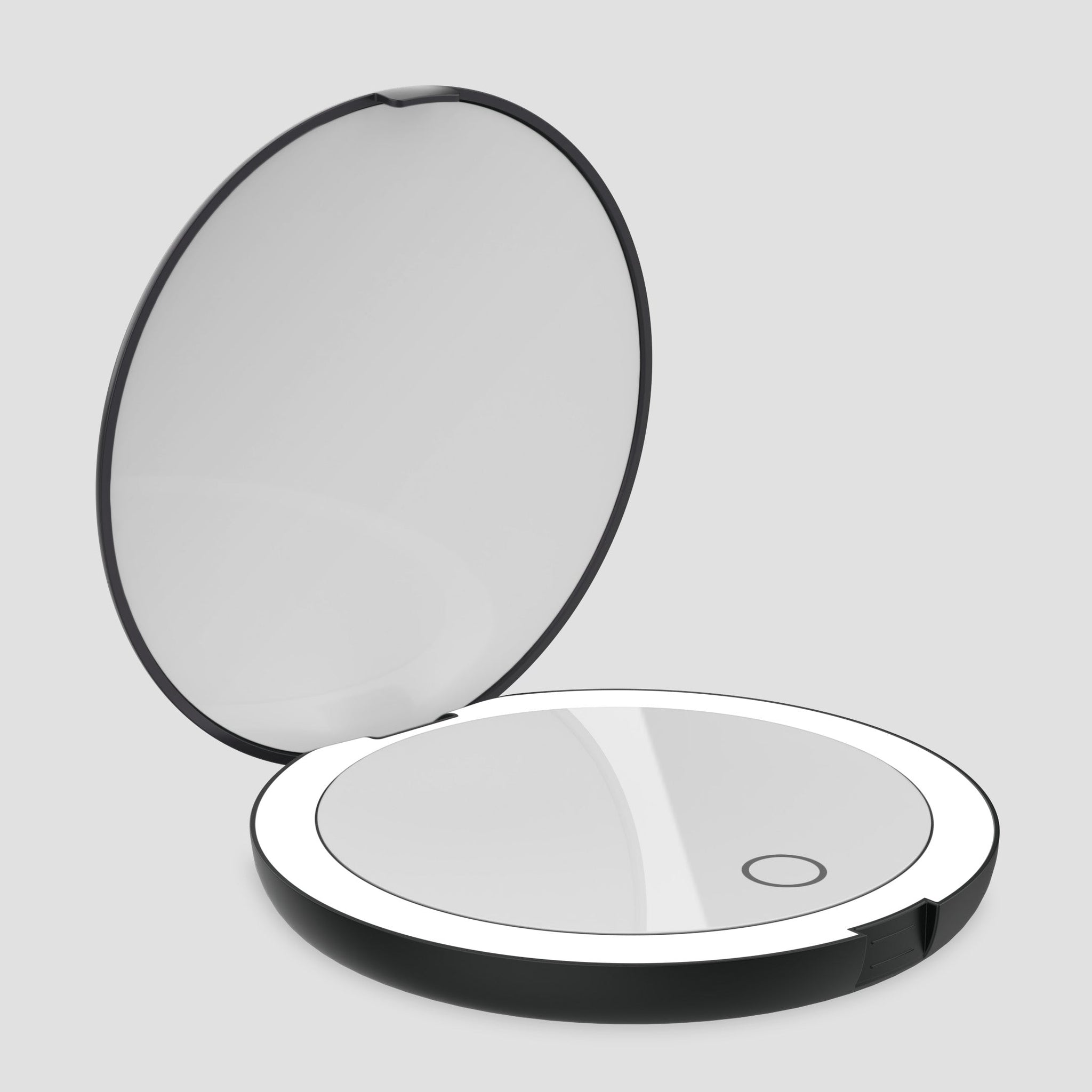 |
COMPACT 2.0 Bag-friendly checks for fringe separation, powder cast, brows, and makeup touch-ups. |
5-inch compact mirror, 1x and 7x magnification, 3 dimmable light modes, USB rechargeable. | The most useful option when the oily-roots fix happens away from home. Use 1x for the overall look and 7x to catch visible powder at the parting. Explore COMPACT 2.0 |
FAQs
What is the best alternative to dry shampoo?
The best alternative to dry shampoo is blotting oily roots first, then using a tiny amount of talc-free loose powder, cornflour, or arrowroot powder only where the hair looks greasy. For many people, a cool blow-dry and parting change will do more than adding lots of powder.
Can I use baby powder instead of dry shampoo?
It is not the best choice. Baby powder can look chalky, create airborne powder, and some formulas may contain talc. If you need a powder in an emergency, a small amount of talc-free loose face powder applied with a brush is usually a cleaner option.
How do I refresh oily roots without any powder?
Blot the hairline and parting with tissue, rinse only the front hairline if you can, dry the roots on a cool setting, then move your parting slightly. Finish with a low bun, claw clip twist, half-up style, or brushed-back ponytail so the result looks intentional.

Leave a comment
This site is protected by hCaptcha and the hCaptcha Privacy Policy and Terms of Service apply.