

Last updated: Wednesday 1 July 2026
How to Choose a Light Up Makeup Mirror Without Wasting Money
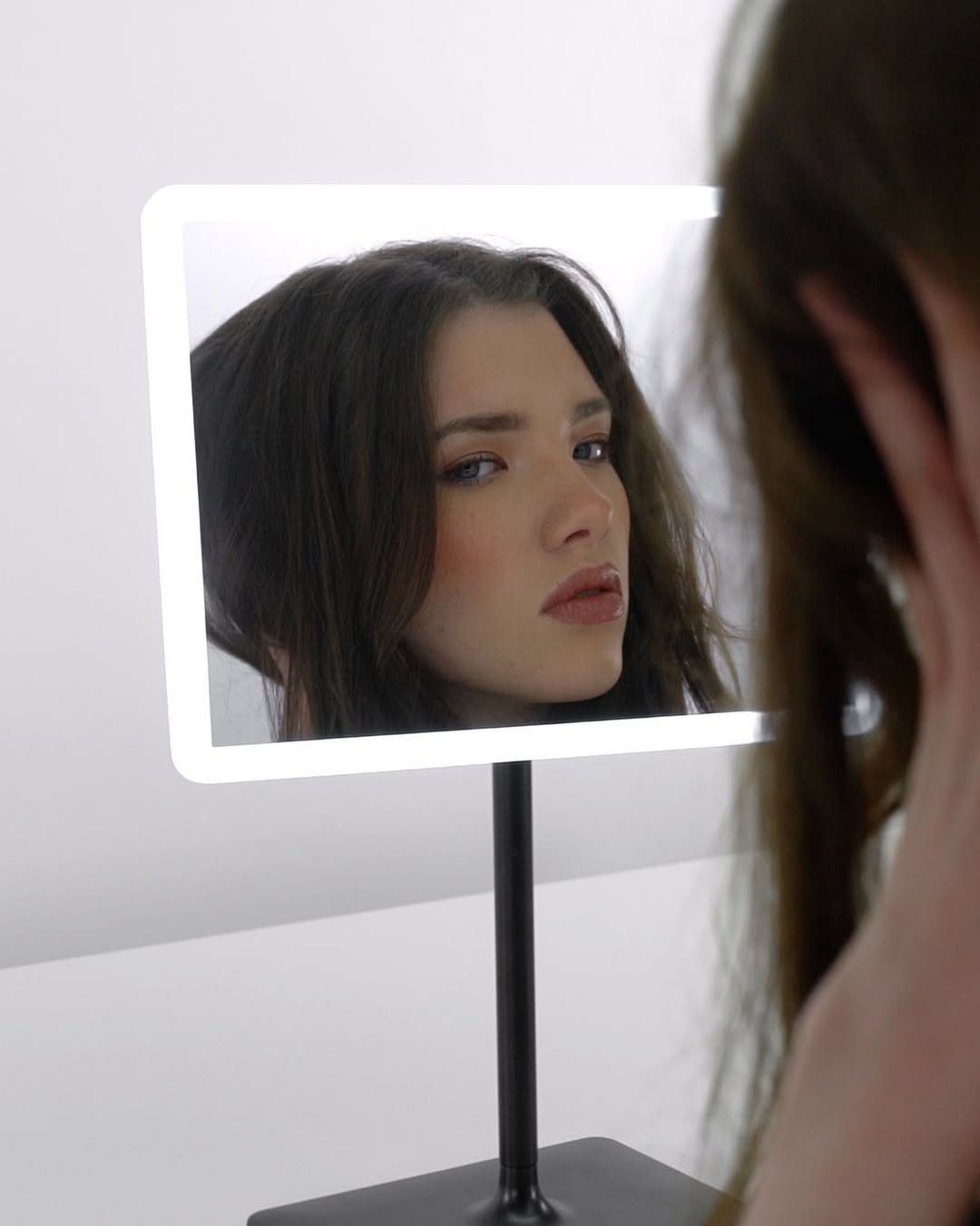
A light up mirror should reduce guesswork, not flatter you into buying the wrong thing. The lazy assumption is that the brightest mirror is the best mirror. That is not quite right. For makeup, the better question is: will this mirror show foundation match, blending, brows, liner and missed areas clearly in the room where you actually get ready?
If you want a full lighting-mode breakdown, read the dedicated guide to warm, cool and natural light for makeup. This page has a narrower job: a before-you-buy checklist for choosing a light up makeup mirror that fits your routine, room and budget.
What Actually Matters Before You Buy
⚡ PRO INSIGHT: If you are leaning in and out constantly, do not blame the mirror brightness first. Fix the height, distance and angle. A well-placed mid-brightness mirror often beats a harsh bright mirror in the wrong position.
Brightness: Enough Light, Not Maximum Light

Brightness is the feature people overvalue most. A very bright light can still be misleading if it is harsh, patchy or hitting your face from the wrong direction. The aim is usable information: can you see the jawline, nose area, under-eyes, brow tails and lip edges without squinting?
The US Department of Energy notes that LED lighting can provide comparable or better light quality than older lighting types while lasting longer and using less energy. That is useful, but it does not mean every LED mirror is automatically good for makeup. You still need to check how the light is directed, whether it is dimmable and whether it works in your room.
For everyday makeup, start at a comfortable medium brightness. Increase brightness briefly for liner, brows or concealer edges, then dim back down before you finish. If the mirror only looks good at full power, it may be too harsh for daily use.
Angle and Room Lighting: The Mirror Cannot Fight the Whole Room
Room lighting matters because your mirror is not working in isolation. A strong warm ceiling bulb, a bright window behind you or a cool desk lamp to one side can all change what your face looks like. NIST’s colour-perception work makes the bigger scientific point: lighting affects how we see colour. In makeup terms, this is why foundation can look balanced in one room and wrong in another.
Place the mirror so the light is in front of your face, close to eye level when seated. Avoid a window directly behind your head because backlighting makes you overapply. Avoid relying only on overhead bathroom spots because they cast shadows exactly where people tend to add too much concealer or powder.
If your main concern is whether to use a mirror or a filming light, this comparison of vanity mirror with lights vs ring light keeps the distinction clear: a ring light helps the camera, while a good mirror helps the routine.
Colour Accuracy: Do Not Stop at “LED”

A light up mirror describes the feature. An LED mirror describes the light source. In practice, those terms overlap, which is why the label alone tells you less than people think. If you want the deeper terminology difference, the companion piece on light-up mirrors vs LED mirrors covers that properly.
For buying, the useful question is whether the light helps you judge colour. CRI is one familiar shorthand, but it is imperfect. The Illuminating Engineering Society’s TM-30 method gives a fuller way to evaluate light source colour rendition, including fidelity and hue-specific shifts. You do not need to become a lighting engineer, but you should be sceptical of mirrors that only say “bright LED” and give no clue about tone, colour modes or dimming.
“The primary advantage of a lighted mirror is the even light distribution and illumination it provides.”
— Sam Kyle, makeup artist and creative designer, Shop TODAY
Before you buy
Choose the mirror around the job, not the prettiest product photo
The easiest way to avoid buying the wrong light up mirror is to start with the routine you actually do most often.
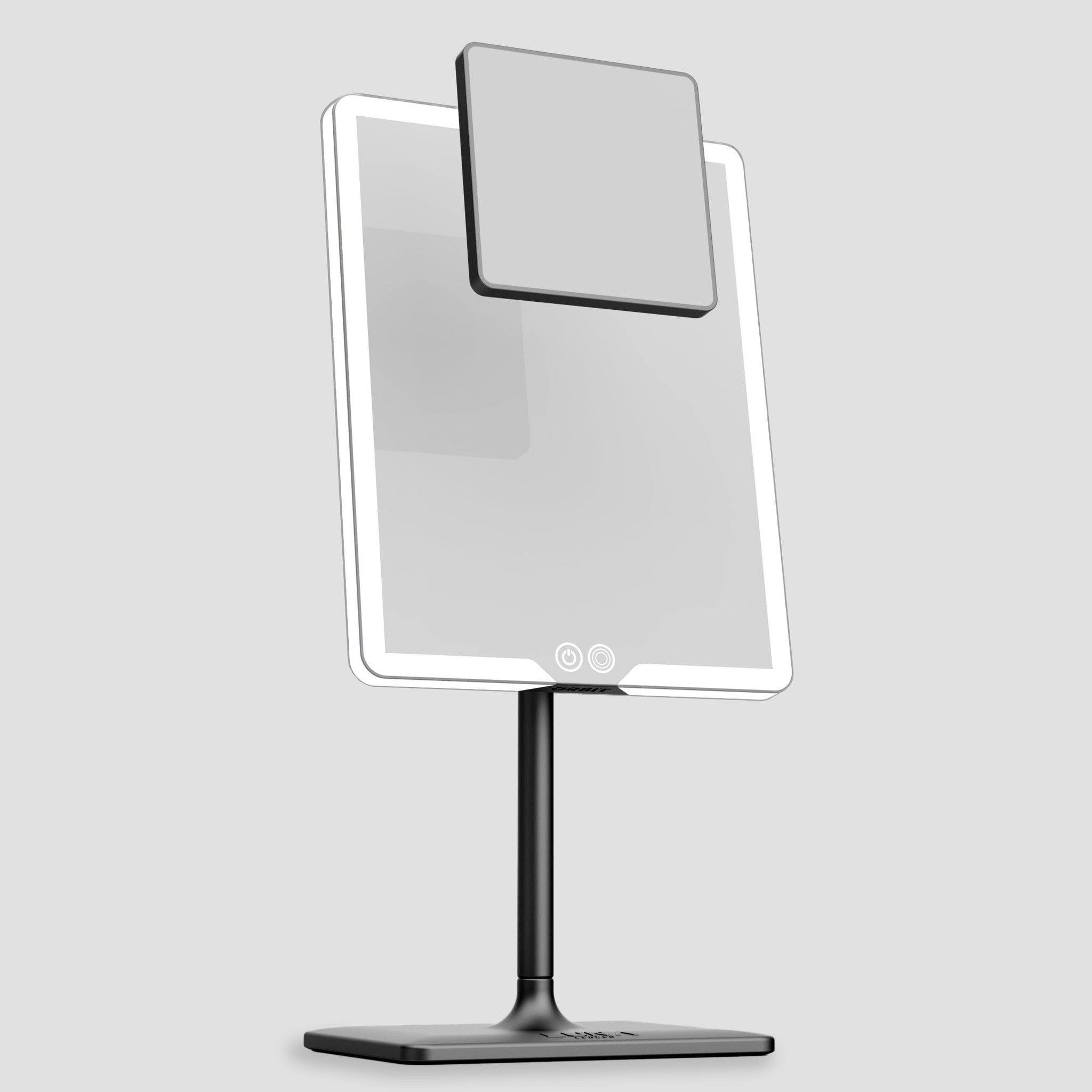
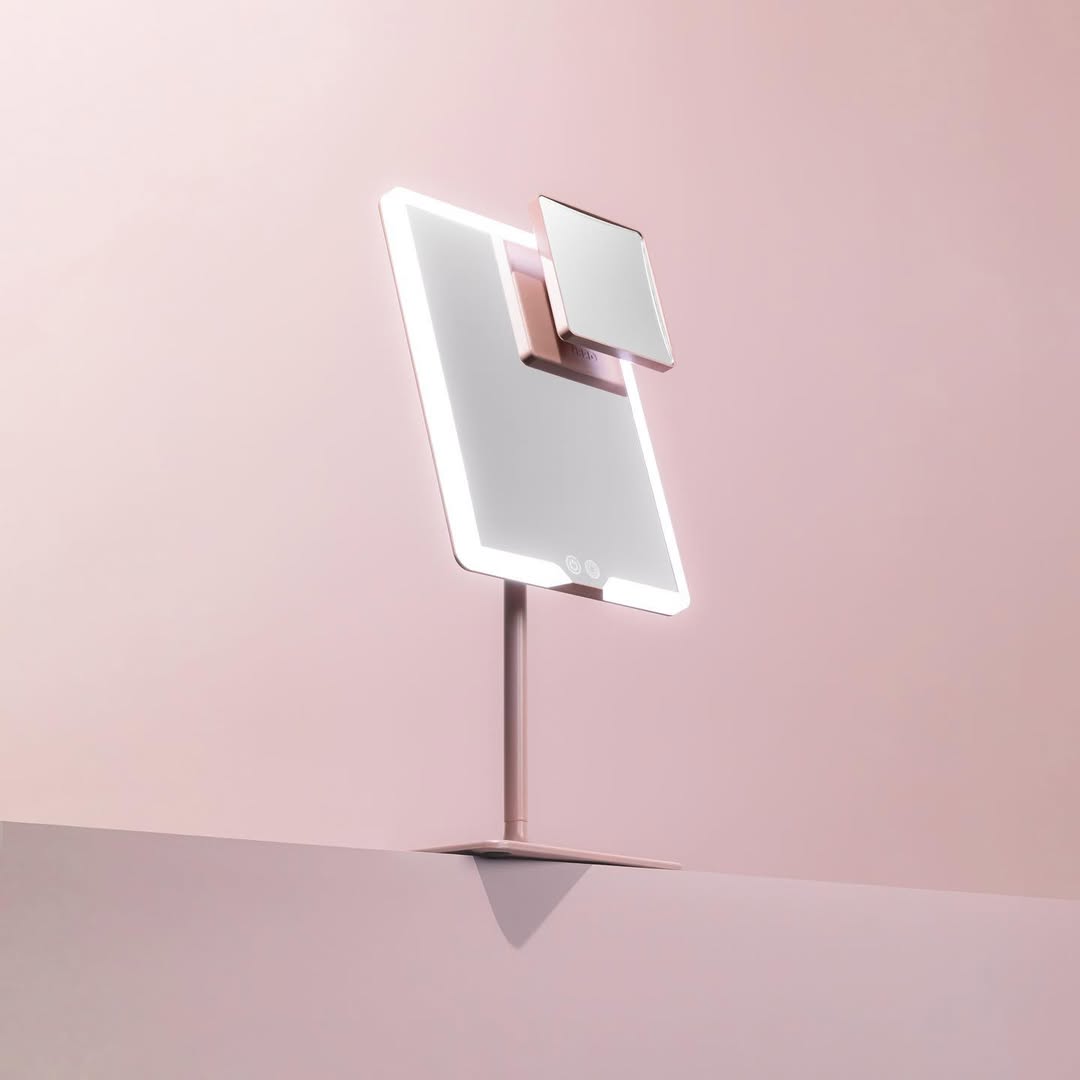
| Home makeup | ORBIT gives the most stable setup: larger face view, adjustable angles, 3 LED brightness settings and 7x magnification add-on for short detail checks. |
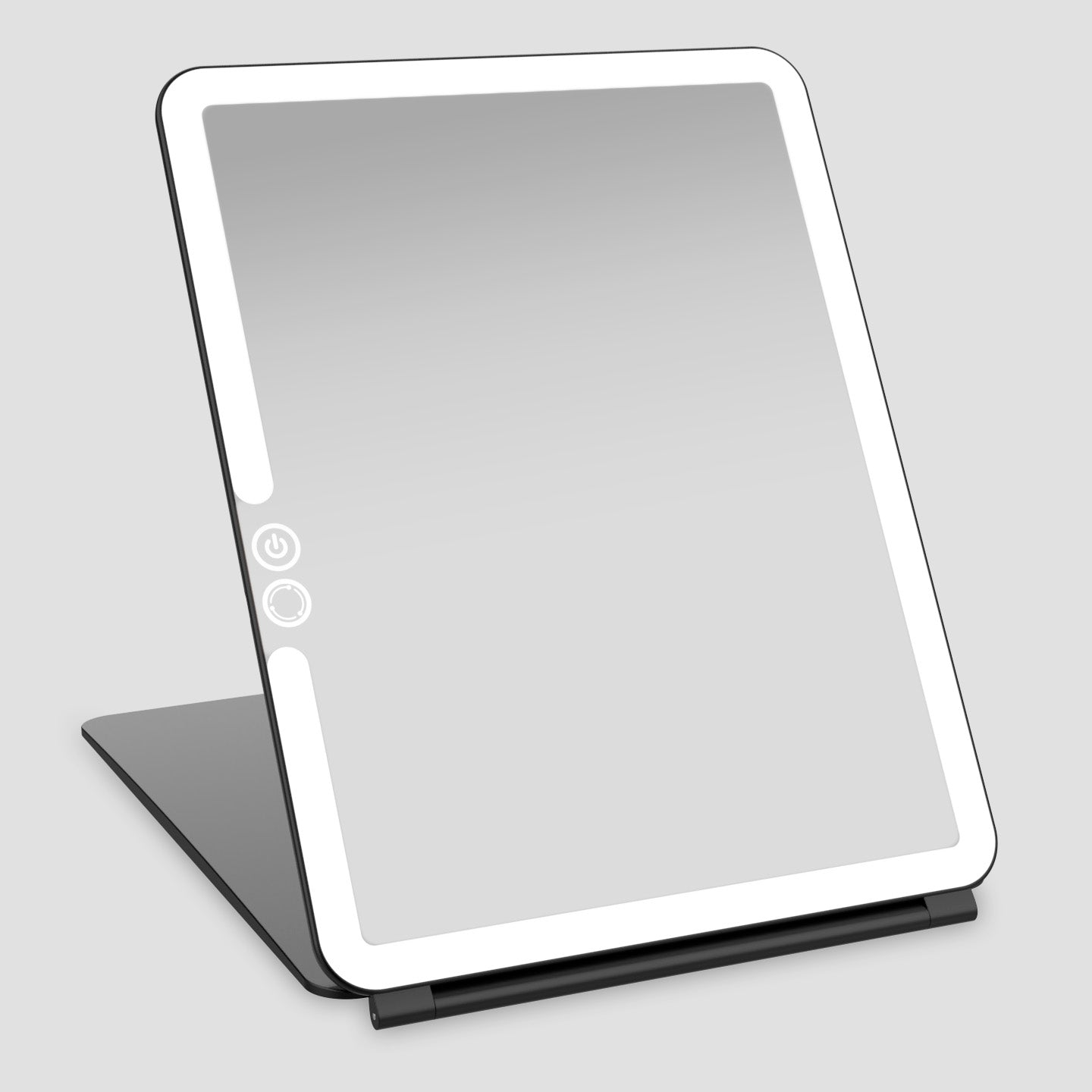
| Travel or desk lighting | ECLIPSE is the cleaner fit when you need fold-flat lighting without magnification. |
| Handbag detail | COMPACT 2.0 is best for lipstick edges, contact lenses, brows and quick 7x checks on the go. |
Size and Stability: The Boring Bit That Decides Daily Use
A mirror can have impressive lighting and still be annoying. If the base wobbles, the angle is awkward or the mirror face is too small, you will stop using it. This is where a buyer checklist beats a feature list.
For a home routine, look for enough mirror surface to see your whole face, hairline and neckline without constantly repositioning. For travel, accept that the mirror will be smaller, then choose the format that solves the real problem: lighting, detail or both.
Charging and Portability: Match the Mirror to the Place
Charging sounds basic, but it changes where you can place the mirror. A rechargeable light up mirror lets you move the setup to the best position rather than defaulting to the nearest socket. That matters in rented bathrooms, hotel rooms, shared bedrooms and dressing tables that were never designed around beauty routines.
If you travel often, the dedicated travel makeup mirror guide goes deeper into hotel lighting, carry-on routines and packing decisions. The important point here is simpler: do not buy a large home mirror if you need something you can actually pack, and do not buy a tiny compact if you expect it to replace a full vanity setup.
For portable lighting
ECLIPSE is the mirror to pack when room lighting is the problem
Choose ECLIPSE when you want a slim, rechargeable, fold-flat light up mirror for hotel bathrooms, desks and travel bags. It is the lighting-first option, not the magnification option.
Magnification: Useful for Detail, Risky for the Whole Face
Magnification is not “better mirror” mode. It is detail mode. Use it for brows, eyeliner, lash placement, contact lenses, missed hairs and precise grooming. Do not use it to judge your full base, blush or bronzer, because it can make normal texture look like a problem that needs fixing.
For LUNA specifically: ECLIPSE does not include magnification. ORBIT includes a 7x magnification add-on for desktop detail work. COMPACT 2.0 includes a 7x magnification mirror for portable checks. That distinction matters because it stops the page from pretending every product solves every problem.
⚡ PRO INSIGHT: Use 7x like a final inspection tool. Do the routine in normal view, zoom in for one specific job, then step back again. If you stay magnified, you will start correcting things nobody else can see.
The 5-Minute Mirror Test Before You Decide
Before you buy, imagine this routine in the room where you actually get ready:
- Set the mirror at face level. If the mirror sits below your chin, shadows will change what you see.
- Turn off competing lights if possible. Mixed lighting makes foundation and concealer harder to judge.
- Use a neutral or daylight-style mode for base. Save warm light for a final preview, not shade matching.
- Check one detail area. Brows, liner, contact lenses or lip edges are the best reason to use magnification.
- Step back before finishing. Makeup has to work at normal distance, not only close to the mirror.
That test is intentionally practical. It keeps this article away from generic lighting theory and forces the right question: will this mirror help your actual routine?
Which LUNA Mirror Fits Your Setup?
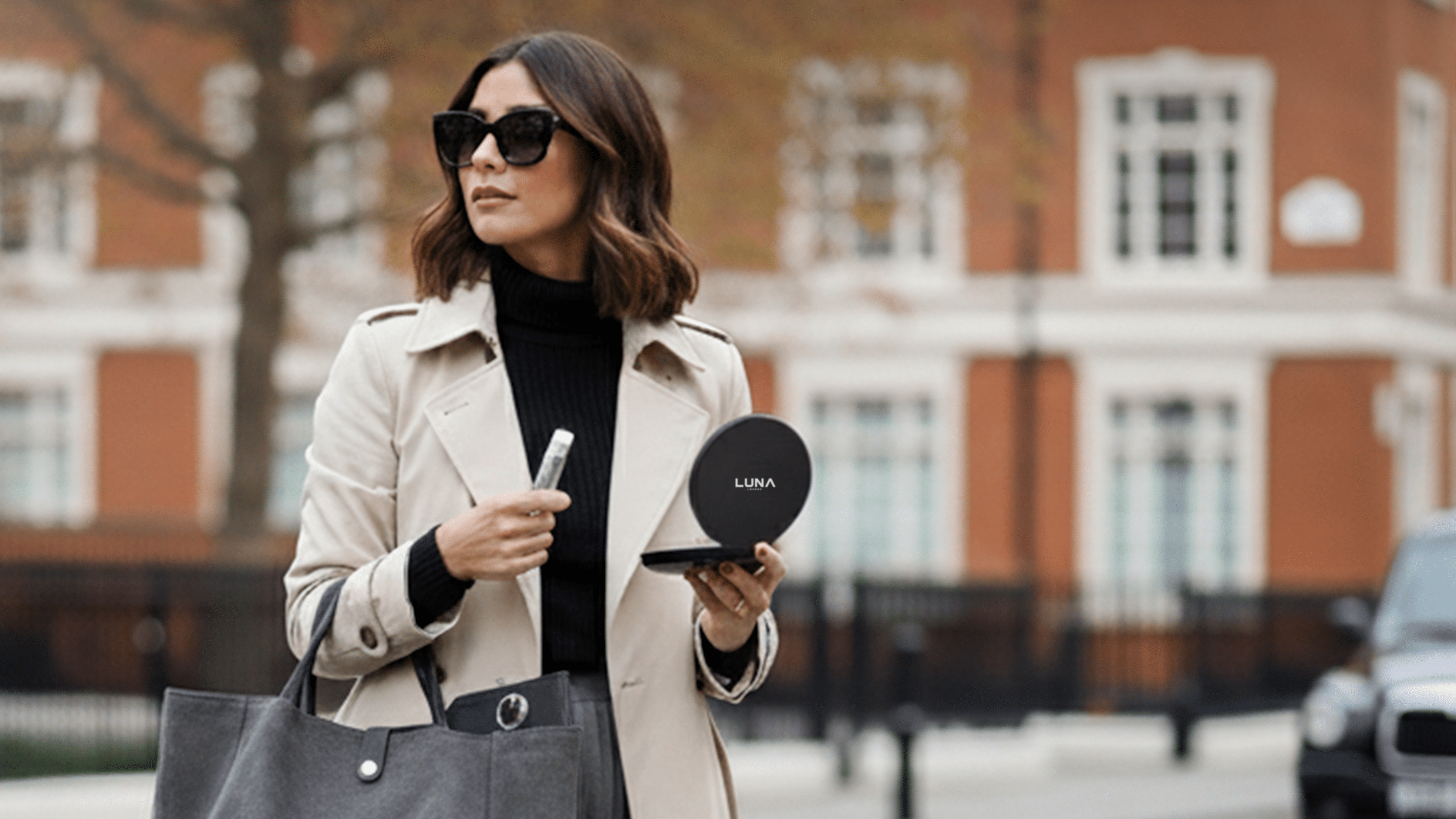
If you want one stable mirror for home, ORBIT is the obvious first look. If you need lighting in hotel rooms, bedrooms, desks or overnight bags, ECLIPSE makes more sense. If you want a small handbag mirror with 7x detail, COMPACT 2.0 is the better fit.
Confidence before you buy
A proper mirror for routines where small details matter
“My hubby likes to use it when shaving as he finds the light really helpful as our bathroom is quite dark.”
Shipping available to:
 USA
USA
 UK
UK
 EU
EU
FAQs
What should I look for in a light up mirror for makeup?
Look for even face-level lighting, adjustable brightness, a usable mirror size, a stable angle, reliable charging and practical magnification if you do detail tasks. Do not buy on brightness alone.
Is a light up mirror better than normal bathroom lighting?
Usually, yes, if the mirror gives front-facing, adjustable light. Many bathrooms rely on overhead or warm lighting, which can hide shadows, shift undertones and make you overapply concealer, powder or bronzer.
Do I need magnification in a makeup mirror?
Only if you regularly do brows, liner, lashes, contact lenses, missed hairs or detail grooming. Use magnification briefly, then return to normal view before deciding whether your whole face looks balanced.
Is ECLIPSE good for magnification?
No. ECLIPSE is best for portable lighting, travel and desk use. If magnification is essential, choose ORBIT for home detail work or COMPACT 2.0 for portable 7x checks.
Which LUNA mirror should I choose?
Choose ORBIT for home routines and precision, ECLIPSE for travel or desk lighting without magnification, and COMPACT 2.0 for handbag detail, contact lenses and 7x touch-ups on the go.
Related links
- Warm, cool or natural light for makeup?
- Vanity mirror with lights vs ring light
- Light-up mirror vs LED mirror
- Best travel makeup mirror 2026
- ORBIT light up vanity mirror
- ECLIPSE travel light up mirror
- COMPACT 2.0 lighted compact mirror

Leave a comment
This site is protected by hCaptcha and the hCaptcha Privacy Policy and Terms of Service apply.