


Last updated: 25 January 2026
Morning Sunlight vs LED: Which is Better for Skin Checks?

In a hurry? TL;DR
- Best daily baseline: LED (neutral or daylight mode) so your checks are consistent day to day.
- Best occasional “reality check”: indirect daylight by a window (not direct sun on your face).
- Avoid bathroom downlights: they exaggerate texture and under-eye shadows.
- Prioritise colour accuracy: high-CRI LED lighting helps you see redness and tone more truthfully.
- Track changes, not flaws: repeat the same setup weekly to reduce over-fiddling and false alarms.
Best mirror for skincare is really a lighting problem
There’s a lazy assumption baked into a lot of “natural light vs LED” advice: that sunlight is automatically more “real”. It can be. It can also be misleading. Sunlight changes with cloud cover, season, window direction, and even the colour of the walls around you. If you’re trying to compare your skin today vs last week, those swings can create fake “improvements” or fake “breakouts” that are really just lighting.
A more useful frame is: am I seeing the same thing under the same conditions? That is why most self-check guidance stresses a well-lit room and mirrors. It’s not because mirrors are magical. It’s because consistency reduces missed areas and reduces misreads. For example, Bupa’s guidance for checking your skin recommends a well-lit room and using mirrors to see difficult areas, and NHS trusts often suggest the same “good light + full-length mirror + hand mirror” approach when teaching people how to check their skin.
⚡ PRO INSIGHT: The best setup is the one you can repeat. If your lighting changes every time, you are not checking your skin, you are checking the weather.
What counts as a “skin check”, realistically?
Most people are not doing medical exams at the mirror. They’re doing routine checks that keep skincare (and shaving, and SPF) honest. Here are the common ones, and why light matters:
- Redness and irritation: shaving rash, sensitivity from actives, or inflamed spots can look calmer under warm light.
- Uneven tone and pigmentation: daylight tends to reveal brown and red tones more clearly than many indoor bulbs.
- Dryness and texture: harsh shadows can make flaking look worse. Sometimes that’s helpful, sometimes it just makes you over-correct.
- SPF and skincare blending: streaks show up in neutral light. Warm dim lighting hides them.
- Makeup crossover: if your base looks “fine” in the bathroom but odd outdoors, your lighting is likely the culprit (see warm vs cool vs natural settings explained).
Morning sunlight: when it helps, and when it lies
What it’s good for: Indirect daylight is great for judging colour. If you’re checking redness, looking for uneven SPF application, or comparing “does this concealer actually match?”, daylight can be a useful reference point.
What people get wrong: They stand in direct sun, or they use “morning sunlight” as if it’s one consistent thing. It’s not. Golden-hour light can be very warm, which flatters but also masks redness. A cloudy morning can be cool and diffuse. A bright morning through a window can be directional, creating hard shadows that exaggerate texture in one spot and hide it in another.
A practical rule: If you use daylight, use indirect window light. Stand a step back from the window so the light is soft and even, not blasting across one side of your face. (If you’ve ever wondered why you keep “discovering” new under-eye darkness on some mornings, this is usually why.)
“Check your skin in a well-lit room… use a full-length mirror and a hand mirror for hard-to-see areas.”
— Dr Samantha Wild, GP, Bupa Health Information
LED: why it usually wins for repeatable checks
If daylight is the reference, LED is the control. You can use it at the same brightness, the same angle, and the same distance every day, which means changes you notice are more likely to be real.
The catch is that not all LED light is equal. “Bright” does not automatically mean “accurate”. Two specs matter most:
- Colour temperature (warm vs neutral vs daylight): warm light can hide redness; cooler light can make redness look more dramatic than it is.
- Colour rendering (CRI): CRI is typically measured on a 0–100 scale, and 90+ is generally considered high colour rendering for tasks where accurate colour matters. That scale is why “cheap bright” bulbs can still make skin look odd.
If you want a quick explanation of CRI without the jargon, RS / DesignSpark’s guide is one of the clearer summaries of how CRI is measured and why it affects perceived colour.
⚡ PRO INSIGHT: If your mirror lighting makes your skin look “weirdly grey” or “weirdly yellow”, don’t blame your face. Blame colour rendering. Brightness is not the same as accuracy.

Sunlight vs LED: the use-case cheat sheet
| Skin check | Best light | Why |
|---|---|---|
| Redness / irritation | LED neutral/daylight | Repeatable baseline helps you spot real changes (warm bulbs often hide redness). |
| SPF blending / streaks | LED daylight + occasional indirect daylight | Daylight reveals true cast; LED keeps the check consistent when you’re in a rush. |
| Pigmentation / tone match | Indirect daylight | Natural spectrum can be a strong reference, but it must be indirect and even. |
| Texture / dryness | LED neutral (front light), not downlights | Downlights exaggerate texture and can push you into over-exfoliating. |
| Shaving lines / beard symmetry | LED cool/neutral | Sharper contrast helps you see edges; consistent light reduces “one side higher” surprises. |
If this table is making you think “wait, my bathroom lighting is doing me dirty”, you are not alone. It’s also why people keep over-applying base makeup in warm bathroom lighting, then wondering why it looks different elsewhere. If you want a quick fix for that specific problem, this lighting-first foundation guide is the cleanest starting point.
A repeatable 60-second skin check routine
This is the bit most “sunlight vs LED” articles skip. They argue about the light source, but they don’t give you a method. Here’s one that’s simple enough to actually do:
| Time | What you do | What you’re checking |
|---|---|---|
| 0–15s | Neutral/daylight LED, face relaxed | Overall tone, obvious redness, overnight dryness |
| 15–35s | Tilt mirror slightly down, keep light front-facing | Texture without harsh shadows, under-eye colour without “cave lighting” |
| 35–60s | Quick close check (optional magnification) | Targeted placement: spot treatment, shaving edges, stray hairs |
Two rules keep this routine sane: (1) you do it under the same light most days, and (2) you don’t turn it into a 10-minute inspection that ends with picking at your skin.

A smarter compromise: LED baseline, daylight cross-check
If you want a clean answer: for repeatable skin checks, LED usually wins. For an occasional “does this look the same in real life?” check, indirect daylight is a useful reference. In practice, people who get the best results use both:
- Daily baseline: LED neutral/daylight so you see the same face under the same conditions.
- Weekly reality check: indirect daylight by a window for colour sanity.
This “baseline + cross-check” approach also reduces the classic bathroom trap where warm light makes you think everything is fine, then you step outside and feel like your skin changed. It didn’t. Your lighting did.
If you’re deep in the “why does my makeup look different everywhere?” spiral, this is closely related to the same lighting mismatch problem we cover in how to prevent cakey makeup with better lighting.
What about “skin checks” in the medical sense?
Quick distinction: skincare checks (redness, dryness, tone) are one thing. Medical skin checks are another. If you’re checking moles or new lesions, follow proper guidance rather than guessing in whatever light feels “flattering”. The American Cancer Society outlines how to do a monthly self-exam, including using a full-length mirror and a hand mirror. In the UK, NHS-linked guidance from trusts like Cambridge University Hospitals includes similar practical steps for checking your skin.
And if you want a quick NHS explainer video to anchor the “when should I get this checked?” question, this is a clear starting point:
Video: NHS guidance on assessing moles and when to seek medical advice.
Common lighting mistakes that sabotage skincare
- Overhead downlights only: harsh shadows under eyes and around the nose lead to over-correction and over-picking.
- Warm bulbs at night: cosy, flattering, and terrible for judging redness or SPF blending.
- Standing too close: at very close range, you exaggerate detail and lose the “whole-face” view that matters for tone.
- Changing rooms mid-routine: cleanse in bathroom, moisturise in bedroom, then judge in hallway lighting. You’ll feel like your skin has five personalities.
If you want to engineer a better vanity setup rather than fighting your bathroom forever, this dressing table lighting setup guide is the simplest path.
So, which is better: morning sunlight or LED?
For most people: LED is better for the day-to-day because it’s consistent, controllable, and repeatable. Morning daylight is a good occasional reference, but it’s not stable enough to be your only mirror truth source. The strongest routine is a boring one: set your baseline with good LED lighting, then check in indirect daylight once a week if you want a sanity check.
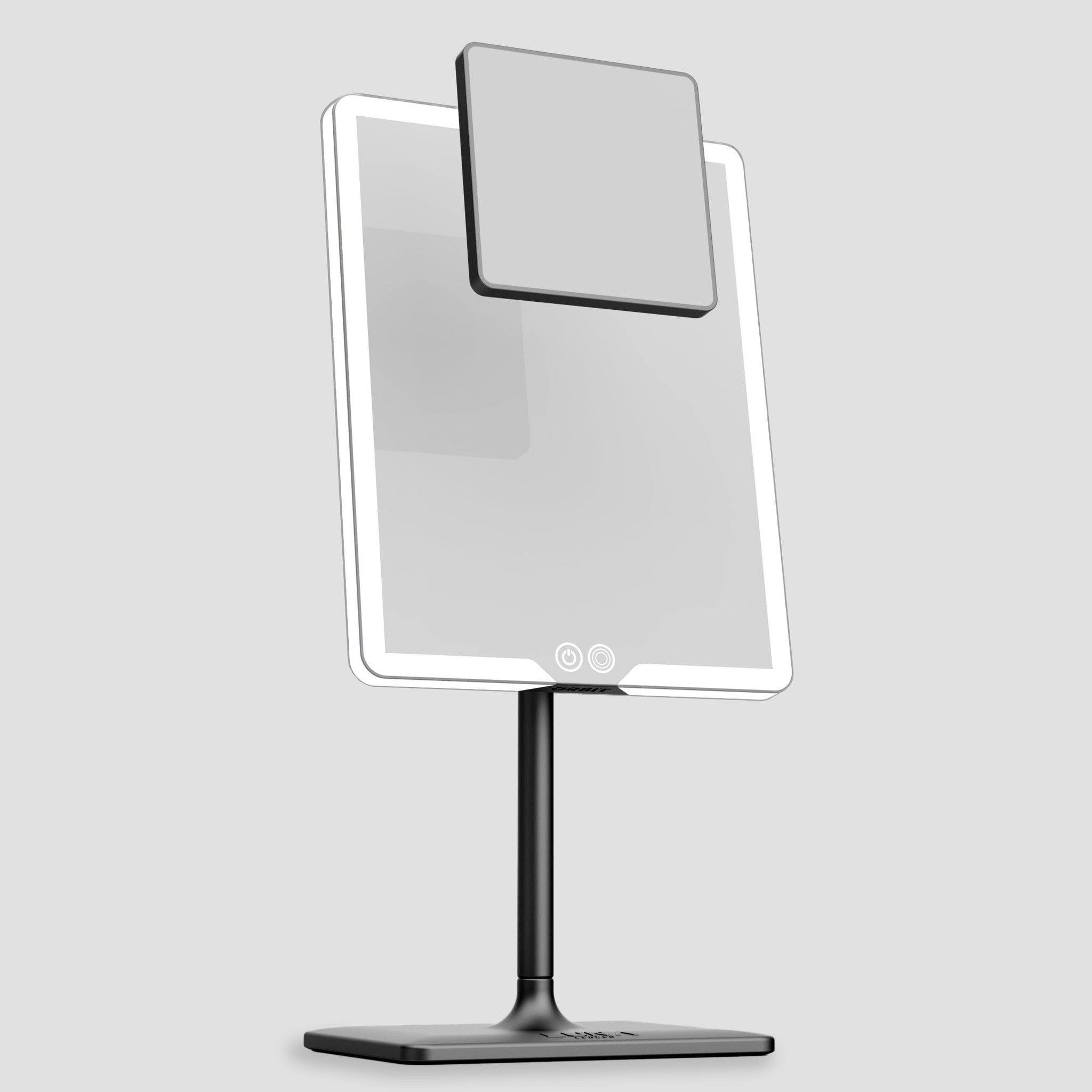
If you’re shopping specifically for the best mirror for skincare, look for: multiple colour modes (so you can match the environment you’ll be in), even front lighting, and strong colour rendering. That’s the core reason a mirror like ORBIT fits skincare routines as well as makeup and grooming.
Make your skin checks consistent, not “lucky”
ORBIT gives you stable, front-facing LED lighting with multiple modes, so you can do the same quick check every day without chasing the “perfect” window light. It’s a calmer way to judge redness, tone, and texture, and it also slots neatly into shaving and grooming routines.
Explore ORBIT lighting →FAQs
Is natural light always best for skin checks?
No. Indirect daylight can be great for colour, but it changes constantly. If you want repeatable checks, LED usually gives a more reliable baseline.
What’s the best LED colour setting for skincare?
Neutral or daylight modes are typically best for judging redness and tone. Warm light can be flattering, but it often hides irritation.
Why do bathroom downlights make my skin look worse?
Overhead lighting creates harsh shadows under eyes and around textured areas, exaggerating what you see. Front-facing, even light is usually more helpful.
What does CRI mean and why should I care?
CRI relates to how accurately a light source shows colours. Higher CRI generally means skin tone and redness look more “true” rather than oddly grey or yellow.
Should I use magnification for skin checks?
Only for targeted moments (spot treatment placement, shaving edges, stray hairs). High magnification can encourage over-checking, so use it briefly, then return to a normal view.
When should I get something checked by a professional?
If you notice a new or changing mole or lesion, follow trusted self-check guidance and seek medical advice rather than relying on mirror lighting. NHS trusts and the American Cancer Society provide practical self-exam steps and “when to seek help” guidance.
Related Links
- Warm vs Cool vs Natural Light: What Settings Actually Do
- How to Fix Patchy Foundation with Better Lighting
- How to Prevent Cakey Makeup with Better Lighting
- Vanity Mirror Setup: Lighting, Angles, and Placement
- Men’s Grooming Mirrors: Shaving and Skincare Lighting
- ORBIT in Phantom Black



Leave a comment
This site is protected by hCaptcha and the hCaptcha Privacy Policy and Terms of Service apply.