

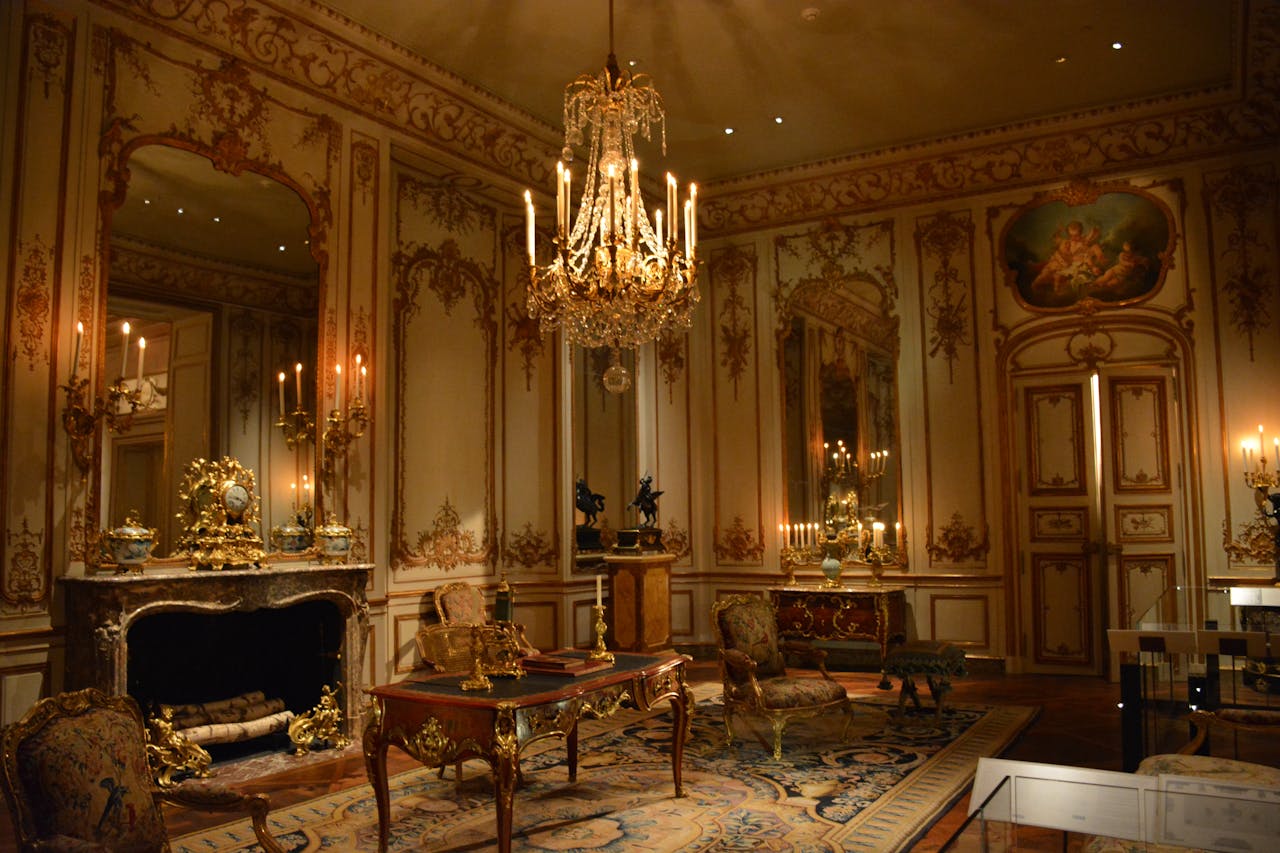
Vanity mirror history, explained: from Victorian dressing tables to modern LED clarity
Last updated: 25 January 2026
How the vanity mirror evolved, and why lighting became the real upgrade
People like tidy origin stories. “The vanity began in the Victorian era,” or “Hollywood invented glamour,” or “LEDs made everything better.” All slightly lazy. The vanity is older than the word “self-care,” and it has always been a mix of function and theatre: a place where the day starts, where you check yourself, where you decide what you want the world to see.
A better way to understand vanity mirror history is to track three things: portability (can the ritual move with you), status (is it displayed or hidden), and clarity (can you actually see what you’re doing). The first two have swung back and forth for centuries. The third is where modern mirrors quietly changed the game.

Before tables, there were boxes: portable beauty and private rituals
The earliest “vanity” wasn’t a table at all, but a container: small, portable storage for cosmetics and tools. If you’ve ever thrown a lip balm and tweezers into a bag and called it a kit, you’ve basically repeated the same logic: the ritual travels.
Museum research on dressing-table history describes this early phase as portable rather than “installed” furniture: you carry what you need, you set up temporarily, you put it away. The furniture comes later, when the ritual becomes a visible part of domestic life.
Europe’s toilette era: when the mirror became an object worth staging

By the 17th and 18th centuries, particularly in elite European contexts, the daily ceremony of the toilette helped drive the creation of elaborate dressing sets with mirrors, brushes, and containers. The point is not that everyone lived this way, but that the ritual became culturally legible, even performative.
The V&A notes that the ceremony of the toilette prompted elaborate sets equipped with mirrors and related tools, often in precious materials. That’s the vanity in embryo: a mirror plus an ecosystem of small items, arranged with intention.
And then furniture caught up. Dressing tables moved from “nice accessory” to “recognisable piece of the room.”
Georgian and early luxury dressing furniture: craftsmanship becomes the signal
If you want proof that vanities were serious furniture well before late-Victorian popular imagination, look at surviving objects: for example, National Trust collections include a “magnificent” dressing table made in Visakhapatnam (Vizagapatam) with ivory inlay and a documented presence in England by 1761. It’s a reminder that vanity mirror history is also a history of global craft, trade routes, and taste.
| Era | What changed | What it meant in practice |
|---|---|---|
| Portable kits and boxes | Tools stored and carried | Ritual is private, mobile, improvised |
| Toilette sets (17th–18th c.) | Mirror + grooming tools staged | Ritual becomes culturally visible, sometimes performative |
| 18th c. dressing tables | Furniture formalises the routine | Vanity becomes a “place”, not a moment |
| Victorian era | Domestic ritual standardises | More people adopt daily grooming stations at home |
| Art Deco and Hollywood glamour | Vanity becomes an icon | Mirror and lighting become part of “the look” |
| Modern LED era | Clarity becomes consistent | You can trust colour and detail regardless of the room |
Victorian dressing tables: the vanity as daily infrastructure
Victorian dressing tables matter because they normalised the idea of a dedicated daily station. Not necessarily ornate, not necessarily theatrical, but reliable: a surface, storage, a mirror, a seat, and a routine.
But here’s the sceptical point: Victorian vanities didn’t magically make grooming easier. They made it more regular. The limitation was still the same as it is in a lot of bathrooms today: inconsistent lighting. A mirror can be beautifully made and still be a terrible tool if the light turns skin undertones into fiction.

Art Deco, salons, and the rise of “glamour lighting”
The early 20th century pushed the vanity into pop culture. The dressing table becomes an icon of glamour, and not just for women. Museum research on dressing-table history notes that, over time, specialised forms emerged (including men’s shaving stands) and that Art Deco made dressing tables an icon of glamour.
This is also where lighting stops being incidental. Stage bulbs, dressing-room mirrors, salon stations, and later film and photography all teach the same lesson: if you control light, you control perception.

Modern vanity mirrors: why the “mirror” became a lighting product
The modern shift is simple: the mirror becomes a controlled light source, not a passive reflector. When lighting is built into the mirror, you remove the biggest daily variable. You stop chasing windows. You stop second-guessing colour. You stop doing makeup that looks “right” in the bedroom and wrong outside.
If you want the practical version of this, LUNA’s vanity mirror buying guide breaks down what matters (size, colour temperature, and CRI) in plain terms. If you want the styling angle, their piece on upgrading a vanity mirror with lights is a useful reference for proportion and placement.
The key takeaway is not “LED is better” as a blanket statement. It’s that consistent, face-level, colour-accurate light is better. The vanity mirror’s job has quietly expanded from reflection to reassurance.
“Polished nickel is going to be the trend of the year.”
Shea McGee, interior designer, quoted in Country Living.
Trends come and go, but that quote is useful because it hints at a bigger point: vanities sit at the intersection of design and function. Hardware finishes, mirror frames, and the overall “corner” aesthetic matter because the vanity is no longer hidden in a private bedroom. It’s often in view, photographed, and treated like decor.
So what does “a modern vanity” actually mean in 2026?

In 2026, a good vanity setup is less “more products” and more “less friction.” If you want a calm, repeatable routine, you need:
- One stable viewing angle (same seat height, same mirror height, same distance).
- One consistent light (so you stop adapting to shadows and colour shifts).
- One surface rule (daily items visible, everything else contained).
If you’re rebuilding a vanity corner from scratch, you’ll like LUNA’s guide on how to organise your vanity for a productive 2026. It frames the vanity like a workstation, which is exactly the right mental model if you want consistency instead of clutter.
| Vanity goal | What to prioritise | Mirror type that fits | Here’s Our Favourite |
|---|---|---|---|
| Bedroom dressing table “anchor” | Stable base, face-level light, decor-grade finish | Full-size LED vanity mirror | ORBIT : a statement mirror that makes “same light every day” the default. |
| Small-space clarity (shared surfaces) | Compact footprint, easy repositioning | Slim LED mirror | ECLIPSE : cleaner lines for smaller setups where space matters. |
| On-the-go touch-ups | Portability, quick checks, reliable light | Compact LED mirror | COMPACT 2.0 : the modern “portable kit” version of vanity history. |
A quick reality check: the vanity isn’t just “for makeup” anymore
Historically, the dressing table has always signalled more than cosmetics: class, culture, daily rhythm, identity. That still holds, but the modern use cases expanded:
- Skincare: checking texture and tone without bathroom-bulb distortion.
- Grooming: detail work that needs shadow-free visibility.
- Confidence: fewer “Do I look weird?” moments when light is consistent.
If you want an easy “why lighting matters” primer, the LUNA article Halloween makeup lighting tricks actually explains the core concept well: lighting changes the story your mirror tells. It’s a modern version of an old truth.
Watch: a museum-level look at “the vanity” as culture
How to style a modern vanity without turning it into clutter
The mistake people make is assuming “historic vanity” equals “more objects.” It doesn’t. The historic lesson is arrangement. The modern lesson is restraint.
- Choose one hero mirror, then keep everything else secondary.
- Use one tray for daily items. If it doesn’t fit, it’s not daily.
- Keep tools honest: if you never use it, it’s decor pretending to be utility.
For more styling ideas (without making it feel staged), you can skim Luxury dressing table ideas and then cross-check the practical rules in Light-up mirrors vs LED mirrors. That pairing keeps you honest: aesthetics plus function.
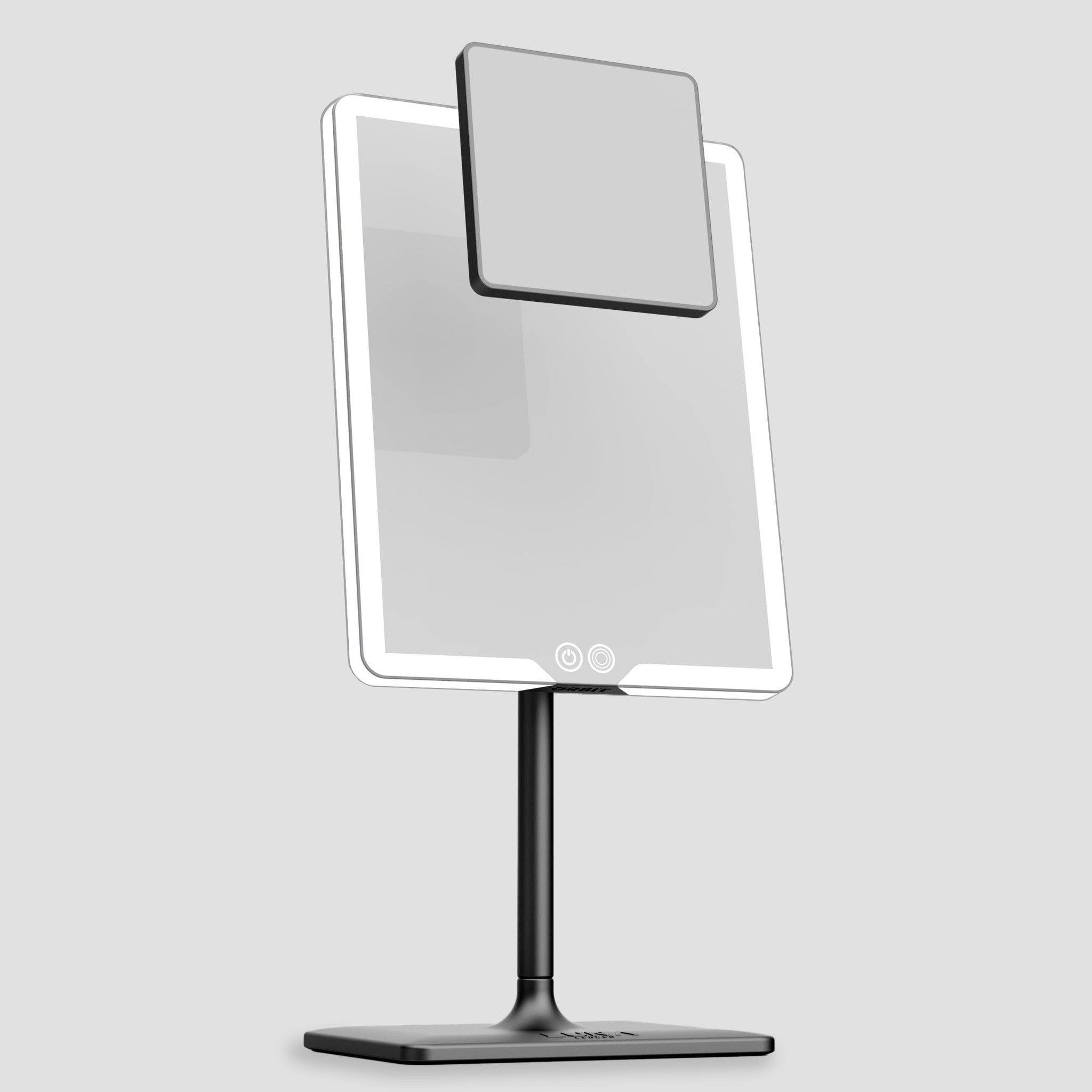
A modern vanity is really a lighting decision
If you like the romance of vanity mirror history but want the modern payoff, prioritise consistent, colour-accurate light. ORBIT is designed to be the “anchor” of a dressing table so your routine stays clear, repeatable, and calm.
Explore ORBIT finishes →FAQs
When did vanity mirrors become common in homes?
Vanity mirrors existed in elite settings earlier, but dedicated dressing tables became more common as domestic routines standardised and furniture design adapted to daily grooming.
Is a dressing table the same as a vanity?
In practice, yes. “Dressing table” often describes the furniture form. “Vanity” tends to describe the ritual and the setup around the mirror.
What’s the biggest modern change in vanity mirrors?
Built-in, consistent lighting. It reduces the daily variable that most older setups couldn’t control: shadows and colour distortion from room lighting.
How do I choose the right size mirror for a dressing table?
A good rule is two-thirds the width of your table, centred at seated eye level. LUNA’s mirror sizing guidance in their buying guide is a solid baseline.
Do I need daylight lighting for a vanity?
Daylight-balanced lighting is usually the most reliable for colour checks. If your mirror can toggle warmth, even better for evening ambience without losing clarity.
How do I make my vanity look expensive without buying lots of organisers?
Keep one tray, one lidded box, and one hero mirror. Expensive-looking vanities are mostly “fewer items, better placed.”
Related links
- Vanity mirror buying guide: sizes, lights and features
- The vanity mirror upgrade that changes everything
- How to organise your vanity for a productive 2026
- Luxury dressing table ideas
- Light-up mirrors vs LED mirrors: what’s the difference?
- Metropolitan Museum: Metropolitan Vanities (history of the dressing table)
- V&A: the toilette and elaborate dressing sets



Leave a comment
This site is protected by hCaptcha and the hCaptcha Privacy Policy and Terms of Service apply.