

Last updated: 4 January 2026
If your brows look uneven after “just a few quick plucks”, it’s usually not your eyebrows. It’s your angle, your light, or your magnification. The best magnifying mirror for tweezing is the one that lets you remove individual hairs cleanly without making you overcorrect the shape.
Summary: Keep the tweezer tips at a shallow 30–45° angle to the skin and pull with the hair’s growth direction, low and steady, to remove the whole hair instead of snapping it. Set up bright, even lighting first, then use 7X–10X magnification only for final clean-up. Map your “no-pluck zone”, step back every few hairs, and stop the moment you feel yourself chasing symmetry.
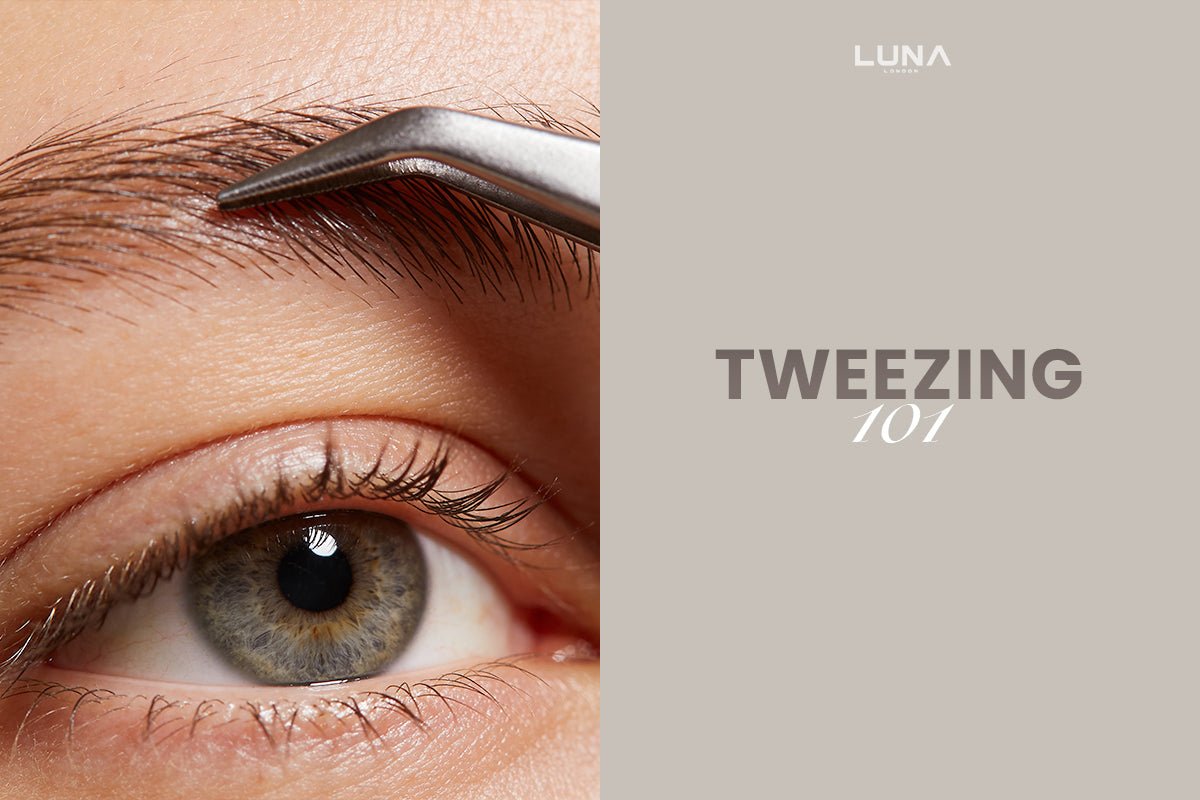
How to Tweeze Eyebrows with the Right Angle (and Stop Breaking Hairs)
Why the angle changes everything
There’s a popular story that broken hairs mean “bad tweezers”. Sometimes that’s true. More often, it’s a steep pull, a twist, or a grip too far from the base. When you pull upwards, the hair can snap above the root. You get a smooth result for a day, then stubble shows up quickly because the follicle was never cleared.
What you want is a clean pull that follows the hair’s path out of the follicle. That’s why brow pros keep repeating the same boring advice: work in the direction of hair growth.
“Tweezing works in the direction of hair growth, making it more gentle on skin.”
Sebastian Latiolais, Celebrity Brow Artist, via Byrdie
| Situation | Tweezer angle | Pull direction | What it prevents |
|---|---|---|---|
| Fine, short regrowth | 30–45° (shallow) | With growth, low and slow | Snapping, pinching skin |
| Thicker hairs under the arch | Around 45° | With growth, steady | Overworking the same follicle |
| Strays above the brow | Closer to 30° | Outward toward the temple | Over-thinning the front |
| A “stubborn” hair that slips | Regrip, keep shallow | Same direction, no twisting | Broken shafts, irritation |
⚡ PRO INSIGHT: If you can only see a “shadow” of a hair, don’t pluck. Change the mirror angle or lighting first. “Half-seen” hairs are where most accidental gaps begin.

Set up your mirror so you’re not fighting it
When people ask for the best magnifying mirror for tweezing, they usually mean: “What will stop me messing this up?” Here’s the practical checklist.
- Even, front-facing light: Shadows hide hairs, and shadows are not symmetrical. Bright, even light reduces the urge to “fix” the wrong side.
- 7X–10X for detail, 1X for decisions: If you start in heavy zoom, you will over-pluck because every hair looks urgent.
- Stable positioning: A wobble turns a good grip into a slip. Tabletop support beats handheld when you’re refining technique.
If you’re choosing magnification for the first time, skim our guide on 5X vs 10X vs 15X. If you’re focused on a men’s routine, this men’s grooming mirror guide covers common midlife brow and beard detail issues.
The 7-step tweezing method (cleaner brows, fewer regrets)
- Start in 1X and map the brow. Brush hairs up with a spoolie. Decide your “no-pluck line” first (especially the front of the brow).
- Dry the skin. Oils make hairs slip. If you’ve just moisturised, wait a few minutes and blot.
- Tension the skin gently. You want stability, not stretching. Over-stretching can encourage hairs to break or irritate the follicle, especially if you’re prone to bumps.
- Grip at the base. Place the tweezer tips as close to the skin as possible without pinching.
- Pull low, with growth, at 30–45°. Think “slide” rather than “lift”. No twisting, no yanking.
- Step back every 5 hairs. Return to 1X, check overall balance, then go back in. Brows are sisters, not twins, and zoom makes people forget that.
- Soothe and stop. Cool compress for 30–60 seconds. If you’re still plucking after noticeable redness, you’re usually past the point of improvement.
One extra reality check: eyebrow hairs have a relatively short growth cycle compared to scalp hair. A clinical review notes eyebrow anagen is typically around 2–3 months, which helps explain why “fixing” over-plucking can feel slow. (Source: Eyebrow and Eyelash Alopecia: A Clinical Review.)
Common mistakes and the quick fix
| Mistake | What’s really happening | Quick fix |
|---|---|---|
| Hairs keep snapping | Pulling upwards, twisting, gripping too far from the base | Shallow 30–45° angle, regrip closer to skin, pull with growth |
| Over-thinned front | Zoom made you treat normal density as “mess” | Leave the first 5–7mm unless obvious strays, decide in 1X |
| Red bumps | Too many passes, friction, or unclean tools | Clean tweezers, fewer plucks per session, cool compress |
| Ingrown hairs | Hair curls back or follicle is irritated | Pause hair removal, avoid digging, follow PCDS guidance for ingrown-hair prone skin |
Video: see the “low pull” technique in action
Reading about angles helps. Seeing the motion makes it click faster. This short explainer shows plucking mechanics and what tends to cause irritation.
What to look for in the best magnifying mirror for tweezing
Try this test: if your mirror forces you to lean in until you tense your neck, your hands won’t stay steady. You want a set-up where your shoulders can relax and your elbows can anchor.
- Magnification that doesn’t distort shape: 7X–10X is plenty for most. Stronger zoom can push people into micro-fixing.
- Lighting that reduces shadow bias: Front-facing light is the difference between “one hair” and “five hairs I invented”.
- Angle control: The mirror should let you keep the pull low and with growth, not upward and awkward.

LUNA mirror picks for precision tweezing
Different routines need different mirror styles. Use this as a shortcut instead of defaulting to “the strongest zoom”.
| Routine | Why it works | Here’s Our Favourite |
|---|---|---|
| Travel, hotels, inconsistent bathroom lighting | Bright, adjustable lighting helps you see the true brow edge before you pluck. |
ECLIPSE Lighting-first control so your angle stays steady on the move. |
| Home routine, steady maintenance | A stable mirror and flexible angle make “low pull” easier to repeat. |
ORBIT Best for controlled angles and stepping back to check symmetry. |
| Handbag top-ups and quick strays | Best for one or two hairs, not full reshaping. |
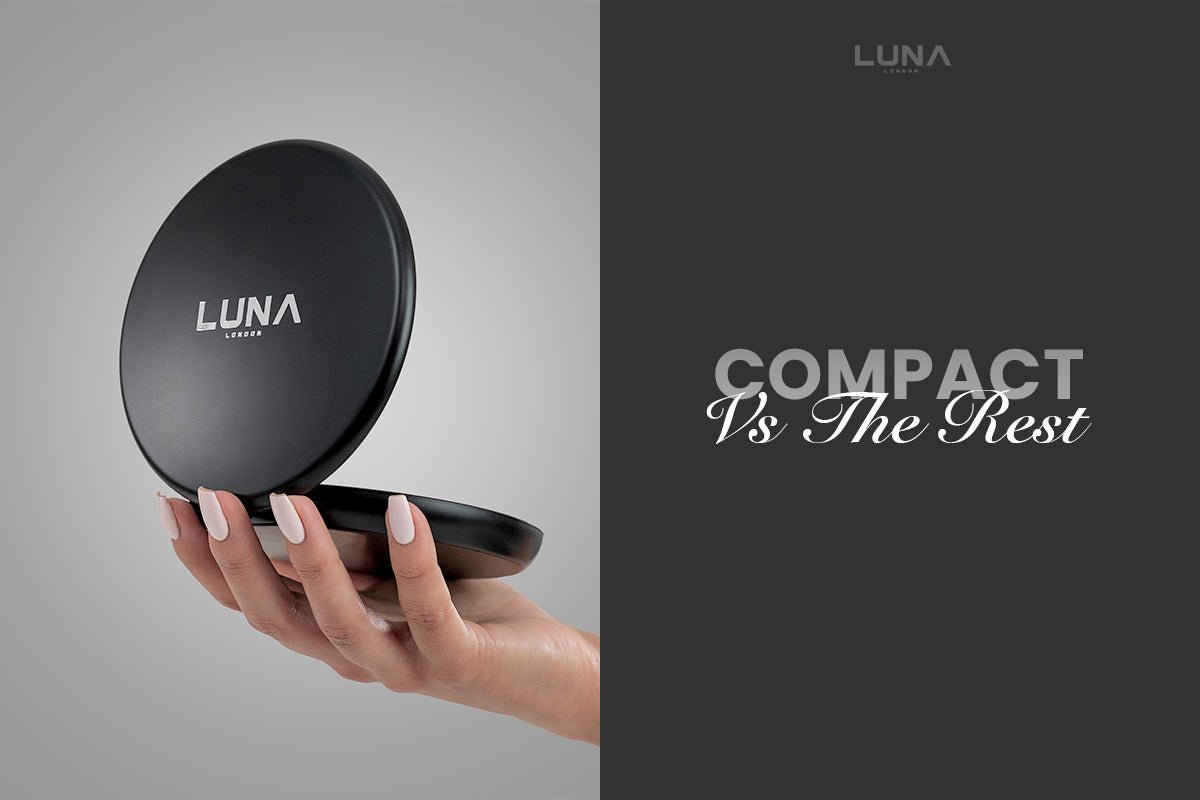
COMPACT 2.0 The practical choice for fast, precise clean-up. |
⚡ PRO INSIGHT: If you’re over 45, the problem is often contrast, not capability. Try brighter, front-facing light first. Stronger zoom can make you pluck more, not better.
When to stop and when to get help
Some redness is normal. Heat, swelling, pus, spreading rash, or increasing pain isn’t. If bumps look infected or the area is getting worse, pause hair removal and follow NHS guidance on ingrown hairs, then consider medical advice.
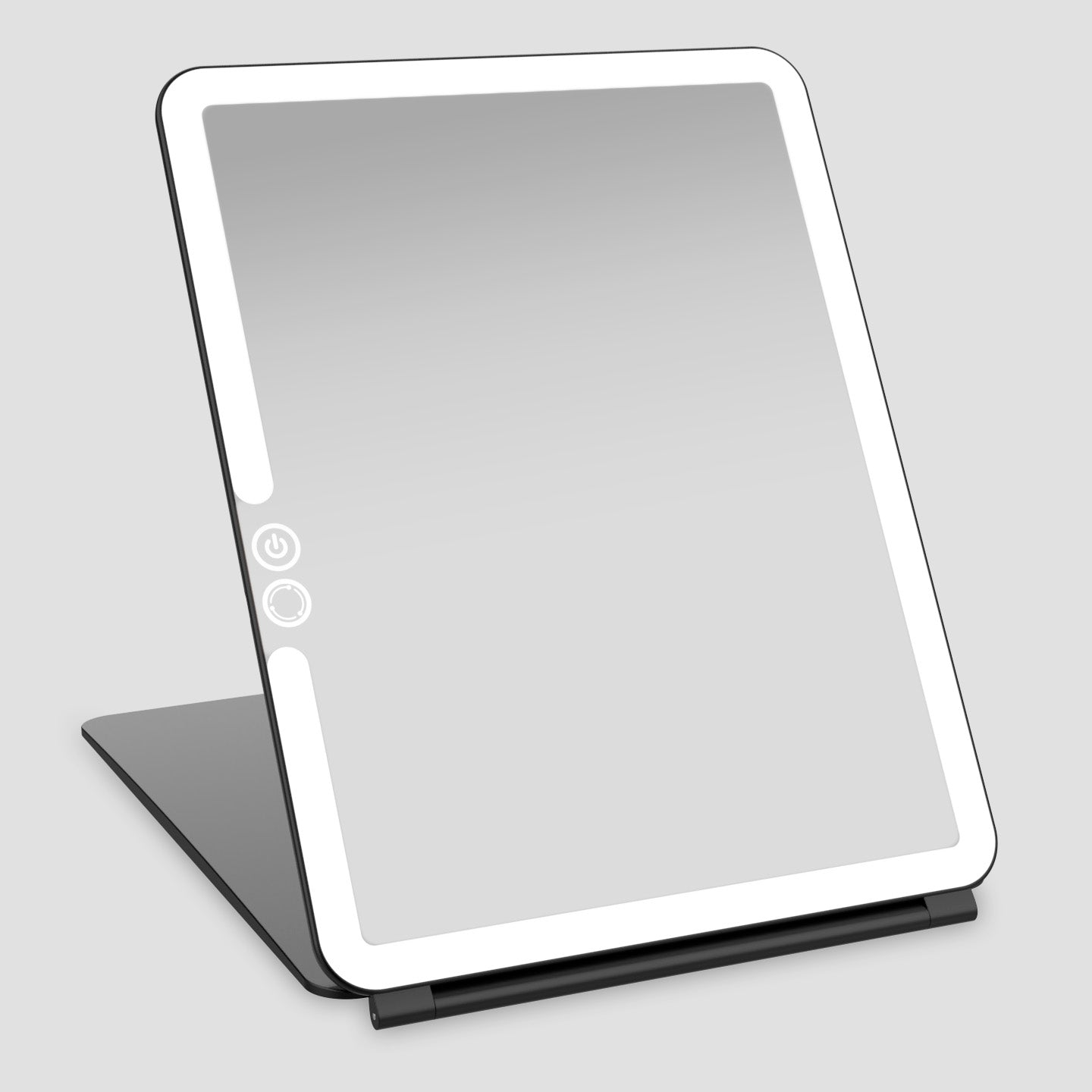
A calmer tweezing set-up starts with better light
If your brows only “misbehave” in dark winter mornings or hotel bathrooms, you’re probably not seeing the hairs clearly. ECLIPSE gives you adjustable, front-facing lighting so you can keep your tweezing angle low and steady, then reassess shape in 1X before doing final detail work.
Discover ECLIPSE lighting →FAQs
What magnification is best for tweezing eyebrows?
For most people, 7X to 10X is enough to see individual hairs without distorting your sense of shape. Use 1X to make shape decisions, then switch to magnification for clean-up.
Why do I keep breaking hairs when I tweeze?
It’s usually angle and direction. If you pull upwards, twist, or grip too far from the base, hairs snap. Keep the tips close to the skin, hold a shallow 30–45° angle, and pull with the hair’s growth direction.
Is 10X magnification too strong?
It can be if you use it for the whole session. 10X is great for spotting one stray hair, but it can make normal density look like a problem. Start in 1X, then use 10X only at the end.
How do I reduce redness and bumps after tweezing?
Clean your tweezers, limit repeated passes, and use a cool compress for 30–60 seconds. If bumps look infected or are getting more painful, pause hair removal and consider medical advice.
Related links
- The Art of Eyebrow Care: pro tips for tweezing, trimming and shaping
- The one mirror you need for tweezing, trimming and skincare
- Best magnifying mirror: 5X vs 10X vs 15X
- Threading vs waxing: expert comparison (Byrdie)
- PCDS: ingrown-hair prone skin guidance


Leave a comment
This site is protected by hCaptcha and the hCaptcha Privacy Policy and Terms of Service apply.