
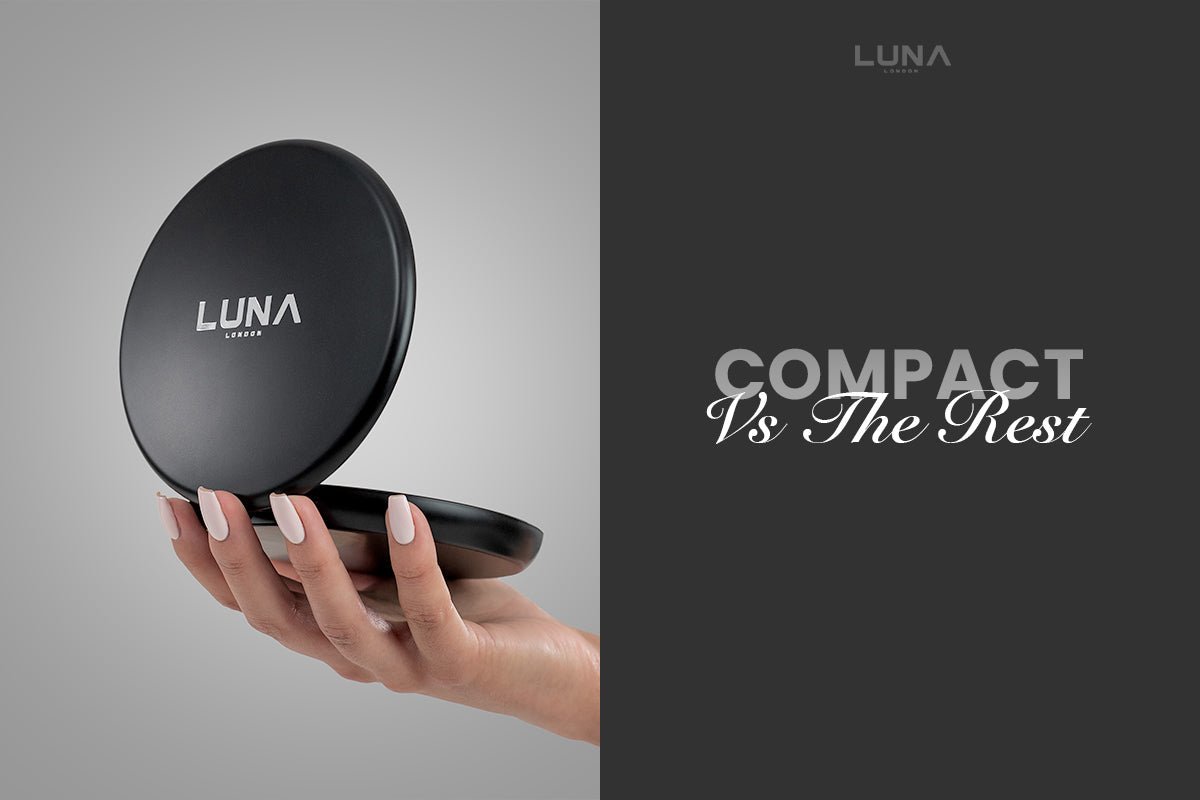
A no-nonsense comparison for real trips, real hotel bathrooms, and real lighting problems.
Summary: The “best travel mirror” isn’t the one with the biggest magnification number, it’s the one that gives you consistent, flattering, colour-accurate light in places where the lighting is awful. In 2026, COMPACT 2.0 stands out for portability, three light modes, and practical magnification, while many alternatives fail on stability, battery reliability, or lighting accuracy.
“Best travel mirror” sounds like a simple shopping question. It isn’t. Most mirrors work fine at home, then fall apart on the road. A hotel bathroom with overhead downlights, a dim Airbnb lamp, or a late-night taxi touch-up turns minor design flaws into instant frustration.
This portable mirror review breaks the options into what you actually encounter while travelling and compares COMPACT 2.0 with the rest: standard compacts, hotel mirrors, suction LED mirrors, fold-out vanity mirrors, and the “just use your phone camera” hack.
⚡ PRO INSIGHT: If a travel mirror doesn’t solve bad lighting, it’s not a travel mirror. It’s just a mirror that travelled.
How to Choose a Travel Mirror That Actually Works
Before comparing brands, get specific about the failure modes. Most people buy a mirror based on size, then discover the real problems are lighting and stability.
Quick checklist: what matters most in a travel kit
| Criteria | Why it matters on trips | What to look for |
|---|---|---|
| Lighting modes | Hotel lighting is often top-down, dim, or overly warm, which distorts tone. | At least 2–3 modes (warm, neutral, daylight) with dimming. |
| Colour accuracy | If colours shift, your base match looks right in-room, wrong outside. | Daylight-balanced option; high colour fidelity matters for makeup. |
| Magnification | Useful for brows, shaving lines, contact lenses, and detail work. | Practical range (typically 5x–10x). Too high can be hard to use at distance. |
| Stability + ergonomics | If it wobbles, you rush. If it’s awkward, you stop using it. | Solid hinge, balanced weight, easy open/close, usable one-handed. |
| Battery + charging | A “dead mirror” on day two is the most common regret buy. | Rechargeable via USB, good charge retention, sensible auto-off. |
| Size + protection | Travel means drops, pressure in bags, and messy kits. | Slim profile, durable casing, and a sleeve or case. |
A useful bit of scepticism: “dehydration” vs “dry skin”
People often blame flights for full-body dehydration, but the more consistent, evidence-backed complaint is dryness: eyes, lips, and skin. The UK Civil Aviation Authority notes aircraft cabin humidity can be far lower than typical buildings, which contributes to dry eyes in particular.
If your skin feels tight after a long haul, you’re not imagining it. A study on long-distance flights reported rapid decreases in skin surface hydration during flight conditions. That matters because dry, tight skin makes makeup sit differently and makes small texture issues look bigger under harsh lighting.
Relevant reading: UK CAA: aircraft cabin comfort and humidity, Skin hydration changes during long-distance flights (PubMed).
“Daylight or daylight-balanced lighting is the closest you’ll get to seeing your makeup as it really is.”
— Lulia David, Photographer, Marie Claire (2025)
Why lighting accuracy beats “more magnification”
Magnification helps you see detail. Lighting helps you see truth. If the lighting is too warm, too green, or too dim, you’ll compensate with heavier product and harsher blending, then wonder why you look different in daylight.
Two terms matter here:
- Correlated colour temperature (CCT): how warm or cool the light appears.
- Colour rendering / fidelity: how well the light reveals colours compared with a reference standard. The CIE’s materials explain why colour rendering metrics exist and why older CRI approaches have limitations.
If you want the underlying standard reference point: CIE on colour fidelity and CRI limitations.
One travel rule most people miss: lithium battery handling
If your travel mirror is rechargeable (and it should be), treat it like any other device with a lithium battery. US FAA guidance is clear that spare lithium batteries and power banks must be carried in carry-on, not checked bags. It’s sensible practice to keep rechargeable items accessible, especially if you gate-check your carry-on.
FAA PackSafe: lithium batteries and travel
COMPACT 2.0 vs the rest: what you’re really comparing

To keep this honest, we’re comparing categories, not cherry-picking a single weak competitor. “The rest” usually looks like one of these five options in a travel kit:
- Standard compact (no light)
- Hotel bathroom mirror
- Suction LED mirror (often 10x)
- Fold-out travel vanity mirror (often bulky)
- Phone camera (front-facing, zoomed)
| Feature | COMPACT 2.0 | Most travel alternatives |
|---|---|---|
| Lighting | Three dimmable light modes (warm, neutral, daylight) built in. | Either no light, or one harsh LED tone that exaggerates texture. |
| Portability | True compact format designed for bags and travel kits. | Fold-out mirrors get bulky; suction mirrors need surfaces; hotel mirrors stay in the hotel. |
| Magnification | Practical detail magnification plus standard view (ideal for brows and grooming). | Ultra-high magnification can be hard to use (distance-sensitive and distortive). |
| Stability | Handheld control with consistent viewing angle. | Suction mirrors wobble; fold-outs tip; phone cameras shift perspective. |
| Charging | Rechargeable for travel, without relying on disposable batteries. | Either disposable batteries, or unknown battery performance from generic units. |
If you want a deeper breakdown of how lighting impacts base match and blending, this is worth skimming: how better lighting fixes patchy foundation. If you’re the type who likes the science, this overview also helps: what CRI means for makeup mirrors.
⚡ PRO INSIGHT: If your “travel mirror” only looks good in one hotel bathroom, it’s not reliable enough to pack. Consistency beats perfection.
Which mirror is best for your travel style?
| Traveller type | What to prioritise | Mirror category | Here’s Our Favourite |
|---|---|---|---|
| Carry-on minimalist | Slim profile, durable case, dependable lighting | Lighted compact |
COMPACT 2.0 Portable, three-mode light, built for bags. |
| Contact lens wearer | Magnification + stable light, no awkward angles | Magnified lighted compact |
COMPACT 2.0 Useful magnification without bulky stands. |
| Business travel (hotel bathrooms) | Daylight option, fast touch-ups, consistency | Lighted compact or travel mirror with modes |
COMPACT 2.0 Reliable in mixed hotel lighting. |
| Grooming focused (beard, brows) | Edge definition + controlled brightness | Magnified lighted compact |
COMPACT 2.0 Detail view without harsh shadows. |
COMPACT 2.0 in context (not hype)

COMPACT 2.0 is designed for the stuff travellers actually do: quick base checks, blending in weird lighting, shaving lines, brow detail, and on-the-go touch-ups. It’s also genuinely “bag-sized”, which sounds obvious until you’ve packed a fold-out mirror once and never again.
If you want a broader view of compact formats and where they fit into routines, these are useful companion reads: COMPACT 2.0, explained and compact lighted mirrors for travel touch-ups.
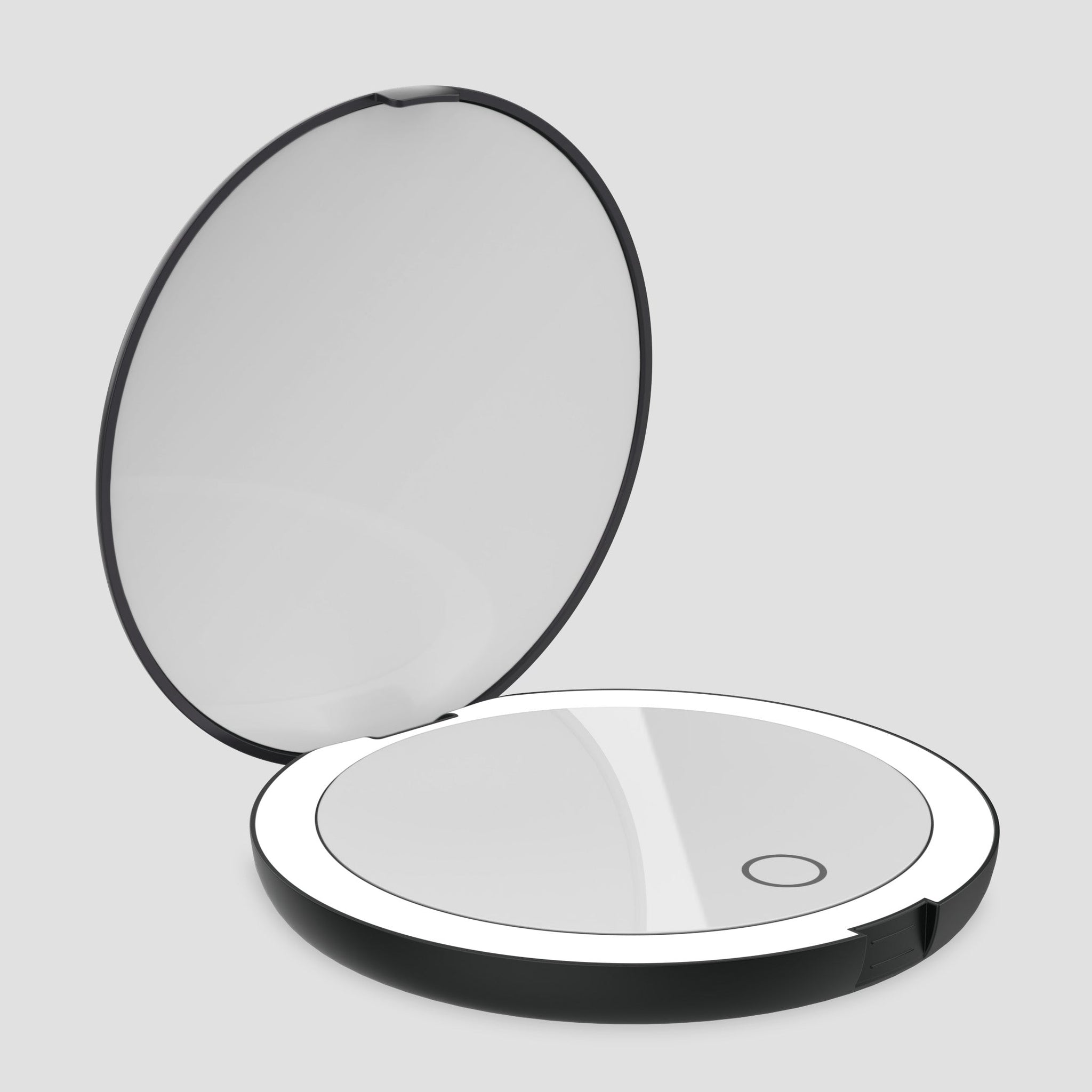
A travel mirror that’s built for bad lighting
If your priority is consistency on the road, COMPACT 2.0 is the most practical pick: compact enough for a travel kit, with three dimmable modes to match hotel, airport, and daylight conditions.
Explore COMPACT 2.0 for travel →FAQs
What is the best travel mirror for 2026?
The best travel mirror in 2026 is the one that stays consistent across bad lighting. For most travellers, that means a compact mirror with dimmable modes and practical magnification, not a bulky fold-out mirror or a suction-only setup.
Is magnification the most important feature in a travel mirror?
Not on its own. Magnification helps with detail, but lighting quality is what prevents mismatched base, over-blending, and that “looked fine in the hotel, wrong outside” problem.
Are suction mirrors good for travel?
They can be, but they’re fragile in practice: they depend on the right surface, can wobble, and are a pain in humid bathrooms or textured tiles. They’re also easy to forget behind.
Can I bring a rechargeable travel mirror on a plane?
Yes, but treat it like any device with a lithium battery: keep it in your carry-on and follow airline and aviation safety guidance on lithium batteries.
What’s the simplest travel kit setup for quick touch-ups?
A lighted compact mirror, a small concealer, a multipurpose tint or balm, and one blending tool. The goal is speed and consistency, not rebuilding your whole routine mid-trip.
Related links
- Travel Makeup Mirror Secrets: How to Look Flawless in Flight
- COMPACT 2.0: The Sleek Mirror That Fits in Your Bag
- Compact Lighted Mirrors: On-the-Go Touch-Ups
- How to Fix Patchy Foundation with Better Lighting
- UK CAA: aircraft cabin comfort and humidity

Leave a comment
This site is protected by hCaptcha and the hCaptcha Privacy Policy and Terms of Service apply.