
Last updated: 20 February 2026

Summary: Your mirror doesn’t “create” mood, but the light around it can influence alertness, calmness, and how your morning routine feels. The right mirror lighting reduces harsh shadows, supports steadier circadian cues, and makes self-care feel easier to start and easier to stop.
How lighting and reflection shape your morning mood
It’s tempting to assume mood is purely internal, and that a mirror is just a passive object. But your brain treats light as a signal. It helps decide whether it’s “go time” or “wind down” time, and it can quietly shape how you feel before you’ve even had coffee.
This is where the idea of led mirror benefits gets interesting. A mirror sits at the centre of many routines: skincare, shaving, makeup, contact lenses, and the quick “do I look alright?” check before you leave. If the lighting at that spot is harsh, dim, or the wrong tone, your routine can feel more stressful than it needs to be. If it’s steady and sensible, the same routine can feel calmer and more predictable.
⚡ PRO INSIGHT: Don’t chase “perfect lighting”. Chase consistent lighting. Mood often improves when your morning cues stay stable, even if they’re not cinematic.
Why light affects mood more than you think

Light exposure influences your circadian rhythm (your internal clock), which is tightly linked to sleep timing, energy, and emotional regulation. When light cues are weak or mistimed, some people feel it as sluggish mornings, flat motivation, or a low-grade sense of “everything is harder”.
The extreme example is Seasonal Affective Disorder (SAD), which the National Institute of Mental Health notes affects a meaningful subset of adults, with symptoms linked to seasonal changes in daylight. If you want a grounded overview (symptoms, timing, and what “counts” as SAD), start with the NIMH explainer on seasonal affective disorder.
Even outside SAD, research reviews continue to link lighting conditions to wellbeing outcomes in real-world settings. A 2024 systematic review focused on lighting and wellbeing highlights that lighting quality, timing, and context can be associated with mental health and quality-of-life outcomes (especially when light is treated as part of the wider environment rather than a single “magic” variable). You can skim the review here: Lighting and wellbeing (systematic review).
Your mirror as a “light amplifier” in daily life
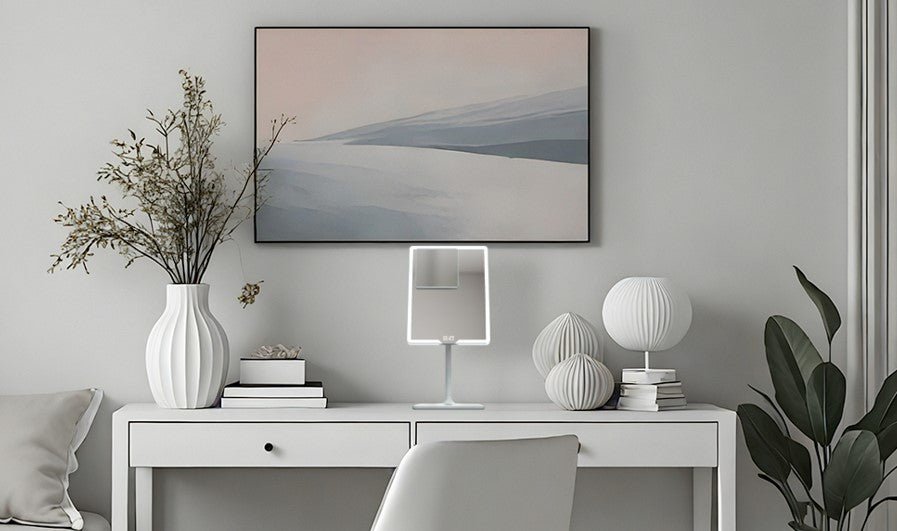
Mirrors don’t just show you your reflection. They bounce light back toward your eyes and face. That means a mirror placed near a window can make a room feel brighter, and a mirror with built-in LEDs can become a consistent “anchor point” for your routine when daylight is unreliable.
The catch is that not all light feels the same. If you’ve ever looked fine at home and then caught yourself in harsh overhead lighting later, you already know how quickly lighting can change your confidence. If this happens often, the fix is rarely more makeup. It’s usually a better “truth check” at home, similar to the approach in makeup mistakes under bad lighting.

Lighting and mood: what settings actually help
There’s a lazy assumption that “brighter is always better”. It’s not. Bright, cool-toned light can feel energising in the morning, but it can also feel clinical, especially when you’re tired. Warm light can feel soothing at night, but it can also distort colour and trick you into over-correcting makeup.
If you’ve ever tried to bridge the gap between indoor and outdoor light (and felt frustrated by how different your face looks), you’ll recognise the problem described in daylight makeup: the indoor vs outdoor light gap.
| Moment | Light goal | What it can do for mood | Practical setup |
|---|---|---|---|
| First hour after waking | Signal “daytime” clearly | Supports alertness and steadier energy | Bright, neutral-to-daylight mirror light plus open curtains if possible |
| Getting ready (makeup/shave) | See true colour and texture | Reduces “second-guessing”, lowers routine friction | Even, diffused LEDs at face level (avoid one harsh overhead bulb) |
| Evening wind-down | Tell the body it’s slowing down | Supports calm and easier transition to sleep | Dimmer, warmer setting and shorter mirror time |
If you want a broader view of why LED mirrors are often easier to live with than a single ceiling light, the LUNA breakdown on why LED mirrors matter for skincare pairs well with this guide.
A 5-minute mirror routine that supports calmer mornings
Mood advice gets weird quickly if it turns into “fix your life before 8am”. Keep it small. You’re aiming for a repeatable cue: consistent light, simple sequence, and an end point so you don’t get stuck in the mirror.
| Minute | What to do | Why it helps |
|---|---|---|
| 0:00–1:00 | Turn on mirror light, open curtains if available | Strong cue that the day has started, reduces “groggy drift” |
| 1:00–3:00 | Do one anchor task (cleanse, shave, or moisturise) | A small completion loop can reduce morning mental noise |
| 3:00–4:30 | Quick “truth check” (tone, symmetry, stray hairs) | Prevents later confidence hits under different lighting |
| 4:30–5:00 | Stop. Turn light down if staying home, or leave the space | Creates an end point so the mirror doesn’t become a spiral |
If you like routines that actually stick, it’s worth pairing this with a simple habit structure rather than chasing motivation. The approach in the power of a structured daily routine is useful here because it focuses on repeatability, not perfection.
When light backfires (and what to change)
The same tool that helps in the morning can undermine your evening if you use it the same way at night. Bright light late in the day can feel stimulating, and some people notice it as restless sleep or a “tired but wired” feeling. If your mirror is part of an evening routine, consider dimming and warming the light, and shortening time spent directly in front of it.
This is also where your environment matters. If the rest of your room is set up for comfort but your vanity area is harsh and glaring, you get mixed signals. Small changes like layered lighting and calmer setup cues are covered in home wellness essentials for cosy nights in.
Expert perspective
“This decrease in light can affect neurotransmitters in the brain, such as serotonin and melatonin, and disrupt the body’s circadian rhythm.”
— Stephanie Cox, psychologist (West Virginia University), in an interview on SAD and seasonal light changes: WVU Today
LED mirror benefits: what to look for if mood is part of the goal
If your goal is “feel a bit steadier in the morning”, the best features are surprisingly unglamorous: even light, stable brightness, and the ability to change tone based on time of day. That’s it. Anything that reduces fiddling reduces friction.
| Option | Best for | Here’s Our Favourite |
|---|---|---|
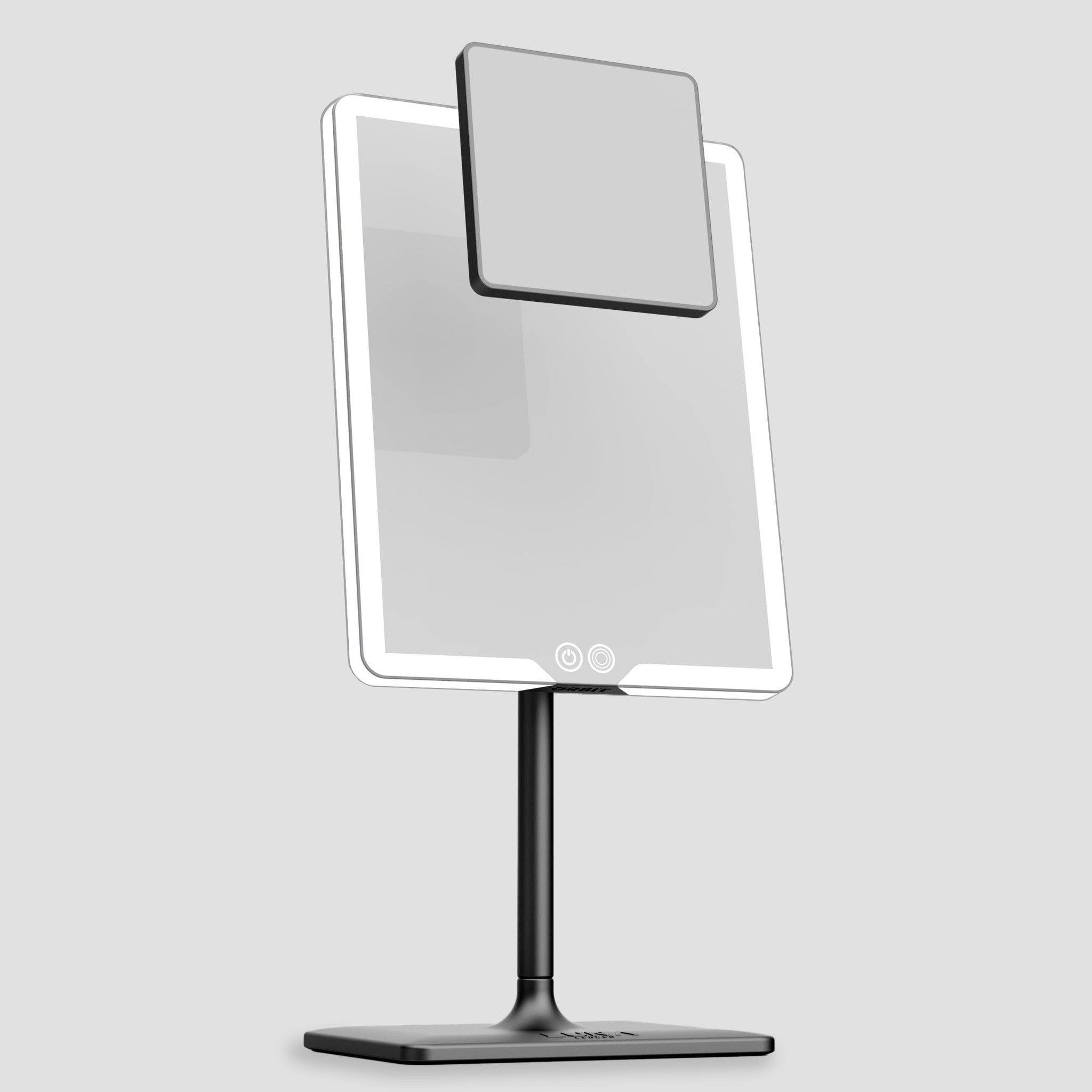
| ORBIT | Face-level, even lighting that keeps routines consistent | ORBIT if you want one “anchor spot” that feels the same every morning, regardless of weather. |
| ECLIPSE | Daily accuracy in a slimmer footprint, warmth control for evening | ECLIPSE if your biggest mood-killer is inconsistent lighting in a small space. |
| COMPACT 2.0 | Portable “truth check” that prevents lighting surprises on the go | COMPACT 2.0 if travel lighting throws your confidence off before important days. |
If you’re choosing between models, the comparison guide ORBIT vs ECLIPSE vs COMPACT 2.0 is a fast way to match the mirror to your space and habits.

A quick watch: light therapy and mood, explained simply
If you want a practical, non-mystical overview of how bright light therapy is used for mood in seasonal patterns (and what it is not), Harvard Health’s short guide is a good starting point: Try this: light therapy.
Video: Mayo Clinic Minute on light therapy (embedded via YouTube privacy-enhanced mode).
A calmer start often begins with consistent light
If your mornings feel rushed or dim, a stable mirror light can reduce routine friction and help your “getting ready” space feel predictable. ORBIT is designed for even, face-level illumination that stays consistent day to day.
FAQs
Can a mirror really affect your mood?
Indirectly, yes. The mirror itself is neutral, but the light around it can influence alertness and calm. If the mirror is where your routine happens, its lighting can shape how that routine feels.
What’s the best colour temperature for mornings?
Neutral-to-daylight settings usually feel most “awake” and make colours easier to judge. If your mornings are dark, a brighter setting can help create a clearer start cue.
Is warm light better for relaxing at night?
Often, yes. A warmer, dimmer setting tends to feel less stimulating and can support wind-down routines. The simplest rule is: brighter and cooler earlier, warmer and dimmer later.
Why do I look “worse” in some mirrors and lighting?
Harsh overhead lighting creates shadows that exaggerate texture and asymmetry. A face-level, even light source reduces those shadows and gives a more stable view of colour and detail.
When should I take low mood seriously?
If low mood lasts weeks, affects sleep or appetite, or makes daily life feel unmanageable, it’s worth speaking to a healthcare professional. Lighting can support routines, but it’s not a substitute for medical advice.
What’s one quick change that helps immediately?
Make your mirror lighting consistent. Use the same brightness and tone every morning for a week and see how your routine feels. The reduction in “fiddling” alone can lower stress.
Related Links
- Makeup Mistakes Under Bad Lighting
- Daylight Makeup: Indoor vs Outdoor Light Gap
- Best LED Mirror for Makeup: ORBIT vs ECLIPSE vs COMPACT 2.0
- Best Vanity Mirrors with Lights for Small Bedrooms
- The Transformative Power of a Structured Daily Routine
- Why LED Mirrors Are Essential for Skincare Enthusiasts


Leave a comment
This site is protected by hCaptcha and the hCaptcha Privacy Policy and Terms of Service apply.