

Last updated: 19 April 2026
Frizzy Hair After Washing? The Before-Work Fixes That Actually Help

How to Fix Frizzy Hair Fast After a Shower Without Restarting Your Whole Morning
If your hair looks decent in the shower, then somehow turns fluffy, rough or oddly swollen by the time you are dressed, you are not imagining it. “Frizzy hair after washing” is one of those annoying morning problems that often feels random, but it usually is not. Hair is more fragile when wet, friction adds up fast, and a few mistimed decisions can leave you trying to rescue things with more serum, more brushing, and more heat than the situation actually needs.
The good news is that this is often fixable in minutes. Guidance from the American Academy of Dermatology stays pretty consistent on the fundamentals: treat hair gently, match your routine to your hair type, and do not assume harsher handling equals better results. University of Utah Health makes the same point more bluntly: wet hair is more fragile and easier to stretch and snap. That matters because a lot of “frizz” is really mechanical damage plus raised, roughed-up texture, not some mysterious bad-hair curse.
If you are reading this while standing in a towel with five minutes to spare, here is the short version: less rubbing, better timing, lower heat, and fewer passes usually beat another product purchase. For related technique help, LUNA’s guides on how to detangle wet hair properly and what actually reduces breakage after a shower are worth reading next.
In a hurry? Do this first
- Blot or squeeze water out. Do not rub your hair with a standard bath towel.
- Apply leave-in or smoothing product while hair is still damp, not when it is already half-dry and puffing up.
- Detangle from ends upward with as few passes as possible.
- If needed, use a hairdryer on low heat or cool to smooth the front sections and crown only.
- Stop touching your hair while it dries. Constant “checking” creates more frizz.
- Do one final light check, then leave it alone.
| If your hair looks like… | It is often caused by… | What helps fastest |
|---|---|---|
| Puffy at the crown | Rough towel drying, over-brushing, hot air from above | Blot, add a little leave-in, then smooth that area with low heat |
| Halo frizz around the hairline | Touching it too much while drying, humidity, static | Use a small amount of smoothing cream, then stop fiddling |
| Ends look dry and fluffy | Not enough slip, too much brushing, older damage | Apply product to ends first, detangle gently, trim if needed |
| Waves or curls go frizzy immediately | Breaking up the pattern too early or drying too roughly | Use product while damp, then diffuse gently or air-dry without touching |
Why hair gets frizzy straight after washing
The awkward truth is that freshly washed hair is vulnerable. University of Utah Health notes that water weakens the hair’s protein structure, making wet strands easier to stretch and break. That is why rough towel work, aggressive brushing, or going straight in with high heat can turn “clean” into “chaotic” very quickly.
Timing also matters more than most people realise. Good Housekeeping’s 2024 expert-backed frizz guide recommends applying leave-in conditioners, heat protectants, and anti-frizz products within a few minutes of getting out of the shower, before the bathroom steam and ambient moisture have more time to interfere. In other words, if you wait until hair has already expanded into a soft triangle of regret, you are often playing catch-up.
⚡ PRO INSIGHT: A “quick fix” works best when it prevents the frizz phase, not when it tries to flatten fully dried puffiness afterwards. Product timing beats panic styling.
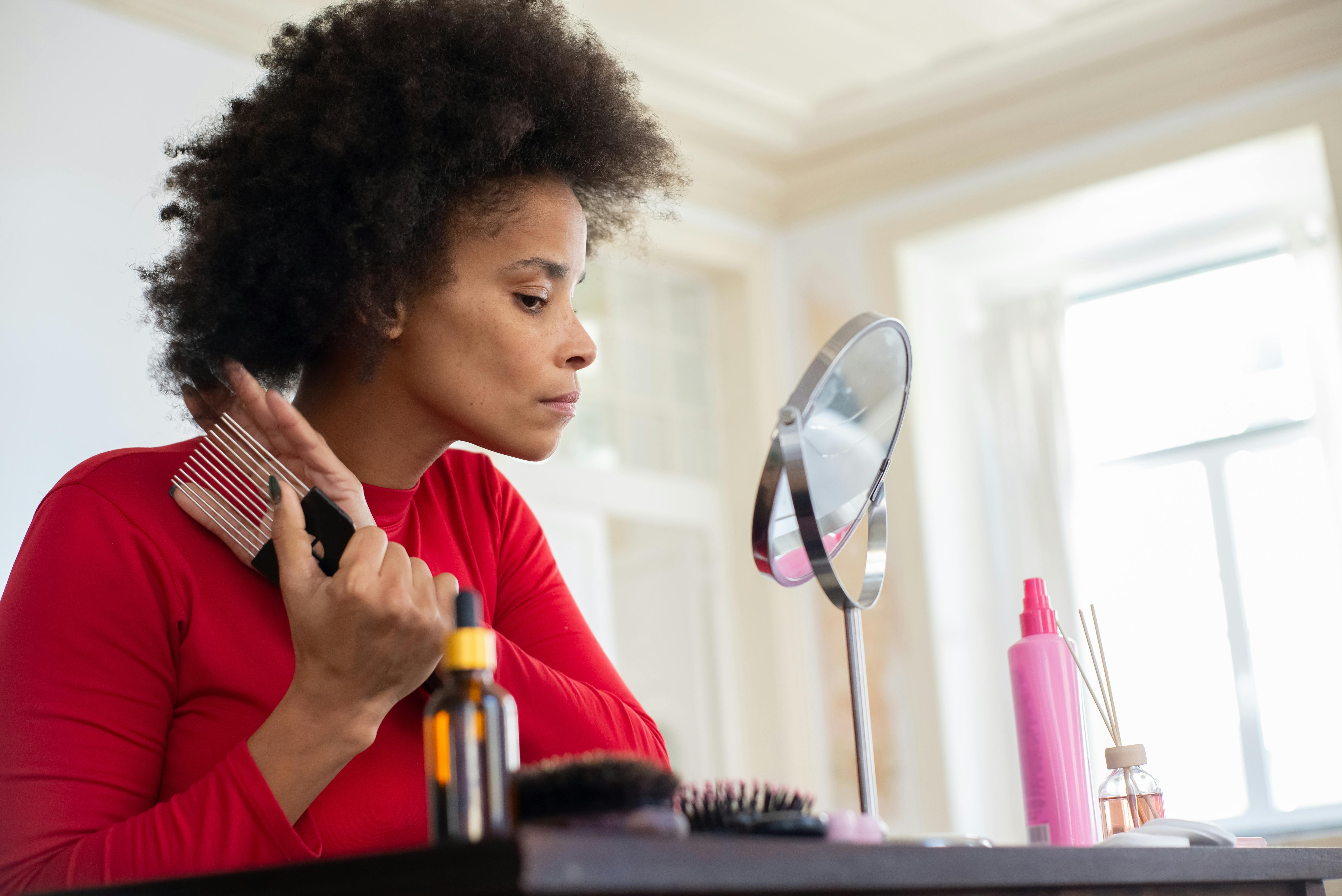
The before-work fixes that actually help
1. Blot, squeeze, or wrap. Never scrub
This is the easiest win. Allure’s air-dry guide quotes hairstylist Samuel Eugenio Rodney advising people to gently squeeze excess water from the hair and avoid aggressive rubbing because it damages the cuticle and can leave hair dry and frizzy. A microfibre towel or soft cotton T-shirt is usually kinder than a standard bath towel. If you are still doing the classic head-rub because you are in a hurry, that may be the first thing to change.
“Do not rub the towel aggressively to absorb water. This can damage the cuticle and leave your hair feeling dry and frizzy.”
— Samuel Eugenio Rodney, hairstylist, Allure (2024)
2. Use your smoothing product while hair is still damp
If your hair frizzes after the shower, it often needs something applied earlier, not more heavily. Leave-in conditioner, smoothing cream, curl cream, or heat protectant should usually go on when hair is damp enough to distribute product evenly, but not so wet that it just slides off. If you need a product sanity check, LUNA’s detangling brush guide explains the same broader principle in practical terms: slip first, control second.
3. Detangle once, then stop
Detangling is where a lot of before-work routines quietly go wrong. Repeated brushing can turn minor texture into full-volume frizz, especially on wavy, curly, bleached, or already dry hair. The calmer approach is ends first, then work upward gradually, using the smallest number of strokes you can get away with. LUNA’s 5-minute wet-hair method gets this right: damp, not dripping, with enough slip to glide.
4. Smooth only the problem zones
You do not need to re-blow-dry your entire head because the front sections misbehaved. Cleveland Clinic’s newsroom guidance on wet hair points out that low heat or cool air is the safer direction when you need hair to dry faster. In real life, that means you can target the crown, front hairline, or top layer with a low-heat pass and leave the rest alone. This usually works far better than blasting everything on full heat.
5. Watch the room, not just the hair
If your home or office air is extremely dry, your hair may feel rougher and more static-prone even when your technique is decent. Cleveland Clinic notes that added humidity can improve hair texture, reduce split ends and static, and tame frizz. It also cites the EPA’s recommended indoor humidity range of 30% to 50%. That will not magically fix damaged ends, but it is a useful clue when your winter or air-conditioned workweek hair behaves differently from your weekend hair.
6. Do one honest mirror check, then leave
This one sounds cosmetic, but it matters. Frizz often looks worse under patchy bathroom downlights or overhead office lighting, which can make you over-apply product and flatten the life out of your hair. A front-facing, more even light shows whether you actually need more smoothing at all. LUNA’s pieces on good lighting for getting ready and bad lighting mistakes make the same basic point: better visual feedback prevents overcorrection.
| Hair type | Best before-work tweak | What to avoid |
|---|---|---|
| Fine / straight | Use lighter leave-in, focus on mid-lengths and ends, smooth only flyaways | Heavy oils at the roots and endless brush passes |
| Wavy | Apply product damp, define sections, then hands off | Brushing again once the wave pattern has started drying |
| Curly / coily | Keep slip high, diffuse gently if needed, avoid breaking up the curl clumps | Dry detangling and high-heat rough drying |
| Bleached / colour-treated | Use more conditioning support and fewer passes | Treating it like brand-new, undamaged hair |
⚡ PRO INSIGHT: The worst post-shower habit is the “one more pass” trap. If the brush is already gliding, stop. Extra strokes often create the very halo frizz you were trying to prevent.
A quick mirror check can stop you over-fixing it
Most morning hair rescue jobs only need one calm check in better light. At home, that usually means a front-facing mirror rather than relying on yellow overhead bathroom bulbs. For a full before-work routine, ORBIT is the strongest fit because it gives you a bigger, steadier view at home. If you are sorting your hair at a desk, in a gym changing room, or on a trip, ECLIPSE and COMPACT 2.0 are the more portable options.
| Mirror | Best for | Key features | Why it stands out |
|---|---|---|---|
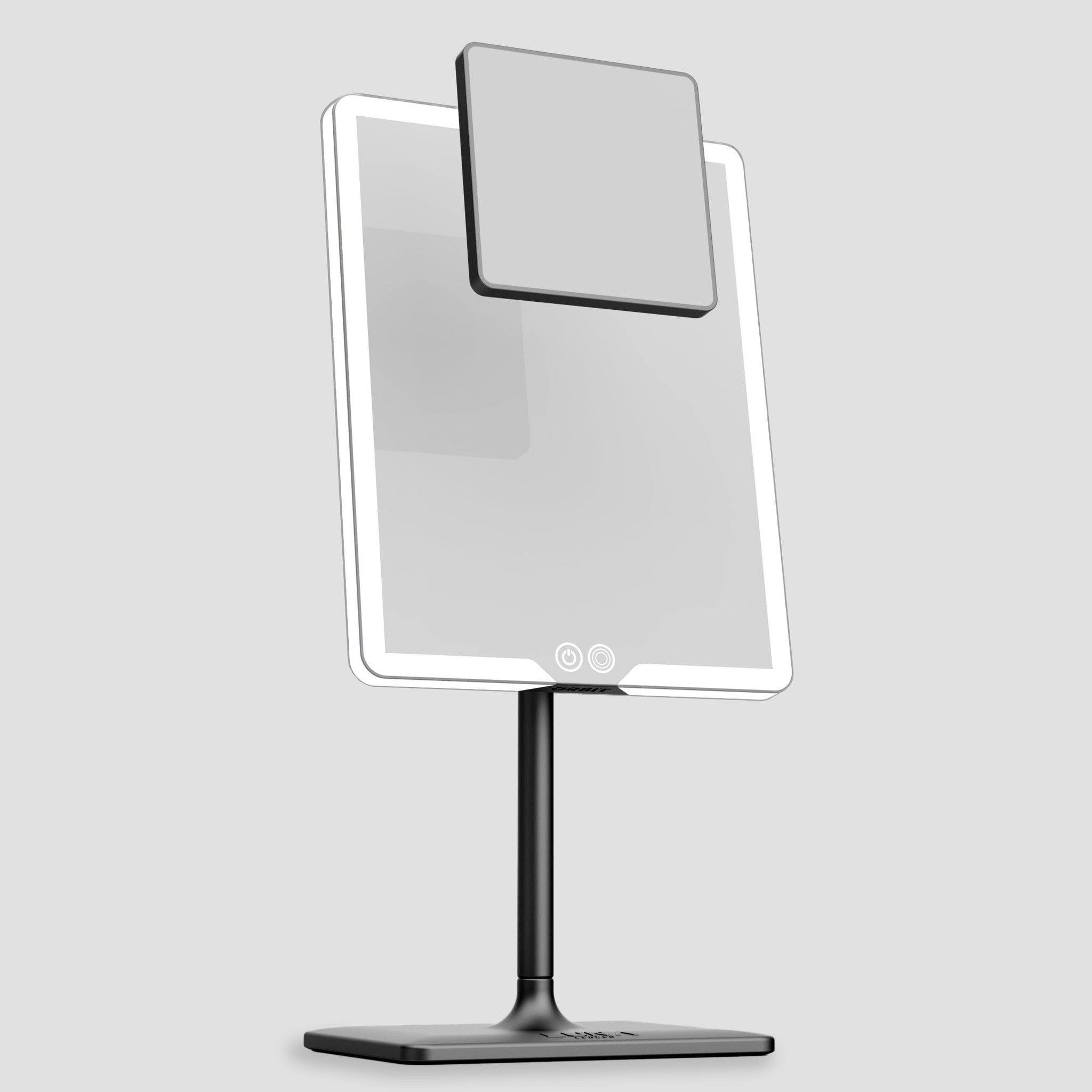 Shop ORBIT Shop ORBIT
|
ORBIT
Best for: Home routines, dressing tables, full hairline and crown checks
|
Rechargeable lighting with a magnetic 7x detail mirror | The easiest way to see halo frizz, parting issues, and product build-up before you overdo the fix |
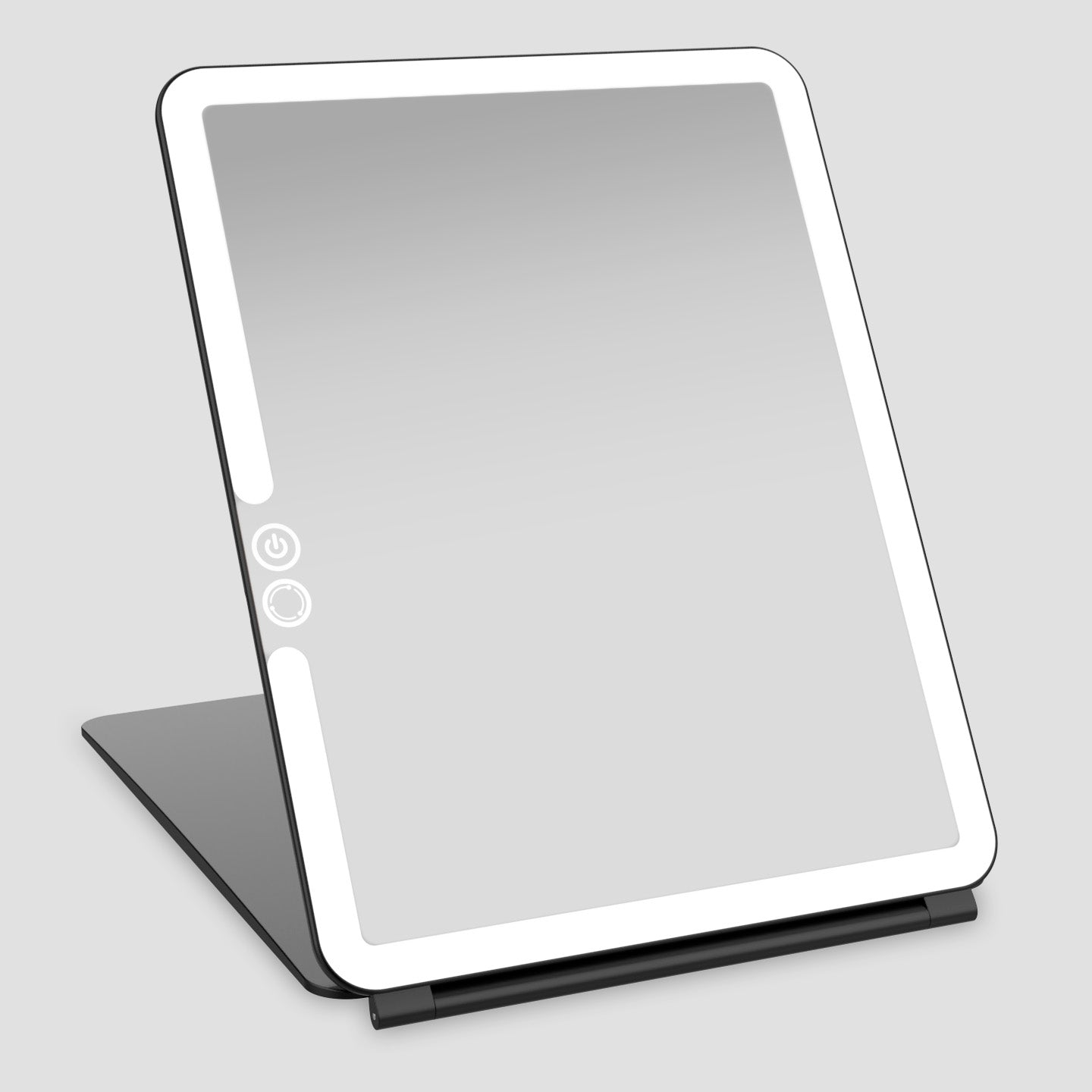 Shop ECLIPSE Shop ECLIPSE
|
ECLIPSE
Best for: Travel, hotel rooms, desk drawers, quick after-commute resets
|
Fold-flat design with 3 dimmable light modes | Ideal when the real problem is bad lighting, not your hair |
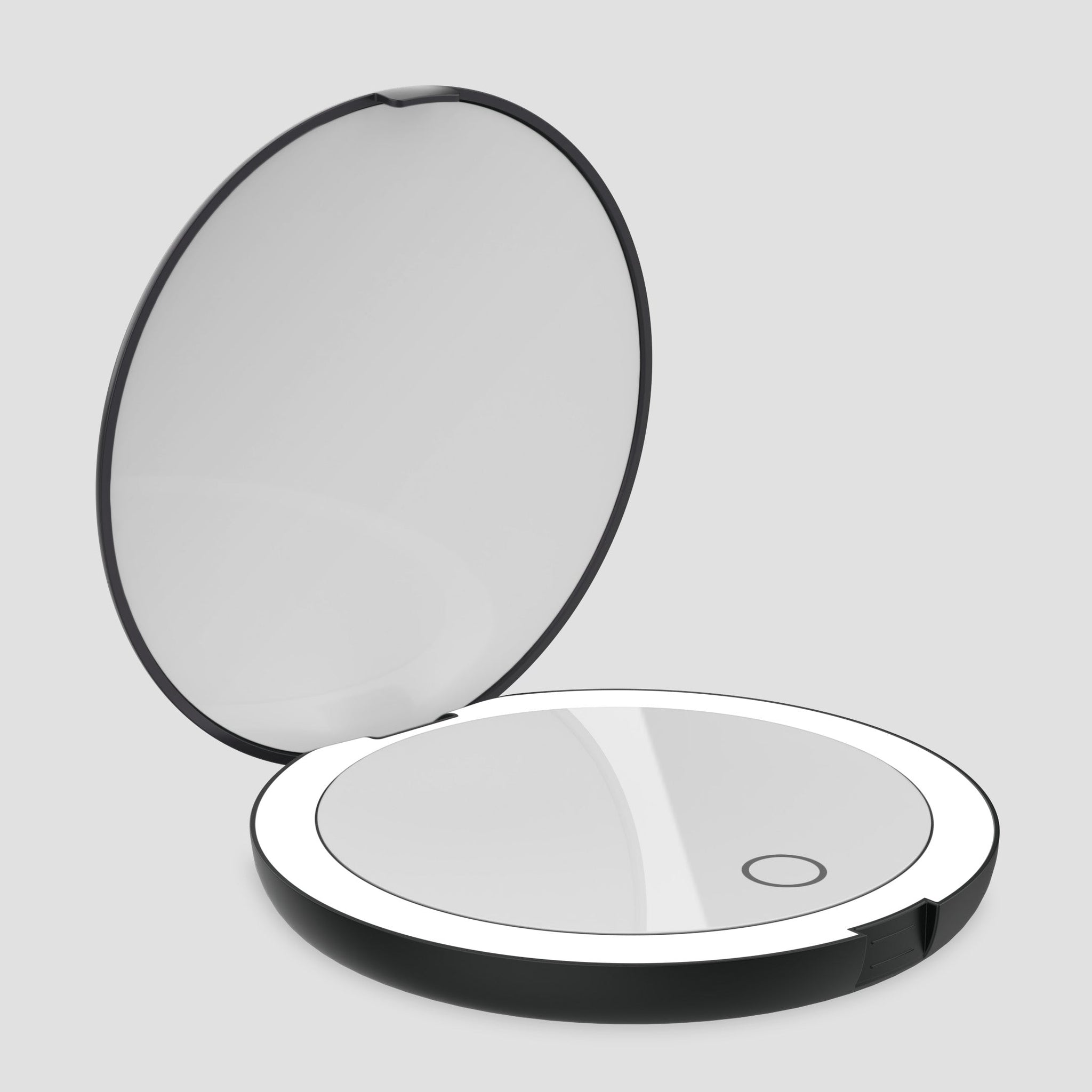 Shop COMPACT 2.0 Shop COMPACT 2.0
|
COMPACT 2.0
Best for: Handbags, quick fringe checks, flyaways, brows, contact lenses
|
1x and 7x magnification with compact rechargeable lighting | Small enough to carry daily, useful enough for the front-section fixes people actually do |
The 7-minute before-work routine
- Minute 1: Blot with a microfibre towel or soft cotton T-shirt.
- Minute 2: Apply leave-in or smoothing product to damp mid-lengths and ends.
- Minute 3: Detangle once, ends first.
- Minute 4: Smooth the crown or front sections with low heat if needed.
- Minute 5: Let the rest air-dry undisturbed.
- Minute 6: Use a calmer mirror light to check the hairline, crown, and parting.
- Minute 7: Stop. Seriously. Leave the house before “helpful” extra touching ruins the finish.
FAQs
Why does my hair get frizzy right after washing?
Usually because wet hair is more fragile, towel friction roughs up the surface, and styling products go on too late or too heavily. Humidity, dry indoor air, and repeated brushing can also make it worse.
What is the fastest way to fix frizzy hair after a shower?
Blot gently, apply a leave-in or smoothing product while hair is still damp, detangle once, and use low heat only where needed. The fastest fix is usually less handling, not more.
Should I brush my hair when it is wet if it frizzes easily?
You can, but do it carefully. Use enough slip, start at the ends, and avoid long, forceful passes. If your hair is very frizz-prone, damp rather than dripping hair is often easier to control.
Related links


Leave a comment
This site is protected by hCaptcha and the hCaptcha Privacy Policy and Terms of Service apply.