
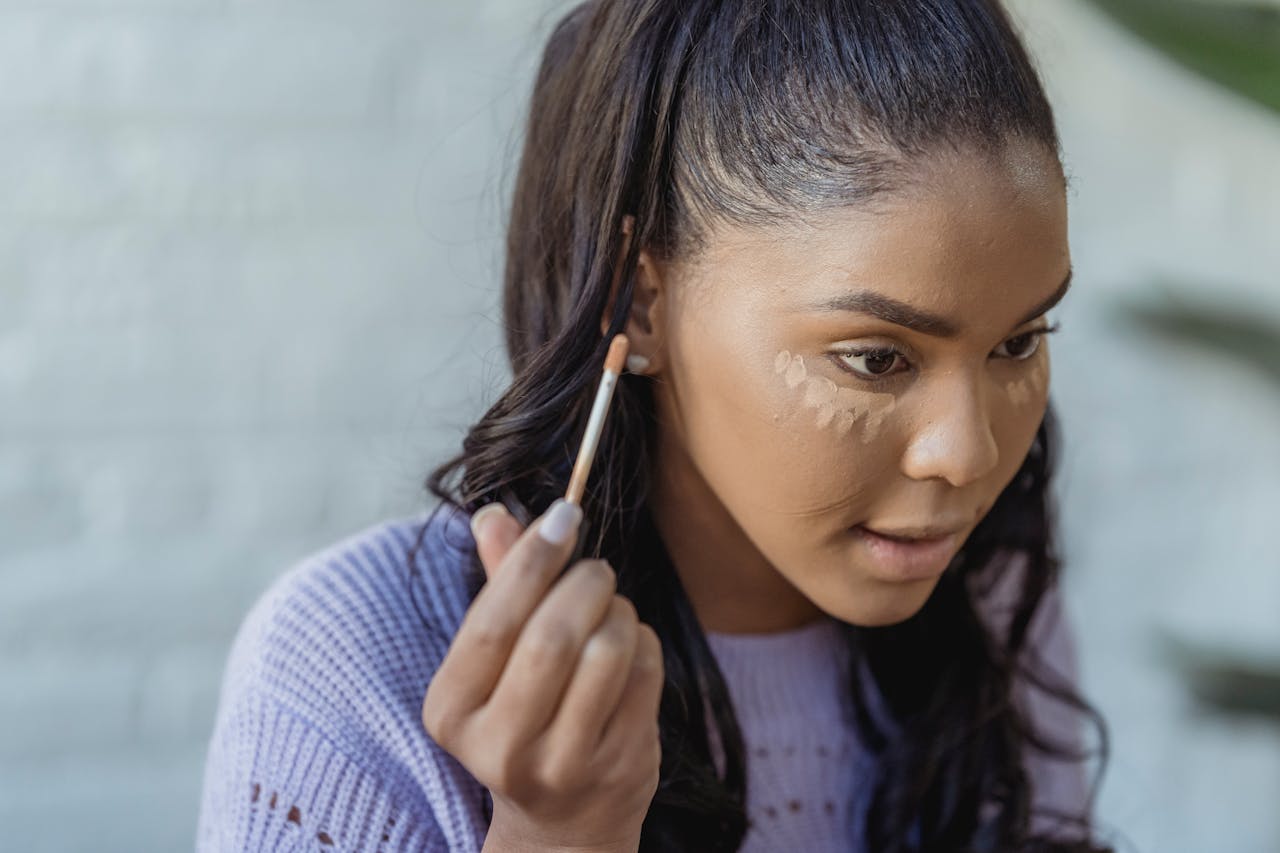
How to apply concealer without creasing: the clean, repeatable method
Most creasing isn’t the concealer’s fault. It’s thickness, placement, and bad lighting. The under-eye is thin, it moves constantly, and heavy layers settle. The fix is simple but precise: hydrate, micro-layer, test in the right light, and press-set before lines form. Below is a seven-step routine, a lighting explainer, formula choices by skin type, and a quick rescue if creases show up later.
⚡ PRO INSIGHT: If you can see texture from an arm’s length in bright neutral light, it will look worse outside. Fix it before you set.
The 7-step crease-proof routine
| Step | What to do | Why it prevents creases |
|---|---|---|
| 1) Hydrate, not grease | Tap a pea-sized amount of lightweight eye gel or moisturiser and let it absorb fully. | Hydrated skin flexes better; humectants like hyaluronic acid reduce dryness that cracks makeup (Harvard Health, 2024). |
| 2) Correct sparingly | Press a tiny amount of peach or salmon corrector only on the darkest zones. | Colour correction reduces how much concealer you need, so less product can settle. |
| 3) Place low | Dot in a small “low triangle” beneath the hollow, then blend upward toward the lash line. | Avoids flooding the fine-line zone with product. |
| 4) Micro-layer | Lay down a thin coat, wait 10–15 seconds, add a second only where shadow remains. | Two thin layers flex better than one thick one. |
| 5) Check in the right light | Face bright, neutral, high-CRI LED light at eye height, directly in front. | Accurate colour rendering exposes micro-creases before they set. CRI ≥90 improves visible accuracy for shade and texture (2025 shade-matching study). |
| 6) Press-set immediately | Smooth once with sponge, then press a whisper of loose powder, or press a fine mist of setting spray with sponge. | Pressing locks the surface without dragging pigment into lines. |
| 7) Long-game care | Night retinoid around the orbital bone and daily SPF. | Retinoids and sun protection improve fine lines over time (Cleveland Clinic; AAD). |
Lighting matters more than you think
Bad light lies to you. Warm yellow bulbs hide purple tones and make you stack coverage. Overheads carve eye bags. Side lamps exaggerate hollows. A bright, neutral, high-CRI source at eye height will show undertone and texture honestly. That is the point of front-facing LED mirrors such as ECLIPSE and ORBIT. You want the light to face you, not the ceiling.
⚡ PRO INSIGHT: When you think you’re done, look up, look left, look right, and smile. Those micro-expressions reveal the lines that appear five minutes later. Smooth and re-press before they set.
Formula chooser by skin type and day demands
| Skin type / Day | Concealer texture | Setting method | Notes |
|---|---|---|---|
| Normal / Office | Thin liquid | Press fine loose powder | Two micro-layers max. |
| Dry / Winter | Hydrating liquid | Mist setting spray, press with sponge | Avoid heavy matte corrector stacks. |
| Oily / Long day | Thin liquid, higher pigment | Press loose powder, small zone only | Blot before top-ups, do not sweep powder. |
| Event / Flash photos | Flexible liquid | Powder + micro mist combo | Test under bright, neutral light for cast. |
Application deep dive: density, tools, placement
Density: Think “thin film”, not “mask”. If your first layer already hides most of the shadow, stop. More product equals more creasing.
Tools: A damp sponge presses product flat without streaks. A micro brush is for the inner corner only. Fingers are fine for warmth, but finish with a sponge to erase edges.
Placement: The low triangle matters. If you start right under the lash line, pigment sinks into lines you are trying to hide. Start lower, blend up, and keep the very top centimetre the thinnest part.
Expert perspective
“Under-eye success is mostly about less product, better placement, and honest light. Correct colour first, keep layers thin, then set while the surface is still flexible.”
— Summary of board-certified dermatology guidance on hydration, SPF, and fine lines via Harvard Health (2024) and treatment options overview at Cleveland Clinic.
Lighting science in plain English
Colour Rendering Index (CRI) describes how accurately a light source shows colours compared to daylight. High CRI helps you judge undertone, corrector balance, and texture. Clinical shade-matching work in 2025 showed that neutral, high-CRI light improves human perception for colour-critical tasks. We can safely infer that the same principle helps makeup decisions for concealer and powder (2025 study).
If your room lighting is poor, you will add extra product to compensate for shadows that don’t exist outside. A mirror such as ECLIPSE keeps things honest at eye level. Travelling? COMPACT 2.0 gives you a portable daylight-balanced check, so you don’t build creases in dim hotel light.
Common myths to drop
- “More coverage means longer wear.” Usually the opposite. Thicker stacks crack faster.
- “Set the whole under-eye.” Set only where creases form. Keep the rest minimal.
- “Go a full shade lighter to look bright.” Too light emphasises texture and looks grey in daylight. Half a shade at most.
- “Swiping powder locks it better.” Pressing beats sweeping. Sweeping moves pigment into lines.
Quick 90-second rescue if creases appear later
- Face a neutral, bright source at eye height.
- Roll a clean sponge to lift lines. Do not rub.
- Press a tiny amount of powder or a single mist of setting spray and press again.
Why a high-CRI LED mirror changes your results
You cannot fix what you cannot see. High-CRI, neutral light shows edge halos, chalkiness, and early creases so you can correct them while the product is still soft. That’s the edge with ORBIT for a full dressing-table setup and ECLIPSE when you want a compact, face-front mirror that keeps tones true.
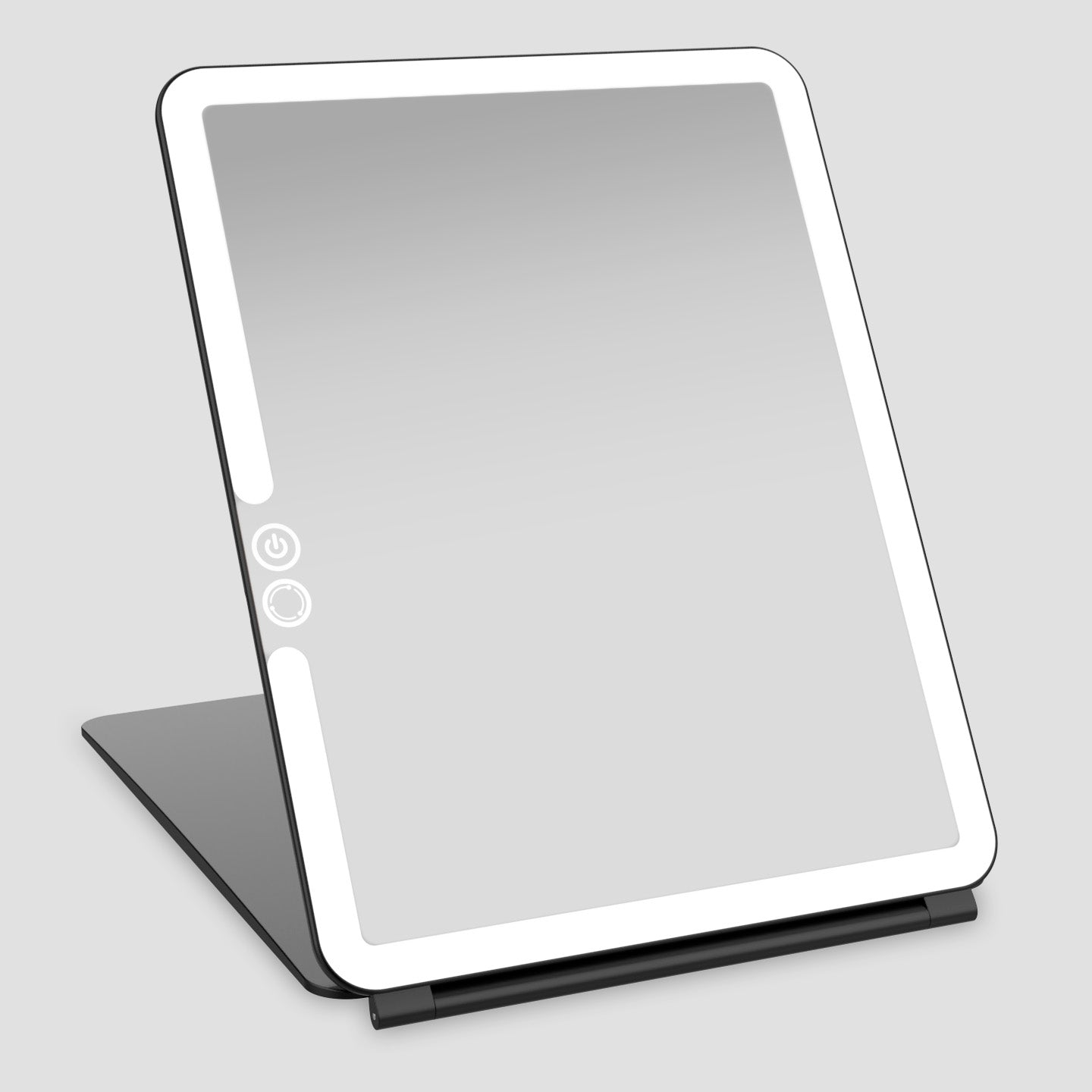
See creases before they happen
ECLIPSE gives you bright, neutral, high-CRI light at eye level, so you can smooth and set while the surface is still flexible. It keeps tones true and texture honest, which is half the battle with under-eyes.
Discover ECLIPSE lighting →FAQs
Should I use eye cream under concealer?
Yes, provided it is lightweight and fully absorbed. Humectants like hyaluronic acid or glycerin help prevent dryness that cracks makeup (Harvard Health, 2024).
Is powder mandatory to stop creasing?
Not always. If you’ve micro-layered well, press a small amount only where lines form. Some prefer a fine mist of setting spray pressed in with a sponge.
Can retinoids stop creasing?
They don’t change makeup directly, but regular nighttime use can reduce fine lines over months, which means less settling (Cleveland Clinic).
Related links
- ORBIT Phantom Black
- COMPACT 2.0 Matte Black
- Browse the LUNA beauty lighting hub
- How to fix patchy foundation with better lighting

Leave a comment
This site is protected by hCaptcha and the hCaptcha Privacy Policy and Terms of Service apply.