

Last updated: 6 February 2026
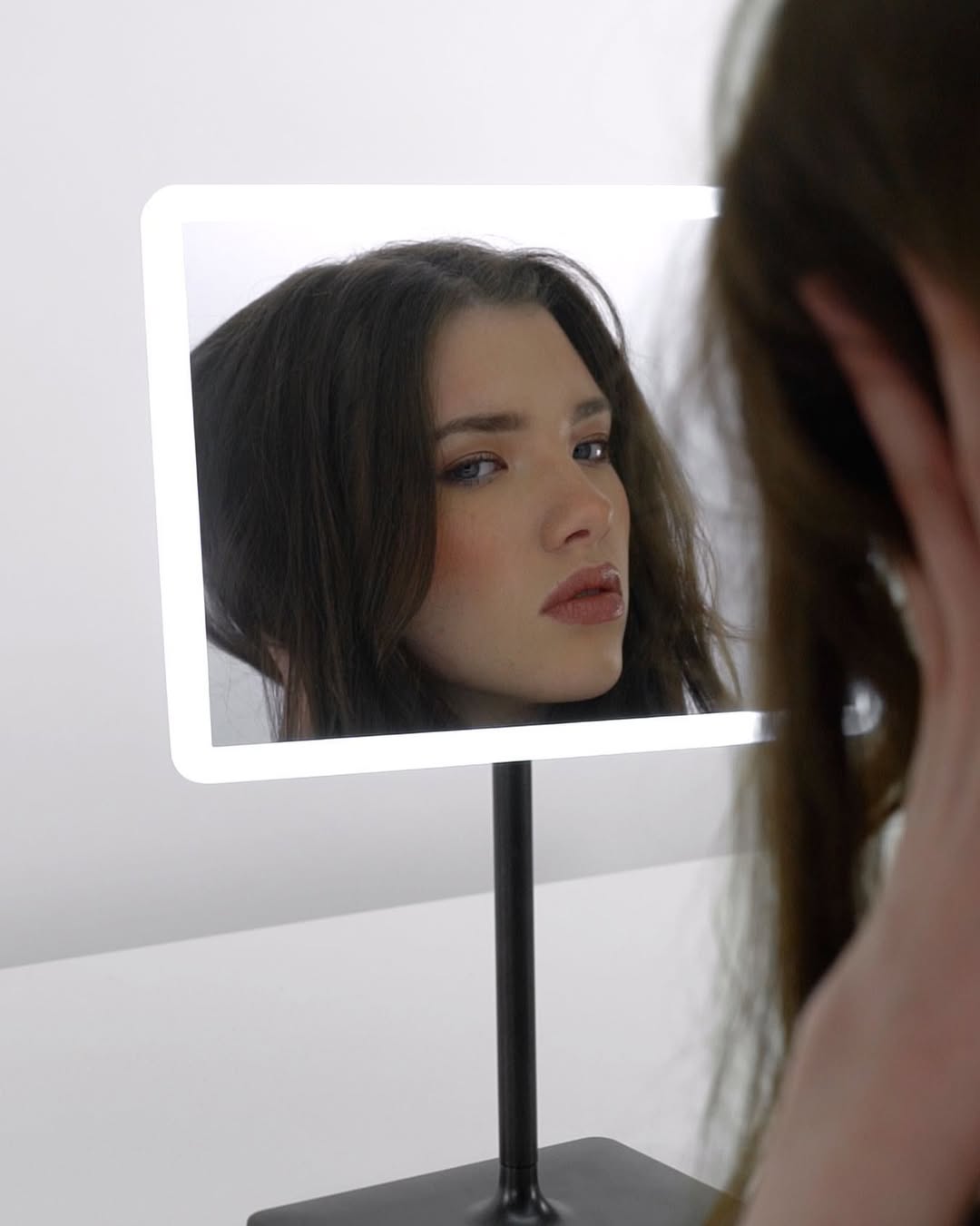
Summary: The best light up mirrors for makeup do one job well: they show you the truth. Prioritise face-level, evenly diffused LED lighting, a daylight or neutral mode for colour matching, enough brightness to avoid “shadow blending”, and (if you need detail work) practical magnification you will actually use.
- Fast rule: Choose daylight or neutral light for applying, then do a quick warm-light check before you leave.
- Specs that matter: colour temperature (Kelvin), colour accuracy (CRI or TM-30), and usable brightness (dimmable).
- Common trap: “bright” lighting is not the same as “honest” lighting. Uneven or overhead light makes you overcorrect.
How to Choose a Light Up Makeup Mirror That Actually Matches Daylight

Most “bad makeup days” are lighting days. If your bathroom light is warm, overhead, or mixed with daylight from a window, it can hide texture, shift undertones, and trick you into adding more product than you need. The result is predictable: foundation that looks fine at home, then too heavy, too orange, or oddly grey everywhere else.
This refresh keeps the original media URLs intact and updates the guide with cleaner decision rules, more precise spec explanations, and a few newer LUNA deep-dives you can use if you want to go further (especially for daylight matching and filming).
1) Start with the problem you are trying to solve
Different routines need different “truth checks”. Before you shop, pick the scenario that causes your most frequent misses:
| Your biggest pain point | What to prioritise | What to avoid |
|---|---|---|
| Shade looks different outside | Daylight/neutral mode + colour-accurate LEDs | Warm-only bulbs, mixed lighting (window + warm lamp) |
| Over-blending or muddy makeup | Even, face-level light and dimming control | Overhead spots that cast under-eye shadows |
| Precision tasks (liner, brows, contacts) | Practical magnification (and stable lighting) | Tiny mirrors that wobble or glare |
| Filming or Zoom-friendly makeup | Soft, front-facing white light + stable brightness | Golden hour lighting, harsh top light |
If you are building a more “studio-like” setup at home, the newest deep dive on professional makeup lighting at home breaks down placement, diffusion, and why a single “hero light” is usually better than a messy mix of bulbs.
⚡ PRO INSIGHT: If the light source is above your head, you will almost always over-correct under the eyes and around the nose. Face-level light is not just flattering, it is functional.
2) Colour temperature: pick one “truth mode” you can repeat
Colour temperature (CCT) is measured in Kelvin (K). For makeup, you want at least one mode that behaves like daylight or neutral indoor light, then (optionally) a warm check for evening environments.
| Lighting mode | Kelvin range | Best used for | Common mistake |
|---|---|---|---|
| Daylight | 5000–6500K | Shade matching, base makeup, redness/undertone checks | Using it too dim and thinking you need more coverage |
| Neutral white | 3500–4500K | Blending edges, brows, detail work without colour bias | Mixing neutral with warm bulbs nearby |
| Warm | 2700–3000K | Evening “sanity check” (restaurants, lamps, candles) | Doing the whole routine warm-only, it hides errors |
If you want a practical framework for consistency, the newer guide on morning sunlight vs LED skin checks explains why “repeatable lighting” beats “pretty lighting”, especially when you are judging small changes over time.
3) Colour accuracy: CRI is a start, TM-30 is better when you care about reds
CRI (Colour Rendering Index) is the familiar shorthand, but it is not the whole story. Two lights can claim a high CRI and still render certain shades differently. That matters for lipstick, blush, redness, and anything where you are trying to judge undertones.
If you want the deeper explanation, the Illuminating Engineering Society’s TM-30 standard was created to address CRI’s blind spots by giving a fuller view of colour rendition. You can read an overview here: IES TM-30.
Expert note (lighting reality check):
“Natural light is the most ideal, as that's how you would be seen in real life.”
Wanchen Kaiser (co-founder, Glamcor and Riki Loves Riki), quoted in Byrdie.
If you are comparing “daylight-balanced” claims across devices, it helps to understand what daylight actually spans. This explainer on the daylight Kelvin range (and why 5000K is often used for colour-critical work) is a useful reference point: RxPhoto daylight colour temperature guide.
4) Brightness: you want enough light, but you need control
Brightness is where people get lazy. They pick the brightest mirror they can find, then complain it feels harsh. The fix is simple: choose a mirror that is bright enough at the top end, but genuinely dimmable so you can match real environments.
| Routine | How bright to go | Why it works |
|---|---|---|
| Everyday makeup (home, office) | Mid brightness + neutral/daylight mode | Shows edges without forcing heavy coverage |
| Precision tasks (liner, concealer) | Higher brightness, then dim back down | Lets you catch micro-misses before you set makeup |
| Evening check | Lower brightness + warm mode | Stops you leaving with a base that reads too stark |
For quick, practical placement rules (and what to avoid), this guide to lighting direction and soft light is a good reference: Lume Cube: best lighting for makeup.
5) Size, shape, and stability: the boring parts that decide whether you use it
A mirror can have perfect LED specs and still be a waste if you hate using it. The biggest usability levers are:
- Mirror size: enough surface area to see your full face and neckline without leaning in.
- Stable base or stand: wobble ruins precision.
- Adjustable angle: you want the centre of the mirror near eye level when seated, not below your chin.
⚡ PRO INSIGHT: If you find yourself leaning in and out repeatedly, your angle is wrong. Fix the height and tilt first, then decide if you even need more brightness.
6) Magnification: use it for detail, not for doing your whole face
Magnification is a tool for specific tasks, not a “better mirror” in general. If you do brows, eyeliner, contact lenses, lash work, or you are noticing age-related near-vision changes, magnification becomes genuinely useful. If you do not, it can just encourage over-fiddling.
- 1x: do your base, blush placement, and overall balance here.
- 7x (practical detail): brows, liner edges, contact lens insertion, and close-up checks.
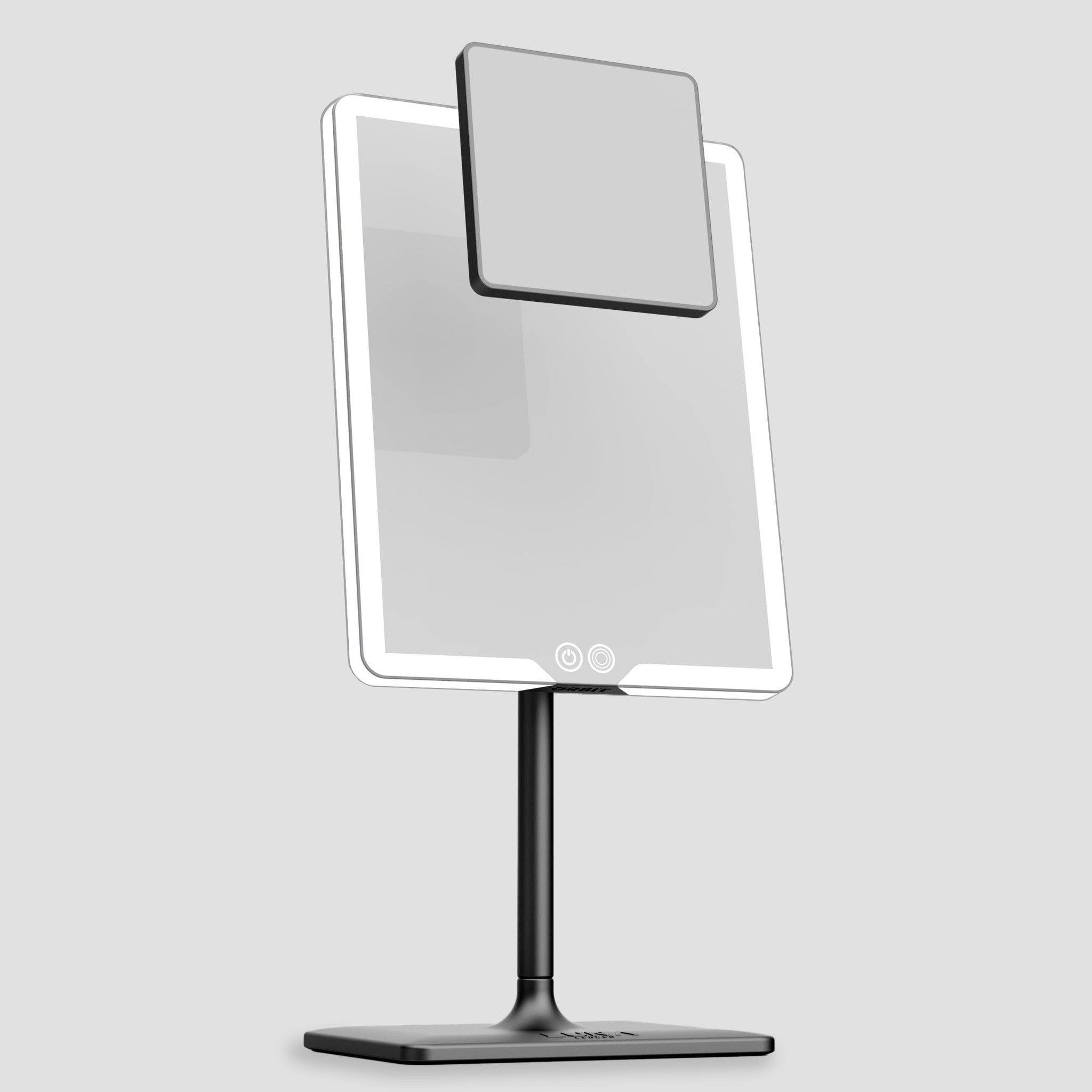
Important correction for this refresh: ECLIPSE does not include magnification. If magnification is a must-have, choose COMPACT 2.0 (built-in 1x + 7x) or ORBIT (with the optional 7x mini attachment), depending on whether you want travel or desktop use.
7) Recommended light up mirrors for makeup (LUNA picks)
| Mirror | Best for | What to know | Here’s Our Favourite |
|---|---|---|---|
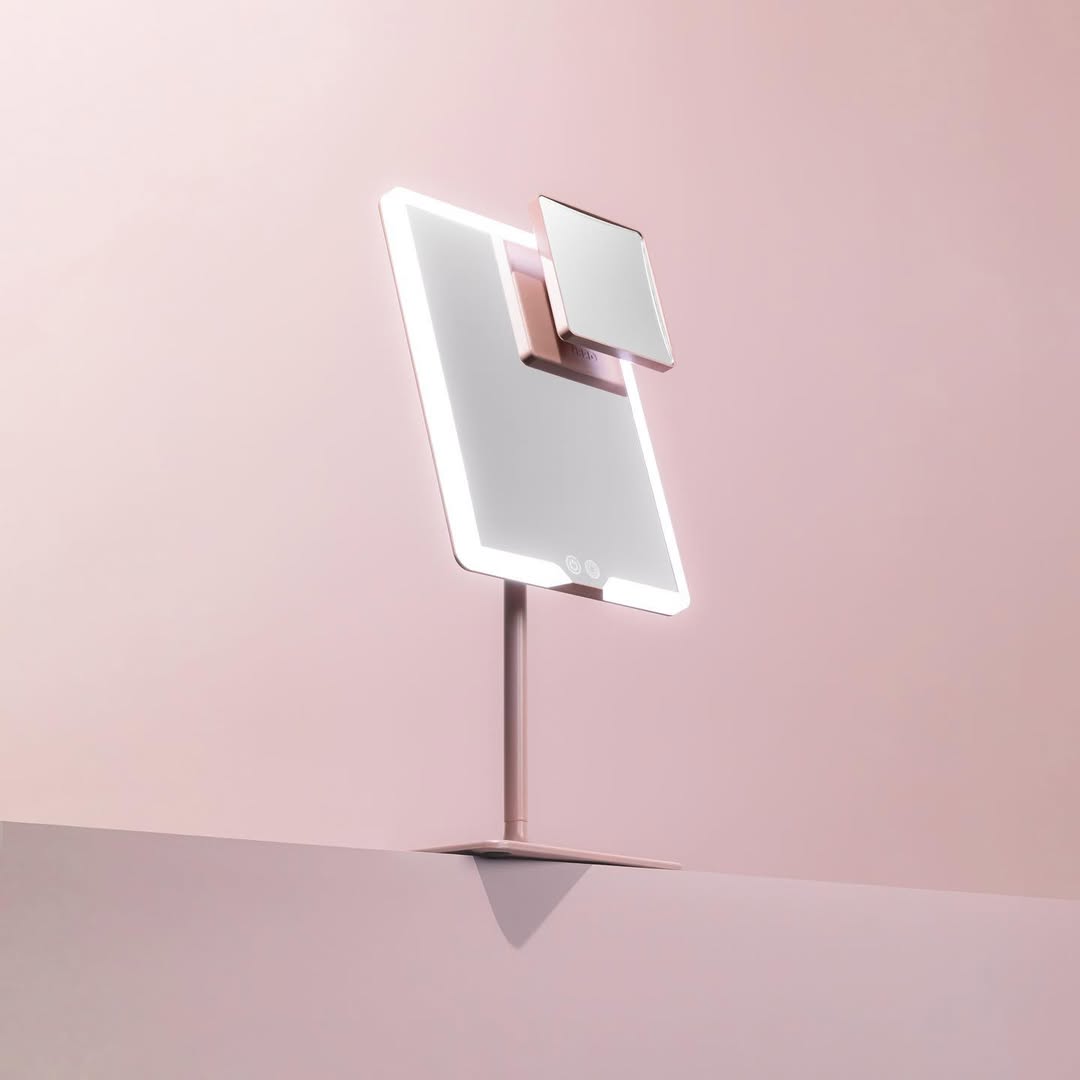
| ORBIT | At-home routines, shade matching, “one mirror that covers most things” | Multi-mode LED lighting, dimmable, optional 7x mini attachment for detail | ORBIT for a repeatable daylight-to-evening workflow without relying on room lighting |
| COMPACT 2.0 | Travel, handbags, touch-ups, gifts | Built-in 1x + 7x magnification, compact and easy to keep consistent on the go | COMPACT 2.0 if you want detail magnification in a genuinely portable format |
| ECLIPSE | Desk, gym bag, travel bathrooms, grooming checks | Fold-flat portability and bright LED lighting, no magnification | ECLIPSE when lighting is the issue and you want a simple, portable fix |
If you are specifically choosing a mirror setup for filming, GRWM content, or video calls, the 2026 guide on the viral GRWM lighting setup explains why “front-facing, soft light” matters more than raw brightness.
8) Where to place your light up mirror (so it actually works)
- Best: face-level light, centred around eye height when seated.
- Good: slightly to one side at 45°, if the light is still soft and even.
- Avoid: strong backlight behind you (window behind your head), it makes you overapply.
- Avoid: overhead-only spots, they cast shadows that mimic texture.
Want a simple test? Hold a hand under your chin. If you see a dark “block” shadow, your light is too high or too directional. Fix the height or add diffusion before you blame your foundation.
9) Sustainability and longevity: what matters, what is mostly marketing
Rechargeable, long-life LEDs are a meaningful upgrade, but the real sustainability lever is whether you keep using the mirror for years. Prioritise build quality, a stable hinge or stand, and lighting modes you actually use, not a long list of features that sound impressive and get ignored.
If you are comparing LED colour quality claims, it helps to know what metrics can miss. This practical breakdown of CRI vs TM-30 is a solid explainer: Yuji International on CRI limitations.
When your makeup “changes” outside, it’s usually your lighting
If you want one consistent reference point, ORBIT gives you face-level LED light with usable modes for daylight matching, detail checks, and an evening sanity check. It is the simplest way to stop chasing different mirrors in different rooms.
FAQs
What is the best light colour for applying makeup?
Daylight or neutral-white lighting is best for applying makeup because it shows undertones and blending more honestly. Warm light is best used as a quick “evening check”, not as your only light source.
How bright should a light up makeup mirror be?
Bright enough that you do not lean in to “find the light”, but dimmable so you can match real environments. If you only have one setting and it feels harsh, you will either overcorrect or stop using it.
Is CRI 90 good enough for makeup?
CRI 90+ is a sensible baseline, but it is not perfect. If you are sensitive to how reds read (lipstick, blush, redness), broader colour rendition metrics like TM-30 can be more informative when available.
Do I need magnification for makeup?
Only if you regularly do detail tasks like brows, liner, lash work, or contact lenses, or you are noticing near-vision changes. Use magnification for detail checks, but do most of your face in 1x so you do not overwork texture.
Does ECLIPSE have magnification?
No. ECLIPSE is designed for portable, reliable LED lighting. If you need magnification, choose COMPACT 2.0 (built-in 1x + 7x) or ORBIT (optional 7x mini attachment).
Why does my makeup look good in my bathroom and bad outside?
Bathrooms often have warm, overhead lighting that hides edges and shifts undertones. Daylight reveals what the bathroom light masks, so a daylight-balanced mirror check prevents “surprises” later.
Related Links
- Professional Makeup Lighting at Home (2026): setup that actually works
- Best Mirror for Influencers (2026): the GRWM lighting setup explained
- Morning Sunlight vs LED (2026): which is better for “truth checks”
- How to Prevent Cakey Makeup With Better Lighting
- How to Fix Patchy Foundation With Better Lighting

Leave a comment
This site is protected by hCaptcha and the hCaptcha Privacy Policy and Terms of Service apply.