

Last updated: 24 February 2026
Summary: Use a makeup mirror with lights to contour your jawline in three passes: map placement, blend downward (not upward), then check the finish in at least two light modes. This guide covers face-shape tweaks, shade selection, and common contour mistakes.
- Choose the right depth and undertone so the shadow reads like bone structure, not bronzer.
- Blend down the jaw and slightly onto the neck for a seamless transition.
- Use lighting checks to prevent over-contouring, patchiness, and “floating foundation.”
Mirror-guided jawline contouring that looks good in daylight
Most jawline contour disasters are not really about technique. They’re about visibility. If you can’t see edges clearly, you’ll either under-blend (hard line), or over-correct (muddy shadow). A lighted makeup mirror is useful because it lets you control your “reality check” before you leave the house.
If you’ve ever done your makeup in one room and then caught yourself in a lift mirror thinking “why is my jaw so… stripey?”, you already know the problem. (If this sounds familiar, you’ll also like our lighting-first fixes for patchy foundation and our guide to preventing cakey makeup with better lighting.)
⚡ PRO INSIGHT: A jawline contour should look like a soft shadow that deepens under the jaw. If it reads as “colour on top of skin,” it’s usually too warm, too dark, or not blended down far enough.
What you need (keep it boring, keep it reliable)
| Tool | Why it matters for jawline sculpting | Quick choice rule |
|---|---|---|
| Makeup mirror with lights | Lets you check blending under different colour temperatures and brightness levels before you leave. | Pick adjustable lighting, so you can test “daylight” vs “warm evening.” |
| Contour product (cream or powder) | Creates the shadow under the jaw. Wrong undertone turns “shadow” into “tan stripe.” | Choose neutral/cool-leaning for shadow; avoid very warm bronzers as “contour.” |
| Blending brush or dense sponge | Blending direction is everything for jawline. You need control, not fluff. | Use a medium-dense brush for powders, or a slightly damp sponge for creams. |
| Translucent or light setting powder (optional) | Locks in cream contour and reduces transfer, especially along the jaw/neck. | Use minimal product to avoid texture emphasis. |
Hygiene note that people ignore until their skin complains: if you’re using sponges or brushes frequently, clean them on a schedule. Cleveland Clinic’s dermatology guidance breaks down cleaning frequency by brush type and product (wet vs dry). See their brush-cleaning guide.
Set up your mirror lighting before you touch contour
Here’s the simple rule: you want lighting that helps you see edges without exaggerating texture. ORBIT is designed to support that kind of checking, with lighting modes intended to mimic different environments (warm, neutral, daylight). You can see the exact product details on the ORBIT product page.
| Lighting check | What it reveals | What to fix |
|---|---|---|
| Neutral/bright | Patchiness, over-application, muddy colour | Sheer it out with a clean brush or sponge; add a tiny bit of base product to soften |
| Daylight-style | Whether the contour reads as a shadow (good) or bronzer stripe (bad) | Switch to a cooler contour tone, or reduce warmth with a light dusting of your face powder |
| Warm/evening | Harsh edges you missed in bright light | Blend downward again, especially near the ear and under the chin |
⚡ PRO INSIGHT: A good contour survives a “light swap.” If it only looks good in one lighting condition, it’s not blended enough, or it’s the wrong undertone.
Jawline contour placement (the part people overcomplicate)
You’re not drawing a line on the jaw. You’re building a gradient under it. Think: soft shadow, strongest just under the jawbone, fading as it moves down the neck.
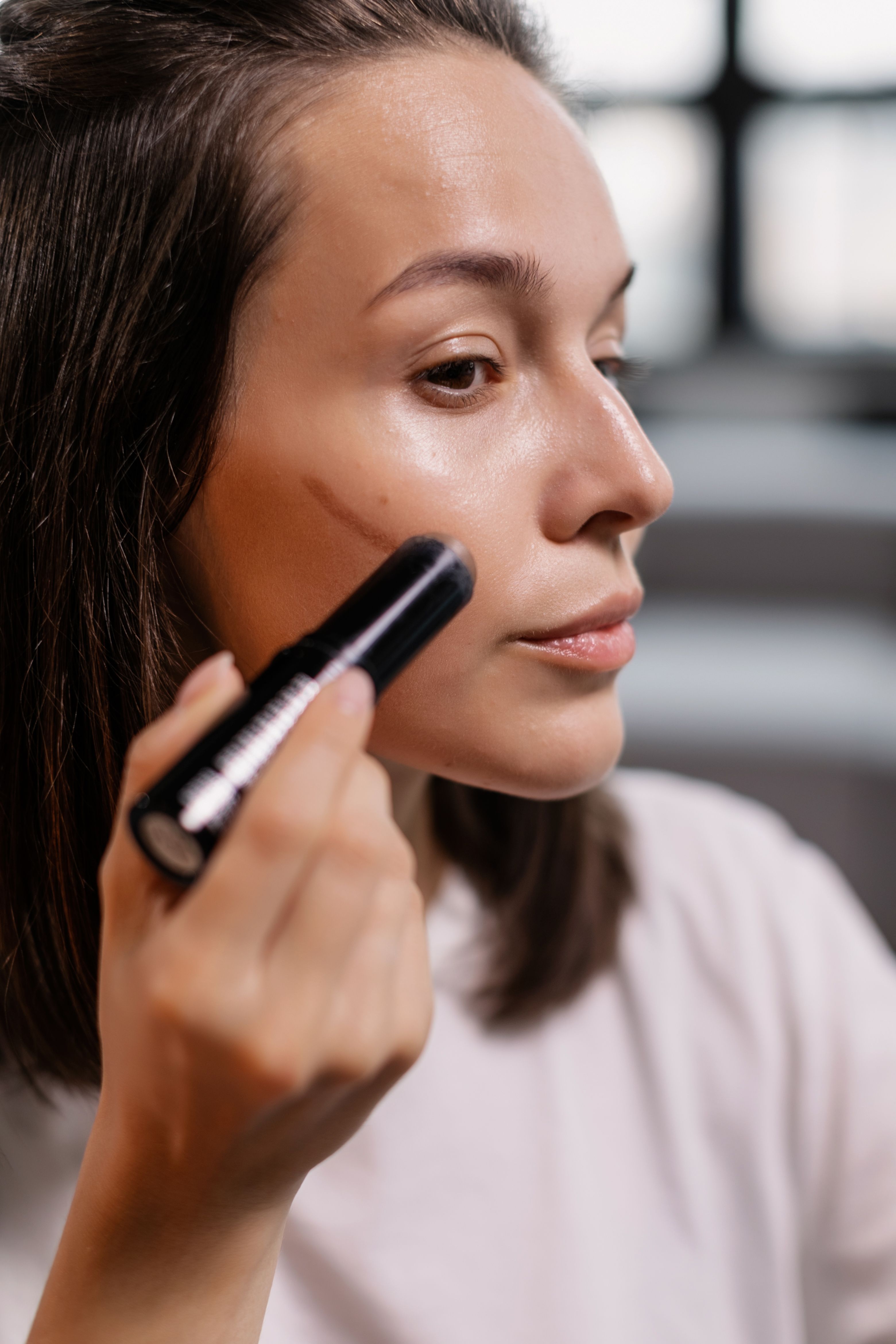
Placement map by face shape
- Round face: Place contour slightly higher under the jaw and extend toward the ear to add definition.
- Square jaw: Keep the contour more concentrated under the jaw angle, then soften forward to avoid sharpening the corners too much.
- Long face: Keep contour lighter and more diffused, focusing on gentle shadow rather than lengthening.
- Soft jawline or “shadow under the chin”: Concentrate product under the jaw and slightly under the chin, then blend down. Avoid placing a dark stripe on the chin itself.
Step-by-step: mirror-guided jawline sculpting
- Start with your base fully blended. If your foundation stops at the jaw, contour will look worse. Blend base down first (our guide on patchy foundation is basically a jawline blending guide in disguise).
- Choose the “shadow” shade. If you’re unsure, go one shade lighter than you think and build. Dark is easy to add, painful to undo.
- Place product under the jaw, not on it. Start near the ear and work forward in short taps or strokes.
- Blend in two directions, but prioritise down. First soften the top edge (near the jaw). Then blend downward onto the neck so there’s no sudden stop.
- Check in a second light mode. Swap lighting and look straight on, then turn your head 45 degrees. You’re hunting for one thing: a visible line.
- Micro-fix, don’t panic-fix. If it’s too strong, use a clean brush, then tap a tiny amount of your base product over the edge to soften.
- Set lightly if needed. A whisper of powder reduces transfer along the jawline and collar. Over-powdering can emphasise texture.
Common mistakes (and how to spot them in the mirror)
- Too warm: reads like bronzer, not shadow. Fix by switching to a cooler contour, or reduce warmth with a light dusting of your face powder.
- Too low: makes the neck look dirty. Fix by blending upward slightly and fading down more softly.
- Hard stop at the jaw: looks painted on. Fix by blending base and contour down the neck, then re-check under neutral light.
- Texture emphasis: heavy powder can highlight dryness. Fix by using less powder and opting for cream contour with a damp sponge.
Expert note (lighting reality check) “Corporate lighting isn't always the best, so the LED light on this mirror … comes in clutch when I need to re-do my lip combo before my next meeting.” Annie Blay-Tettey, associate beauty editor (Allure)
Contouring on mature skin (or just skin that’s tired of heavy makeup)
If your skin is showing more texture than it used to, the best jawline contouring “upgrade” is restraint. Use thinner layers, slightly softer edges, and spend more time on lighting checks than on adding more product.
- Prefer cream contour for a smoother finish, then set only where you crease or transfer.
- Keep the shadow narrower and more diffused. A wide contour band reads heavy fast.
- Do a final check in softer light so you don’t chase perfection and overdo it.
Also: clean tools matter more than people admit. If you’re breaking out around the jawline, it’s worth being blunt with yourself about brush and sponge hygiene. The American Academy of Dermatology warns that dirty tools can contribute to breakouts and irritation, and even provides step-by-step guidance for sponges and brush care. See AAD guidance on makeup and tool hygiene.
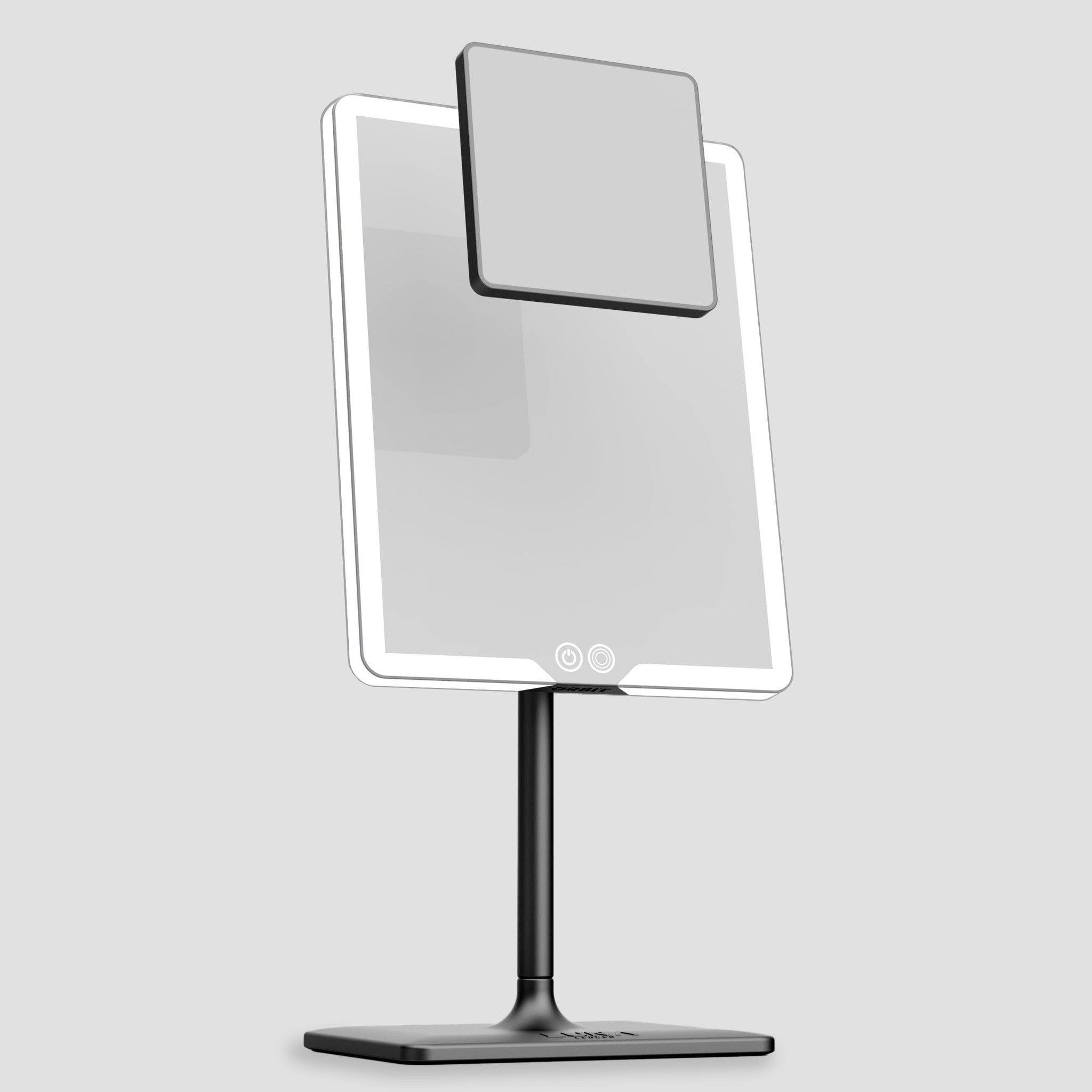
Make your jawline contour look right in every light
ORBIT is built for close-up precision and lighting checks, so your contour reads like a soft shadow, not a harsh stripe. If you contour often, the “light swap” test becomes effortless.
FAQs
Should jawline contour be cool or warm?
For most people, a neutral-to-cool tone reads more like a natural shadow. Warm shades can look like bronzer rather than definition, especially under bright light.
Do I contour on top of my jaw or under it?
Under it. The contour should sit just beneath the jawline so it creates a believable shadow. Then blend down so there’s no visible stop.
Why does my contour look fine at home but harsh outside?
Lighting. One room can hide edges. Using a makeup mirror with lights helps you check in more than one “environment” before you leave.
How do I stop jawline contour transferring onto collars?
Use thinner layers, blend down well, and set lightly where you transfer. Also make sure your base is fully set along the jaw.
Is powder or cream better for jawline sculpting?
Cream can look more skin-like and forgiving, especially on texture. Powder can be great too, but it needs a controlled brush and careful blending.
How often should I clean brushes and sponges if I contour a lot?
It depends on what you use and how often. Cleveland Clinic dermatology guidance suggests weekly cleaning for brushes used with wet products, and more frequent washing for eye-area tools. Sponges need extra attention because they hold moisture. See their recommendations here: How to clean your makeup brushes.



Leave a comment
This site is protected by hCaptcha and the hCaptcha Privacy Policy and Terms of Service apply.