
Build a Travel Skincare Kit That Survives TSA, Dry Air, and Bad Bathroom Lighting
Most people do not need more products on a trip. They need fewer decisions. When your routine is built like a system, you pack faster, waste less, and your skin behaves more predictably across flights, air-con hotels, winter city breaks, or humid beach weeks.
The 6-piece capsule, minimal but complete

Think in functions, not brands. Each item earns its place by solving a travel problem: low humidity, inconsistent cleansing conditions, and disrupted sleep. Dermatologists quoted by ELLE are blunt about in-flight routines: keep it clean, keep it minimal, and do the “real” routine before you board and once you land.
| Capsule slot | Why it matters when travelling | Travel format that behaves | Use it like this |
|---|---|---|---|
| Cleanse | Removes SPF and grime without stripping (over-cleansing often backfires in dry air). | Solid bar, powder-to-foam, or 50–75ml gentle gel | Evening always, morning only if you need it |
| Hydrate | Stops tight, dull “travel skin” in dry cabins and air-conditioned rooms. | Mini serum, essence, or mist with humectants | After cleansing, plus a light top-up if tight |
| Seal | Locks hydration in, supports the skin barrier in harsh environments. | 30–50ml cream, ideally in an airless pump | Morning and night, extra after showers |
| Protect | Broad-spectrum SPF prevents “holiday damage” that sets back your skin for weeks. | 50ml SPF tube (avoid decanting if possible) | Every morning, reapply on outdoor days |
| Treat | One familiar active only. Travel is a bad time to start something harsh. | 10–15ml vial or single-use pods | Night only, pause if irritated or sun-heavy trip |
| Rescue | Fixes predictable problems: lips, raw patches, surprise spots. | Lip balm, hydrocolloid patches, small barrier balm | As needed, especially after flights |
Decanting and TSA liquids, the no-drama approach
For US travel, treat the TSA’s 3-1-1 liquids rule as the default: containers up to 3.4oz/100ml, all liquids in one quart-size bag. Other airports may differ, but if your kit works within 3-1-1, it travels well almost anywhere.
⚡ PRO INSIGHT: Do not decant “unstable” actives into random jars. Some formulas degrade with air and light, and rushed decanting can contaminate product. If it is finicky, buy a travel size or use single-use pods.
| Product type | Container that behaves | Leak and label tip |
|---|---|---|
| Cleanser | Flip-cap bottle, 50–75ml | Tape the cap, write “Cleanser AM/PM” |
| Moisturiser | Airless pump or small jar | Use a clean spatula, label skin type |
| Hydrating serum | Dropper vial, 10–15ml | Avoid sunlight, double-bag in liquids pouch |
| SPF | Original tube (preferably 50ml) | Keep label intact, counts as a liquid |
Why travel makes skin feel drier (and how to stop it)

Airplanes and hotels are dry enough to change how your skin looks and feels. One flight study measured cabin humidity dropping below 10% and recorded a rapid fall in skin hydration during long-distance flights (PubMed). You do not need to panic about the science. You just need to build your kit so dryness does not derail your routine.
Two reliable moves:
- Layer, don’t chase: hydrate, then moisturise, then spot-seal with a small amount of barrier balm on the places that crack first.
- Reduce triggers: avoid long hot showers, and moisturise immediately after bathing. The NHS explains that emollients work by forming a protective film to trap moisture.
Hotel room fix in 3 steps (takes 90 seconds)
- Step 1: splash or mist, then apply your hydrating layer while skin is still slightly damp.
- Step 2: moisturiser over the top, focusing on cheeks and around the mouth where dryness shows first.
- Step 3: a rice-grain amount of barrier balm on lips, sides of the nose, and any rough patches.
If you are wondering whether the air is really that dry, beauty editors and dermatologists regularly point out that aircraft cabins can drop to ultra-low humidity, and hotel air-conditioning can keep rooms below comfortable levels too (Who What Wear). You do not need to buy gadgets to cope. The point is to treat dryness as a predictable input and pack for it.
Expert quote
“Frankly, I think masks on the plane are disgusting,” says board-certified dermatologist Dr. Karan Lal.
Why it matters: if you cannot cleanse properly, “extra steps” can turn into irritation or breakouts.
In-flight skincare that won’t backfire
Keep the “in-flight” routine to touchless or low-contact steps. ELLE’s dermatologist panel recommends keeping products to a minimum because you cannot properly cleanse on a plane and the environment is not exactly clean (source).
- Before boarding: cleanse, moisturise, and apply SPF for day flights.
- Mid-flight: hydrating mist, lip balm, hand cream. That’s enough.
- After landing: gentle cleanse, moisturise, then decide if you use your one treatment.
⚡ PRO INSIGHT: If you wear contact lenses, pack lubricating drops and consider switching to glasses on long flights. Dry air makes lenses feel worse, and you rub your eyes more without noticing.
Trip-length “scaling” that avoids overpacking
Do not scale the whole kit. Scale only what runs out: cleanser and SPF.
- Overnight: cleanse, moisturise, SPF, lip balm, one rescue item.
- Weekend: add your hydrating serum/mist and a few hydrocolloid patches.
- Week plus: bring larger SPF, and a richer night moisturiser if the climate is cold or dry.
Optional tools that make the routine easier (lighting included)

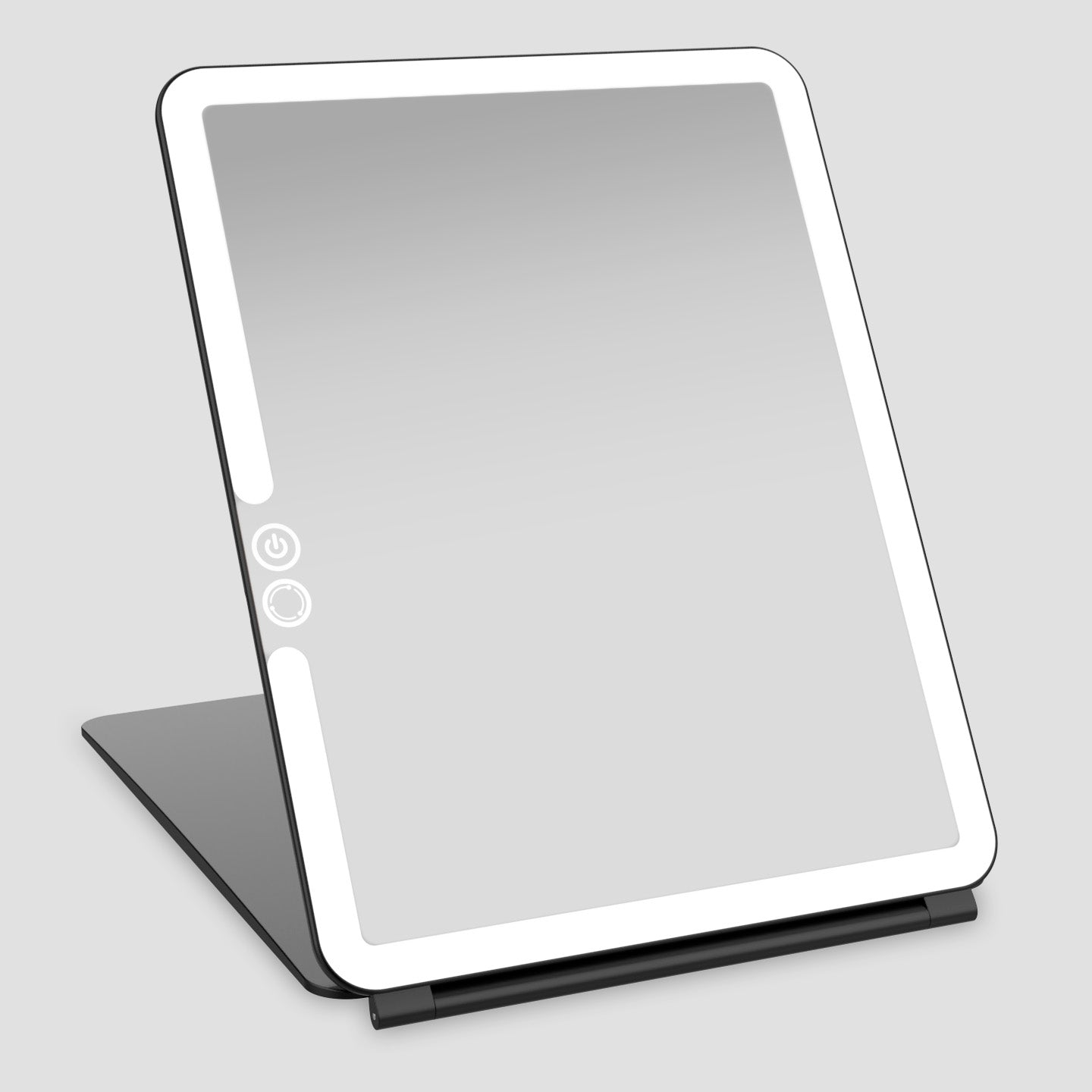
Consistency is easier when you can actually see what you are doing. Hotel bathrooms often use warm, uneven lighting that hides dryness until makeup starts to cling. If you already travel with a mirror, it is worth choosing one that reduces lighting surprises rather than amplifying them. If you want the wider travel-lighting breakdown, see our guide to travel makeup mirror secrets.
| Tool | Why it helps | Here’s Our Favourite |
|---|---|---|
| LED travel mirror | Helps you apply product evenly and avoid over-rubbing irritated areas. | ECLIPSE, consistent hotel-bathroom lighting |
| Microfibre face cloth | Reliable cleanse without relying on hotel towels. | Fast-drying, so it does not get musty |
| Mini sanitiser | Cuts down “dirty hands on face” during travel days. | Fragrance-free if you have reactive skin |
The 60-second pre-flight checklist
- Pack your liquids bag first, and treat 100ml as the default safe limit for carry-on.
- Put SPF, lip balm, and your rescue item where you can reach them mid-journey.
- Skip new actives. Travel is not the week to start a strong retinol.
- Do the full routine before boarding and after landing, not in the middle.
When hotel bathroom lighting throws you off
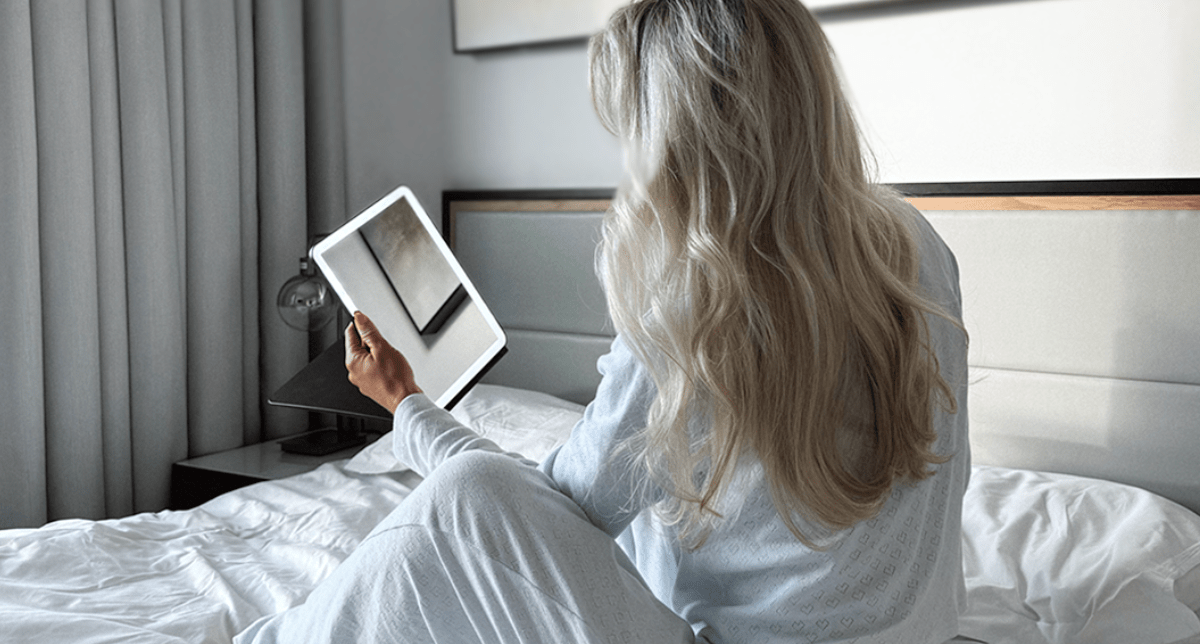
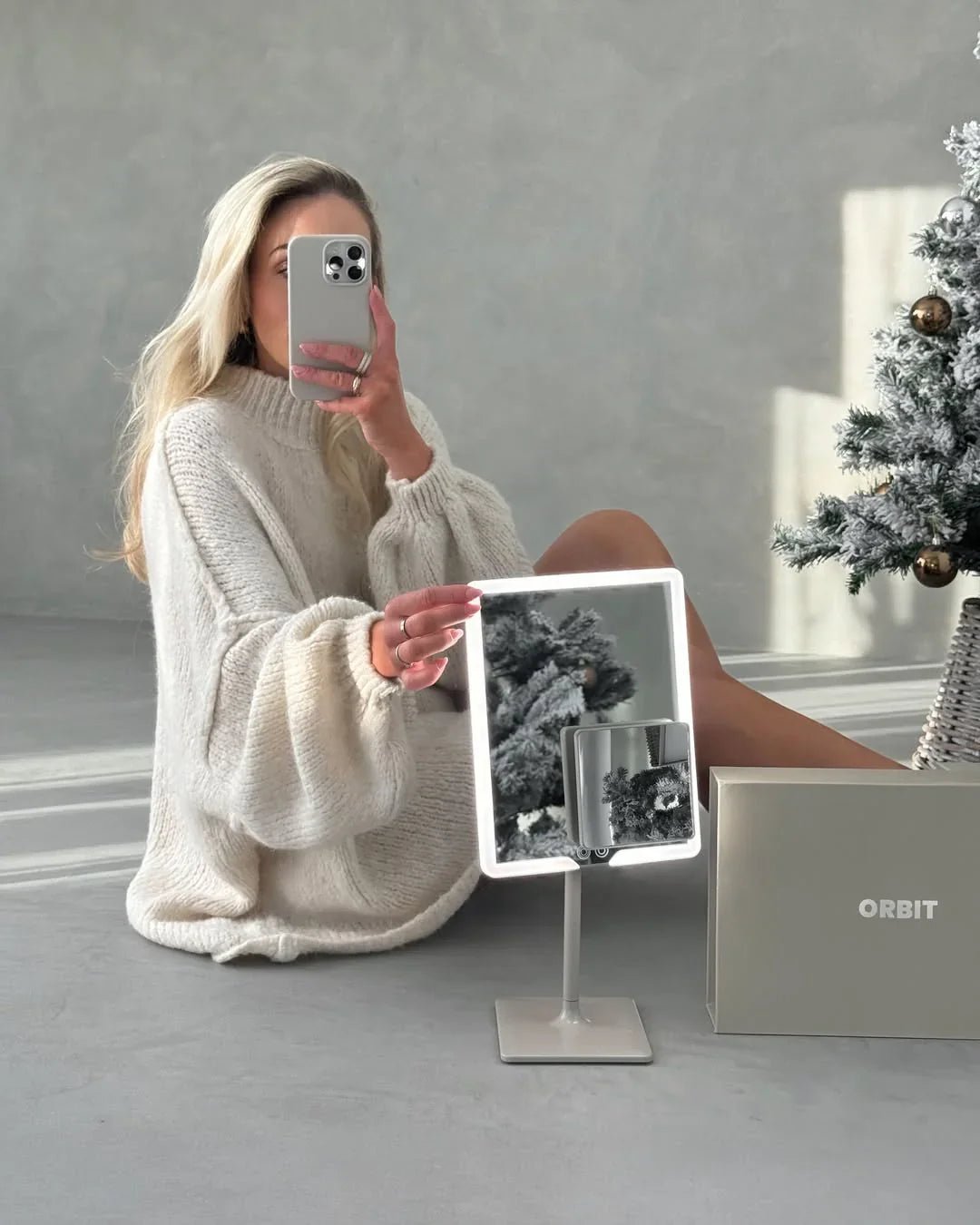
A travel skincare kit is only half the battle if you cannot see dry patches clearly. ECLIPSE gives you consistent lighting in hotel rooms, so you apply more evenly and rub less, which matters when skin is already stressed from travel.
Discover ECLIPSE lighting →FAQs
How big should a travel skincare kit be?
Small enough to repeat. Cleanse, hydrate, seal, SPF, one treatment, one rescue. If it needs a second bag, it is probably doing too much.
What is the safest way to pack liquids for carry-on?
Assume 100ml/3.4oz per container and one quart-size liquids bag (TSA 3-1-1), then check the airport rules if you are flying internationally.
Should I do skincare on the plane?
Keep it minimal. Mist, lip balm, hand cream. Save cleansing, moisturising, and treatments for before boarding and after landing.
How do I stop my skin feeling tight in a hotel room?
Hydrate, moisturise, then spot-seal dry areas with a little barrier balm. Avoid long hot showers and moisturise straight after bathing.
Can flying cause breakouts?
Yes. Dry air, stress, and disruption can trigger “dehydrated breakouts”. Keep cleansing gentle, moisturise consistently, and use hydrocolloid patches for surprise spots.
Should I travel with retinol or acids?
Only if you already tolerate them. Consider pausing on travel days, especially if you will be in the sun or your skin is easily irritated.
What is the easiest way to avoid overpacking?
Use the same containers and capsule every trip, then add only one trip-specific extra (more SPF for beach, richer moisturiser for winter).
Related links
- Compact LED Mirror for Travel: Small but Mighty
- Best Travel Makeup Mirrors 2025: Picks That Actually Travel Well
- Travel Makeup Mirror Secrets: Good Lighting Anywhere
- How to Prevent Cakey Makeup: Lighting Tips Included
- How to Fix Patchy Foundation With Better Lighting
- TSA: liquids, aerosols and gels rule
- NHS: emollients and how they work
- Study: skin surface hydration decreases during long flights
- Dermatologists on plane skincare routines (ELLE)

Leave a comment
This site is protected by hCaptcha and the hCaptcha Privacy Policy and Terms of Service apply.