

A practical winter skincare routine you’ll keep — seven mini rituals
Harsh weather outside, central heating inside… and suddenly your skin feels tight, looks dull, and makeup clings to dry patches. The fix isn’t a 14-step overhaul — it’s a small set of routines you can repeat without thinking. Below, you’ll find seven evidence-informed habits that take minutes, plus lighting tips to make makeup checks faster and more accurate. We’ve linked to credible resources like the American Academy of Dermatology and the NHS so you can sanity-check anything new you add.
Winter quick-glance cheat sheet
| Routine | When | Time | Why it works |
|---|---|---|---|
| Cleanse → moisturise → seal | AM & PM | 3–4 min | Gentle cleanse + fast moisturising supports the barrier in dry air (AAD tips). |
| Short, lukewarm showers | Daily | 5–10 min | Avoids hot-water dehydration and itch (NHS guidance). |
| SPF still counts in winter | AM | 1 min | UV exposure persists on cold/overcast days (see AAD survey). |
| Humidify the bedroom | Night | Set-and-forget | Dry indoor air worsens winter dryness (see AAD cold-weather advice). |
| Hands & lips micro-care | Carry-on | 30 sec | Targeted emollients prevent cracks and chapping (AAD). |
| Lighting-aware makeup check | AM & PM | 1–2 min | At-face, even light shows true tone — switch warm/neutral/daylight. |
| Travel-proof kit | On-the-go | Grab-and-go | Pocket mirror + mini emollients keep you topped up. |
1) Cleanse → moisturise → seal (the 3-minute rule)
Winter is when your barrier needs the most love. Use a mild, fragrance-free cleanser; pat dry; then get moisturiser on within three minutes to trap remaining water. If your face feels tight mid-morning, layer a hydrating serum (hyaluronic acid or glycerin) under a cream. If cheeks or around the nose flake, spot-treat with a richer ointment overnight. For step-by-step self-care, the AAD dry-skin guide is a solid reference.
Barrier-friendly ingredients cheat sheet
| Type | Examples | What they do |
|---|---|---|
| Humectants | Glycerin, hyaluronic acid, urea | Attract water to the outer skin layers |
| Emollients | Squalane, shea butter, fatty alcohols | Smooth roughness; improve flexibility |
| Occlusives | Petrolatum, lanolin, waxes | Seal in moisture; reduce TEWL |
| Barrier helpers | Ceramides, cholesterol | Support the skin’s lipid matrix |
2) Short, lukewarm showers + body “moisture sandwich”
Hot water strips lipids; long showers compound it. Keep it warm, keep it short. Post-shower, apply a light body lotion while skin is damp, then “seal” elbows, knees and shins with a small amount of ointment. If you struggle with itch, the NHS advice on mild soaps and lukewarm baths is practical and easy to follow.
3) SPF still matters in winter
Yes, really. UVA penetrates clouds and glass, and UV exposure bounces off bright surfaces (pavement, snow). Build a broad-spectrum SPF 30+ into your morning, then re-check the finish under neutral light so it sits evenly over moisturiser. The AAD found many people skip sun care in winter — your competitive advantage is simply doing it.
4) Hands and lips — tiny routines, big payoff
Winter wrecks hands and lips first because they’re exposed and frequently washed. Keep a pump moisturiser at every sink; apply a pea-sized amount after washing. For lips, bland occlusives (petrolatum, lanolin) are still the gold standard. Keep a mini at your desk and bedside so you actually use it. More practical tips: AAD’s relief for dry skin.
Video: Board-certified dermatologists on dry-skin basics for cold weather.
5) Night-time humidity support
Cold, dry air outdoors and heated air indoors both reduce humidity. A cool-mist humidifier in the bedroom can ease overnight dryness; you’ll notice your morning cleanse feels gentler and makeup base grips better. See AAD cold-weather guidance for more context. If you wake with a dry throat or tight cheeks, that’s your nudge to start.
“In winter, I recommend patients consider adding a filtered, cool-mist humidifier in their bedrooms… it can help treat dryness and prevent it.” — American Academy of Dermatology
6) Lighting-aware makeup checks (so your base looks right outside)
Lighting changes how makeup reads. Under warm bathroom bulbs, bronzer looks richer; in daylight, it can look cooler. The easiest fix is a mirror with adjustable modes and even, face-level light. Set your base under neutral (~4000K) for accuracy, then quickly preview warm and daylight — if it looks good in both, you’re safe in almost any environment. For precision, try ORBIT at home and ECLIPSE for desk or travel.
Lighting settings to sanity-check undertones
| Mode | When to use it | What you’re checking |
|---|---|---|
| Neutral (~3500–4500K) | Set base and concealer | True-to-tone shade matching; texture visibility |
| Warm (2700–3000K) | Evening looks | Bronzer depth; blush warmth |
| Daylight (~5000K) | Outdoor/office preview | Edges around jaw/hairline; SPF cast |
7) The travel-proof winter kit
When your day is back-to-back, micro-routines win. Build a small pouch with: (1) fragrance-free hand cream, (2) lip balm, (3) mini face cream for cheeks/elbows, (4) COMPACT 2.0 for lighting-aware checks. That’s it — no excuses. If you’re often at the gym or office, stash a second kit in your locker or desk.
Moisturiser textures — when to use which
| Texture | Best for | Why |
|---|---|---|
| Lotion | Mild dryness, daytime layers | Lightweight, sinks fast under SPF/makeup |
| Cream | Moderate dryness, face & body | Balanced occlusion for day or night |
| Ointment | Severe dryness, lips, knuckles | Maximum barrier support in harsh weather |
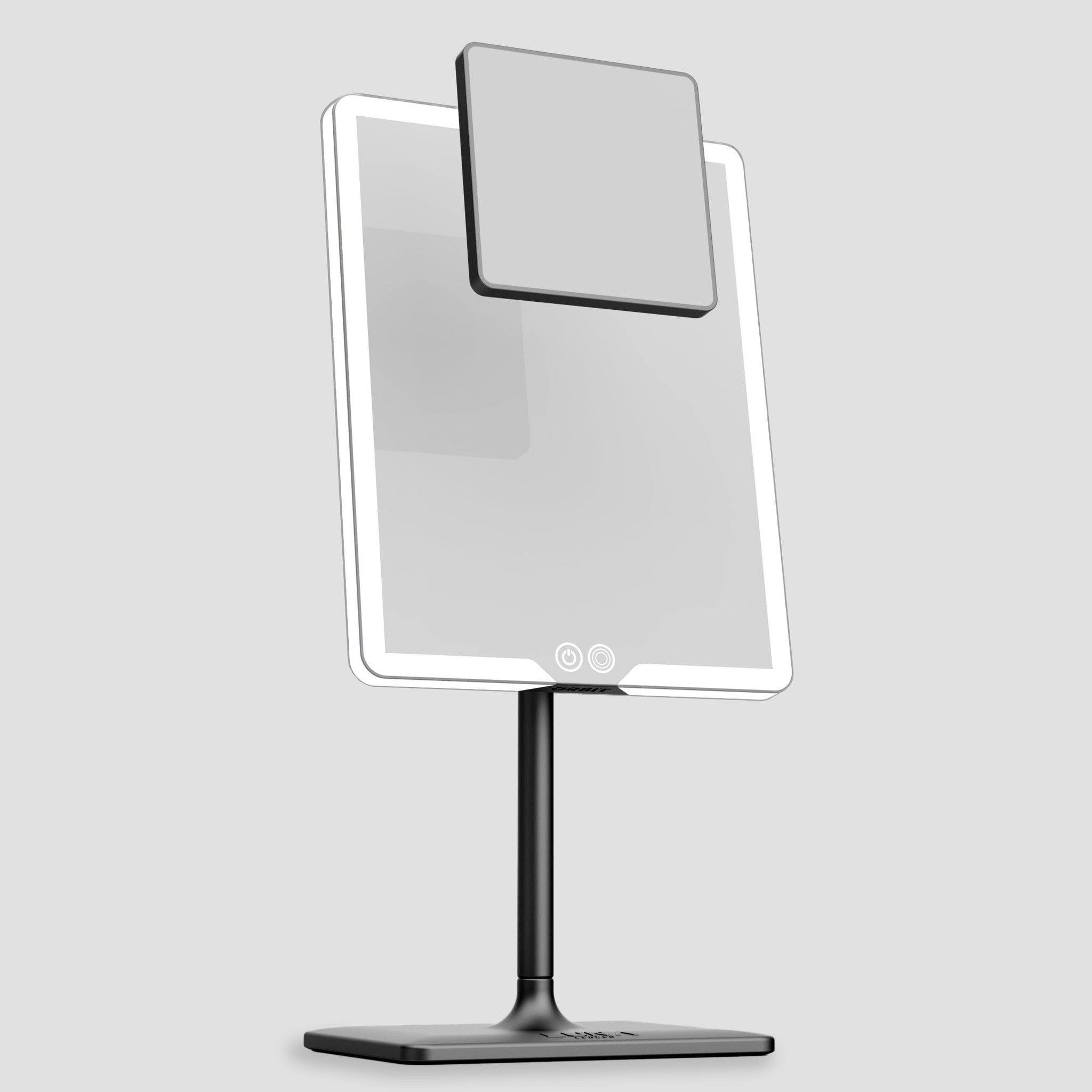
ORBIT brings high-CRI LEDs and three light modes to your dresser — set neutral for accuracy, then preview warm or daylight before you head out.
FAQs
Do I really need SPF in winter?
Yes. UVA travels through clouds and glass, so apply a broad-spectrum SPF 30+ in the morning. Re-check the finish under neutral light so it sits evenly.
Are hot baths bad for dry skin?
Very hot water strips oils and can worsen itch. Keep baths/showers lukewarm and shorter than ten minutes; moisturise straight after.
Should I switch to thicker moisturisers?
Most people benefit from creams or ointments in winter, especially on hands and lips. Reapply often; spot-treat problem areas at night.
Is a humidifier worth it?
Yes if your indoor air is dry. A cool-mist humidifier in the bedroom reduces overnight tightness and makes morning routines easier.
Related links
- AAD — Dermatologists’ top tips for relieving dry skin
- AAD — Cold weather and your skin
- NHS — Itchy skin self-care
- LUNA — ORBIT mirror
- LUNA — ECLIPSE mirror
- LUNA — COMPACT 2.0


Leave a comment
This site is protected by hCaptcha and the hCaptcha Privacy Policy and Terms of Service apply.