

Last updated: 17 May 2026
How to Check Fine Facial Hair After 45 Without Overdoing It
Chin hair after 45 can feel oddly personal, but it is not rare, dirty, or a sign that your routine has failed. NHS guidance on excessive hair growth notes that lighter, finer facial hair can become more common as women get older, particularly after menopause. The important distinction is between normal fine hair, a few thicker chin hairs, and sudden heavy growth that deserves a medical check.
This guide is about calm pointwork on a woman’s face: chin, jawline, upper lip, brow edges, the visible nostril line and the outer ear. No panic, no magnification spiral, no sitting under harsh bathroom light until everything looks like a problem. Professional makeup artists, beauty experts and dermatologists all tend to agree on the boring-but-useful bit: you need consistent light and a steady view before you decide what actually needs removing.
In a hurry? The gentle version
- Use 1x first. Check the whole face at normal distance before chasing one hair.
- Use 7x only for short, precise tasks: one chin hair, one brow stray, one visible edge.
- Trim visible nose hairs, do not pluck or wax inside the nostril.
- For ear hair, only tidy what you can clearly see on the outer ear or entrance area.
- If growth is sudden, dark, heavy, or comes with other symptoms, speak to a GP or clinician.
Quick decision table: what to check, what to avoid
| Area | Best gentle method | Avoid | Mirror check |
|---|---|---|---|
| Chin and jawline | Tweeze isolated thicker hairs after cleansing or a warm shower. | Digging, repeated passes, or chasing every fine vellus hair. | 1x for face balance, 7x for the single hair. |
| Upper lip and peach fuzz | Threading, careful dermaplaning, trimming, or leaving it alone if only visible in harsh light. | Hot wax on irritated or retinoid-treated skin. | Daylight-style light, then step back. |
| Nose edge | Trim only the visible hairs with clean, rounded scissors or a nose trimmer. | Plucking, waxing, or pushing tools deep inside. | Tilt mirror slightly upward, use 7x briefly. |
| Outer ear | Trim visible outer-ear hairs only. | Putting sharp tools into the ear canal. | Side angle, soft light, slow movements. |
Why facial hair can become more noticeable after 45
It is tempting to blame the mirror. Sometimes, though, the mirror is simply the first place you notice a change. The Cleveland Clinic’s guide to chin hair in women explains that hormonal fluctuations through life, including menopause, can change the amount and type of facial hair you notice. A few chin or jawline hairs can sit within normal ageing, while rapid or heavy growth may need medical review.
Mayo Clinic’s hirsutism overview describes hirsutism as extra dark or coarse hair growth in areas such as the face, chest, back or lower stomach, often linked with androgens. That does not mean every chin hair is hirsutism. It means the pattern matters. A few strays are different from a sudden increase, a new dark pattern, acne, scalp hair loss, voice change, or other symptoms.
⚡ PRO INSIGHT: Do your first check in normal 1x view. If a hair only looks obvious under strong magnification and disappears at conversation distance, it may not need removing today.
For close detail after 45
ORBIT makes fine facial checks easier without crowding the mirror
For chin hairs, brow strays, nose-edge trimming and contact lens checks, the safest routine is still 1x first, then close detail only when needed. ORBIT gives you a large lit face view, then a 7x magnification add-on for the single-hair pointwork this article is really about.

The 4-minute facial pointwork routine
This is the routine to keep. It is intentionally short because over-checking is where small grooming becomes skin irritation.
Minute 1: Clean light, clean skin
Start with a clean face and dry hands. Place your mirror at face height, not under the chin, and choose neutral or daylight-style light. The goal is not to make skin look flawless. It is to see hair direction, shadow and texture honestly. If you already use a magnifying setup for brows or lenses, the same 7x magnifying mirror workflow for ageing eyes applies here: normal view first, magnification second.
Minute 2: Map the face in 1x
Look straight ahead. Check the chin, jawline, upper lip, brows and sideburn area from normal distance. Turn your head left and right. This tells you what other people are likely to see. It also stops the classic mistake: designing your whole face under 7x and ending up with a harsher result than you wanted.
Minute 3: Use 7x for pointwork only
Now move into close detail. Isolate one thicker chin hair, one brow stray, or one visible nostril-edge hair. Do not scan the entire face looking for problems. For tweezing, hold the skin gently taut and pull in the direction of growth. For trimming, use clean tools and avoid pressing hard into the skin.
Minute 4: Step back and stop
Return to 1x and check the result from normal distance. If the face looks balanced, stop. This is where celebrity makeup artists and stylists are quietly sensible: they check the overall impression, not every pore under magnification.
“Everyone has a different level of comfort with it.”
- Dr Vinni Makin, Endocrinologist, Cleveland Clinic (2023)
Chin, lip, nose and ear: the calm rules

Chin and jawline
For one or two thicker hairs, tweezing is usually the simplest option. The American Academy of Dermatology’s unwanted hair guidance sets out the common trade-offs across shaving, waxing, depilatories and laser. For mature skin, the practical point is simple: fewer passes, less friction, and no aggressive pulling on irritated skin.
Upper lip and fine facial hair
Fine facial hair after menopause can be more visible under strong light. That does not automatically mean it needs removal. If you choose to treat it, consider threading with an experienced professional, careful trimming, or gentle dermaplaning if your skin tolerates it. Be careful with depilatory creams on the face, especially if your skin is dry, reactive, recently exfoliated, or using retinoids.
Nose-edge trimming
Only trim visible hairs that sit outside or just at the nostril edge. Ohio State Wexner Medical Center recommends cutting protruding nose hairs rather than plucking or waxing, due to the risk of follicle infection or ingrown hairs. This is not the place to be brave. It is the place to be boring and precise.
Outer-ear pointwork
Visible outer-ear hair is less common in women, but it can happen. Cleveland Clinic’s ear hair overview notes that ear hair usually grows on or in the outer ear and can be managed safely. Keep this to what you can see. Do not insert sharp tools into the ear canal.
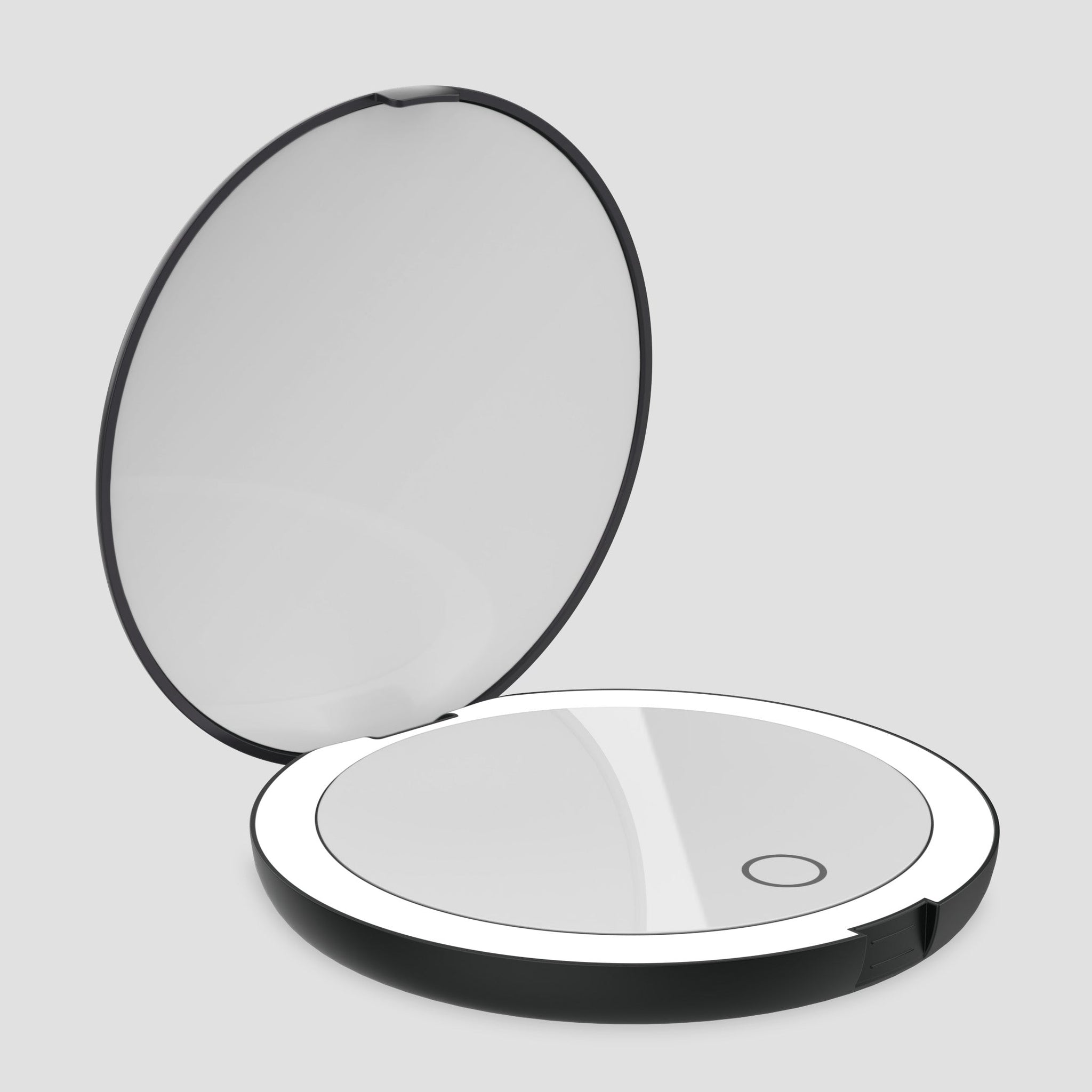
Best for portable precision
COMPACT 2.0 keeps quick facial checks sensible when you are away from the vanity
Use it for travel, handbag checks, contact lenses and tiny touch-ups when the bathroom mirror is not helping. The useful bit is restraint: a 7x magnification mirror for short detail checks, then close it before you start chasing every fine hair.
⚡ PRO INSIGHT: If your skin looks red after one area, stop there. Mature skin often forgives a missed hair faster than it forgives repeated scraping, waxing or tweezing.
Which mirror helps with facial grooming after 45?
The right mirror is not about seeing every flaw. It is about choosing when to see the whole face and when to see detail. If you are already reading about 5x vs 10x vs 15x magnifying mirrors, the useful answer here is moderation. For chin hair women over 50, brows, contact lenses and small grooming checks, 7x is often enough. More zoom can make tiny things feel urgent.
| Mirror | Best for | Key features | Here’s Our Favourite |
|---|---|---|---|
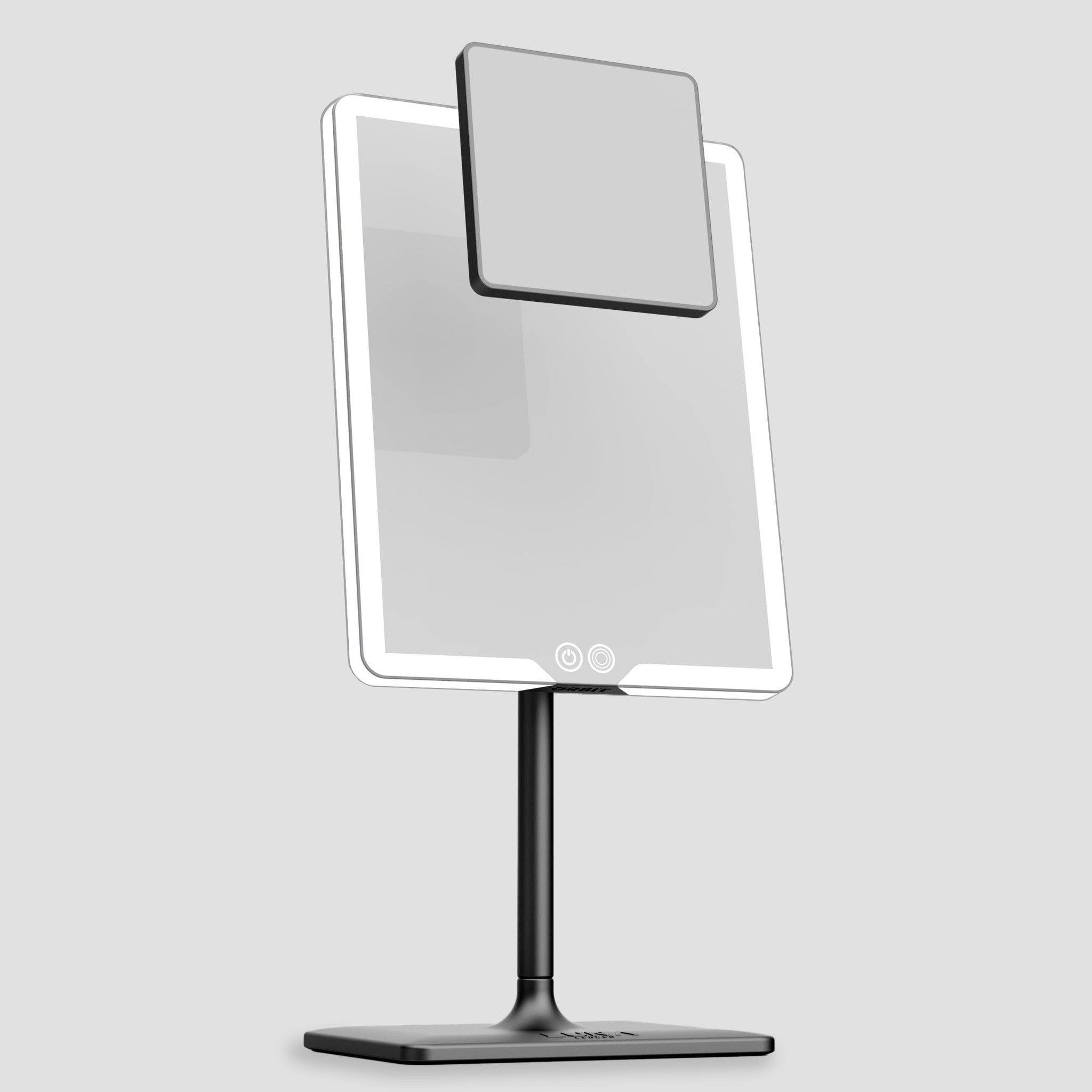 ORBIT ORBIT
|
Stable home pointwork Best for chin, brow, jawline and outer-ear checks at a vanity. |
Large 11 inch mirror face, 3 light modes, dimmable ring light, magnetic 7x mini attachment. |
Shop ORBIT Best if you want a steady, hands-free setup before brief 7x checks. |
|
COMPACT 2.0
|
Quick checks and travel Best for handbag, hotel, desk or post-appointment touch-ups. |
1x and 7x magnification, 3 dimmable light modes, rechargeable, 5 inch format. |
Shop COMPACT 2.0 Most convenient if you want close-up checks without a full vanity station. |
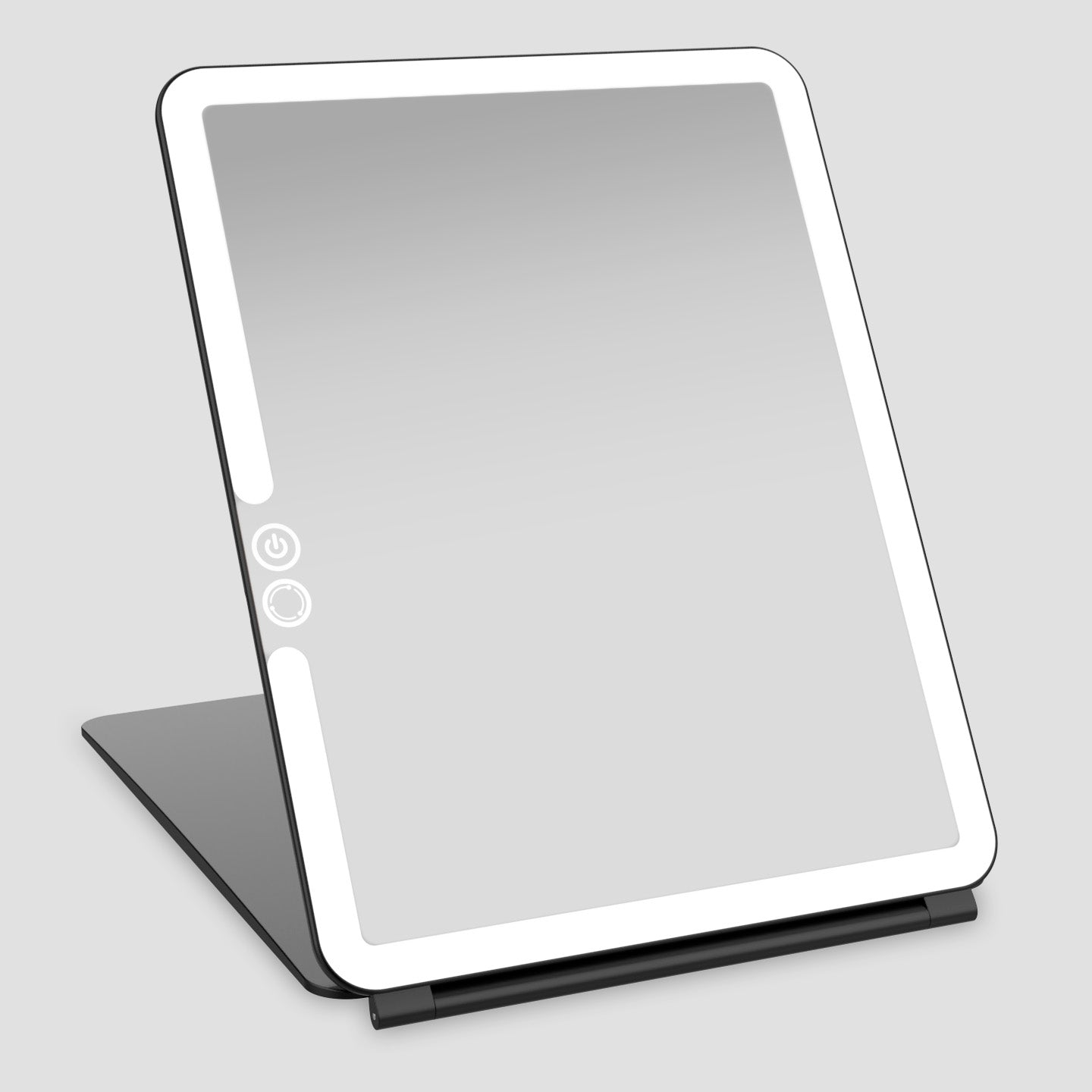 ECLIPSE ECLIPSE
|
Lighting without magnification Best if zoom makes you over-check. |
Fold-flat travel mirror, 3 dimmable light modes, rechargeable, no magnification. |
Shop ECLIPSE Best if you only need better light, not a closer view. |
When to get medical advice
A few hairs are usually a grooming issue, not a crisis. Still, be sensible. Ask a GP, dermatologist or endocrinologist if facial hair becomes sudden, heavy, dark, coarse, or spreads quickly, especially alongside irregular periods, acne, scalp hair loss, voice changes, or other hormone-related symptoms. That is not alarmism. It is simply the line between routine grooming and something worth checking.
For a fuller grooming cluster, pair this with LUNA’s eyebrow care guide, the COMPACT 2.0 compact mirror guide, and the more grooming-led mirror setup for shaving, brows and detail work.
One mirror, daily use
Make the close-up check easier, not harsher
ORBIT is the better fit when this routine happens at home: chin, brow, upper-lip, outer-ear and skincare detail checks. Start with the wider lit mirror, use the 7x magnification add-on only for pointwork, then step back before the mirror turns one stray hair into a full excavation.

Order today and receive tomorrow in:
 USA
USA
 UK
UK
 EU
EU
FAQs
Is chin hair after 45 normal?
Yes, a few chin or jawline hairs can be normal after 45, especially around and after menopause. If the hair growth is sudden, heavy, dark, coarse, or paired with other symptoms, speak to a GP or clinician.
How do I see fine facial hair without over-plucking?
Use a 1x mirror first to check the whole face at normal distance, then use 7x only for short pointwork. If a hair only bothers you under magnification and disappears in normal light, leave it for now.
Should women trim nose or ear hair?
You can trim visible nose-edge or outer-ear hairs if they bother you, but keep it gentle. Do not pluck or wax inside the nostril, and do not put sharp tools into the ear canal.


Leave a comment
This site is protected by hCaptcha and the hCaptcha Privacy Policy and Terms of Service apply.