
Last updated: 18 January 2026
Best magnifying mirror for elderly users: what 7x actually fixes (and what it doesn’t)
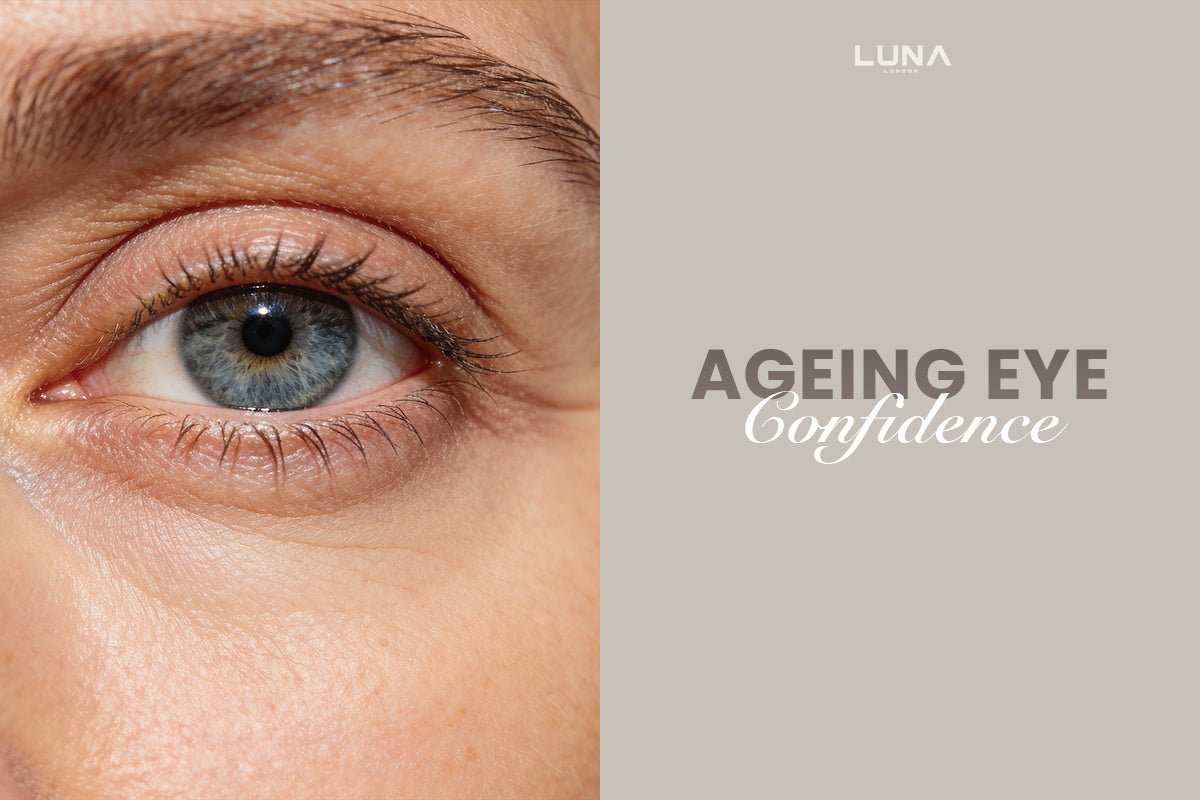
“Ageing eyes” is a fuzzy phrase, so let’s be precise. For many people, the issue is presbyopia, the gradual loss of close-up focus that typically becomes noticeable from the early-to-mid 40s onward. Add typical changes like reduced contrast sensitivity, more sensitivity to glare, and less “forgiveness” in low light, and suddenly small tasks turn into guesswork.
That’s why 7x magnification matters. Not because it makes you “see better” in a medical sense, but because it reduces uncertainty. When you can reliably see the lash line, brow edge, shaving boundary, or contact lens position, you stop overcorrecting.

When 7x magnification helps most
7x is most useful when the task is precision-led, not “full face”:
- Eyeliner and tightlining: seeing the lash roots reduces wobble and over-thick lines.
- Brow shaping: spotting the exact hair you want, not the ones nearby. (If you want a technique refresher, see our tweezing angle guide.)
- Shaving edges and detail grooming: moustache line, sideburn symmetry, beard contours.
- Contact lens insertion: 7x can help you see the lens cup and alignment, especially with good lighting.
- Skincare close checks: applying spot treatment or avoiding missed patches.
When 7x can backfire
This is the bit most articles skip. If the user’s hands shake slightly, or they’re applying foundation across the whole face, 7x can make things harder. You see “too much”, chase tiny imperfections, and end up over-applying. That’s why a sensible workflow is usually:
- Use 1x for overall balance and symmetry.
- Switch to 7x only for short, precise tasks.
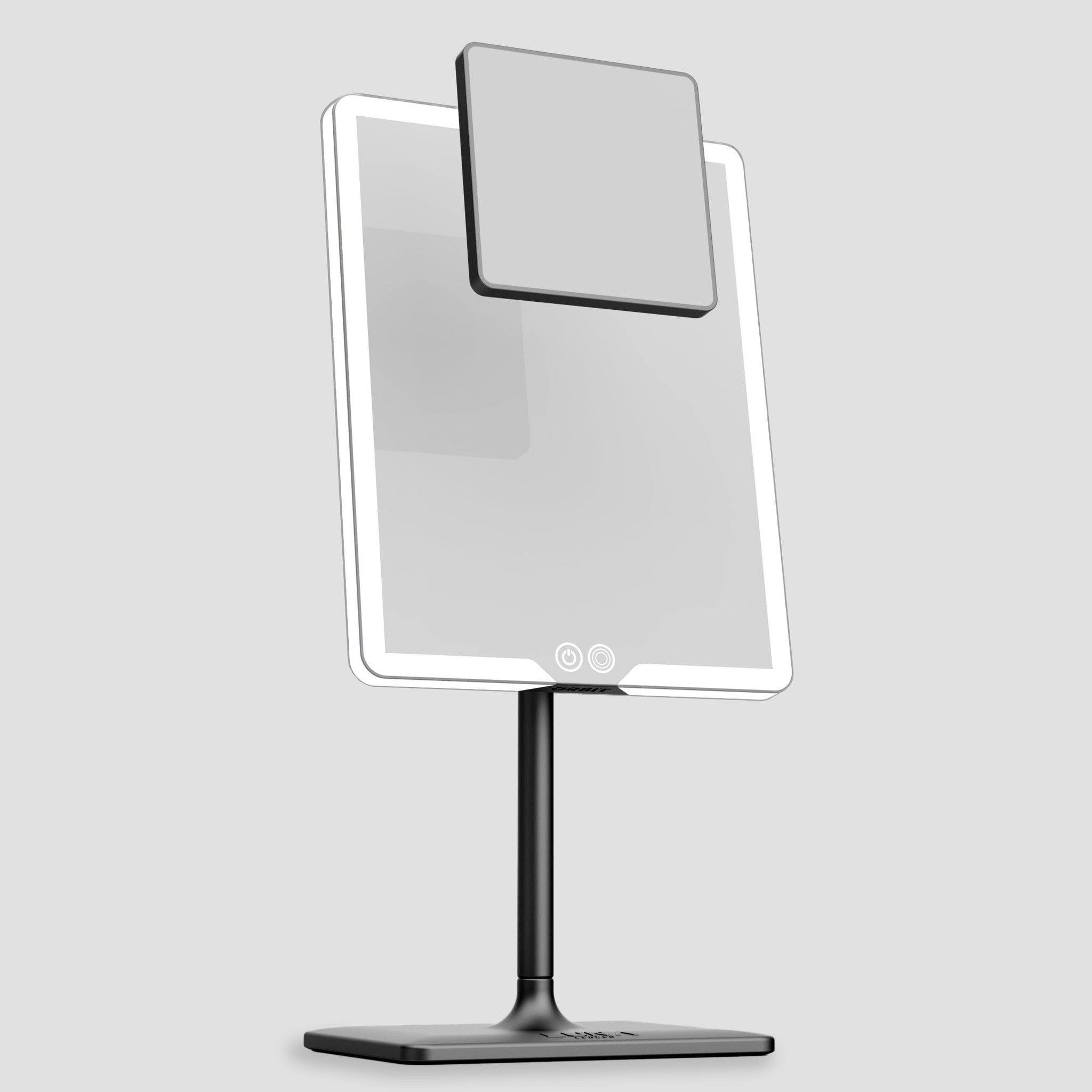
That workflow is built into COMPACT 2.0 (1x + 7x), and it’s why ORBIT’s 7x add-on works well in real life. ORBIT stays your stable “base mirror”, then you move into 7x only when it’s genuinely useful.
Expert note: In discussions about presbyopia solutions, clinician-researcher Dr Giovanna Benozzi has highlighted how many options still carry trade-offs, which is why practical environmental changes (better lighting, clearer viewing) can matter day-to-day.
The point: you don’t always need a “treatment” to get relief. Sometimes you need a better setup.
The 3-part setup that makes 7x feel easy
Most “magnifying mirror frustration” is actually setup error. Get these three right and the experience changes:
1) Distance: lock it in
Every magnifying mirror has a “sweet spot”. Too close and it blurs, too far and it shrinks. Pick a distance that stays clear and repeatable. A simple trick: bring your face toward the mirror until it’s sharp, then mark that “feel” by resting elbows lightly on the vanity. Stability matters as much as magnification.
2) Lighting: even, not harsh
Ageing eyes often need more light and more even light, but not glare. Balanced LEDs help because they reduce directional shadows that hide or exaggerate texture. If you want to go deeper on lighting accuracy, see our CRI guide.
3) Workflow: 1x first, 7x second
Do your base application in 1x, then switch to 7x for the “high precision” bits. This prevents the classic problem where someone applies everything under magnification and ends up with heavy brows, harsh edges, and over-blended concealer.

Quick decision table: what magnification level suits which task?
| Task | Best view | Why |
|---|---|---|
| Foundation / overall makeup balance | 1x | Keeps proportions natural, avoids over-application. |
| Eyeliner, mascara roots, lash checks | 7x | Precision at the lash line, less guesswork. |
| Tweezing, ingrowns, detail grooming | 7x | Targets one hair or edge accurately. |
| Contact lens insertion | 7x (short bursts) | Helps alignment, but keep lighting soft to avoid glare. |
| Final “check before leaving” | 1x then 7x | 1x for overall harmony, 7x for one last precision pass. |
A practical note for low vision
If the concern goes beyond normal age-related blur, it can help to borrow ideas from low-vision routines: organise tools consistently, reduce clutter, and use a mirror that stays stable. RNIB’s guide on applying make-up with sight loss is genuinely useful even for people who wouldn’t describe themselves as “low vision”. For medical guidance, the American Academy of Ophthalmology’s presbyopia overview is a good starting point.
Video: makeup technique when you can’t rely on close focus
This is a strong, practical walkthrough from a low-vision angle. Even if your vision issue is “just” age-related, the organisation tips and slower, repeatable technique translate well.
Which LUNA mirror is best for ageing eyes?
Here’s the straight answer, without pretending one product fits everyone:
| Mirror | Best for | Magnification | Here’s Our Favourite |
|---|---|---|---|
| ORBIT | Daily vanity setup, even lighting, precision add-on when needed | 7x (via mini attachment) |
Best all-rounder for ageing eyes Stable mirror first, 7x only when you need it. |
| COMPACT 2.0 | Close-up tasks, travel, quick checks, handbag reliability | 1x + 7x (built in) |
Best portable 7x option Great for lenses, eyeliner, brows on the go. |
| ECLIPSE | People who want lighting and clarity without magnification | No magnification |
Best if magnification feels “too intense” Lighting-led clarity, simpler viewing. |
A steadier 7x setup, without doing everything under magnification
ORBIT gives you balanced lighting for everyday viewing, then lets you bring in 7x only for precision moments like eyeliner, brows, and detail grooming. It’s a calmer workflow than living in magnification mode.
Explore ORBIT’s 7x add-on workflow →FAQs
Is 7x magnification too strong for elderly users?
It depends. If you’re doing precision tasks (brows, eyeliner, shaving edges), 7x is often ideal. If you’re doing full-face makeup, it can push you into over-application. A 1x then 7x workflow is usually best.
What is the best magnifying mirror for elderly people who wear glasses?
Most people remove glasses for close work, so stability and lighting matter more than the glasses themselves. A well-lit mirror plus 7x for short precision checks is typically easier than trying to do everything under magnification.
Can a magnifying mirror help with contact lens insertion?
Yes, especially if you struggle to see lens position clearly. Use 7x briefly, keep lighting even (not glaring), and keep your distance consistent so the image stays sharp.
Why does magnification make my hands look shakier?
Because magnification enlarges motion as well as detail. Resting elbows, using a stable mirror, and limiting 7x to short bursts makes a big difference.
Does ECLIPSE have magnification?
No. ECLIPSE is lighting-led and non-magnifying. For 7x magnification, look at ORBIT (with 7x attachment) or COMPACT 2.0 (1x + 7x).
Related Links
- Best magnification for makeup & grooming (5x vs 10x vs 15x)
- Tweezing 101: the angle that changes everything
- The science of CRI: why mirror lighting accuracy matters
- AAO: Presbyopia overview
- RNIB: Make-up tips for people with sight loss


Leave a comment
This site is protected by hCaptcha and the hCaptcha Privacy Policy and Terms of Service apply.