

Colour-Accurate Lighting: The CRI Guide for Real Makeup and Grooming
Last updated: 4 January 2026
If your makeup looks “right” at home but shifts outdoors, or your grooming looks fine in the bathroom then odd in daylight, you are not imagining it. It is usually colour rendering. CRI is the most common shorthand, but it is only part of the story. This guide explains CRI clearly, shows what to look for beyond one number, and why a mirror like ORBIT is built around controllable, face-forward light rather than flattering guesswork.

What CRI actually measures (and what it doesn’t)
CRI is a standardised method created by the International Commission on Illumination (CIE) to estimate how “natural” colours appear under a test light compared with a reference light of the same colour temperature. In the classic method, the overall score is called Ra, calculated from a set of test colour samples that are intentionally moderate in saturation. That design choice is the key gotcha: it makes CRI stable for general lighting comparisons, but it can under-report problems in the vivid, high-stakes colours we care about for faces, lips, redness, and undertones.
The “R9 problem”: why reds decide whether your base looks believable
In CRI language, “special” indices can be used to look at specific colours, including a strong red sample often referenced as R9. Reds are notoriously difficult for some LED spectral mixes, and that can show up as dull lips, greyish warmth, or a strange flattening of complexion. One reason this matters is simple: skin, stubble, redness, and most undertone battles live in the red and near-red zones. If your light source struggles there, your mirror can quietly train you to compensate with too much bronzer, the wrong concealer tone, or over-correcting redness.
Even outside cosmetics, researchers keep flagging that certain setups and modifiers can change CRI results, and that red samples often show the largest deviations, reinforcing how sensitive colour rendition can be in practice. That is exactly why you want lighting you can control and repeat, not lighting that just looks “bright”.
TM-30: the modern answer to “CRI is fine, but why does it still look off?”
CRI compresses colour rendering into one score. TM-30 expands it into a set of metrics, commonly summarised as fidelity (Rf) and gamut shift (Rg), plus hue-by-hue graphics. The point is not to turn you into a lighting engineer, it is to avoid being fooled by a single number. Two lights can share a similar CRI but behave very differently: one may be accurate but slightly muted, another may be “punchy” but oversaturate certain hues. Both can be fine for different goals, but you should know which you are getting.
Expert note (why TM-30 exists):
“ANSI/IES TM-30… provides a robust suite of metrics that convey much more information than any previous attempt at characterizing color rendering.”
— Jason Livingston and Tony Esposito, Illuminating Engineering Society (IES)
Quick guide: CRI vs R9 vs TM-30 (plain English)
| Metric | What it tells you | Why it matters for faces | What to do with it |
|---|---|---|---|
| CRI (Ra) | Overall “colour faithfulness” score vs a reference light. | Good baseline, but can hide issues in vivid hues. | Aim for high CRI when choosing a mirror light, then check for consistency with real-world tests. |
| R9 (strong red) | How well a saturated red sample is rendered. | Red handling influences blush, lip colour, redness, and undertone perception. | If you can find R9 (or similar red performance info), prioritise it for makeup and grooming mirrors. |
| TM-30 (Rf/Rg) | Fidelity plus saturation shift across many colours, with hue detail. | Explains “accurate but dull” vs “vivid but misleading”. | Use it when available. For shade-matching, higher fidelity is usually your friend. |
Three tests you can do at home (no special equipment)
Here is the slightly annoying truth: most people blame their foundation, their technique, or their skin. Lighting is often the actual culprit. These simple checks make it obvious whether your mirror light is teaching you the wrong corrections.
| Test | How to do it | What “bad” looks like | Fix |
|---|---|---|---|
| Jawline match check | Apply a thin stripe of base along jaw and blend. View in mirror light, then by a window. | Looks fine in mirror, turns orange, grey, or “floating face” in daylight. | Match in daylight-like mode first, then preview warmer mode after accuracy is locked. |
| Red truth test | Compare a true red item (lipstick, fabric, book cover) under different lights. | Red looks brownish, brick, or weirdly muted under one light. | Choose higher colour quality lighting, and avoid relying on one warm overhead bulb. |
| Photo reality check | Take one photo in mirror light, then one near daylight. Use the same angle. | Under-eyes, blush, or bronzer look unbalanced across the two shots. | Increase brightness slightly for blending, then reduce to preview “going out” lighting. |
So what makes LUNA different, in practical terms?
It is tempting to treat CRI like a marketing badge. The better approach is: design for repeatable, controllable, face-first lighting. That is the difference you feel day to day.
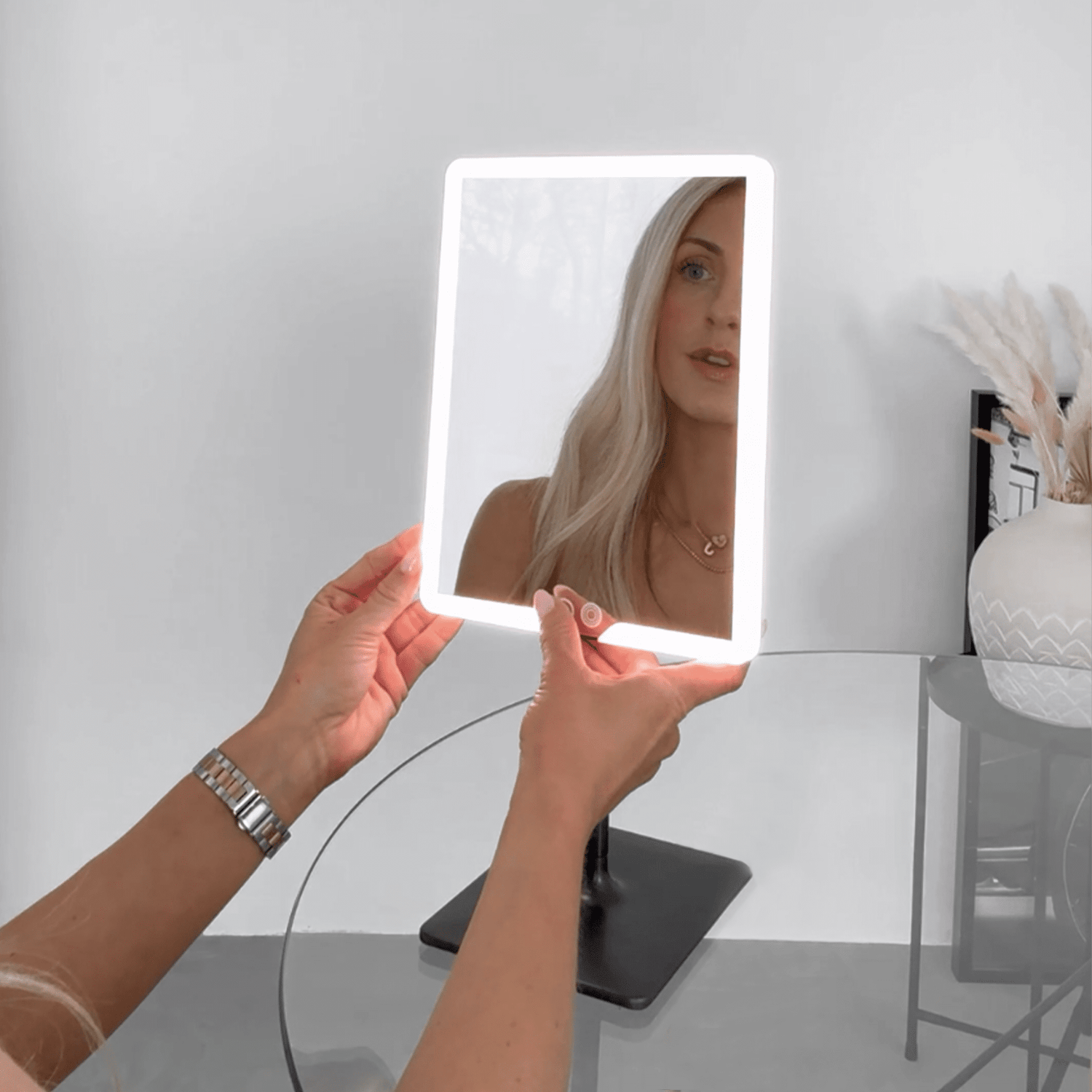
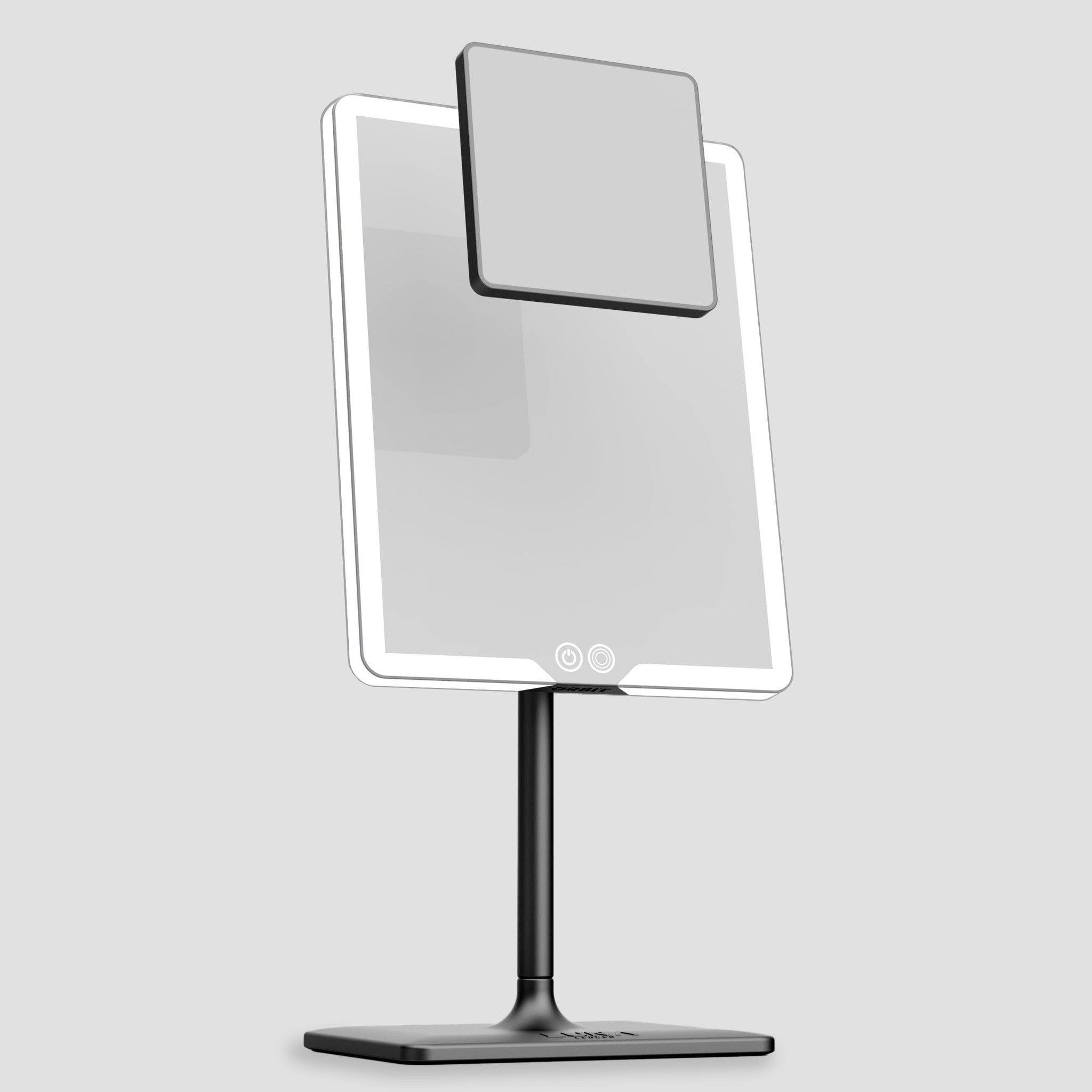
With ORBIT, the goal is not “ambient bathroom vibes”. It is a controllable ring light designed to cover the face evenly, with adjustable brightness and multiple lighting modes (daylight-like, neutral, warm). It is also cable-free (rechargeable), and includes a magnetic 7X magnification attachment for detail work. Those choices matter because they reduce two common failure modes: directional shadows (which hide patchiness and texture), and spectrum surprises (which shift undertones).

Which LUNA mirror fits colour-critical routines best?
| Use case | What matters most | Best fit | Here’s Our Favourite |
|---|---|---|---|
| Daily makeup at home | Even face lighting, adjustable modes for daylight vs evening preview. | ORBIT | ORBIT for ring-style coverage plus mode switching, so your shade reads consistently across settings. |
| Detail grooming (beard lines, brows, skincare) | Close-up clarity, shadow control, stable brightness. | ECLIPSE | ECLIPSE when you want a clean, focused setup for precision routines. |
| Travel touch-ups | Portable accuracy, consistent light when venues vary. | COMPACT 2.0 | COMPACT 2.0 for quick, reliable checks when the room lighting is doing you no favours. |
FAQs
What is a “good” CRI for a makeup mirror?
As a rule of thumb, CRI 90+ is a strong baseline for colour-critical tasks like shade matching. But do not stop there. If you can, look for information about red performance (often discussed as R9) or modern colour metrics like TM-30.
Is CRI enough to guarantee accurate skin tone?
Not always. CRI can rate two lights similarly even if one oversaturates certain hues or struggles with saturated red. That is why standards bodies discuss methods beyond colour fidelity, and why TM-30 exists for more detailed evaluation.
Why does my foundation look orange outside?
Often because you matched under warm indoor light, then daylight reveals a different undertone. Match under a daylight-like mode first, then preview warmer lighting to see how it will read at dinner or in photos.
Does brightness matter as much as CRI?
Yes. Too dim and you over-apply. Too harsh and you chase texture that nobody sees in real life. Adjustable brightness is a practical feature because it lets you blend in a “truthful” setting, then reduce intensity to mimic typical environments.
What lighting mode should I use first?
Start neutral or daylight-like for accuracy, especially for base products. Once your shade is correct, switch to warmer light to check the look you will actually wear.
How can I tell if my mirror lighting is distorting colour?
Do the jawline match check and the red truth test in this article. If your results change dramatically across lights, it is a lighting problem before it is a makeup problem.



Leave a comment
This site is protected by hCaptcha and the hCaptcha Privacy Policy and Terms of Service apply.