

Last updated: 23 March 2026
In a hurry? TL;DR:
- Don’t stack rich moisturiser, gripping primer, full-coverage foundation and loose powder all at once unless your skin genuinely needs it.
- Let skincare settle before makeup, especially SPF, or you risk pilling and drag.
- Apply base in neutral, front-facing light, not under overhead bathroom bulbs that exaggerate shadows.
- Powder the T-zone, sides of the nose, chin crease and under-eyes only if they actually move or get shiny.
- If makeup looks heavy at lunch, blot first. Adding more powder onto oil usually makes texture worse.
How to Stop Makeup Looking Cakey With Better Prep, Light and Powder Placement

If your foundation starts the day looking fine, then turns dry, thick or oddly textured by noon, the instinct is often to blame the formula. Sometimes that is fair. More often, though, cakey makeup comes from a chain of small errors: over-cleansing, too many layers underneath, applying in flattering but misleading light, then setting far more of the face than needed.
The good news is that this is fixable. If you have already read our guides on fixing patchy foundation with better lighting or applying concealer without creasing, you will recognise the same pattern here: thin layers, honest light, and less product exactly where the skin creases or gets dry.
| If you see… | It usually means… | Best first fix |
|---|---|---|
| Flakes on cheeks or around the mouth | Skin is dry, over-exfoliated, or makeup is clinging to rough patches | Gentle cleanse, lighter base, no powder on dry zones |
| Foundation gathering beside the nose | Too much product plus natural facial movement | Use less base there, press in with sponge, powder only the fold |
| Texture looks worse under bathroom lights | Overhead lighting is casting shadows and making you over-correct | Switch to front-facing neutral light |
| Midday heaviness after touch-ups | Powder layered on top of oil and old makeup | Blot first, then reapply the smallest amount needed |
1. Prep matters, but over-prep is one of the main reasons makeup cakes
A lot of people with “cakey” makeup are actually too aggressive with prep. Skin that has been scrubbed, over-exfoliated or washed with hot water will often look tighter and rougher once base goes on. The American Academy of Dermatology’s face-washing guidance is refreshingly boring: lukewarm water, fingertips, no scrubbing, then moisturiser if skin is dry. Boring is useful here, because irritated skin rarely wears makeup well.
If your skin is dry, the same organisation also advises applying moisturiser after washing while the skin still has some moisture, because that helps trap water in the skin. You can see the logic immediately with foundation: smoother, slightly cushioned skin needs less base and less powder later on. Their broader dry-skin advice also points out that harsh products and long hot showers strip oils and worsen dryness, which is exactly the sort of thing that makes foundation grip in the wrong places.
⚡ PRO INSIGHT: If your skin feels “squeaky clean” before makeup, that is usually not a win. It often means you have removed too much surface comfort, so foundation will catch on texture instead of gliding over it.
The other trap is layering too much underneath. Serum, rich moisturiser, gripping primer, glowy sunscreen, then full coverage foundation sounds thorough, but often behaves like a traffic pile-up. If your SPF or skincare pills, simplify the routine. Keep only the layers that make a visible difference.
2. Your light may be causing you to apply too much
People talk about cakey makeup as if it starts with the foundation bottle. Often it starts with the room. Overhead bathroom downlights create hollows around the eyes, nose and mouth, so you add extra concealer, more coverage around redness, then more powder to “lock it in”. The result looks finished indoors and overdone everywhere else.
This is where lighting quality matters. The U.S. Department of Energy explains that CRI is a 1 to 100 scale showing how accurately a light reveals colour compared with a reference light source. Their LED guidance also notes that 80 is a common interior baseline, while 90+ shows colours more naturally. In practical makeup terms, better front-facing light helps you stop earlier. That alone can reduce cakiness.
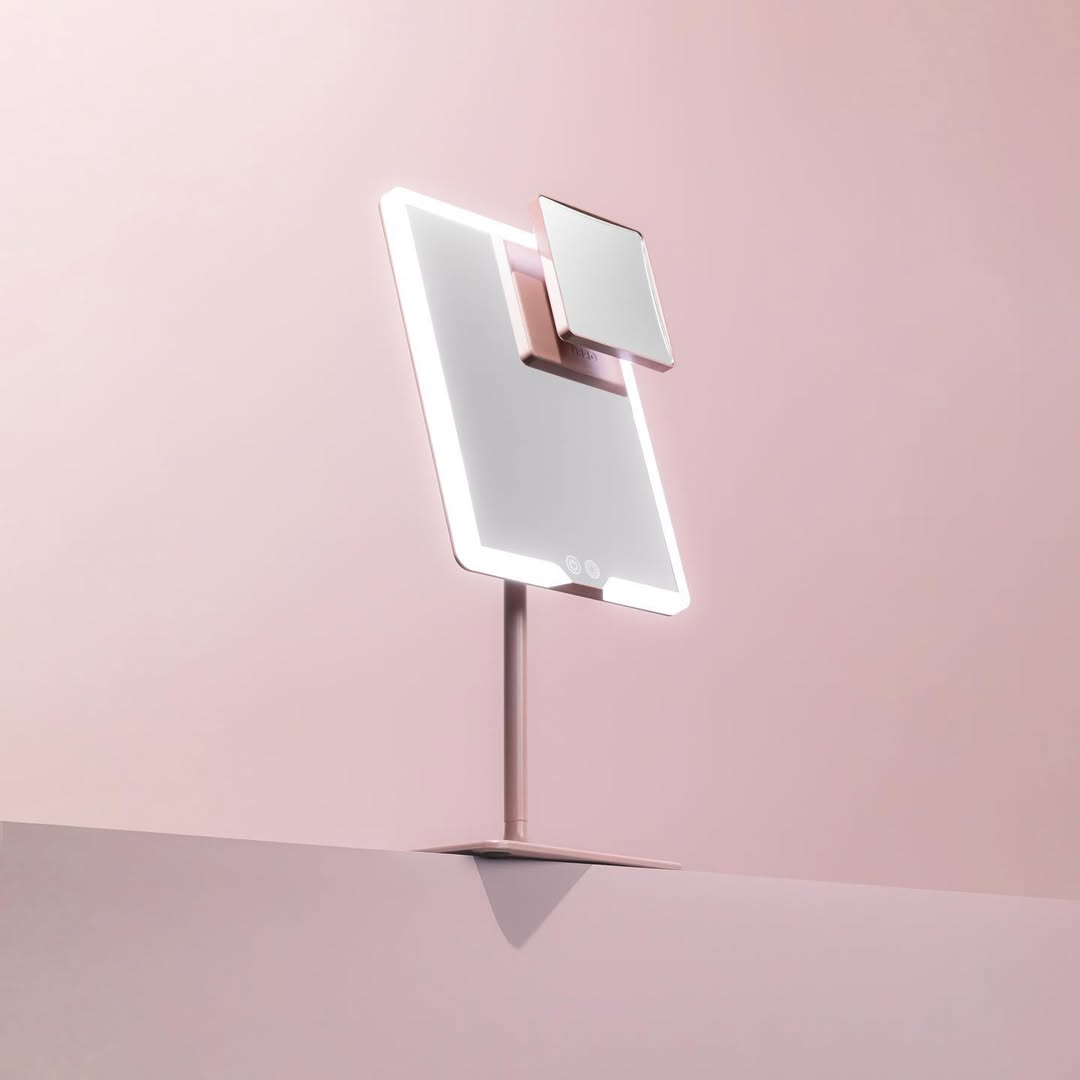
If you routinely get ready in poor bathroom lighting, a mirror with controllable, front-on light is not a cosmetic extra, it is a decision-making tool. A slim option like ECLIPSE helps you see texture and tone more honestly than overhead bulbs, while a detail mirror like ORBIT is useful for precision checks, though you should always step back to 1x before deciding the whole face looks “too textured”.
For a broader breakdown of what different room conditions do to your base, it is worth skimming our guides on foundation in different lighting, makeup mistakes under bad lighting, and indoor lighting for natural makeup. The pattern is consistent: face-level, neutral light is much less likely to make you overwork the skin.
“The best foundations for dry skin will contain hydrating and moisturizing properties without drawing attention to dry areas.”
— Dr. Blair Murphy-Rose, board-certified dermatologist, TODAY (2025)
3. Powder placement is where most faces go wrong
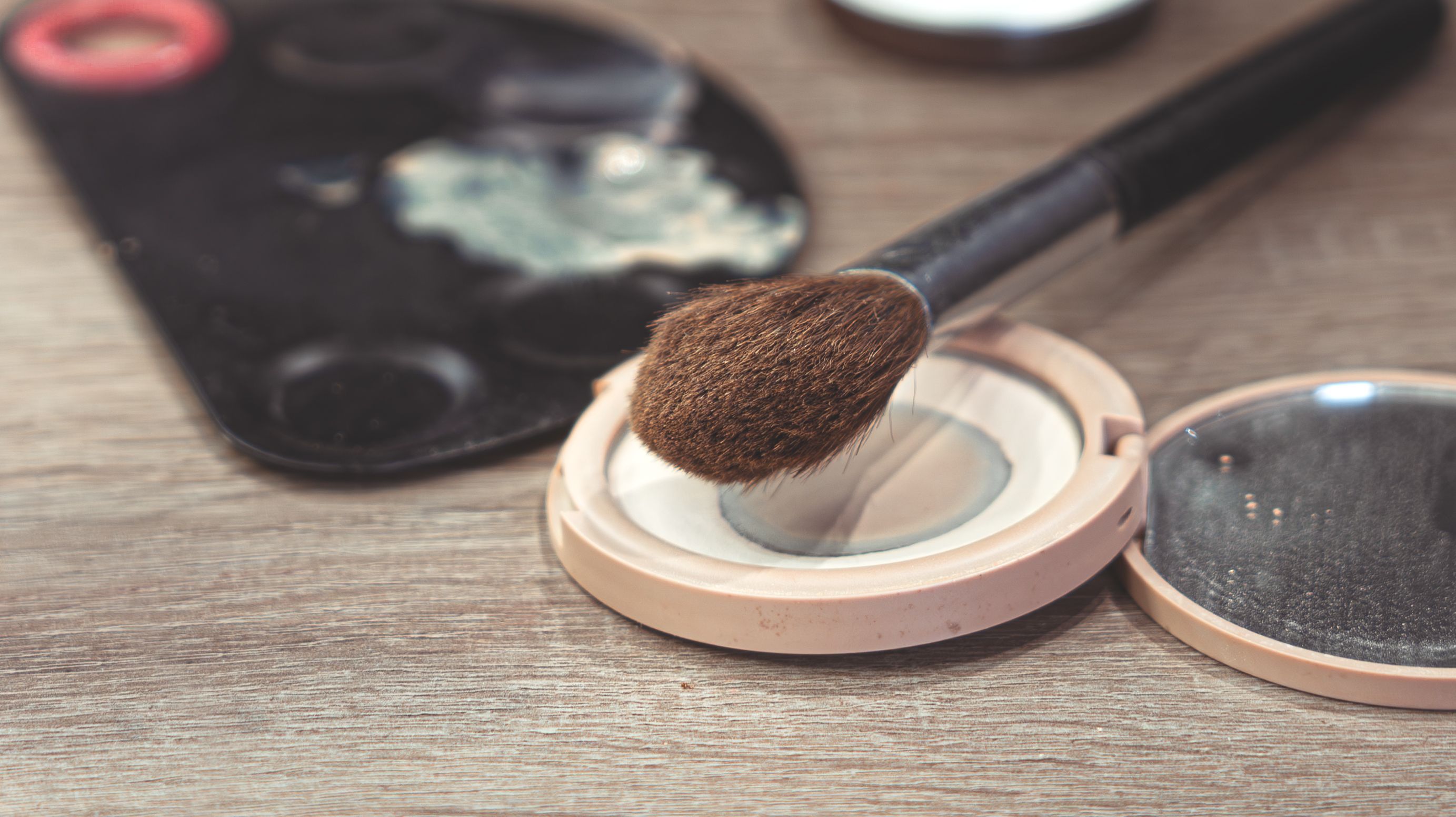
Powder is not the enemy. Blanket powdering is. If your whole face is dry, flat or older-looking by 2pm, there is a good chance you are setting areas that did not need setting in the first place.
The face does not need one uniform finish. Most people benefit from setting only the parts that move, crease or get shiny first: sides of the nose, centre of forehead, chin crease, and sometimes under-eyes. The outer cheeks, temples and higher points of the face often look better with little or no powder, especially if dryness or fine lines are part of the problem.
This is also why midday touch-ups go wrong. Shine appears, so people add more powder everywhere. But powder on top of oil and old base creates the slightly crusted film that reads as cakey. Blot first. Then decide whether you still need powder. If you do, press a small amount exactly where breakdown is visible.
⚡ PRO INSIGHT: The test is simple: if a zone is dry, leave it alone. If a zone is shiny and mobile, powder just that zone. Your face should not have identical texture from centre to perimeter.
4. A repeatable anti-cakey routine that takes less product, not more
| Step | What to do | Why it helps |
|---|---|---|
| 1 | Cleanse gently and moisturise lightly | Reduces drag and stops base catching on rough patches |
| 2 | Let skincare and SPF settle for a few minutes | Cuts down pilling and slipping |
| 3 | Apply thin foundation only where you need it | Less product means less chance of settling into lines |
| 4 | Press product in with a sponge, especially beside the nose and mouth | Removes excess and smooths edges |
| 5 | Check the whole face in neutral front-facing light | Prevents over-correction from misleading shadows |
| 6 | Powder only the zones that crease or shine | Keeps skin looking skin-like |
| 7 | For touch-ups, blot first and reapply minimally | Stops midday buildup |
If you want a video walkthrough of the same logic, this tutorial explains how to keep foundation smoother and avoid that heavy, over-set finish:
5. What to change if your makeup still cakes in specific areas
Under-eyes: usually too much concealer, too close to the lash line, then too much powder. Use less, blend outward, and set only if you genuinely crease.
Beside the nose: this area moves constantly. Don’t build thick foundation there. Press a tiny amount in, then powder only the fold.
Chin and mouth: often a sign of dryness or over-exfoliation. Back off actives the night before if this keeps happening.
Cheeks: if they look papery, stop setting them. A smoother cheek usually comes from hydration and restraint, not from more product.
SPF pilling underneath: keep your morning routine simpler, let layers settle, and don’t rub aggressively. The AAD’s sunscreen advice is useful here too, because correct application matters, but so does choosing formulas that sit comfortably under makeup.

A more honest light usually means less makeup
If cakiness gets worse in bathrooms, offices or hotel rooms, the issue may be the light as much as the formula. ECLIPSE gives you a cleaner front-facing check, so you can stop before the base gets too heavy and see where powder is actually needed.
Discover ECLIPSE lighting →FAQs
Why does my makeup look smooth at home but cakey outside?
Usually because the light you applied it in was too flattering or too shadowy. Neutral, face-level light shows texture and edges earlier, so you use less product.
Does primer always help with cakey makeup?
No. Primer helps only when it solves a real problem, such as grip in an oily T-zone or smoothing obvious pores. If your issue is dryness or product overload, extra primer can make things worse.
Where should I avoid powder if my makeup looks dry?
Usually the outer cheeks, upper cheekbones and any flaky areas. Keep powder focused on the T-zone, nose folds, chin crease and only the parts of the under-eye that truly crease.
Can bad skincare prep make foundation settle into lines?
Yes. Over-cleansing, harsh exfoliation, hot water and too many layers can all leave the skin rougher or make base slip and pill, which then settles more obviously into lines.
What is the best light for applying foundation?
Front-facing neutral or daylight-style light is usually best for colour matching and keeping the finish balanced. It helps you see when enough is enough.
How do I touch up cakey makeup in the middle of the day?
Blot first, smooth any separation with a clean fingertip or sponge, then add the tiniest amount of powder only where shine remains. Don’t reset the whole face.
Is cakey makeup more common as skin gets drier or more textured?
Yes. As skin changes, heavy formulas and heavy powder become less forgiving. Thinner layers, better hydration and more selective setting usually give a more natural finish.
Related links
- ORBIT Phantom Black
- ECLIPSE Matte Black
- COMPACT 2.0 Matte Black
- Fix Patchy Foundation with Better Lighting
- How to Apply Concealer Without Creasing
- Browse the LUNA London blog


Leave a comment
This site is protected by hCaptcha and the hCaptcha Privacy Policy and Terms of Service apply.