
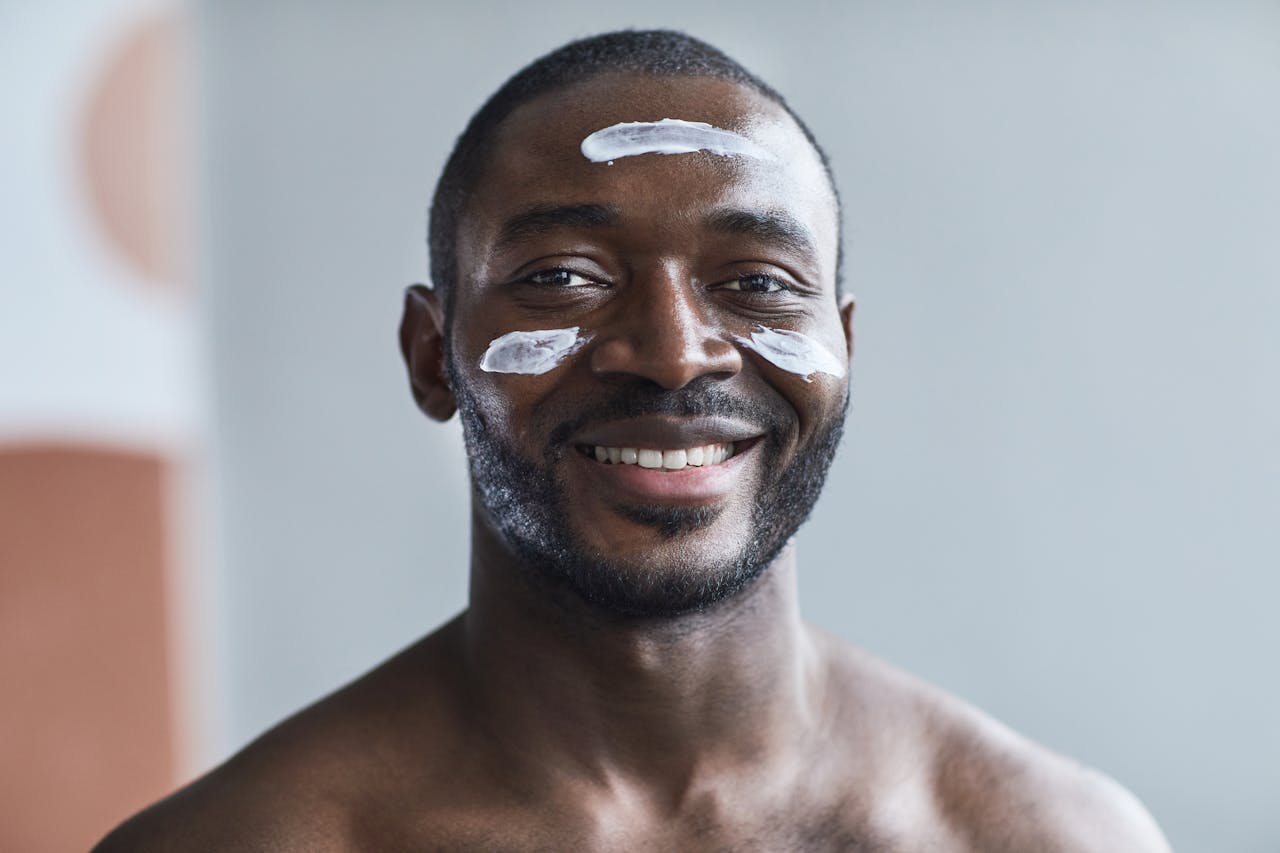
If your face feels drier than it used to, shaving suddenly stings, or you’re noticing uneven tone you didn’t have a decade ago, you don’t need a 12-step routine. You need a few consistent moves that protect your skin barrier, reduce irritation, and make the “quick mirror check” actually useful.

A consistent routine beats a complicated one, especially when your skin starts changing in midlife.
How to Build a Men’s Skincare Routine That Actually Sticks
Most men quit skincare for predictable reasons: it feels fiddly, it feels expensive, or it feels like you’re meant to care more than you do. The fix is not “more motivation”. The fix is a routine that matches how you actually live. That means fewer steps, a clear order, and products that do one job well.
Dermatologists consistently come back to the same foundation: cleanse gently, moisturise as needed, and protect your skin from the sun. The American Academy of Dermatology Association recommends those basics for men of every skin type, alongside better shaving technique and regular skin checks. Skin care tips for men (AAD)
⚡ PRO INSIGHT: If you only do one thing this year, make it daily SPF. It’s the highest-leverage step for preventing “crepey” texture, blotchy tone, and visible sun damage over time. Start with a formula you’ll actually wear every day, not the one that looks best in a marketing photo.
Before we get into products, get clear on why midlife skin often feels “different”:
- Barrier changes: many people get drier with age, which makes skin more reactive and prone to roughness.
- Cumulative sun exposure: the effects show up gradually as uneven tone, age spots, and fine lines.
- Shaving and friction: frequent shaving, hot showers, harsh soaps, and gym sweat can all trigger irritation when your barrier is already stressed.
Expert quote
“Most people don’t need anything more than a basic cleanser and moisturiser, and sunblock if you’re going outside.”
Dr Bav Shergill, consultant dermatologist, via BBC Science Focus
Step 1: Identify your skin type in 30 minutes

If you’ve ever bought a “for men” moisturiser and wondered why it stings or makes you shiny, you probably picked the wrong texture for your skin. Here’s the quick test: wash your face, gently pat dry, wait 30 minutes with no products, then look and feel. Tight and flaky usually means dry. Shiny all over suggests oily. Oily in the T-zone but normal on the cheeks points to combination.
Consultant dermatologist Dr Jonathan Kentley explains that skin type is largely determined by how much oil (sebum) your skin produces, and while it’s mostly genetic, it can shift through life and environment. British Skin Foundation: identifying your skin type
Expert quote
“Skin types are mostly determined by the amount of oil (sebum) produced.”
Dr Jonathan Kentley, Consultant Dermatologist, via British Skin Foundation
Step 2: Build the “boring” routine first (AM + PM)
Think of this like brushing your teeth. You do not reinvent it daily. You make it automatic. Here’s the simplest routine that covers most men over 45.
| When | Do this | What it solves | Common mistakes |
|---|---|---|---|
| Morning | Gentle cleanse (or rinse if very dry), then moisturiser, then SPF 30+ | Dryness, dullness, uneven tone, sun damage | Using body soap on face, skipping neck and ears, relying on “SPF moisturiser” alone |
| Night | Cleanse properly, moisturiser, optional active (only if your skin tolerates it) | Rough texture, fine lines, clogged pores | Over-exfoliating, stacking too many products, applying actives on irritated skin |
| Two to three times weekly | Gentle exfoliation or a soft washcloth, plus a quick check for ingrown hairs | Flakes, razor bumps, roughness | Using harsh scrubs, scrubbing hard, exfoliating right before a close shave |
What “SPF 30+” actually means in the UK
SPF is only part of the story. In the UK you also want strong UVA protection. NHS guidance recommends choosing sunscreen with at least SPF 30 and at least 4-star UVA protection, or the UVA circle logo. NHS sunscreen and sun safety
The British Association of Dermatologists’ patient information also recommends SPF 30+ and looking for UVA protection, ideally 4 or 5 stars. BAD: Sunscreen fact sheet
Why mention this in a men’s routine guide? Because a lot of men use “whatever is in the bathroom” and assume it’s fine. It usually isn’t, especially if it stings, pills, or makes you look shiny so you stop using it.
Expert quote
“SPF only stops UVB. In order to block UVA, you need a broad spectrum sunscreen, one with a four- or five-star UVA rating.”
Prof Helen MacDonald (University of Aberdeen), via The Guardian

Daily SPF is the simplest way to protect midlife skin from visible sun damage.
Common midlife skin issues and the simplest fixes
This is the part most guides skip. They tell you what to buy, not what to do when something goes wrong. Here are the problems we see most often in men 45+, plus practical fixes you can try without turning your bathroom into a lab.
| Issue | What it often is | Fix in 7 days | Prevent it |
|---|---|---|---|
| Dry, tight, flaky skin | Barrier is depleted, often from hot water, harsh cleanser, or too much exfoliation | Switch to a gentle cleanser, moisturise on damp skin, avoid hot water on face | Use fragrance-free products, keep exfoliation gentle and limited |
| Razor burn and bumps | Irritation, pseudofolliculitis, or ingrown hairs from shaving too close | Shave with the grain, try a single or double blade, moisturise after shaving | Do not stretch skin taut, change blades regularly, exfoliate gently between shaves |
| Shiny by lunchtime | Oily or combination skin, sometimes worsened by stripping cleanser | Use a mild cleanser, lighter moisturiser, and non-greasy SPF | Avoid alcohol-heavy toners, do not “over-wash” after the gym |
| Uneven tone and dark spots | Often sun exposure over years, sometimes post-shave irritation | Daily broad-spectrum SPF, add vitamin C or niacinamide if tolerated | Hat + shade, protect ears and scalp, be consistent year-round |
| Adult breakouts | Clogged pores, sweat, or heavy products, sometimes stress related | Switch to non-comedogenic products, cleanse after exercise | Avoid picking, keep pillowcases clean, consider a dermatologist if persistent |
Two quick health caveats. First, if you have a spot that is changing, bleeding, or not healing, do not “wait and see”. Men over age 50 have a higher risk of melanoma than the general population, and early assessment matters. AAD guidance on regular checks
Second, if you think you have eczema, rosacea, or psoriasis, a basic routine still helps, but you may need specific advice. “Strong” products are not automatically better in those cases.
Grooming that supports skin health (without becoming the whole point)
Good grooming is not vanity. For midlife skin it is often about reducing friction and preventing inflammation. That means shaving smarter, tidying eyebrows in a way that does not irritate the skin, and keeping tools clean. If you want a broader kit overview, this guide is a good starting point: Men’s Grooming 101: the tools every man needs
Shaving: the irritation-light method
The AAD suggests that men who get razor bumps, razor burn, or ingrown hairs may do better with a single or double blade, and should avoid stretching the skin taut while shaving. They also recommend shaving in the direction of hair growth and changing blades regularly. AAD shaving technique tips
If ingrown hairs become infected or painful, seek clinical advice rather than digging at them. NHS guidance includes when to get help and what not to do. NHS: ingrown hairs
If you’re prone to razor bumps, it can help to understand pseudofolliculitis and adjust technique. The British Association of Dermatologists notes there’s no single method that works for everyone, so you may need to experiment carefully. BAD: pseudofolliculitis (razor bumps)
For a deeper step-by-step shaving breakdown (including prep and exfoliation), these two are worth a skim: how to shave cleanly with the right grooming mirror and the secret to a smooth shave.
⚡ PRO INSIGHT: Shave irritation is often a lighting problem as well as a technique problem. If your bathroom light throws shadows under the jaw, you keep “chasing” missed patches. That means extra passes and more inflammation. Bright, even light can reduce over-shaving because you can see what you’re doing in one pass, not three.
Eyebrows for men 45+: tidy, do not sculpt
Eyebrows can thin and go wiry with age. The goal is not to chase a trend, it’s to keep them looking intentional. Start with a small pair of scissors or a trimmer guard. Brush brow hairs up, then trim only the obvious long ones. Avoid over-plucking, especially near the centre where gaps look harsher in daylight than under bathroom bulbs.
If you do need to remove a few stray hairs, do it after a shower when the skin is softer, and apply a light moisturiser afterwards. If you repeatedly get red bumps around brows, your skin may be reacting to fragrance, harsh exfoliation, or dirty tools.

A small amount of eyebrow tidying can make your whole face look more rested, without turning it into a “project”.
How to add one “helper” step without wrecking your skin
The mistake most men make is adding three actives at once, then wondering why everything stings. Add just one helper step, and only after your cleanser, moisturiser, and SPF are stable for two weeks.
If you want smoother texture and fewer fine lines: try a retinoid at night
AAD’s midlife guidance stresses healthy habits and sun protection as the foundation, and then suggests selecting anti-ageing products carefully if you want them. AAD: skin care in your 40s and 50s
Retinoids can irritate, so take the low-drama approach: two nights per week to start, then build slowly. Apply after moisturiser at first if you’re sensitive. Never apply on raw, recently shaved, or sunburnt skin.
If you want fewer clogged pores: use gentle exfoliation, not sanding
Exfoliation can help because shaving creates its own kind of build-up. Keep it simple: a mild chemical exfoliant two to three times a week, or a soft washcloth with a gentle cleanser. If you’re prone to razor bumps, exfoliate on non-shave days.
If you want a more even-looking tone: vitamin C or niacinamide
These are popular because they can help with dullness and uneven tone. The catch is tolerance. If your skin is sensitive, start every other morning, and stop if you get persistent burning or peeling.
Make the routine easier than skipping it
Most routines fail because of friction, not because people do not care. Make it easy:
- Keep products visible: one spot, one order, no rummaging.
- Pair with an existing habit: cleanse right after brushing your teeth at night.
- Use travel duplicates: a mini cleanser and SPF in your wash bag so hotel mornings don’t break the streak.
- Set a minimum: if you’re exhausted, moisturise and apply SPF in the morning. Consistency beats perfection.
Lighting matters too, but mostly because it stops self-sabotage. A bright, even reflection helps you see if you missed sunscreen around the hairline, left shaving gel under the jaw, or forgot moisturiser on a dry patch. The AAD specifically flags areas men often miss, including scalp, ears, neck, and lips. AAD sun protection tips for exposed areas
Video: a no-nonsense routine you can copy tonight
If you’d rather see the order once than read it twice, this men’s skincare video walks through cleanse, moisturise, SPF, plus shaving add-ons.
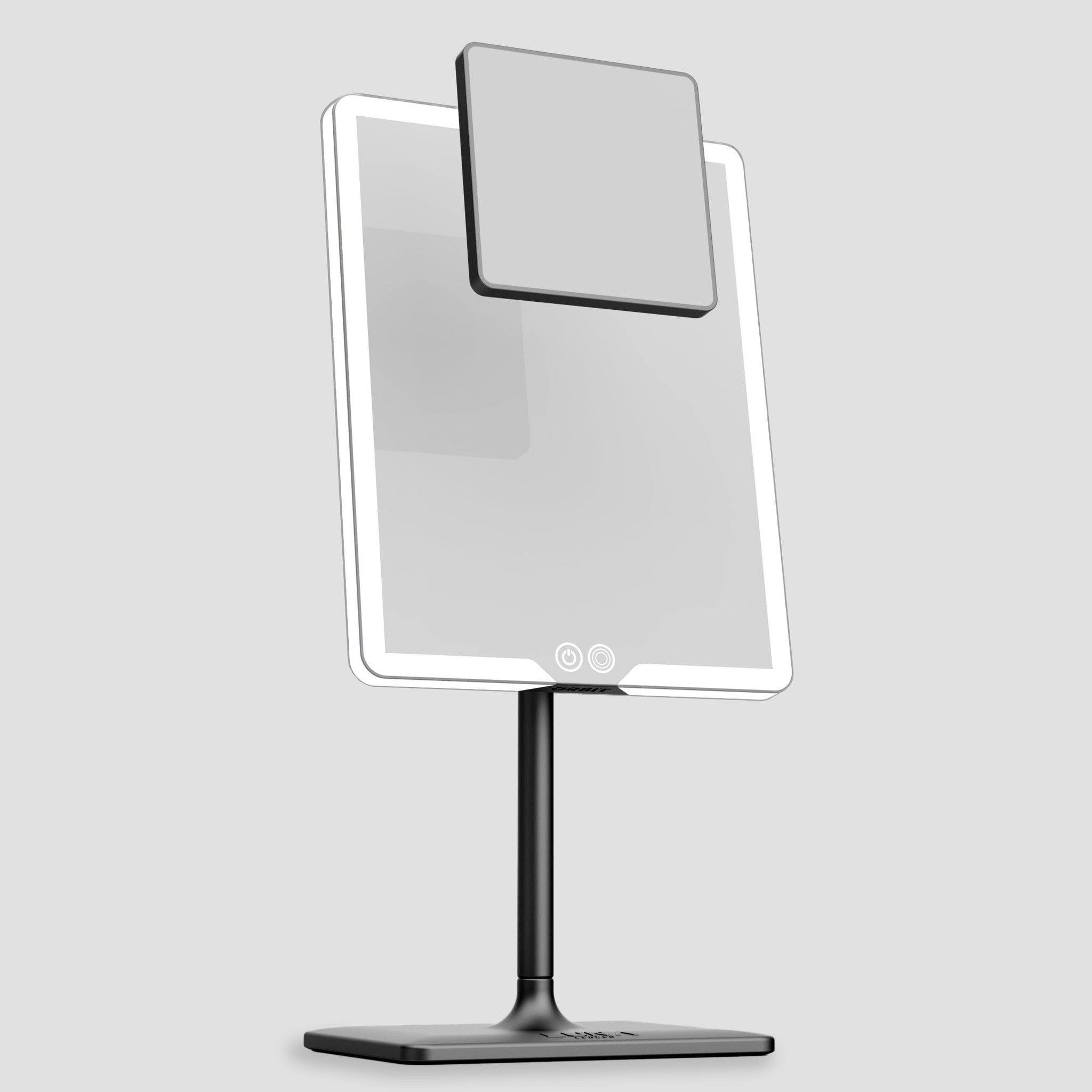
A clearer routine starts with clearer light
If you’re building a simple men’s skincare routine, bright, even light helps you apply SPF evenly, shave with fewer passes, and spot the areas that tend to get missed around the neck, ears, and hairline. ORBIT adds magnification for detail work, without turning your bathroom into a beauty studio.
FAQs
How long does it take to see results from a men’s skincare routine?
For dryness and irritation, you can often feel a difference within a week if you switch to a gentle cleanser and moisturise consistently. For uneven tone and fine lines, think in months, not days. Sun protection is a long game, but it’s still the best bet.
Do men really need moisturiser if their skin is oily?
Often yes, but the texture matters. Oily skin usually does better with a lightweight, non-comedogenic moisturiser. If you skip moisturiser entirely, you may over-cleanse, which can trigger rebound oiliness.
Is it OK to use the same product on face and body?
Sometimes, but be careful with body soaps and fragranced washes, they can be harsh on facial skin. The AAD specifically advises using a mild facial cleanser instead of regular bar soap. AAD cleanser guidance
What is the best order to apply skincare products?
As a rule: cleanse first, then thinner products, then moisturiser, then sunscreen in the morning. If you only use three products, it’s simple: cleanse, moisturise, SPF. If you add a serum, put it between cleansing and moisturising.
How do I prevent razor bumps?
Shave with the grain, avoid stretching the skin tight, and consider switching to a single or double blade if multi-blades shave too close. Change blades regularly and moisturise after shaving. These are all recommendations highlighted by dermatologists via the AAD. AAD shaving tips
Do I need sunscreen in winter in the UK?
UVA is present year-round. If you’re outside regularly, it’s sensible to use a broad-spectrum sunscreen, not just an SPF-labelled moisturiser. For UK labels, look for strong UVA protection (star rating or UVA circle), as explained by the BAD. BAD sunscreen guidance
When should I see a dermatologist?
If you notice a new spot or mole that changes, bleeds, itches persistently, or does not heal, book an appointment. Also consider professional advice if acne, eczema, or rosacea is not improving with gentle basics.
Related links
- Men’s Grooming 101: The Tools Every Man Needs in 2025
- Men’s Simple Grooming Routine: Clear Skin in 10 Minutes
- How to Shave Cleanly with the Right Grooming Mirror
- The Secret to a Smooth Shave: Exfoliate for a Closer, Irritation-Free Experience
- Skincare with LED Mirrors: 5 Products That Work Best
- AAD: Skin care tips for men
- British Skin Foundation: identify your skin type



Leave a comment
This site is protected by hCaptcha and the hCaptcha Privacy Policy and Terms of Service apply.