

Last updated: 29 March 2026
A Simple Makeup Expiry and Hygiene Schedule You Can Actually Keep
Most people do not need a laboratory system for their makeup bag. They need a rule that works on a rushed Tuesday morning, in a warm bathroom, with products they half-forgot they owned. The lazy rule many people use is “keep it until it smells strange”. That works poorly, especially for mascara, liquid liner and damp sponges. By the time something looks obviously grim, you may already have been using contaminated product for weeks.
This guide keeps it simple: think in terms of eyes, liquids, powders and tools. If it goes near your eyes, be stricter. If it is wet or creamy, be stricter. If it touches your face every day and stays damp, be stricter still. The point is not to create waste. The point is to stop treating your makeup bag like a museum.

In a hurry? TL;DR
- Mascara and liquid liner: replace roughly every 3 months, and sooner if they dry out, flake or smell odd.
- Liquid and cream makeup: usually 6 to 12 months once opened, less if texture or colour changes.
- Powders and pencils: often 12 to 24 months if kept dry, clean and sealed.
- Sponges: clean after every use, air-dry properly, replace every 1 to 3 months depending on wear.
- Brushes: wash foundation brushes weekly, eye brushes every 2 weeks, powder brushes about monthly, then replace when they fray, shed or lose shape.
- Anything used during pink eye, a cold sore or a skin infection should be thrown away, not “sanitised and hoped for”.
| Item | Easy rule-of-thumb | Replace sooner if… |
|---|---|---|
| Mascara, liquid liner | About 3 months | It dries out, flakes, smells odd, or you had an eye infection |
| Liquid foundation, concealer, cream blush | 6 to 12 months | It separates, turns darker, goes patchy, or starts irritating skin |
| Powder products | 12 to 24 months | The surface hard-pans, smells odd, gets damp, or performance drops |
| Lip products | 6 to 12 months | Smell changes, texture turns waxy, or you had a cold sore |
| Sponges | Replace every 1 to 3 months | They tear, stay stained, smell damp, or never fully dry |
| Brushes | Replace when worn, frayed or misshapen | They shed, scratch, splay out, or stop applying product evenly |
A good cross-check is the small open-jar symbol on packaging, often marked with something like 6M, 12M or 24M. That means months after opening, not months after purchase. The catch is that not every product spells this out clearly. The FDA notes that cosmetics are not legally required to carry an expiry date, so writing the date you opened something is smarter than trusting your memory.
⚡ PRO INSIGHT: If a product lives in a warm bathroom, treat it as older than it looks. Heat, moisture and fingers-in-product are a worse combination than most people admit.

When to replace makeup, by category
1. Eye products get the strictest rule
This is where people get too relaxed. The FDA says eye-area cosmetics have shorter shelf lives, and notes that mascara is repeatedly exposed to bacteria and fungi every time you use the wand. A conservative household rule is simple: replace mascara and liquid liner every 3 months. Not “when it runs out”. Not “when it gets weird”. Three months.
If you have had pink eye or any eye infection, bin the lot that touched the area. That sounds wasteful until you compare it with re-infecting yourself. The same logic applies to anything used on a cold sore, broken skin or an active rash.
2. Liquids and creams deserve more suspicion than powders
Liquid foundation, concealer, cream blush and similar products usually have a shorter safe life once opened because water and oils create a friendlier environment for contamination and breakdown. Cleveland Clinic’s current guidance is useful here: pay attention to smell, texture, colour, performance and how your skin reacts. If your foundation suddenly goes orange, separates, sits oddly, or starts stinging when it never used to, stop negotiating with it.
There is also a practical angle most people miss. Expired liquids do not just become less hygienic, they become less flattering. If you are already troubleshooting texture, it is worth checking whether the culprit is the formula itself rather than your technique. That is one reason readers who struggle with base issues often find our guides on fixing patchy foundation with better lighting and preventing cakey makeup useful alongside a proper stash audit.
3. Powders usually last longer, but not forever
Powders are often safer for longer than creamy or liquid products, but “longer” is not “forever”. If they get damp, crack, smell dusty in an odd way, or develop a hard, glossy film on top, their days are numbered. A powder that never touches a dirty brush and stays sealed in a dry room can last a fair while. A powder that lives open on a humid bathroom shelf is a different story.
4. Lip products need a bit more honesty
Lipsticks, glosses and balms tend to be kept far longer than they should because they often still look usable. That is weak logic. Your mouth carries bacteria, and dermatologist Shilpi Khetarpal, MD, points out that lip products get contaminated quickly. A good rule is 6 to 12 months after opening, with zero debate if you have had a cold sore.
“Clean brushes or sponges at least weekly because they’re touching your powder and skin every time you use them.”
— Shilpi Khetarpal, MD, Dermatologist, Cleveland Clinic (2026)
Brushes and sponges: cleaning matters as much as replacement
Here is the part many people underestimate. A tool can be technically “not old” and still be filthy. In a peer-reviewed UK study of used cosmetics, 79% to 90% of used products were contaminated with bacteria, and beauty blenders were particularly messy. The study also found that 93% of beauty blenders had not been cleaned, which feels both depressing and believable.
The American Academy of Dermatology says sponges should be cleaned after every use. That is stricter than many people expect, but it makes sense because sponges stay damp, absorb product and sit pressed against skin. Brushes need a different cadence depending on what they do.
| Tool | Cleaning cadence | Replace when… |
|---|---|---|
| Foundation / concealer brushes | Weekly | They stay stained, feel scratchy, shed or stop blending evenly |
| Powder / blush brushes | About monthly | They splay out, lose softness or hold onto old product |
| Eye brushes | Every 2 weeks | They irritate the eye area, fray or lose precision |
| Makeup sponges | After every use | They tear, stay damp, smell musty, or never rinse clean |
For the actual wash, AAD recommends lukewarm water and gentle or clarifying shampoo, rinsing only the tips, then drying brushes flat rather than upright. That last point matters because water running into the ferrule can loosen glue and quietly ruin a brush before you realise what happened.
⚡ PRO INSIGHT: If a sponge never quite loses its foundation stains, that is not automatically a problem. If it stays damp, smells musty, tears at the edges or feels slimy after washing, it is finished.
The five-minute hygiene reset that makes this manageable
- Write the open date on mascara, liquid liner and liquid base with a fine marker.
- Pull eye products to the front so they are the easiest things to monitor, not the easiest things to forget.
- Keep a “wash tonight” pot for dirty brushes and used sponges instead of letting them drift around the sink.
- Move makeup out of the steamiest spot. A drawer or cupboard away from direct heat beats the bathroom windowsill every time.
- Throw away on behaviour, not sentiment. If a product changes smell, colour, texture or performance, it does not need a committee meeting.
Where better light helps, without turning this into a shopping lecture
A surprising amount of “Is this product off?” confusion comes from poor light. Colour shift, separation, patchiness and residue are harder to judge in dim or yellow lighting. That is why a quick check in consistent, front-facing light is useful, especially if you are trying to work out whether a liquid base has turned or whether yesterday’s makeup is still sitting around the nose and hairline. Our pieces on morning sunlight vs LED for skin checks and makeup mistakes under bad lighting go deeper into that problem.
That does not mean you need a ten-step vanity ritual. It means consistency helps. If tiny expiry icons, clumped mascara wands or fraying bristles are getting harder to inspect, especially in the morning, a stable mirror setup simply removes guesswork.
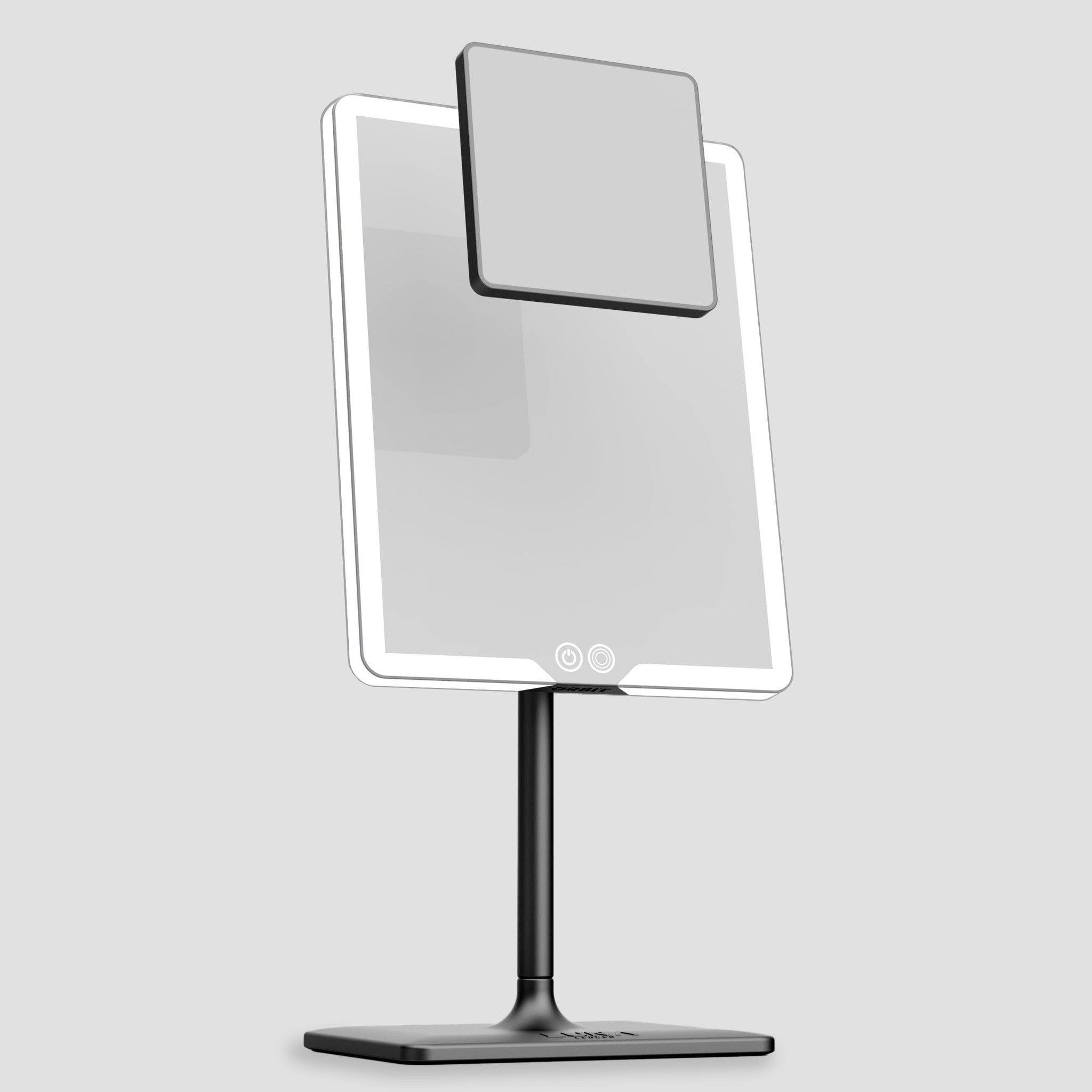
A clearer way to do the makeup-bag check
If you are sorting old products, checking tiny PAO symbols or trying to see whether a brush is genuinely worn out, ORBIT makes those details easier to judge. Its three light modes and 7x mini attachment are especially useful when labels and textures are small enough to invite wishful thinking.
Explore ORBIT in Phantom Black →FAQs
How often should I replace mascara?
A safe, simple rule is every 3 months. If it dries out, smells odd, flakes more than usual, or you have had an eye infection, replace it immediately.
Do powder products really last longer than liquid ones?
Usually, yes. Powders tend to last longer because they contain less moisture, but they still need replacing if they become damp, develop hard pan, smell off or stop performing properly.
When should I replace a makeup sponge?
Replace it every 1 to 3 months, depending on use. A torn, musty, permanently damp or slimy sponge should go straight in the bin.
How often should I wash makeup brushes?
Foundation and concealer brushes should be washed weekly, eye brushes about every 2 weeks, and powder brushes about monthly. More frequent washing makes sense if you have acne-prone or sensitive skin.
Is it okay to store makeup in the bathroom?
It is common, but not ideal. Heat and humidity can speed up product breakdown and encourage microbial growth, so a dry drawer or cupboard is better if you can manage it.
What does the little open-jar symbol on makeup mean?
It usually shows how many months a product is meant to last after opening, such as 6M or 12M. It is a useful guide, but you should still throw a product away sooner if it changes in smell, colour, texture or performance.
Do I really need to throw makeup away after pink eye or a cold sore?
Yes. Anything that touched the infected area, especially mascara, liner or lip products, is not worth keeping. Re-using it is a good way to repeat the problem.
Related links
- Fix patchy foundation with better lighting
- How to prevent cakey makeup with better lighting
- Makeup mistakes under bad lighting
- Morning sunlight vs LED for skin checks
- Best LED mirror for makeup
- Browse the LUNA blog hub



Leave a comment
This site is protected by hCaptcha and the hCaptcha Privacy Policy and Terms of Service apply.