

Last updated: 30 March 2026
In a hurry? TL;DR
- If you wore SPF, makeup, or heavy product, remove that first. If you did not, do not force a double cleanse.
- Use a gentle cleanser, lukewarm water, and your hands, not a scrubby cloth.
- Apply hydrating layers and moisturiser while skin is still slightly damp.
- Pick one active for your main issue, not three that fight each other.
- If your skin feels tight, shiny, stinging, or oddly “squeaky”, your routine is probably too harsh.
- Better skin by morning usually means calmer, fresher, better-hydrated skin, not an overnight miracle.
The 6-step evening system that leaves skin calmer, fresher and less dull by morning

A lot of night routines are basically theatre: too many bottles, too much rubbing, too much faith in the idea that more equals better. That logic breaks fast. If your skin looks worse after a “full reset”, the problem is often not that you need another serum. It is that you stripped the barrier, layered actives badly, or used poor lighting and over-applied half of it.
Dermatologists keep making the same point for a reason: simple wins. In a recent AP roundup, Yale dermatologist Dr Kathleen Suozzi said skin care routines have become “way overcomplicated”. That feels about right. You do not need a 12-step ritual. You need a repeatable one.
| If you wake up with… | What to prioritise at night | What to stop doing |
|---|---|---|
| Tight, flaky skin | Gentle cleanse, damp-skin hydration, richer moisturiser | Hot water, harsh foaming cleanser, nightly exfoliation |
| Congestion or breakouts | Proper makeup/SPF removal, one acne-friendly treatment | Sleeping in makeup, heavy occlusives everywhere |
| Dull, flat-looking skin | Consistent cleansing, hydration, measured use of retinoid or exfoliant | Random product hopping, aggressive scrubs |
| Redness or stinging | Fragrance-free basics, recovery nights, barrier support | Layering acids, retinoids, and scrubs together |
⚡ PRO INSIGHT: If your face feels “clean” in the satisfying, squeaky sense, that is not always a win. For many people it means the cleanser was too aggressive, and the tightness you feel 15 minutes later is the clue.
1. Remove what is actually on your skin
If you wore makeup, sunscreen, long-wear base, or simply had a full day in city air, start with removal. An oil cleanser, balm, or micellar first step can make sense here. If you did not wear much and your skin is fairly bare, you do not need to double cleanse just because the internet told you to. That is the kind of copy-paste advice that creates irritation for no reason.
This is also where lighting matters more than people think. In dim, yellow bathroom light, it is easy to miss residue around the hairline, nostrils, jaw, and brows. A quick check in even light helps you stop at “clean” rather than drifting into unnecessary rubbing. If you want a side-by-side on why consistent lighting makes these checks easier, see LED mirror vs natural light for skincare routines.

2. Cleanse gently, and stop trying to sand your face down
The American Academy of Dermatology advises using your fingertips rather than a washcloth or scrubby tool, and Cleveland Clinic recommends a gentle cleanser plus lukewarm, not hot, water. That is boring advice, which is probably why people ignore it, but it works. A gentle cleanse removes what needs to go without turning your barrier into collateral damage.
If your skin leans dry or reactive, choose a fragrance-free cleanser and keep the whole wash brief. If you are more acne-prone, you may do well with a cleanser containing ingredients such as salicylic acid or benzoyl peroxide, but only if your skin tolerates them. “Strong” is not the same thing as useful.
For a closely related LUNA guide, Night-Time Skincare with an LED Mirror breaks down the same logic with a more lighting-led angle.
3. Rehydrate while skin is still slightly damp
This is the step people skip, then blame their moisturiser for “not working”. The AAD’s guidance on dry skin is blunt: moisturiser is more effective when it goes onto damp skin because it traps water and helps stop it evaporating. That principle matters at night because you are trying to keep the skin comfortable for hours, not just ten minutes after the sink.
If you like a serum, use one that has a clear job. Hydrators such as hyaluronic acid or glycerin can help. If your barrier feels battered, ingredients like ceramides and niacinamide are more interesting than another trendy acid. Cleveland Clinic notes that ceramides make up about 50% of the outer layer of the skin, which is a good reminder that barrier support is not a side quest, it is the structure holding the whole routine together.
“Skincare regimens have become way overcomplicated.”
— Dr Kathleen Suozzi, Professor of Dermatology, Yale School of Medicine via AP News (2025)
4. Pick one treatment step, based on your main problem

This is where routines go off the rails. People get impatient, then try retinoid, exfoliating acid, brightening serum, spot treatment, and a resurfacing pad in the same evening. That is not an advanced routine. It is a coordination failure.
Choose one treatment lane:
- For dullness and texture: a retinoid can make sense on selected nights, introduced slowly.
- For clogged pores or acne-prone skin: a retinoid or salicylic-acid-led approach may be useful, depending on tolerance.
- For sensitivity or barrier damage: skip the active and make it a recovery night.
The AAD’s updated acne guidance strongly recommends topical retinoids in acne management, but that does not mean everybody should rush into nightly use. Start slowly, keep the rest of the routine boring, and do not stack it with a strong exfoliant on the same night unless your dermatologist tells you otherwise.
5. Seal it in with the right moisturiser, not the thickest one you own
Your final cream should match what came before it. If you used a retinoid or active cleanser, a plain, fragrance-free moisturiser is usually the smartest move. If your skin is oily, you do not necessarily need the heaviest cream in the cupboard. If your skin is dry, winter-tight, or irritated, a richer cream or ointment-style finish may be exactly what stops the morning flake-fest.
Again, the goal here is not to look glossy for social media. It is to wake up with skin that feels settled. That is a better test.
For readers who tend to wake up looking swollen rather than dry, How to Look Less Puffy pairs well with this routine.
6. Stop sabotaging the routine after the routine
The final step is not a bottle. It is what happens after you switch the light off. Poor sleep, friction, and overheated bedrooms all work against the work you just did. Emerging dermatology reviews now link poor sleep quality with compromised barrier function and worse skin outcomes, which fits what a lot of people notice in real life anyway: bad sleep shows up fast in the mirror.
None of that means you need silk pillowcases, mouth tape, or an elaborate “morning shed” experiment. It means keep the bedroom cool, do not sleep in makeup, change your pillowcase regularly, and stop touching your face once the routine is done.
⚡ PRO INSIGHT: Recovery nights are underrated. If your skin is suddenly prickly, shiny, or reactive, do less for two or three evenings. Cleanse gently, hydrate, moisturise, and let the barrier catch up.
The routine in one table
| Step | What to do | Why it helps by morning | Common mistake |
|---|---|---|---|
| 1 | Remove makeup/SPF if needed | Less residue, fewer clogged areas | Double cleansing when there is nothing to remove |
| 2 | Gentle cleanse with lukewarm water | Cleans without stripping barrier lipids | Hot water and scrubbing |
| 3 | Hydrate on damp skin | Improves comfort and reduces overnight water loss | Waiting until skin is fully dry |
| 4 | Use one treatment only | Targets your main issue without overload | Layering multiple strong actives |
| 5 | Moisturise to seal | Keeps skin calmer and smoother by morning | Using a formula that is far too heavy or too light |
| 6 | Sleep in a skin-friendly environment | Less friction, less heat, fewer next-day flare-ups | Touching face, dirty pillowcase, overheated room |
Where lighting fits into a good night routine

This article is not really about mirrors, but lighting still matters. The point is not vanity. It is accuracy. Even light helps you see whether cleanser has fully come off, whether a treatment is sitting where you intended, and whether you are starting to overdo redness around the nose, cheeks, or chin.
If you want a practical read on that side of things, Facial Massage for Glowing Skin and The Best Light Settings for Makeup both explain why consistent, front-facing light changes what you notice and what you stop overcorrecting.

See what your routine is actually doing
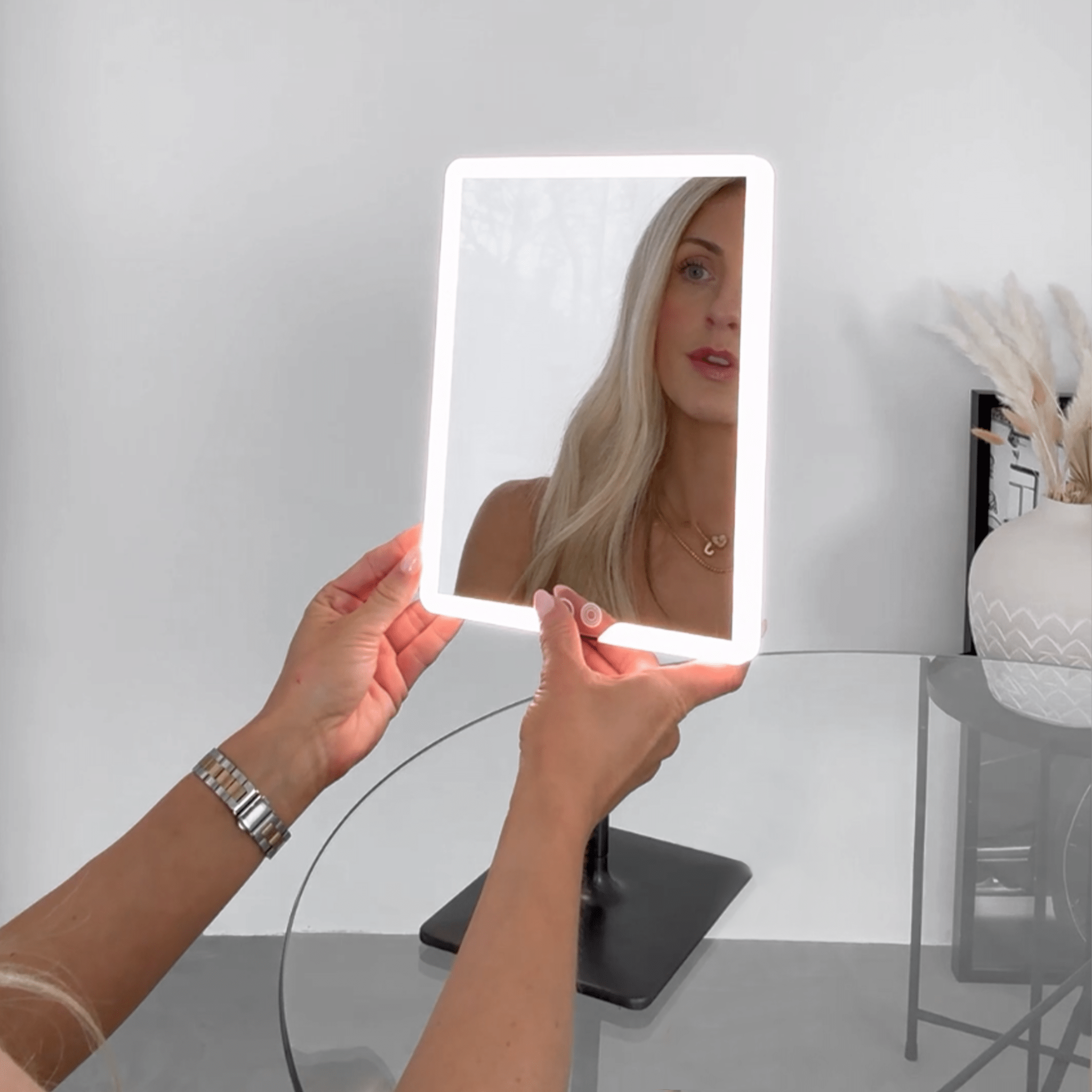
A night routine works better when you can check texture, residue, and product placement properly. ECLIPSE gives you three dimmable light modes in a slim, rechargeable format, so you can keep the routine precise without turning it into a production.
Discover ECLIPSE lighting →FAQs
Do I need to double cleanse every night?
No. Double cleansing is useful when you wore makeup, sunscreen, or heavier products. If your skin is fairly bare, a single gentle cleanse is usually enough.
What is the best night routine for better skin if my skin is dry?
Keep it simple: gentle cleanser, hydrating serum or essence if you like one, then a cream with barrier-supporting ingredients such as ceramides. Skip aggressive acids unless your skin clearly tolerates them.
Should I put moisturiser on before or after retinoid?
Usually after, though some people use the “sandwich” method, moisturiser, retinoid, moisturiser, to reduce irritation. The key is starting slowly and not combining retinoid with every other strong active.
Why does my skin look worse the morning after trying a new routine?
Because “more” is often the problem. Too many actives, harsh cleansing, fragrance, or over-exfoliation can leave skin red, tight, shiny, or flaky by morning.
Can I exfoliate every night if my skin looks dull?
For most people, no. Nightly exfoliation is a fast way to irritate the barrier. If dullness is your issue, a slower, more consistent approach usually beats daily scrubbing.
Does lighting really matter for skincare?
Yes. Good lighting helps you see leftover cleanser, missed makeup at the hairline, patchy product placement, and early irritation. That usually means less rubbing and fewer unnecessary extra layers.
How long should a good evening routine take?
On most nights, five to ten minutes is enough. A routine that is easy to repeat will usually outperform a perfect routine you cannot be bothered to do.
Related links
- Night-Time Skincare with an LED Mirror: The Ritual Experts Recommend
- LED Mirror vs Natural Light: Which One Is Best for Skincare Routines?
- How to Look Less Puffy: The Best Skincare Products and Morning Fixes
- Facial Massage for Glowing Skin: A Routine with Your LED Mirror
- The Best Light Settings for Makeup: Warm vs Cool vs Natural Light, Explained


Leave a comment
This site is protected by hCaptcha and the hCaptcha Privacy Policy and Terms of Service apply.