


Last updated: 12 February 2026
Summary: Natural light is the most honest reference, but it changes hour to hour and season to season. A good LED mirror gives you repeatable lighting for daily skincare, then you can sanity-check in daylight before you head out. The best routine is usually “LED for consistency, daylight for confirmation”.
In a hurry? TL;DR
- Use LED for your everyday routine because it stays consistent, which makes it easier to spot what’s genuinely changing in your skin.
- Use daylight for quick checks before you leave, especially if you’re wearing SPF, tint or makeup.
- Prioritise colour accuracy over raw brightness, so redness, dullness and residue show up clearly.
- If you’re checking any new or changing marks, use a well-lit room and follow medical guidance, not “flattering” bathroom light.
How to Set Up “Truthful” Light for Your Skin
Most skincare frustration is not about the cleanser or serum. It’s about feedback. You do your routine, glance in the mirror, and you’re not sure what you’re seeing. Is that redness real or just warm lighting? Is your moisturiser pilling, or is the overhead light creating harsh texture?
Lighting changes three things that matter for skincare:
- Colour (does your skin look flushed, sallow, grey, warmer, cooler?)
- Texture (dryness, flakes, “pilling”, leftover mask residue, missed cleanser)
- Shadows (under-eyes, beard shadow, jawline definition, uneven application)
So the question “LED mirror vs natural light” is really about consistency versus realism. You want one light source you can rely on daily, and another you can use to confirm how you’ll look out in the world.
Natural light: the honest mirror, with a big catch
Daylight is useful because it’s a familiar baseline. If you’re doing a quick “final check” before you leave, natural light is hard to beat. If you want a dedicated method for doing that check properly, see Morning Sunlight vs LED: Which Is Better for Skin Checks?.
The catch is that daylight is inconsistent. It swings with weather, time of day, window direction, and even the colour of the room you’re standing in. That matters because skincare improvements are often subtle, and subtle changes only show up when your viewing conditions are stable.
When natural light is genuinely best
- Before you leave, to sanity-check SPF streaks, tinted moisturiser, or makeup edges.
- After exfoliation or a strong active, to confirm whether redness is mild and temporary or more intense than expected.
- For colour decisions, like whether a tinted product blends into your neck and chest.
When natural light can mislead you
- Very early or late daylight can run warm and make redness look calmer than it is.
- Direct sun can wash out detail and flatten texture, which hides residue and uneven coverage.
- Grey, cloudy light can skew cool and make you think you look dull when it’s mainly the lighting.
⚡ PRO INSIGHT: If you rely on daylight only, you’ll end up chasing “ghost problems” because your baseline keeps changing. Consistency matters more than perfection when you’re tracking irritation, dryness, or shaving symmetry.
LED mirror lighting: consistent feedback for daily routines
A good LED mirror gives you what daylight can’t, a repeatable reference. The goal is not to look flattering. It’s to see your skin in the same conditions, so you can tell what’s actually improving or worsening.
This matters most when you’re layering products. Missed cleanser, leftover sunscreen, patchy serum application, these are small errors that compound. Stable lighting makes the “tiny misses” visible.
Cleveland Clinic dermatologist Dr Sean McGregor also makes a useful point for anyone who keeps adding steps because their skin “doesn’t look right”. If you’re not seeing clearly, it’s easy to overdo it.
“Certain toners, serums and other products cause dryness, and it’s easy to overdo it if you’re using too many products.”
Dr Sean McGregor, DO (Dermatology), quoted in Cleveland Clinic guidance on routine order.
In practice, consistent LED lighting helps you simplify because you can tell whether a product is helping, or whether it’s just “good light”. For a practical walkthrough, see Best LED Mirror for Applying Skincare.
What “good LED” means (without the rabbit hole)
Two things matter more than anything else:
- Colour temperature (how warm or cool the light looks).
- Colour accuracy (how truthfully the light shows skin tone and product colour).
Colour accuracy is often described with the colour rendering index (CRI). DesignSpark explains CRI as a metric for how well a light source shows the real colours of objects compared with natural sunlight, with higher CRI meaning clearer, crisper colours. Read the CRI explainer here.
If you want a simple way to think about warmth vs coolness for everyday grooming as well as skincare, this guide on warm vs cool vs natural light settings lays out the trade-offs clearly.
⚡ PRO INSIGHT: For skincare, “colour accuracy” matters more than raw brightness. A slightly dimmer, accurate light will show leftover cleanser, SPF streaks and redness better than a very bright, colour-distorting bathroom bulb.
The practical answer: use LED for the routine, daylight for the final check
If you do skincare in the bathroom and only ever see yourself under a warm ceiling light, it’s normal to feel like your face looks “different” everywhere else. Overhead lights create shadows that exaggerate texture and under-eyes. That’s the core issue we unpack in Why Hotel Bathroom Lighting Is Failing You.
The workaround is simple: decide what you’re trying to do, then match the light to the task.
| Skincare task | Best light | Why it works |
|---|---|---|
| Cleansing, double cleanse, “did I get everything?” | LED mirror, neutral or daylight mode | Repeatable light shows residue and texture without changing daylight variables. |
| Applying serums and actives | LED mirror | Helps you see even coverage and avoid “stacking” more than you need. |
| Morning SPF application | LED first, daylight check second | LED gives consistency, daylight catches tint mismatch or missed edges before you leave. |
| Shaving, beard edges, brows | LED mirror with front light, not overhead | Reduces shadow distortion and makes symmetry easier to judge. |
| Tracking irritation or dryness week to week | Same LED mode, same distance daily | A stable baseline makes trends obvious, instead of reacting to one weird lighting moment. |
A 60-second “truth test” you can do once, then stop thinking about it
- Pick your baseline LED mode (neutral or daylight is usually easiest).
- Cleanse and dry your face, then look for any leftover product around hairline, nose folds, jawline and under the chin.
- Step back two paces and look again. If things look “better” only when you step back, that’s normal. What matters is being consistent about your distance.
- Do a window check for 10 seconds. You’re not hunting flaws, you’re confirming you won’t be surprised later.
This is also where simpler routines win. Cleveland Clinic’s step-by-step guidance notes that, at minimum in the morning, it’s cleanser, moisturiser and sunscreen in that order, with actives used more carefully at night depending on tolerance. (See their simple routine breakdown here.) Better lighting makes it easier to stick to a routine you can actually repeat.
Common mistakes that make both LED and daylight less useful
- Changing your light mode daily, then assuming your skin changed. Pick a baseline mode and keep it.
- Standing too close and treating “normal texture” as a crisis. Use a consistent distance, and only zoom in for specific tasks.
- Judging skin in harsh overhead lighting. If it’s all ceiling light, expect exaggerated shadows.
- Using direct sun as your “truth”. Direct sun often hides detail and can encourage overapplication of products.
If you’re balancing skincare with makeup and camera lighting too, this guide on vanity mirror with lights vs ring light explains why ring lights can look great on camera but still mislead you in everyday life.
Choosing a mirror setup for skincare
You don’t need a “lab mirror”. You need a mirror that gives you stable light, sits at a usable height, and helps you keep your routine simple.
| Option | Best for | Trade-offs | Here’s Our Favourite |
|---|---|---|---|
| ORBIT | Daily skincare station, shaving, routine consistency | Takes a fixed space, so it’s best if you have a dedicated counter or vanity area | Best all-round “truth mode” for everyday skincare |
| COMPACT 2.0 | Travel routines, quick checks, handbag or gym bag skincare | Smaller mirror area, so it’s less ideal for full-face symmetry checks | Best for staying consistent when you’re not at home |
If you’re still unsure whether an LED mirror genuinely changes outcomes, our deep dive on Cosmetic Light Mirrors: Do They Really Make a Difference? covers the practical wins, from more even application to fewer “why does my face look different?” moments.
Quick safety note, if you’re doing more than “routine skincare”
For day-to-day skincare, it’s fine to use whatever light helps you stay consistent. But if you’re checking a new mark, a changing mole, or anything that worries you, the goal is a thorough look in a well-lit room, not a flattering glow. Cancer Research UK recommends using shade, clothing and sunscreen together for sun safety, and the American Cancer Society provides a methodical skin self-exam checklist for checking your skin properly. If anything looks unusual, get medical advice.
Useful references: Cancer Research UK sun safety steps and American Cancer Society skin self-exam guide.
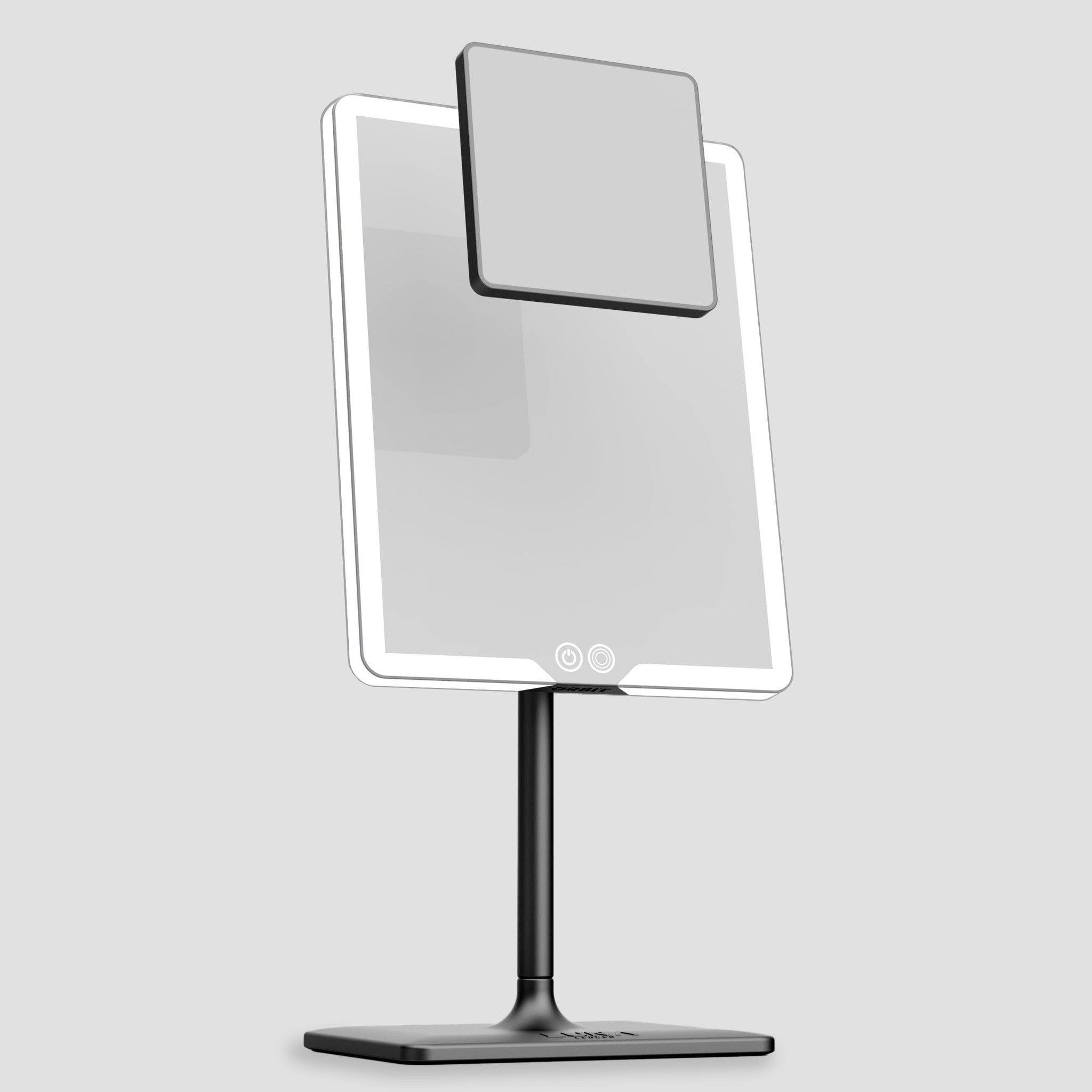
A consistent “truth mode” makes routines easier
If you want repeatable lighting for cleansing, actives and daily SPF, ORBIT is designed for routine consistency, then you can do a quick window check before you leave.
FAQs
Is natural light always best for skincare?
It’s the best “reality check”, but it’s not always the best daily baseline because it changes constantly. Use daylight to confirm how your skin looks before you go out, and LED for consistent daily feedback.
What light colour is best for skincare routines?
Neutral to daylight-like settings are usually easiest for seeing true skin tone and product residue. Very warm light can hide redness, while very cool light can exaggerate dullness.
Do LED mirrors damage your skin?
A standard LED vanity mirror is for illumination, not treatment. If you’re concerned about UV exposure, prioritise sunscreen and sensible sun habits.
Why does my skin look worse in the bathroom?
Overhead lights create shadows that exaggerate texture and under-eyes. Front-facing, even illumination reduces that “harsh” effect and gives a clearer view for skincare and grooming.
Should I do skincare by a window?
If the light is indirect, it’s a great finishing check. For the routine itself, don’t rely on daylight as your only light source unless you can use the same spot and time most days.
What’s the simplest routine to judge in any light?
Keep it repeatable. Cleveland Clinic’s guidance suggests a simple morning baseline is cleanser, moisturiser and sunscreen, then add extras only if you can see they help without causing irritation.
Related links
- Morning Sunlight vs LED: Which Is Better for Skin Checks?
- Best LED Mirror for Applying Skincare
- Warm vs Cool vs Natural Light Settings Explained
- Vanity Mirror with Lights vs Ring Light
- Cosmetic Light Mirrors: Do They Really Make a Difference?
- Why Hotel Bathroom Lighting Is Failing You
- Cleveland Clinic: How To Order Your Skin Care Routine
- DesignSpark: What CRI Means (Colour Rendering Index)
- Cancer Research UK: Sun Safety
- American Cancer Society: How to Do a Skin Self-Exam


Leave a comment
This site is protected by hCaptcha and the hCaptcha Privacy Policy and Terms of Service apply.