

Last updated: Wednesday 1 July 2026
The Real Difference Between Mirror Lighting and Ring Lights for Makeup
The old argument was simple: ring lights looked professional, so people assumed they were better for makeup. That is only half true. A ring light can make your face look smoother on camera, but everyday makeup is judged in daylight, office lighting, restaurant lighting, car mirrors and bathroom lighting that is rarely kind.
A good makeup lighting setup needs to do one boring but important job: show you what is actually happening before you leave the house. That means colour, blending, texture, jawline edges, brows, liner and powder. A ring light can help with some of that, but it was built mainly for camera-facing light. A vanity mirror with lights is built for your reflection.
Vanity mirror with lights vs ring light: quick comparison
⚡ PRO INSIGHT: If you only choose one for everyday use, pick the tool that reveals mistakes before you leave the house. For most people, that is a mirror with adjustable front-facing light, not a ring light designed to flatter a camera.
When a ring light is actually the better choice
A ring light makes sense when your makeup routine is tied to a camera. If you film tutorials, shoot GRWM videos, take selfies, teach on Zoom, record content at your desk or need to look sharper on video calls, a ring light can be genuinely useful. It creates even, front-facing illumination and helps your camera expose your face clearly.
That is why many ring light buying guides talk about phone mounts, tripods, brightness controls and colour temperature ranges. Tom’s Guide’s ring light testing frames ring lights around content, video conferencing, selfies, vlogging, streaming and beauty work. That is exactly the point: they are content tools first.
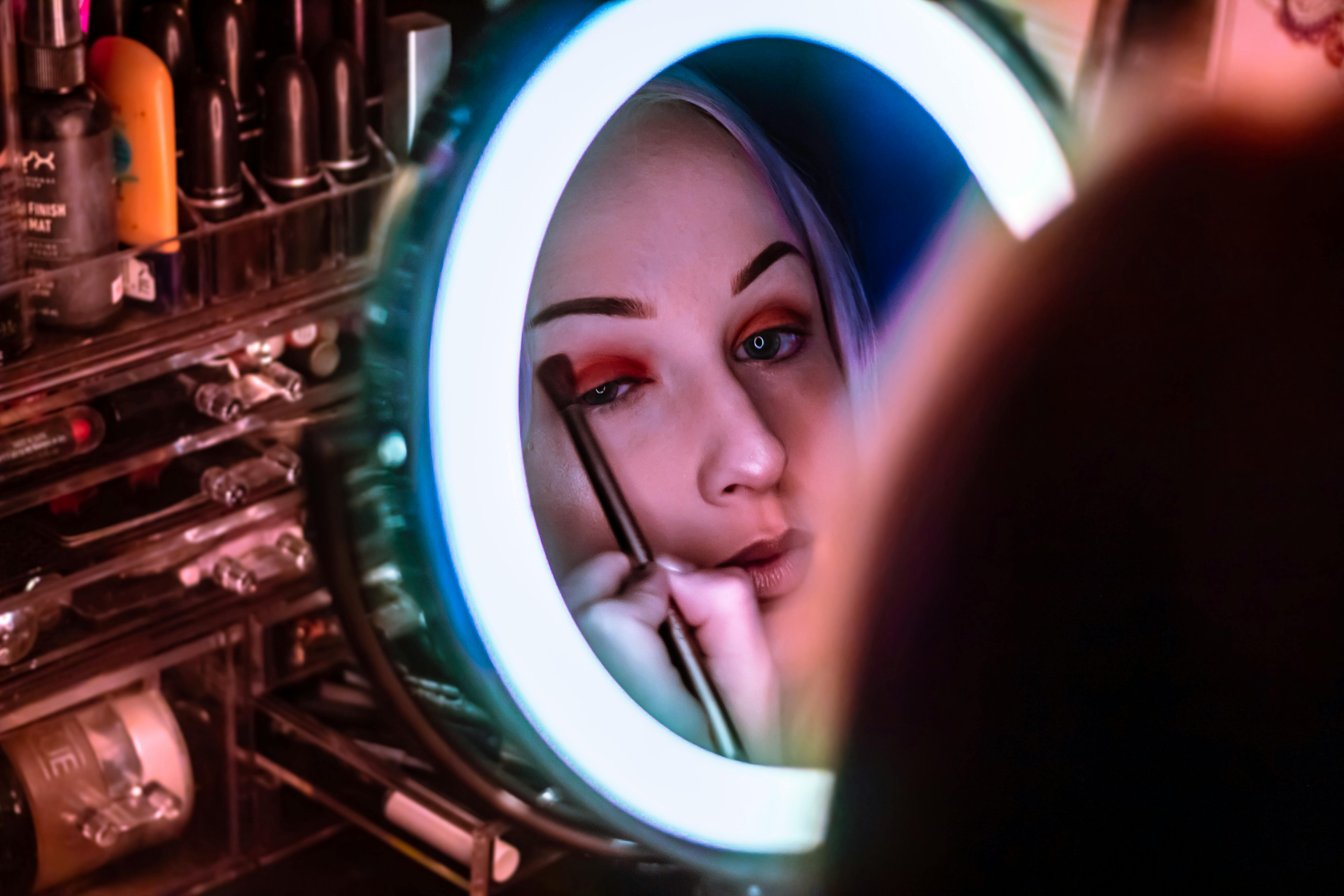
The catch is that “looks good on camera” and “looks good outside” are not the same promise. A ring light can soften texture, reduce face shadows and make skin appear smoother through a lens. Helpful? Yes. Honest for foundation shade matching? Not always.
Is a ring light overkill for everyday makeup?
Sometimes, yes. That does not mean ring lights are bad. It means they are often more equipment than the average morning routine needs.
If you are getting ready for work, school runs, errands, dinners or a normal day out, the main problem is usually not that your face needs a content light. The problem is that your mirror is giving poor feedback. Yellow bathroom bulbs can make foundation look warmer. Overhead lights can exaggerate under-eye shadows. Dim rooms can hide blend lines until you see yourself in a lift, car mirror or office bathroom.
For that kind of routine, a ring light may add brightness without solving the actual issue: you still need a stable mirror, a comfortable working distance and light that helps you judge colour and detail. If the ring light sits behind your phone or off to the side, you may be lighting the camera better than your reflection.
The more useful order is: mirror first, ring light second. Do the makeup in a mirror that gives honest face-level feedback, then use a ring light if the camera matters.
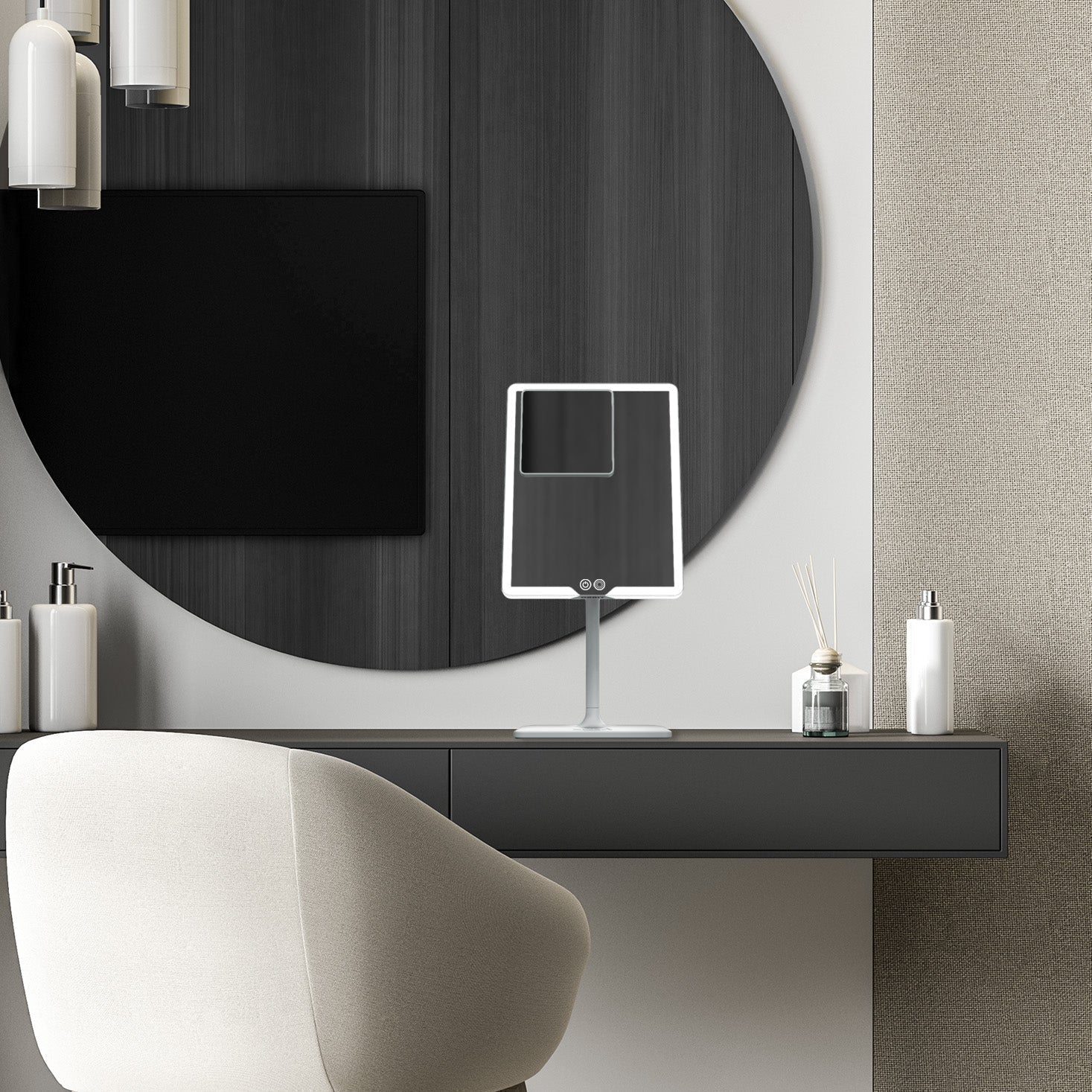
Quick setup rule: if your routine is mostly makeup, brows or getting ready in a small room, start with ORBIT. If your routine is mostly filming, add a ring light after the mirror check, not before it.
When a vanity mirror with lights wins, which is most mornings
If you do makeup to look good in the real world, a vanity mirror with lights is usually the more useful tool. You are looking directly at your reflection from the distance and angle you actually work from. That makes it easier to spot:
- foundation undertone that looks too warm, cool or grey
- blend lines around the jaw, hairline and nose
- patchy powder, concealer texture and dry areas
- brow symmetry, liner edges and lash placement
- small grooming details that overhead bathroom lighting tends to hide
This is where a lot of “bad makeup days” are not really product problems. They are feedback problems. If your bathroom light is yellow and overhead, you may over-powder because shine looks worse. If it is too cool, your base can look dull, so you warm everything up and then look orange outside. If it is too dim, you simply cannot see enough to blend properly.
For a deeper example of that feedback problem, read our guide to makeup mistakes under bad lighting. It is the same issue from a different angle: bad light pushes you into bad corrections.
The two specs people ignore: colour temperature and CRI
1. Colour temperature
Colour temperature changes how warm or cool your skin, base and blush appear. The U.S. Department of Energy explains that lower Kelvin temperatures are perceived as warmer, while higher Kelvin temperatures are perceived as cooler. For makeup, that matters because the wrong light can push you into the wrong correction.
A practical rule: use a neutral or daylight-style mode for daytime makeup, then sanity-check in warmer light if you are heading to dinner or an evening event. For a fuller breakdown, see our guide to warm, cool and natural light for makeup.
2. CRI
CRI, or Colour Rendering Index, measures how accurately a light source renders colour compared with a reference source such as daylight. The DOE describes CRI as a 1 to 100 scale, with higher scores indicating more faithful colour appearance. Translation for makeup: brightness helps you see, but colour rendering helps you judge shade.
⚡ PRO INSIGHT: Bright light can still be wrong light. If your foundation looks fine indoors and strange outside, the issue may be colour rendering, light direction or room colour, not your foundation.
What makeup artists and beauty editors actually look for
Professionals do not just chase brightness. They look for consistency. That means a setup where the light direction, colour and working distance stay predictable. In its 2026 lighted mirror guide, Allure highlights mirrors with different magnifications, sizes, light settings and brightness settings for makeup tasks such as contouring, brow shaping and touch-ups.
“I got my hands on a compact LED mirror so I can see what I’m doing more clearly.”
— Sarah Han, Commerce Editor, Allure, 2026
That quote is useful because it gets to the heart of the comparison. A ring light can make your content look more polished. A lighted mirror helps you catch the kind of patchiness, under-blending and small detail issues that people notice once you are out of the bathroom.
Magnification: useful for brows, not for your whole face
Magnification can be brilliant for brows, liner, lashes, contact lenses and tiny grooming details. It is much less useful for judging your whole face. Too much zoom makes texture look dramatic, which can lead to over-correcting with concealer, powder or tweezers.
The safer method is simple: do your full face in 1x, use magnification for one small task, then step back again. That is why our 5x vs 10x vs 15x magnifying mirror guide and 7x magnifying mirror guide both come back to the same principle: magnification is a precision tool, not the final judge.
If you notice eye strain when doing close work, lighting and breaks matter too. Mayo Clinic recommends adjusting lighting for close work and taking occasional breaks by looking away from the page, screen or task.
Mirror first, camera second
If your makeup changes in every room, start with a better mirror check
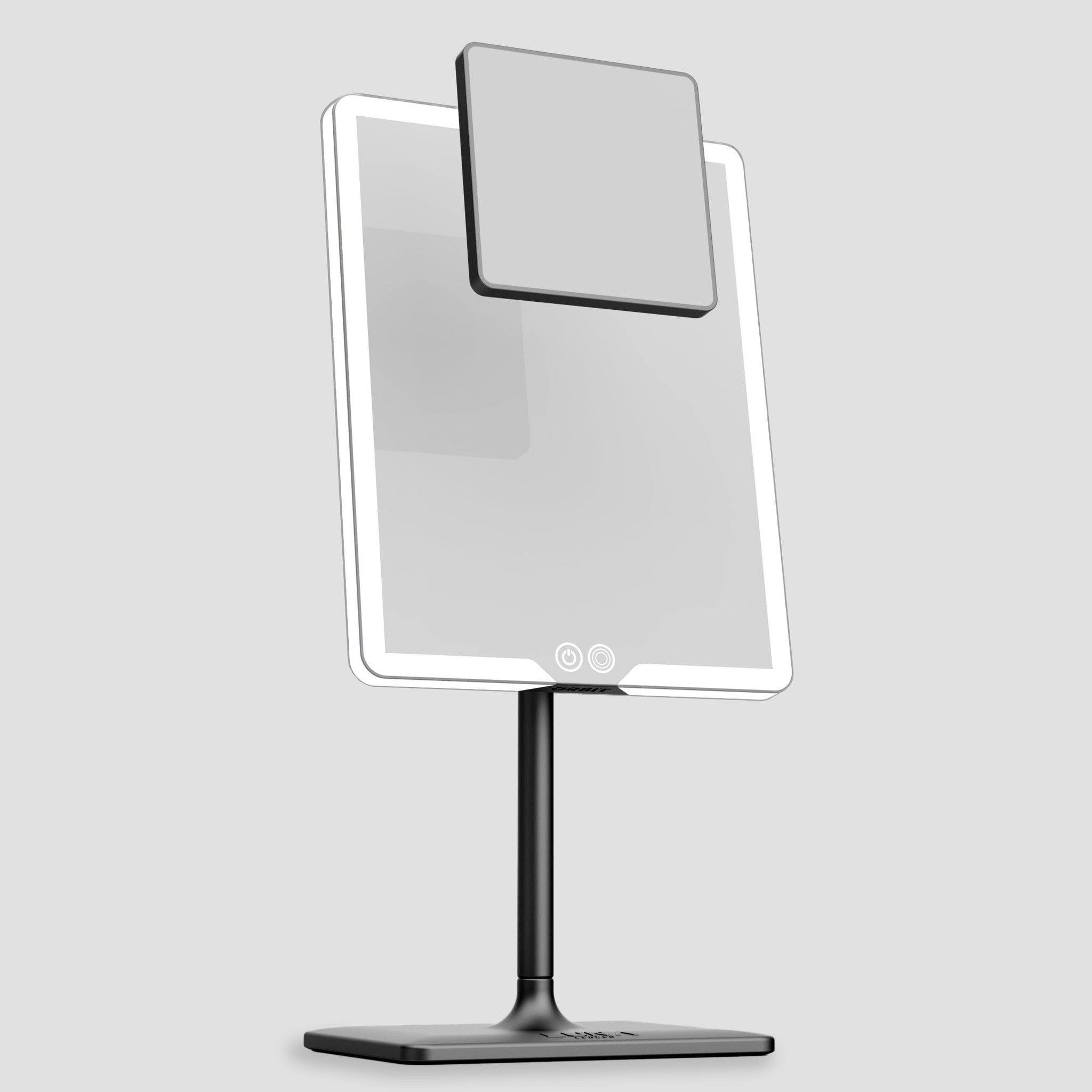
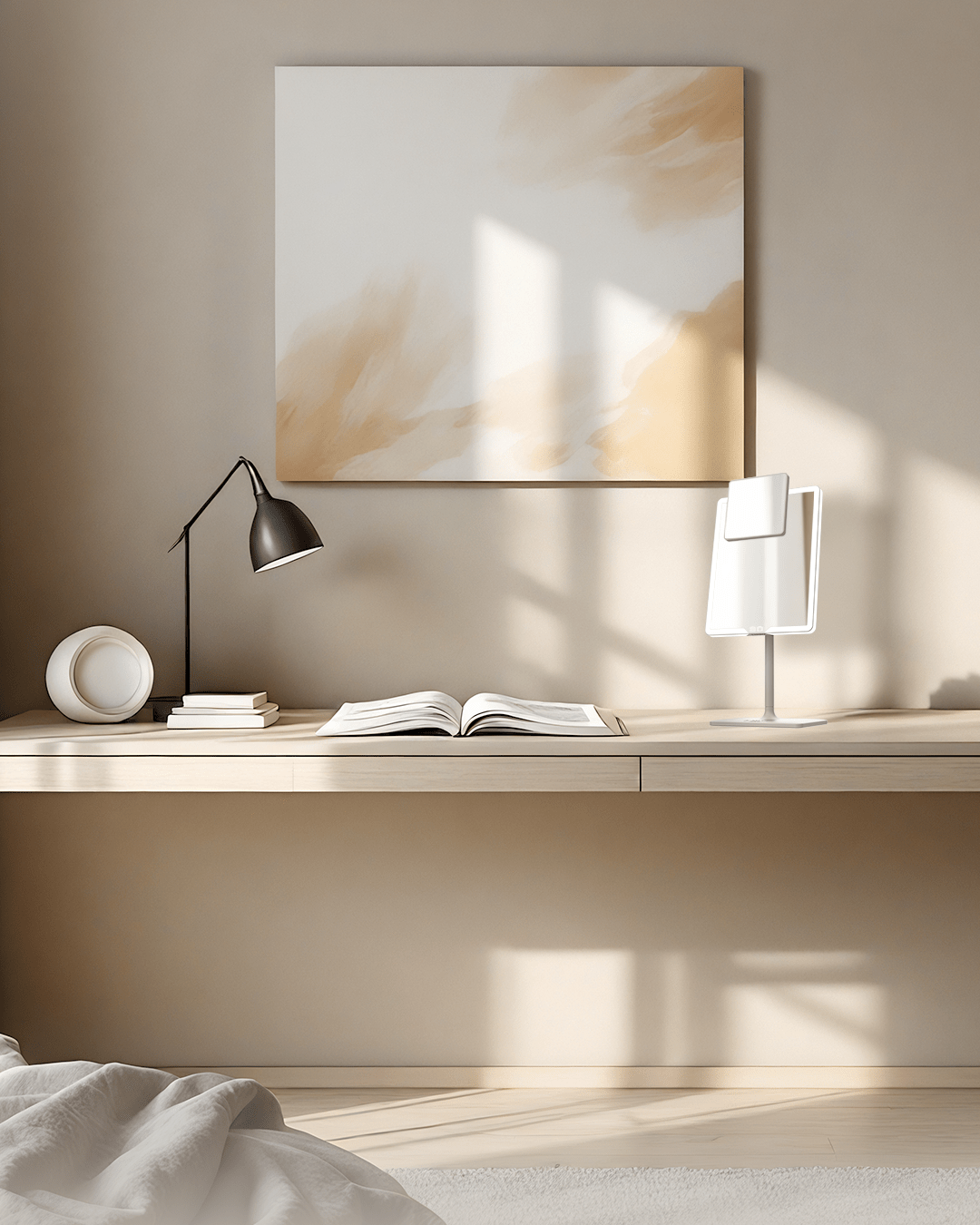
ORBIT gives you one stable place to check the full face, then use the 7x magnification add-on briefly for brows, liner, lashes or small corrections. Add a ring light afterwards if you also need the look to read well on camera.

A simple decision framework based on what you actually do
Everyday setup tips that stop the “looks good here, bad there” problem
- Set the mirror at face level. Overhead bathroom light creates shadows under the eyes, nose and chin. A face-level light source is usually more useful.
- Use neutral or daylight-style light for daytime makeup. Warm light can be flattering, but it may hide undertone problems.
- Do the full face in normal view. Use magnification only for targeted tasks such as brows, liner or contact lenses.
- Step back before you finish. If makeup only looks good six inches from the mirror, it probably needs softening.
- Use the ring light last if filming. Check real-life makeup first, then adjust for camera if needed.
If you do not have reliable daylight in your room at all, this makeup with no natural light setup is the better next read. If you are still confused by the terms, our light-up mirror vs LED mirror guide explains what actually matters before you buy.
So, which is better in 2026?
If you are choosing one tool for everyday makeup, a vanity mirror with lights is the better first buy. It is designed for the routine itself: seeing your face clearly, checking undertones, blending properly and catching detail before the world does.
If you are camera-forward, a ring light can still be worth it. Just do not confuse flattering video light with accurate makeup light. The smartest setup is often: vanity mirror with lights for the makeup, ring light for the camera.
The quick LUNA mirror selector
If this comparison has made one thing clear, it should be this: do not buy lighting just because it looks good in a video. Buy the setup that matches the routine you actually do.
The simplest rule is still the best one: use mirror lighting to make the makeup honest, then use camera lighting if you need the content to look polished. Reverse that order and you risk creating makeup that looks great on-screen but falls apart in daylight.
Daily-use proof point
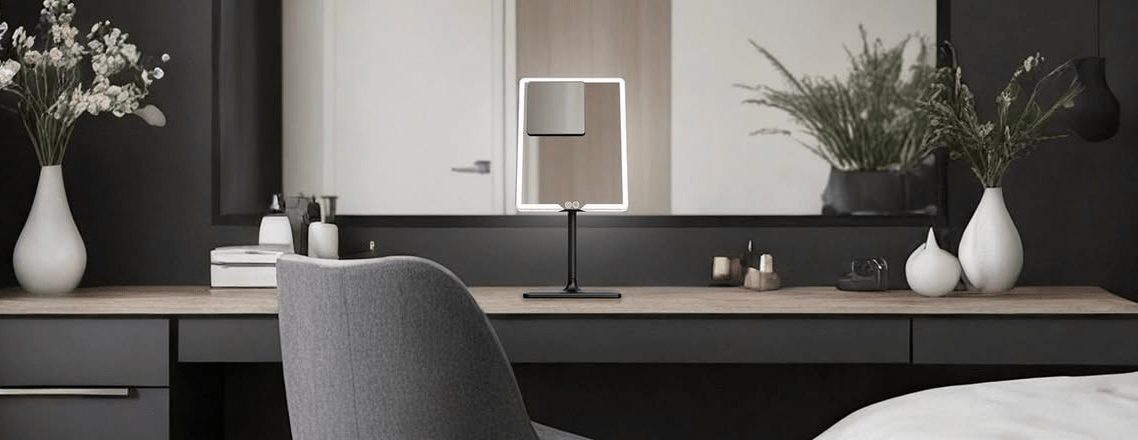
A proper mirror for routines where small details matter
“My hubby likes to use it when shaving as he finds the light really helpful as our bathroom is quite dark.”
Quick tracked delivery available in:
 USA
USA
 UK
UK
 EU
EU
FAQs
Is a ring light good for everyday makeup?
It can be, but it is better for camera-facing light than real-life makeup accuracy. For everyday makeup, a vanity mirror with lights is usually more reliable because it helps you judge undertones, blending, texture and detail at the mirror.
Is a vanity mirror with lights better than a ring light?
For daily makeup, usually yes. A ring light is excellent for filming and Zoom, but a vanity mirror with lights gives better routine feedback for foundation matching, brows, liner and overall finish.
Is a ring light overkill for everyday makeup?
For many people, yes. If you are not filming, streaming or taking regular selfies, a ring light can be more setup than you need. A good lighted vanity mirror usually solves the daily problem more directly because it improves the mirror check itself.
Why does my foundation look different in daylight?
Indoor lighting can shift how undertones appear. Warm, cool and low-colour-rendering light can make foundation look more yellow, grey, orange or dull than it really is, which is why adjustable mirror lighting helps.
Should makeup artists use ring lights or vanity mirrors?
For client work and filming, many makeup artists use both. The mirror helps with application accuracy, while the ring light helps the finished look read well on camera.
Related links
- Warm, cool or natural light for makeup?
- Makeup mistakes under bad lighting
- Light-up mirror vs LED mirror
- Best travel makeup mirror 2026
- Makeup with no natural light setup
- ORBIT vanity mirror with lights

Leave a comment
This site is protected by hCaptcha and the hCaptcha Privacy Policy and Terms of Service apply.