
Last updated: 10th April 2026
In a hurry? TL;DR
- 7x is a detail-check tool, not the best main mirror for most people.
- It helps most with brows, stray hairs, lash placement, contact lenses and precision grooming.
- If you mainly struggle with shadows, dim rooms or hotel bathrooms, lighting often matters more than extra magnification.
- The safest workflow is simple: decide in 1x, check in 7x, finish in 1x.
- If higher zoom makes you over-pluck, over-blend or fix things nobody else can see, it is too much for your routine.
When 7x Magnification Makes Sense, and When Better Lighting Matters More

A lot of people search for a 7x magnifying mirror when the real problem is slightly different. Sometimes it is about brows. Sometimes it is eyeliner. Sometimes it is the slightly annoying stage where menus, labels, or contact lenses suddenly feel harder than they used to. According to the National Eye Institute, presbyopia is a normal age-related change that usually starts after 45 and makes near tasks harder. The same page also notes that brighter reading lights can help.
That matters because magnification and lighting solve different problems. Magnification helps you see a small area in more detail. Good lighting helps you see the area more honestly. If the mirror is too dark, a stronger zoom does not magically fix that. It often just gives you a sharper view of the same shadows.
⚡ PRO INSIGHT: If a mirror only becomes “useful” when your nose is almost touching it, the issue may be working distance or lighting, not just the zoom level. Comfortable posture is part of a good mirror set-up.
What 7x actually does well
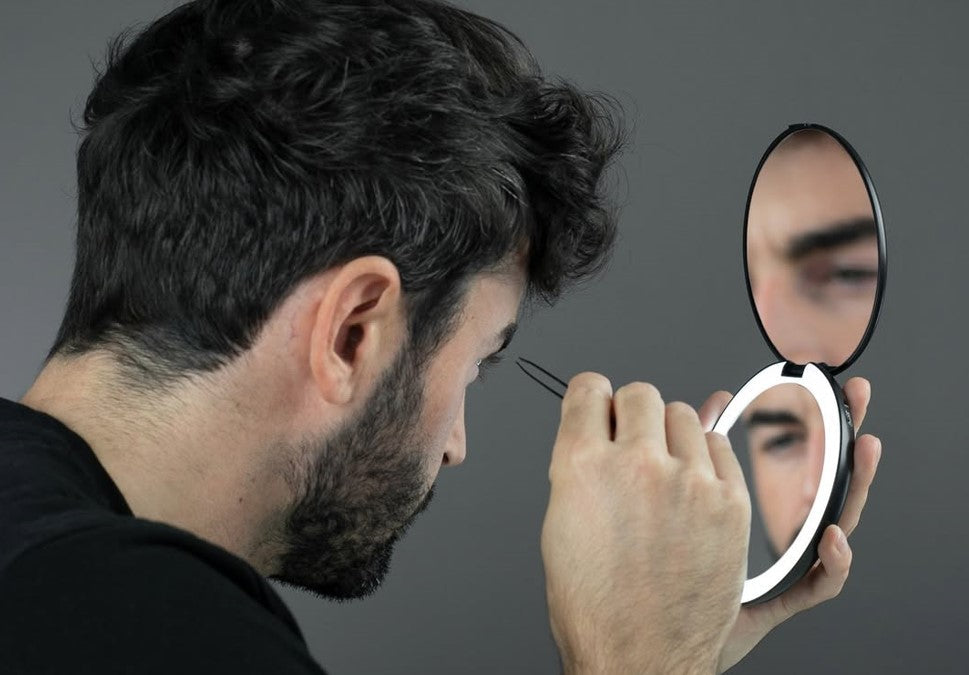
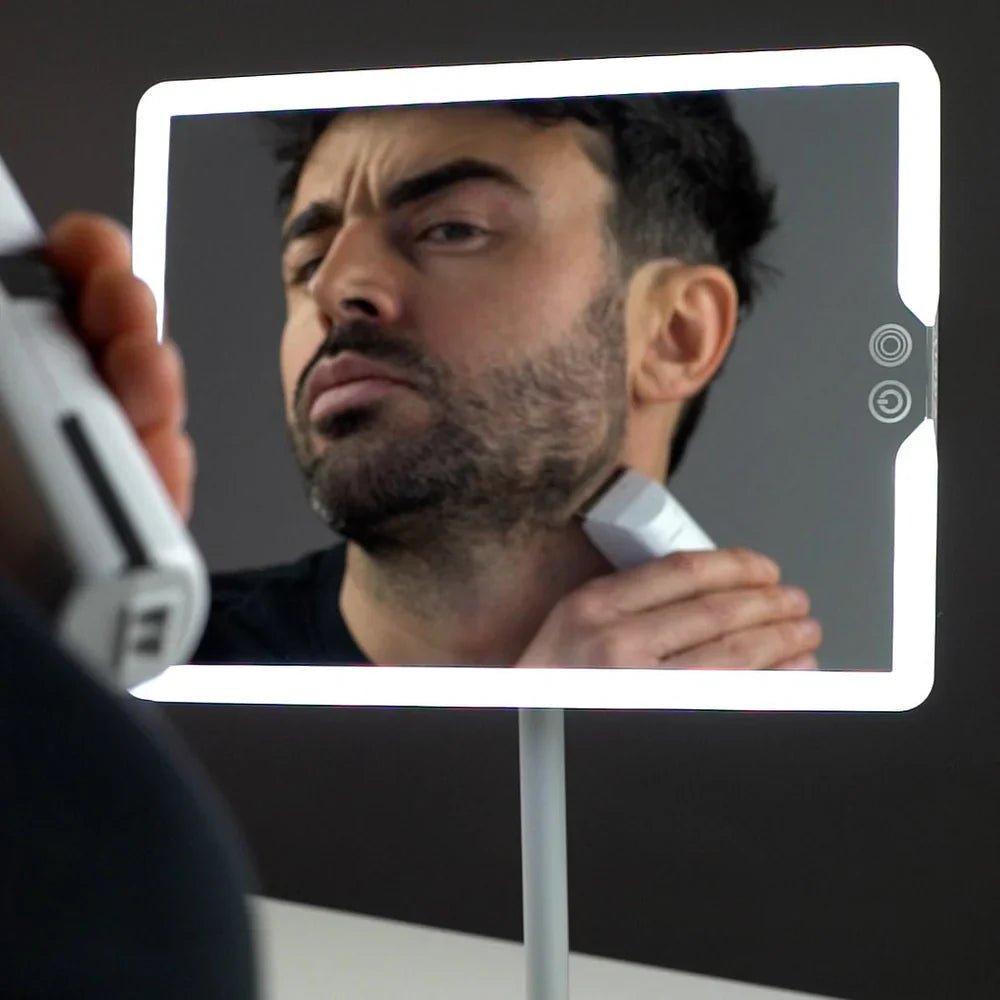
7x sits in an interesting middle ground. It is strong enough to help with close-detail work, but not so extreme that it instantly becomes a novelty for most people. That is why it often works well for specific jobs rather than whole routines. If you are cleaning up brow strays, refining eyeliner, placing lashes, or checking a beard line, 7x can be genuinely useful.
It can also help if you have started doing the classic “phone a bit farther away” move. Moorfields notes that presbyopia is caused by age-related loss of near focusing, and that by the mid-forties even people who have never needed glasses often start needing some help for close work. If that sounds familiar, 7x can feel less like a luxury and more like a convenience upgrade when used sensibly.
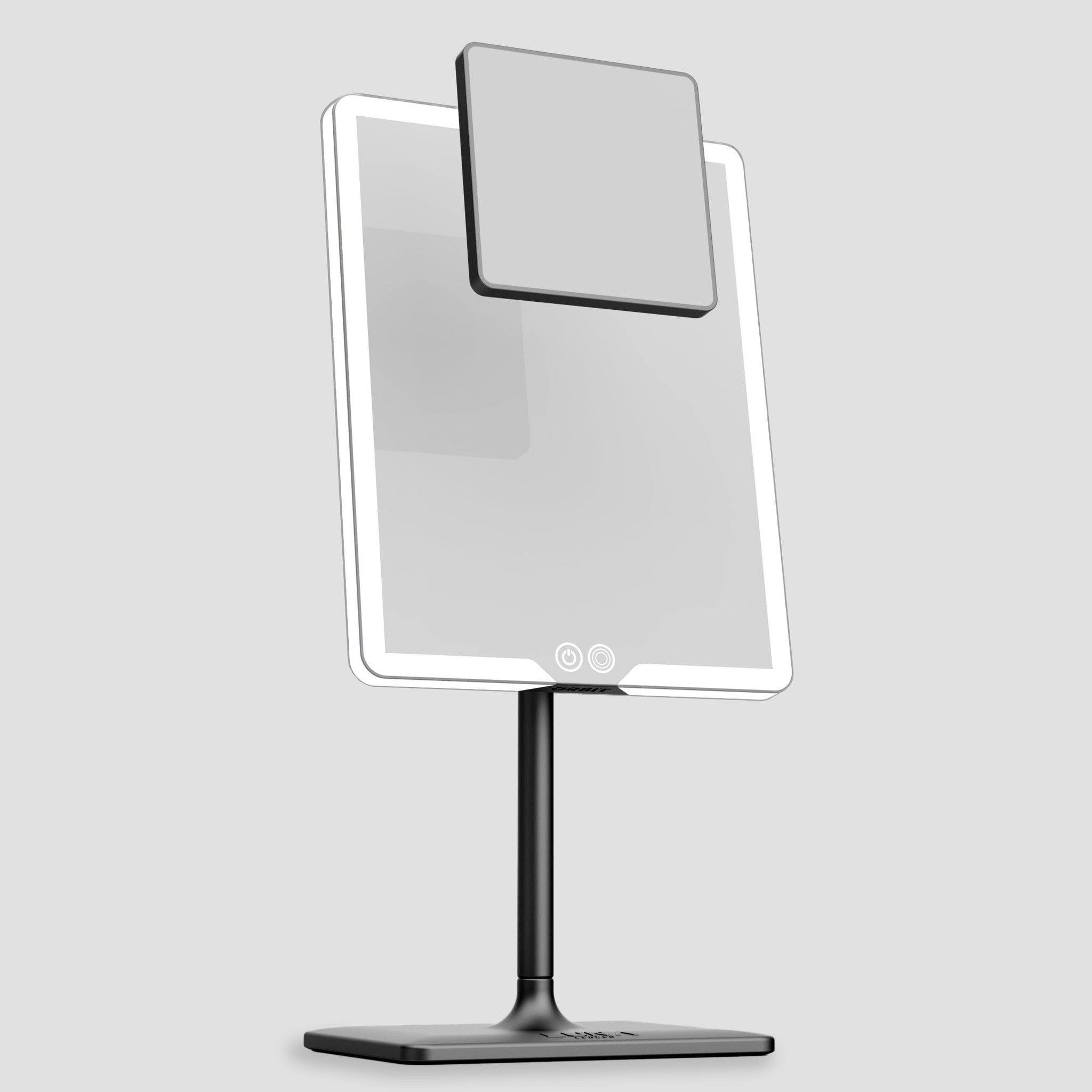
For LUNA’s own range, ORBIT works well as a home set-up because the 7x mirror is detachable rather than permanent, while COMPACT 2.0 makes more sense when you want 1x and 7x in a portable format. If you are comparing broader magnification levels, this related guide on 5x vs 10x vs 15x magnification goes wider.
When 7x is too much
This is the bit most product pages duck. A 7x magnifying mirror can make normal skin texture, tiny hairs, and asymmetry look far more urgent than they do in real life. That is useful when you are trying to catch one exact brow hair. It is less useful when you are deciding whether your foundation is balanced across the whole face.
RNIB’s guidance on low vision tools makes the general trade-off clear: as magnification power increases, working distance usually gets shorter. In plain English, stronger magnification often forces you to get closer. That is one reason high magnification feels intense. It narrows your view, changes your posture, and encourages “micro-fixing”.
If that sounds familiar, you are not alone. The best eyebrow mirror guides tend to arrive at the same answer: use magnification briefly for detail, then step back. LUNA’s own eyebrow mirror buying guide makes the point well. Shape decisions happen better in a realistic view. Zoom should be the final check, not the whole session.
“In the past, emerging presbyopes may have been identified by stretched out arms or a jaunty angle of the head trying to capture the best light.”
— Clair Bulpin, locum optometrist and Johnson & Johnson faculty member, AOP (2024)
That quote is useful because it gets at the real issue. Plenty of people do not need a more aggressive mirror. They need a kinder set-up. Better light, a more stable mirror, and just enough magnification usually beats extreme zoom.
Who 7x is actually for
7x tends to suit four groups especially well.
1. People doing short, precise beauty tasks
If your routine includes tweezing, lash checks, spot concealer placement, or tight eyeliner work, 7x is practical. It helps you stop guessing. LUNA’s tweezing angle guide is a good example of where detail view genuinely earns its keep.
2. People noticing early near-vision changes
If labels, menus, and phone screens are getting harder at close range, moderate magnification can make day-to-day grooming less annoying. The NEI and Moorfields both describe presbyopia as a normal age-related change, not some personal failure of technique.
3. People who need one mirror to switch roles
If you want one set-up for realistic 1x checks and occasional close work, 7x is often more balanced than jumping straight into something stronger. That is why detachable or secondary 7x formats tend to feel more usable than mirrors that lock you into heavy zoom all the time.
4. Travellers and commuters who do detail checks away from home
Hotel bathrooms, office loos and gym changing rooms are where good intentions go to die. A portable mirror with light and 7x support can rescue detail tasks quickly. This is where COMPACT 2.0 makes more sense than a larger tabletop option.
⚡ PRO INSIGHT: The “right” magnification is usually the lowest level that solves the task cleanly. If you can complete the job in 5x, do not buy 10x or 15x just because more sounds better.
How to use 7x without overdoing it
The simplest routine is also the one that keeps results looking natural.
- Start in 1x. Check balance, symmetry, and overall placement first.
- Turn on proper lighting. RNIB recommends even, diffused light and extra task lighting for close work, which is exactly why lighting-first mirrors feel easier to use.
- Switch to 7x for one task only. Brows, liner edge, lash placement, beard line, contact lens insertion.
- Set a stop rule. Two minutes is plenty for most close-detail checks.
- Return to 1x before you finish. This is the realism check that stops over-correcting.
If your main struggle is bad bathroom light rather than detail vision, a lighting-first mirror can be the smarter buy. LUNA’s newer article on the signs you are using the wrong mirror is worth reading if your whole set-up feels off, not just your zoom.
Which LUNA set-up makes the most sense?
So, do you actually need a 7x magnifying mirror? Only if you do close-detail tasks often enough to benefit from it. For most people, 7x is excellent as a secondary view and a bad idea as a full-routine main view. That is the distinction that saves money and frustration.
Want 7x when you need it, not all the time?
ORBIT is a smarter fit for people who want a realistic everyday mirror first, with optional 7x for brows, lashes, beard edges, or close checks. That balance is exactly why it works better for real life than treating magnification as the whole routine.
Explore ORBIT with detachable 7x →FAQs
Is 7x magnification too strong for everyday makeup?
For most people, yes. It is usually too strong for doing full-face makeup from start to finish because it narrows your field of view and can make you over-correct. It works better as a short detail check after you have already done the main work in 1x.
What is the best magnification for a makeup mirror if I wear contact lenses?
It depends on how close you like to work, but 7x is often a practical middle ground. It is strong enough to help with close alignment and lens handling, without feeling as extreme as very high magnification. Good front-facing light still matters just as much as the zoom level.
Who should skip a 7x magnifying mirror?
If you mainly need better overall lighting, if magnification makes you pick at your skin, or if you want one mirror for quick whole-face balance checks, a 1x lighting-first set-up may suit you better. In LUNA’s range, ECLIPSE is the better fit when the main problem is bad light rather than lack of detail.
Is ORBIT or COMPACT 2.0 better if I want 7x?
Choose ORBIT if you want a stable home mirror with optional 7x. Choose COMPACT 2.0 if you want 1x and 7x in a portable format for travel, handbags, or office touch-ups. The right answer is really about where you use it, not just the magnification number.
Why does 7x sometimes make my skin look worse?
Because it shows a very small area in a lot of detail. Normal texture can look much more dramatic when you are inches away. That is why it helps to make decisions in 1x, then use 7x only for precise corrections.
Does a higher magnification always mean a better mirror?
No. Higher magnification often means a shorter working distance and a more intense view. If a lower magnification solves the job comfortably, it is usually the better choice.
What if I’m struggling with close-up tasks more than I used to?
That can be a normal age-related near-vision change, but it is still worth getting checked, especially if the change feels sudden or your usual correction is no longer enough. A mirror can make close tasks easier, but it does not replace an eye exam.
Related links
- ORBIT
- COMPACT 2.0
- ECLIPSE
- Best Magnification for Makeup & Grooming (5x vs 10x vs 15x)
- Eyebrow Mirror Buying Guide: Light, Angle & Magnification
- Best Magnifying Mirror for Tweezing: The Angle Trick


Leave a comment
This site is protected by hCaptcha and the hCaptcha Privacy Policy and Terms of Service apply.