


Last updated: 18 May 2026
Choosing a Magnifying Mirror for Ageing Eyes Without Over-Zooming
If close-up grooming has started to feel harder, the lazy answer is “buy stronger magnification”. That is not always the right answer. Ageing vision is usually a mix of near-focus change, lower light tolerance, glare sensitivity and steadiness. A mirror that solves only one of those can still feel frustrating.
The most common shift is presbyopia, where the eye’s lens becomes less flexible and close-up focus gets harder. NHS Wales explains presbyopia as a normal ageing change that often makes people hold things further away, especially for close tasks. The Canadian Association of Optometrists also notes difficulty reading in dim light, eye fatigue and headaches as common signs.
So, yes, a magnifying mirror can help. But the winning setup is not “maximum zoom”. It is: enough magnification, even face-level light, a stable base and a working distance you can repeat. For a deeper magnification companion piece, read LUNA’s 7x magnifying mirror guide.
In a hurry? The mirror rules for elderly eyes
- Most people should start with 5x to 7x: it is strong enough for detail, but less disorienting than 10x.
- 10x is not wrong: it is just less forgiving, with a smaller field of view and closer working distance.
- Lighting matters as much as magnification: dim light makes close-up blur worse and encourages leaning in.
- Stability beats cleverness: a wobbling small mirror makes ageing eyes work harder.
- Use zoom briefly: check the detail, then return to a normal view for balance.
Quick decision table: 5x, 7x or 10x?
⚡ PRO INSIGHT: If this is your first magnifying mirror for ageing eyes, solve lighting and stability before chasing 10x. For most daily routines, 7x gives enough precision without trapping you in “zoom tunnel vision”.

For the checks that get harder with time
ORBIT gives you a normal mirror view first, then 7x detail when you need it
For elderly eyes, that sequence matters. Use the larger lit mirror face to keep the whole routine balanced, then add the 7x magnification attachment for brows, contact lenses, shaving edges or tiny corrections.
Why lighting becomes part of the magnification decision
Magnification without enough light can still feel blurry. That is the part people often miss. RNIB’s lighting guidance notes that by age 60, people are likely to need three times more light than when they were 20. That does not mean blasting your face with harsh bulbs. It means improving usable light where the task happens.
For mirror use, aim for even, face-level light. Overhead bathroom light creates shadows under the brow bone, nose and jaw. Backlighting, such as a bright window behind you, can make your face look darker. Glare from a bare bulb can be just as bad as dimness, especially if dry eye or cataracts are part of the picture.
Quick lighting checklist
- Put the light in front of your face, not behind you.
- Use brighter light for detail work, but avoid painful glare.
- Clean the mirror glass often, because film and fingerprints scatter light. This LED mirror care checklist helps keep the reflection honest.
- Use magnification only once the room light is good enough to see edges clearly.

What optometrists would check before recommending “more zoom”
“If over the next five to 10 years you find that you’re holding things further away... or struggling in lower lighting levels, that’s very normal.”
— Josie Evans, optometrist, Association of Optometrists, 2024
That quote is useful because it points away from panic buying. If you need more light, hold things further away or feel tired doing close work, the answer may be proper optical correction, better lighting, or a more stable mirror setup. It is not automatically 15x magnification.
Research from the BCLA CLEAR Presbyopia report also reinforces a practical point: pupil size and illumination can affect presbyopia correction and visual performance. In plain English, the light you use changes how easy close work feels.
Choose a mirror that supports posture and steadiness
A magnifying mirror for elderly eyes should not force you to hunch over a sink. If you are leaning in, your neck tenses, your hands become less steady and the “simple” task gets harder. The better test is whether the mirror comes to your face comfortably.
The 1x to 7x method for elderly eyes
This routine prevents the most common magnification mistake: using zoom to make every decision.
- Start in 1x: check the whole face, both brows, beard shape or overall makeup balance.
- Switch to 7x for one task: one brow hair, one lash corner, one contact lens, one missed shaving edge.
- Timebox detail work: 30 to 60 seconds per area is enough for most checks.
- Return to 1x before stopping: this prevents over-plucking, over-blending or chasing tiny texture.
For brow-specific detail, the same principle applies: map the shape in normal view, then use zoom only for controlled clean-up. The LUNA guide to brow tweezing with the right mirror goes deeper on that workflow.
⚡ PRO INSIGHT: If 7x makes you want to “fix everything”, step back immediately. Magnification is for confirming tiny details, not judging your entire face.
When a portable 7x mirror makes more sense
Not everyone needs a full dressing-table setup. If the main problem happens away from home, contact lenses at work, lipstick edges in a restaurant bathroom, travel grooming or quick brow checks, portability matters. That is where COMPACT 2.0 is the better fit: it has 1x and 7x mirror panels, 3 LED brightness settings and a small format that can live in a handbag, travel bag or desk drawer.

Portable precision
COMPACT 2.0 is the 7x option for detail checks away from the dressing table
Use it for contact lenses, brow checks, grooming and small corrections when a full vanity mirror is not practical. The key is the same: use 7x briefly, then come back to the normal view.
When to speak to an optometrist instead of buying a stronger mirror
A magnifying mirror helps with grooming, but it does not replace eye care. Book an eye test if close work has changed suddenly, one eye feels worse than the other, you notice distortion, flashes, new floaters, headaches, or glare that feels painful. Age UK’s eye health guidance is blunt on this point: regular eye checks matter because many eye diseases can be detected early.
This is especially relevant if you are choosing a mirror for a parent or partner. A premium mirror is useful, but it should not become a way to ignore a real vision change.
A practical shortlist strategy
- Mostly home grooming or makeup: choose a stable mirror with a larger face and 7x detail option.
- Mostly brows, contact lenses or shaving edges: 7x is usually the strongest practical daily magnification.
- Mostly travel or handbag checks: choose a compact 1x + 7x mirror.
- Mostly poor bathroom light, not detail: improve lighting first. ECLIPSE can help with portable lighting, but it is not a magnifying mirror.
If grooming is part of the use case, this men’s grooming mirror guide covers shaving lines, brows and beard checks in more detail.
Which LUNA mirror fits ageing vision best?
Use this as the final sanity check. The mistake would be buying ECLIPSE for magnification. It is excellent for lighting-only portability, but ORBIT and COMPACT 2.0 are the better fits when 7x detail matters.
| Mirror | Best for | Key features | Why it stands out |
|---|---|---|---|
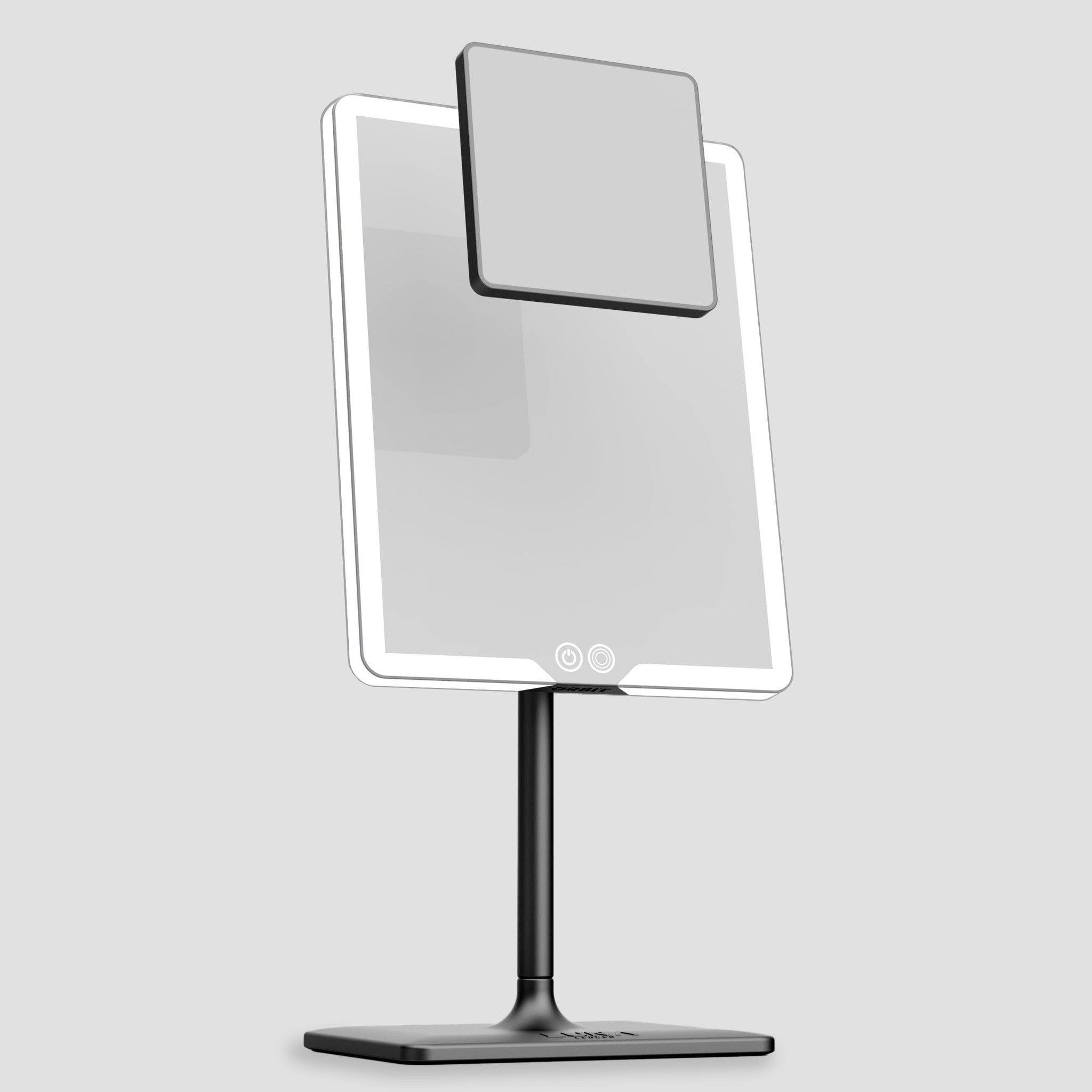 |
ORBIT Best home setup for ageing eyes |
Large mirror face, 7x magnification add-on, 3 LED brightness settings, USB C rechargeable | Best if you want a steady daily mirror that lets you see the whole face first, then zoom in only when needed. Shop ORBIT |
|
COMPACT 2.0 Best portable 7x detail checks |
1x and 7x mirror panels, 3 LED brightness settings, USB C rechargeable, travel sleeve | Best for contact lenses, travel, handbag checks and small grooming corrections away from home. Shop COMPACT 2.0 |
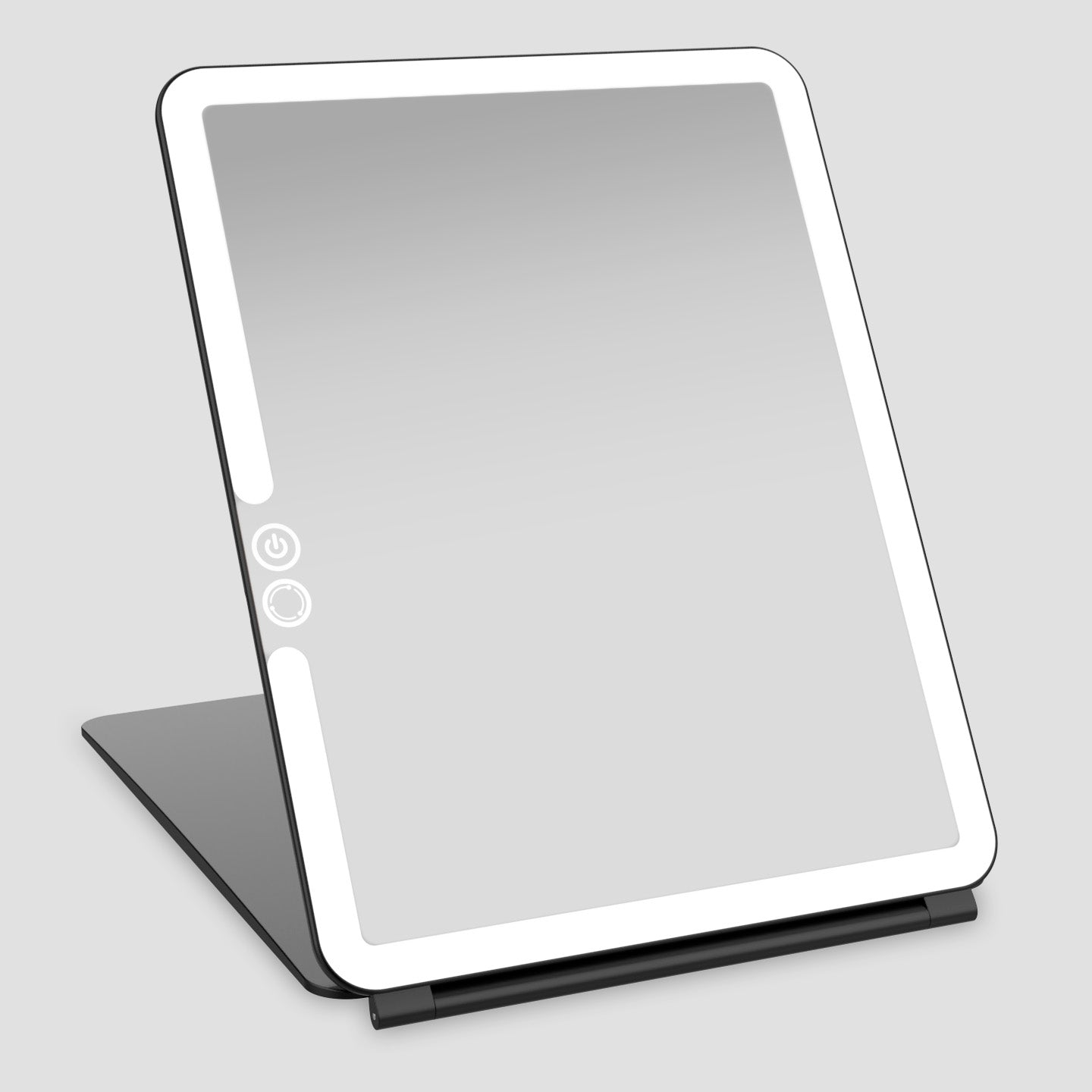 |
ECLIPSE Best lighting-only travel option |
Fold-flat design, 3 LED brightness settings, USB C rechargeable | Best if the problem is dim travel or desk lighting, not magnification. It does not offer 7x zoom. View ECLIPSE |
Delivery note: if this is a gift for a parent, partner or anyone who struggles with close-up checks, pick the mirror around the task first, then the finish second.
Quick tracked delivery available in:
 USA
USA
 UK
UK
 EU
EU
FAQs
Is a 10x magnifying mirror good for elderly eyes?
Sometimes, but not as a default. 10x can help for very fine detail, but many people find 5x to 7x easier for everyday grooming because the field of view is larger and the working distance is less strict.
What magnification is best for eyebrows and facial hair?
For most people, 5x to 7x is the practical range. Use normal view first to judge shape, then use 7x for isolated hairs, beard corners, moustache edges or lash roots.
Why does everything look worse in the mirror at night?
Dim light can make close-up blur more obvious and can reduce focusing comfort. Better, even lighting often helps more than stronger magnification alone.
Should I choose a lighted magnifying mirror or a regular magnifying mirror?
For ageing vision, a lighted magnifying mirror is usually more useful because it improves contrast and reduces shadows. Magnification without good light can still feel flat or blurry.
Can a magnifying mirror replace reading glasses?
No. A magnifying mirror can help with grooming tasks, but it does not correct presbyopia. If you are unsure about near vision changes, book an eye test with an optometrist.
What is the safest way to use high magnification if my hands shake?
Sit down, use a stable mirror, keep the mirror at face level and work in short bursts. Move the mirror toward you rather than leaning across the sink.
Related links
- Do I need a 7x magnifying mirror?
- Best mirror for brow tweezing and shaping
- Best mirror for men’s grooming, shaving and brows
- COMPACT 2.0: the sleek mirror that fits in your bag
- Mirror maintenance 101: LED mirror care


Leave a comment
This site is protected by hCaptcha and the hCaptcha Privacy Policy and Terms of Service apply.