

Last updated: 7 February 2026
Summary: A barber-standard fade at home comes down to three things: start longer than you think, work in small zones, and stop before you “chase perfection”. Do a full pass with your longest guard first, then step down one guard at a time only on the lower third. Most bad fades are just harsh bands and missed patches you didn’t see in the lighting.
In a hurry? TL;DR:
- Set up bright, even light and use photos to check the back.
- Buzz sides/back with your longest guard first (full perimeter).
- Drop one guard only on the lower third, blend out with a gentle “C” exit motion.
- Detail ears and neckline last, then connect sideburn into beard with small guard steps.

How to Cut a Clean Fade at Home (Without Overdoing It)
A “barber-standard” fade at home is a realistic goal, but only if you’re honest about what usually goes wrong. Most people don’t ruin a fade because their clippers are bad. They ruin it because they go too short too early, they work randomly instead of in zones, and they keep “fixing” the same area until there’s no hair left to save.
This guide is intentionally conservative. If you want the sharp look without the high-risk drama, aim for a low-to-mid fade that bottoms out at a #1 or #2 rather than chasing a skin fade on attempt one. Barbers tend to stress the same point in DIY fade advice: pace and restraint matter more than fancy technique. A solid reference is GQ’s walkthrough that includes guidance from barber Eric Becker (Blind Barber Philadelphia). Read it here.
⚡ PRO INSIGHT: “Barber-standard” is how it reads in normal light from 1 metre away, not how it looks when you’re 10 cm from the mirror under harsh bathroom spots. If you can’t see the back properly, keep the fade simpler and longer.
What “barber-standard” means for a home fade
- Even height on both sides: the fade doesn’t climb higher on one temple than the other.
- Soft transitions: no obvious dark stripe (a “band”) where you changed guards.
- Intentional edges: ears and neckline look tidy, not hacked.
If you’re wondering why your fades look OK at night then rough in daylight, it’s often visibility, not ability. This is why mirror angle and lighting keep coming up in men’s at-home grooming. If you want a quick checklist for avoiding shadowy angles and “false bands”, this LUNA post on mirror mistakes men make when trimming at home is a useful companion read.
Tools you actually need (and the ones people overthink)
| Tool | Why it matters | If you’re missing it |
|---|---|---|
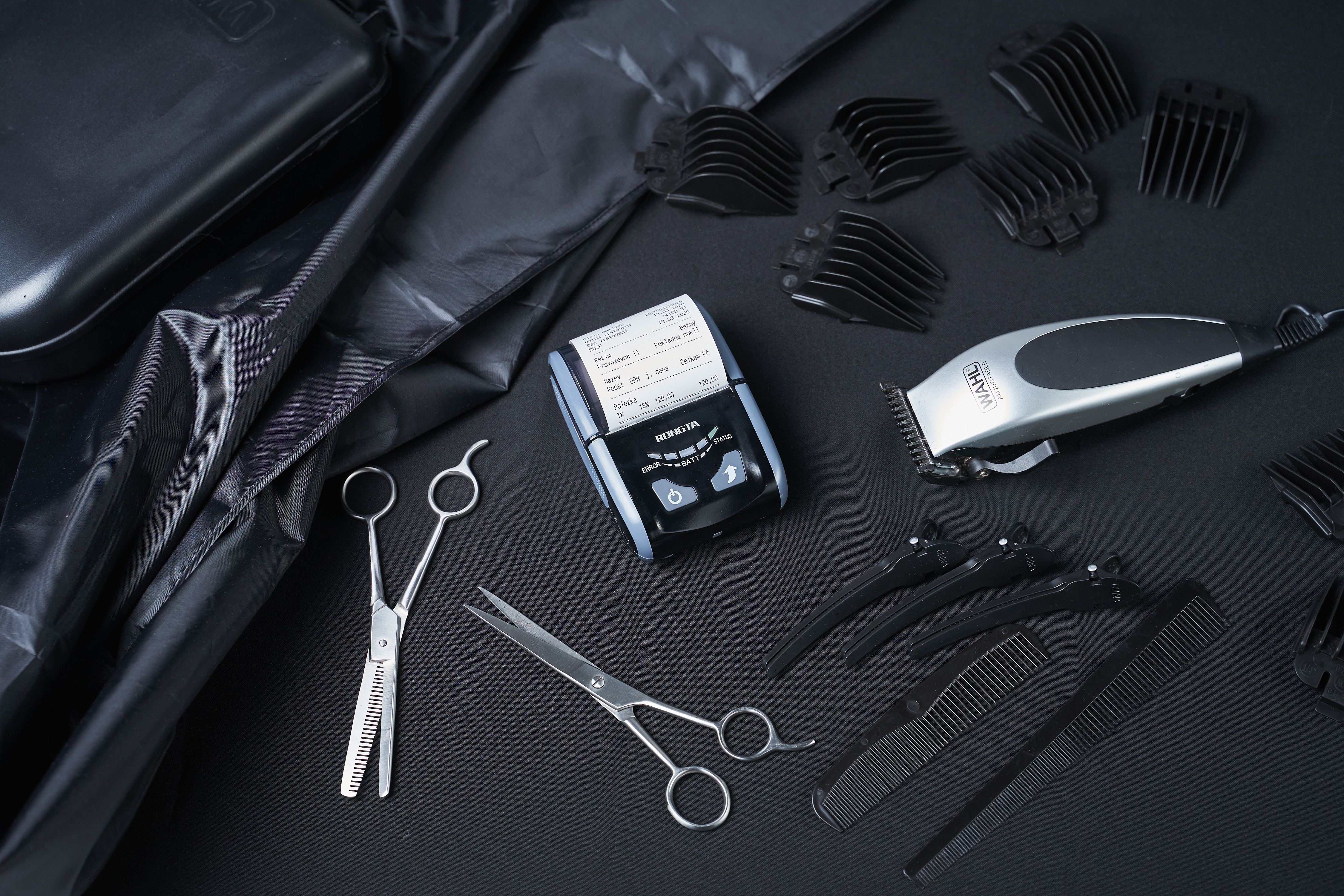
| Hair clippers + full guard set | Guards give predictable length steps and safer blending. | Do a simpler fade (fewer guard changes) and stay longer overall. |
| Trimmer/edger | For ears, neckline, and sideburn clean-up. | You can use clippers without a guard lightly, but be cautious. |
| Hand mirror (or phone camera) | The back is where most fades fail. | Use photos and fix only what you can clearly see. |
| Comb + clips | Keeps longer hair out of your fade zone. | A hairband works, clips are just easier and cleaner. |
| Cape or towel | Stops hair collecting in collars and on your neckline. | Old t-shirt with a widened neck hole. |
Set-up that makes your fade look 30% better
- Dry hair (most of the time): damp hair clumps and hides unevenness.
- Even lighting: overhead spots create shadows that look like blend lines.
- One reference angle: don’t cut half the head leaning, then stand straight for the other half.
If you’re building a general home grooming routine (hair, beard, brows), this broader guide on men’s grooming with LED mirrors is useful for setup ideas. Try to avoid treating “visibility” as optional, it’s the quiet reason the finish feels barbershop-level or not.
Pick a conservative guard plan (the safest way to start)
You do not need five guard lengths to get a clean fade. In fact, too many steps often creates more bands at home. Start with a two-step fade, then add a third step only if it’s genuinely needed.
| Fade plan | Guard sequence | Best for | Risk |
|---|---|---|---|
| Low conservative fade | #4 base → #3 lower third → #2 at the very bottom (optional #1 at the base) | First-timers, most hair types | Low |
| Mid fade | #3 base → #2 lower third → #1 at the base | Thicker hair, sharper silhouette | Medium |
| Skin fade attempt | #2 → #1 → no guard → trimmer | Only if you’ve already nailed basic fades | High |
Step-by-step: the fade method that avoids harsh bands
1) Mark your “horseshoe” boundary
Picture a horseshoe shape around your head that separates top length from the sides and back. Your fade rises towards this line, it shouldn’t chew into the top. If you blur that boundary, the haircut looks accidental fast.
2) Do a full pass with your longest guard first
Start with your base guard (for many men, #4). Go around the entire head in slow vertical panels. This is your foundation. If the foundation is uneven, every shorter step will make the unevenness louder.
3) Exit the stroke with a gentle “C” motion
As you approach the upper limit of your fade zone, arc out and away in a shallow “C” motion. The arc is what creates softness. The dead stop is what creates a band.
Expert quote: “Go slow; you shouldn’t be rushing.” Eric Becker (Blind Barber Philadelphia), via GQ. Source.
4) Step down one guard, but only on the lower third
Drop one guard (for example, #4 to #3). Repeat the same vertical panels, but only on the lower third of the sides and back. Keep your strokes light. You’re not trying to “remove hair”, you’re trying to create a gentle transition.
5) Repeat once more for the base (optional)
If you want more contrast, drop another guard (to #2) and keep it tight to the bottom section. The key is restraint: the shorter you go, the smaller the zone should be.
6) Fix bands the smart way
If you see a stripe, don’t panic and go shorter everywhere. That’s how fades collapse. Instead, go back to the longer guard and do very light “C” strokes over the band to soften it. Then reassess in a different light.
7) Detail ears and neckline last
Once the fade reads even from the sides, tidy around the ears and clean up the neckline. Keep the neckline natural, slightly curved usually grows out better than a hard square edge.
8) Photo check, then stop
Take photos of both sides and the back. If it looks even in a photo, it’s probably even in real life. If you keep cutting after this point, you’re usually working for your anxiety, not the haircut.
⚡ PRO INSIGHT: The most common DIY fade failure is “micro-corrections” that become a new haircut. If you feel the urge to keep fixing, wash your hair, wait 24 hours, then re-check in daylight before touching clippers again.
Watch it done properly (copy the pace, not the ego)
Video helps because it shows tempo. Look for tutorials that move slowly, work in panels, and keep the guard changes simple. Here’s a pause-friendly mid-fade self-cut tutorial:
How to fade into your beard (so sideburns don’t look pasted on)
The beard connection is where “barber-standard” shows. You want a gradual drop from sideburn into beard, not a sudden step.
- Comb the sideburn down so you cut what’s actually there.
- Match your lowest head guard to the top of the sideburn (often #1 or #2).
- Drop one guard as you move down into the beard, keeping the zone small.
- Soften with the corner of the blade rather than bulldozing the whole area.
If you do regular edging, keep your shave-and-line routine consistent. This guide on how to shave cleanly with the right grooming mirror is helpful for line-checking habits (especially around the neck and jaw) that also apply to beard fades.
Troubleshooting: common home fade failures and fastest fixes
| What you see | Likely cause | Fastest fix |
|---|---|---|
| A dark stripe halfway up the side | Stopping the clipper stroke at the same height repeatedly | Use a longer guard and light “C” strokes over the stripe to soften it |
| One side sits higher than the other | No fixed reference point (you followed ear shape instead) | Pick a landmark (temple corner), then match the other side to it |
| Back looks patchy in photos | Missed panels due to poor visibility | Fix only the missed spots, don’t shorten the whole back |
| Neckline looks harsh | Edge is too square or too high | Soften into a gentle curve and leave more natural hair at the edges |
Hygiene and skin: the unglamorous part that prevents regret
DIY fades are “safe” until you use dirty tools on irritated skin. Public health guidance for barbers consistently treats hygiene, equipment handling, and cleaning as routine, even for mobile or home-based setups. New Zealand’s Ministry of Health guidance is practical and clear on this.
If you get bumps or soreness around the neckline or beard area, it may be folliculitis (inflamed follicles) or pseudofolliculitis (often called shaving bumps). The Primary Care Dermatology Society has clear, UK-oriented pages on folliculitis and pseudofolliculitis, including self-care and when to get help.
One more hygiene note that’s easy to miss: if you’re using a straight razor or similar for sharp edges, treat it as a genuine infection-control risk. WA Health’s guidance explains why single-use blades matter in professional contexts, and it’s a sensible standard to borrow at home too. Read the WA Health razor guidance.
| When | Do this | Why |
|---|---|---|
| After every cut | Brush hair out, wipe down, follow your clipper’s cleaning instructions | Reduces bacteria build-up and keeps blades cutting cleanly |
| Weekly | Deep clean guards, check blades for snagging, replace dull razors | Dull tools cause tugging, irritation, and uneven cutting |
| If skin flares | Pause close trimming, keep the area clean, avoid aggressive edging | Lets inflammation settle and reduces the chance of worsening bumps |
Final check: judge your fade like a barber would
- Daylight check: look at both sides in natural light.
- Photo check: take a straight-on photo of each side and the back.
- Distance check: step back 1 metre. If it reads clean there, you’re done.
Also, keep your grooming setup honest. A smudged mirror or harsh overhead light can make you “correct” problems that aren’t real. If you’re using a lighted mirror day-to-day, a simple cleaning routine helps keep edges true. (This LED mirror care guide is a quick refresher.)
And if you’re trying to make home fades more repeatable, visibility matters more than people admit. At the end of a cut, you mainly need a clear view to spot missed patches around the ears and neckline, plus a clean look at the beard connection.
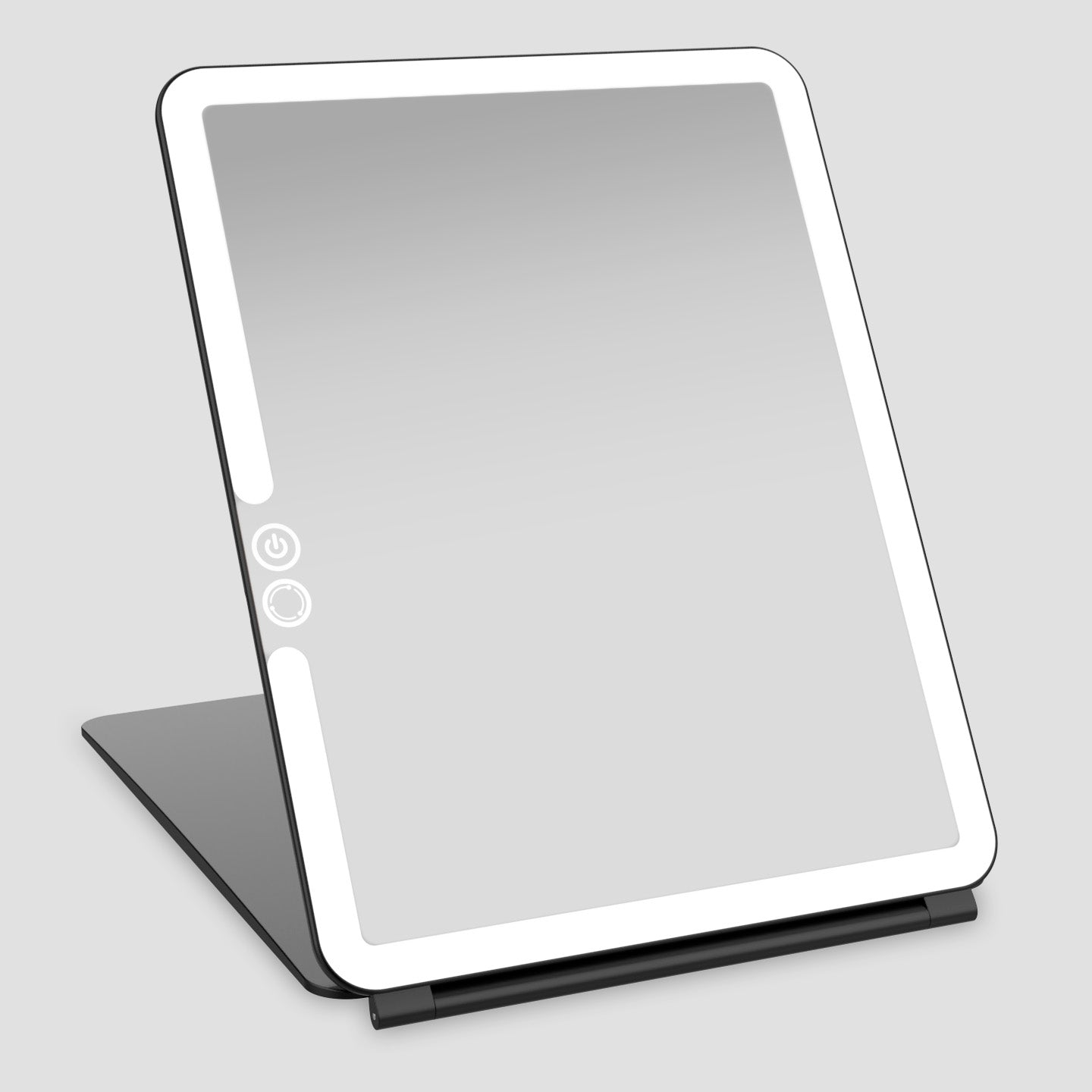
A clearer view for finishing touches
If you cut your own fade or keep beard lines sharp, most “mistakes” are missed spots you didn’t see, then over-corrected. ECLIPSE gives you even, face-level light in a compact format, so the final checks are simpler and calmer.
FAQs
Can I get a barber-standard fade without anyone helping?
Yes, but your ceiling is lower because the back is harder to see. If you’re solo, keep the fade conservative (longer guards, fewer steps) and rely on photos for the back before making changes.
What guard numbers do I need for a simple at-home fade?
You can get a clean result with #4, #3, and #2, plus a trimmer for edges. More guards make blending easier, but you don’t need to use every guard to look tidy.
How do I avoid a harsh line (“band”) in my fade?
Don’t stop your clipper stroke at the same height repeatedly. Exit with a light “C” motion, and if a band appears, soften it with a longer guard first rather than going shorter everywhere.
Should I try a skin fade at home?
If this is your first or second attempt, it’s usually not worth it. Skin fades punish small mistakes. A fade that bottoms out at #1 or #2 can still look sharp and grows out better.
How often should I clean my clippers and guards?
After every cut: remove hair, wipe down, and follow your tool’s instructions. Public health guidance treats cleaning and safe handling as routine, even for home-based setups. Ministry of Health NZ.
What if I get bumps or soreness after trimming?
Pause close trimming for a few days, keep the area clean, and avoid aggressive edging. If it persists or worsens, check reputable guidance and consider speaking to a clinician. PCDS: folliculitis, PCDS: pseudofolliculitis.
Related Links
- Men’s Grooming with LED Mirrors: shaving, beard lines and brows
- Mirror mistakes men make when trimming at home (and easy fixes)
- Men’s shaving mirror routine: ECLIPSE maintenance and set-up
- Men’s grooming mirrors hub
- GQ: DIY fade guidance (barber input)
- NZ Ministry of Health: public health guidance for barbers



Leave a comment
This site is protected by hCaptcha and the hCaptcha Privacy Policy and Terms of Service apply.