

Last updated: 11 February 2026
Summary: Most “painful detangling” comes from friction and tension in the first 30 seconds. Get slip first (water + conditioner or detangling spray), split hair into sections, hold above the knot, then work from ends to roots in small strokes. A gentle detangling brush for knots should reduce snagging with flexible bristles and a comfortable grip, so you detangle hair without tears, tugging, or breakage.
- Fast rule: If it hurts, pause and add more slip, don’t push harder.
- Best technique: Ends first, then move upward centimetre by centimetre.
- Biggest mistake: Brushing from scalp down through a knot.
How to Detangle Knots Gently (Step-by-Step, Wet or Dry)
There’s a reason knots feel personal. When a brush catches, your instinct is to “power through”. That usually turns one knot into five smaller ones, plus breakage you only notice later. A painless detangling brush for knots is helpful, but the real win is method: reduce friction, reduce tension, then detangle with control.
Dermatology guidance is consistent on the fundamentals: be gentle, avoid aggressive brushing, and treat hair carefully when it’s at its most vulnerable. The American Academy of Dermatology (AAD) summarises practical hair-care habits that reduce damage over time, including gentle detangling and avoiding harsh handling. Read AAD tips for healthy hair here.
And while you’ll often hear “never brush wet hair”, the more accurate version is: wet hair can be more fragile, so detangle it the right way and don’t rush. Cleveland Clinic notes that wet hair is weaker and more prone to stretching, which is why technique and the right tool matter. See Cleveland Clinic’s guidance on wet hair and fragility.
Step 0: Do a 20-second “knot check” before you touch a brush
This sounds fussy. It saves hair.
- Is it a single knot or a small mat? If it’s a mat close to the scalp, you need more time, more slip, and smaller sections.
- Is your hair dry, damp, or soaking? Dry hair often needs a light mist + leave-in. Soaking-wet hair needs conditioner and patience.
- Where is the knot? Ends usually mean dryness or friction. Mid-length knots often mean product build-up or tangling from wind and collars.
- What’s your hair type today? Curly/wavy hair often tangles in “clusters”. Fine hair tangles fast but can break if you pull.
⚡ PRO INSIGHT: If you can’t slide two fingers through the section you’re about to brush, you don’t have enough “slip” yet.
Add water + conditioner (or a detangling spray), wait 30 seconds, and try again. Detangling should feel like untying, not pulling.
Now you’re ready to detangle without tears or tugging.
The painless detangling method (works for most knot types)
- Add slip first. Mist with water, then apply conditioner/leave-in to the tangled area. If you’re post-shower, keep hair damp and “coated”, not squeaky-clean.
- Split hair into sections. Two sections for short hair, four to six for longer hair. Clip what you’re not working on.
- Hold above the knot. Use your non-brushing hand to hold the hair above the tangle, close to the scalp. This protects your roots and reduces pain.
- Start at the ends. Use short, gentle strokes. You’re loosening the knot from the bottom up.
- Move up slowly. Once the ends glide, move the brush up a little, repeat. If you hit resistance, go back down and add more slip.
- Finish with a full pass. When the section is smooth, do one longer pass from mid-lengths to ends, then roots to ends if it feels easy.
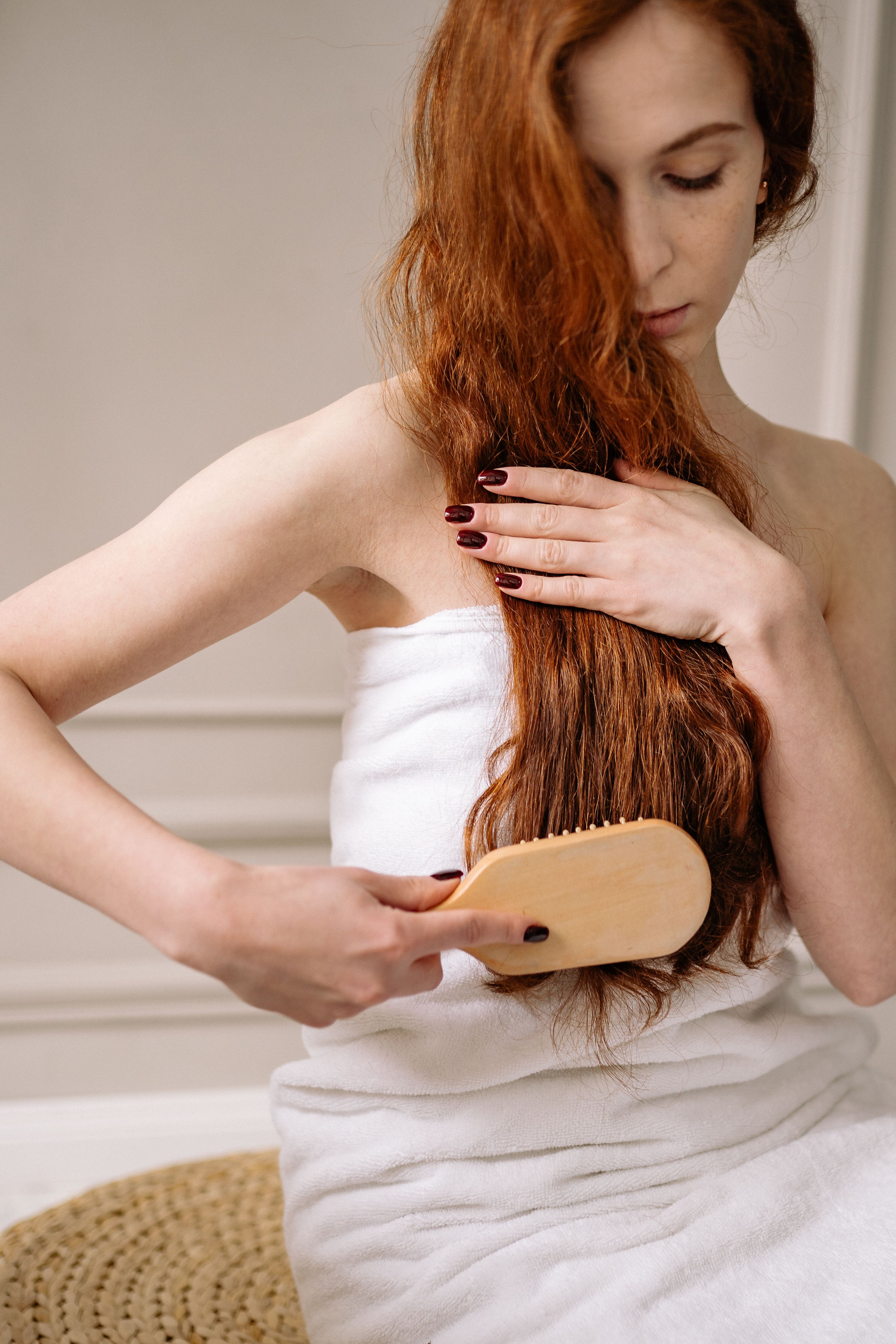
Gentle detangling is mostly about tension control. If you’re building a routine, our quick wet-hair method guide is here: How to detangle wet hair properly.
Quick fixes table: match the knot to the approach
| Knot situation | What it usually needs | What to avoid |
|---|---|---|
| Small knot at the ends | Mist + leave-in, then ends-first brushing | Dry brushing fast with long strokes |
| Post-shower tangles | Conditioner slip + sectioning + gentle detangling brush | Brushing “soaking wet” hair without product |
| Curly/wavy clumps tangling together | Finger detangle first, then brush through with slip | Breaking curl clumps dry (frizz + snagging) |
| Small mat near the nape | More time, smaller sections, detangle from the edges inward | Trying to “rip through” from the top |
What actually makes a gentle detangling brush for knots?
A knot brush only helps if it reduces snagging while you keep control. The most useful design traits tend to be simple:
- Flexible bristles that bend slightly instead of stopping dead at the knot.
- Rounded tips for comfort, especially on sensitive scalps.
- Spacing that matches your hair density so hair can “flow” through rather than bunch up.
- A grip that doesn’t slip when you’re working slowly (especially on damp hair).
If you want the deeper “what matters” breakdown, we documented how detangler designs evolved across many iterations and what changed the most for snag reduction. Read: The detangling hair brush people keep asking for.
Expert quote
“Rounded bristles” and an ergonomic shape can make detangling easier on the scalp, especially when used on wet hair with shampoo or conditioner.
Kerry E. Yates (trichologist), cited in Shop TODAY’s trichologist brush guide.
Notice what the quote implies: the brush helps, but it’s the combination of slip + gentle tension + the right tool that removes knots without pain.
Tool comparison: fingers vs comb vs detangling brush
| Tool | Best for | Watch-outs | Here’s Our Favourite |
|---|---|---|---|
| Finger detangling | Curly hair, mats, “where is the knot?” diagnosis | Slow, can feel tiring for thick hair | Use first for stubborn tangles, then switch tools |
| Wide-tooth comb | Post-shower detangling with conditioner | Can still snag if you rush or use long strokes | Great as a “first pass” on damp hair |
| Detangling hair brush | Everyday knots, quick smoothing, gentle tension control | Wrong brush can encourage yanking (avoid stiff bristles) | DETANGLER Hair Brush for a comfortable, snag-reducing everyday brush. |
Common detangling mistakes (and the fix)
-
Mistake: brushing from roots straight through a knot.
Fix: ends first, then move up gradually. -
Mistake: “dry brushing” tight tangles with no product.
Fix: add slip (water + leave-in), then brush in small strokes. -
Mistake: increasing force when it catches.
Fix: pause, add slip, reduce section size. -
Mistake: detangling as fast as possible.
Fix: go slow for 60 seconds, then you’ll be fast for the next 10 minutes.
If you’re curious why friction-based damage adds up, a 2024 open-access paper on split-end mechanics explains how tangles and combing loads can drive micro-cracks and breakage over time. See the 2024 paper here.
When to stop and get help
Most knots are solvable at home. Stop and reassess if:
- The knot is turning into a mat near the scalp.
- You feel scalp pain (not just mild pulling).
- You’re snapping hair repeatedly, even with slip.
In those cases: add more product, make sections smaller, and consider getting a trim if knots are concentrated at the ends. Sometimes the kindest detangle is removing what’s already split.
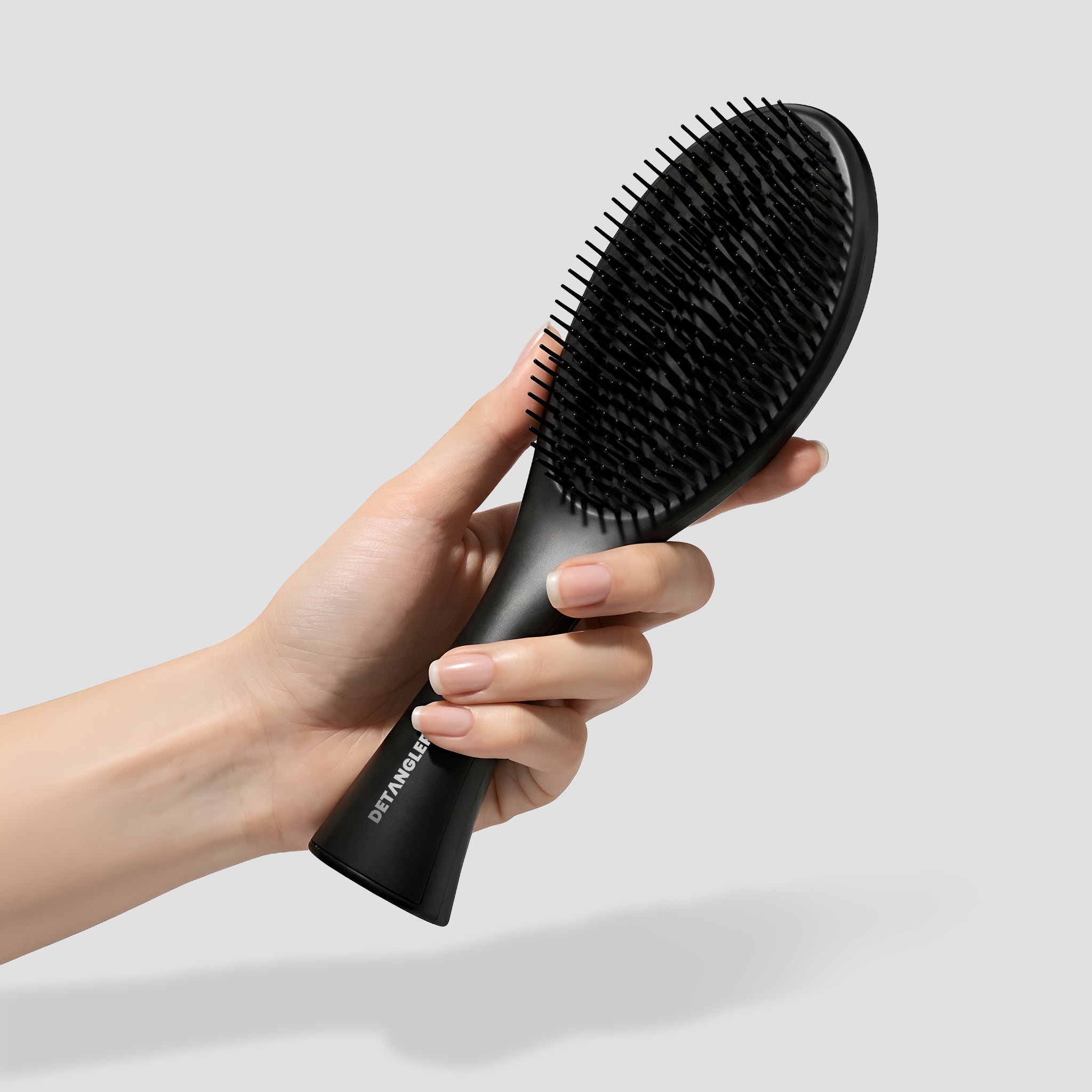
A calmer detangle starts with the right tension
If you want a detangling hair brush that supports the “ends-first, no-yanking” method, DETANGLER is designed for comfortable grip and controlled, snag-reducing passes. It’s a simple upgrade that makes gentle technique easier to stick to.
FAQs
Is it better to detangle hair wet or dry?
It depends. Wet hair can be more fragile, so detangle gently with conditioner slip and smaller sections. Dry detangling can work if you add a light mist or leave-in and avoid forcing a brush through tight knots.
What is the least damaging way to detangle knots?
Add slip first, hold hair above the knot to protect the roots, then work from ends to roots in short strokes. If it hurts, you’re pulling too hard or working too large a section.
What should I look for in a painless detangling brush for knots?
Look for flexible bristles, comfortable grip, and a design that reduces snagging. The brush should support slow, controlled passes rather than encouraging you to yank through resistance.
Why do I get knots again right after brushing?
Common causes are dryness at the ends, friction from collars/scarves, product build-up, or split ends that catch. Try adding leave-in after detangling and consider a trim if knots cluster at the ends.
How do I detangle a child’s hair without tears?
Use more slip than you think you need, go in tiny sections, and keep tension off the scalp by holding above the knot. Slow and steady wins. Five calm minutes beats one painful minute.
Related links
- How to Detangle Wet Hair Properly: The 5-Minute Post-Shower Method
- The Detangling Hair Brush People Keep Asking For
- Hair Care Accessories (all LUNA posts)
- Men’s Midlife Skincare Routine 45+: A Simple Guide (AM/PM + Fixes)
- AAD: Tips for healthy hair
- Cleveland Clinic: Wet hair and fragility

Leave a comment
This site is protected by hCaptcha and the hCaptcha Privacy Policy and Terms of Service apply.