

Last updated: Friday 10 July 2026
Heat-Proof Makeup Mistakes Makeup Artists See Every Summer
What Makeup Artists Actually Fix Before Summer Makeup Melts
“Sweat-proof makeup” sounds reassuring, but it is not a very honest promise. Heat, humidity, oil, SPF, friction and real skin movement all affect how makeup wears. The better goal is not makeup that never moves. It is makeup that breaks down more gracefully, touches up cleanly and does not turn heavy by lunchtime.
That is where most summer makeup mistakes start. People add more primer, more foundation, more powder and more spray, then wonder why the face feels tight, patchy or shiny in the wrong places. The smarter route is controlled layering: skin prep that grips without sliding, SPF that is treated seriously, powder only where movement happens, and lighting that shows what the base really looks like.
If bad bathroom lighting is already part of the problem, read LUNA’s guide to makeup mistakes under bad lighting after this. This article is narrower: the heat-proof makeup mistakes makeup artists tend to spot every summer, and the practical fixes that actually help.

In a hurry? The quick heat-proof checklist
- Use light, balanced skin prep. Heavy cream underneath SPF and foundation is a common slide risk.
- Let SPF settle before base, then plan how you will reapply it later.
- Choose thinner base layers. Heat exaggerates heavy coverage fast.
- Powder the T-zone, smile lines and under-eye crease points, not the whole face by default.
- Use setting spray correctly: fine mist, proper distance, enough drying time.
- Do one final check in neutral or daylight-style light before leaving.
1. Treating skin prep like a full facial
Skin prep matters, but more prep is not always better. A rich moisturiser, facial oil, SPF and gripping primer can become too many layers before foundation even touches the face. In heat, that stack can turn into a slip layer.
For summer, prep should be boringly strategic. Hydrate where skin is tight, control oil only where it appears, then give each layer a moment to settle. British Vogue’s heatproof makeup advice cites makeup artist Jamie Genevieve recommending a primer that feels slightly tacky for longevity, which is a good cue: grip, not grease.
“Use a primer that feels slightly tacky.”
— Jamie Genevieve, makeup artist, British Vogue
⚡ PRO INSIGHT: Do not prime the whole face out of habit. Use mattifying or gripping primer only where makeup moves first: nose, chin, forehead, upper lip and eyelids.
2. Forgetting that SPF changes the whole routine
SPF is not optional summer prep. It is skin protection first, makeup base second. The American Academy of Dermatology advises reapplying sunscreen every two hours outdoors, and immediately after swimming or sweating. That matters because the makeup question is not “How do I apply SPF once?” It is “How will I reapply without wrecking everything?”
The mistake is treating SPF as a one-and-done primer. A heavy sunscreen under a heavy foundation may feel secure at 9am, then look thick once it has been warmed by skin, oil and weather. A lighter base, tinted SPF, SPF mist or careful sponge reapplication can be more realistic than pretending your morning application will carry the whole day.
The AAD also recommends broad-spectrum, water-resistant sunscreen with SPF 30 or higher for sun protection. If you are outside for long periods, makeup should work around that need, not the other way around.
3. Powdering shine before removing oil
This is the classic summer panic move. You see shine, add powder, see shine again, add more powder. By the third round, the face is not matte. It is layered, dry-looking and still oily underneath.
Blot first. Then powder only where makeup creases, transfers or breaks: sides of the nose, centre of the forehead, chin, smile lines, under-eye edges and around glasses marks. British Vogue’s heatproof makeup feature makes the same point in practical terms: powder can work well when applied to the areas where makeup moves most, rather than treated as a full-face blanket.
If you have mature or textured skin, this matters even more. Powder is useful, but it is not neutral. Too much can exaggerate lines, dryness and peach fuzz, especially under harsh light.
4. Using setting spray as a rescue product only
Setting spray is not magic hairspray for the face. Used badly, it can leave droplets, disturb powder or make a base feel tight. Used well, it helps layers settle together and reduces the powdery finish that summer routines often create.
Keep the bottle far enough from the face to create a fine mist, not wet spots. Spray after powder, let it dry naturally, then decide whether you need one final touch. Some artists also mist lightly between thin layers, but be careful: if your base is already too wet, more mist just adds movement.
⚡ PRO INSIGHT: If setting spray leaves visible droplets, your distance is wrong or the mist is too heavy. Let it dry before touching your face, or you will press fingerprints into the base.
5. Building your base in flattering warm light

Warm light is kind. That is exactly why it can be dangerous for heat-proof makeup. It can soften texture, disguise warmth in foundation and make powder look less obvious than it really is. Then you step into daylight, office lighting or a car mirror and the base looks heavier than expected.
Use neutral or daylight-style light for foundation, concealer and powder. Save warm light for the final mood check. LUNA’s guide to warm, cool and natural light for makeup breaks this down in more detail, but the short version is simple: truthful light first, flattering light last.
For at-home prep, ORBIT is the stronger fit because it gives you a large lit mirror face for the whole look, plus a 7x magnification add-on for precise checks. Use magnification briefly for liner, brows or lipstick edges, not to judge your entire complexion.
6. Not doing a “leaving the house” check
Makeup artists do not judge a look from one angle and one light source. They move, step back and check balance. That does not mean you need a backstage setup. It means you need one honest final pass.
Before leaving, look at three things: jawline, under-eye powder and the centre of the face. These are the areas that expose summer makeup mistakes fastest. If your foundation stops at the jaw, your powder has gathered under the eye or your nose is already shiny before you leave, fix those now.
For rooms with no window, the setup matters even more. This makeup with no natural light guide is a useful companion if your bathroom or bedroom gives you poor feedback every morning.
7. Packing more makeup instead of better touch-up tools
A summer touch-up kit does not need to contain your entire makeup bag. In fact, that is often the problem. If you carry foundation, concealer, powder, blush and brushes, you are more likely to keep adding product when the cleaner fix is blotting, edge correction and SPF reapplication.
A better heat-proof touch-up kit is small: blotting paper, SPF reapplication option, lip product, cotton bud, mini concealer only if needed, and a compact lighted mirror. For handbag checks, COMPACT 2.0 makes more sense than a phone camera because it gives you a normal view, a 7x magnification mirror for detail and three light modes in a bag-friendly format.
If your issue is hotel lighting rather than handbag touch-ups, ECLIPSE is the better travel-lighting option. It folds flat, has three dimmable ring light modes and is rechargeable, but it is not the magnification option.
The 8-minute heat-proof makeup routine
- Prep lightly: cleanse if needed, use lightweight moisturiser only where skin feels tight.
- Apply SPF properly: let it settle before base, and plan your reapplication method.
- Prime selectively: use grip or mattifying primer where makeup usually moves.
- Use thin base: apply less than usual, then build only where redness or discolouration remains.
- Set movement zones: press powder onto the T-zone, under-eye edges and smile lines.
- Mist to settle: use setting spray from a proper distance and let it dry.
- Check in honest light: use neutral or daylight-style light for shade, powder and jawline.
- Pack for subtraction: blot, tidy and reapply SPF. Do not rebuild the whole face outdoors.
For a wider seasonal checklist, the older LUNA piece on summer makeup mistakes is still a useful supporting read. This guide is the more precise version for heat, sweat, SPF and real-world wear.
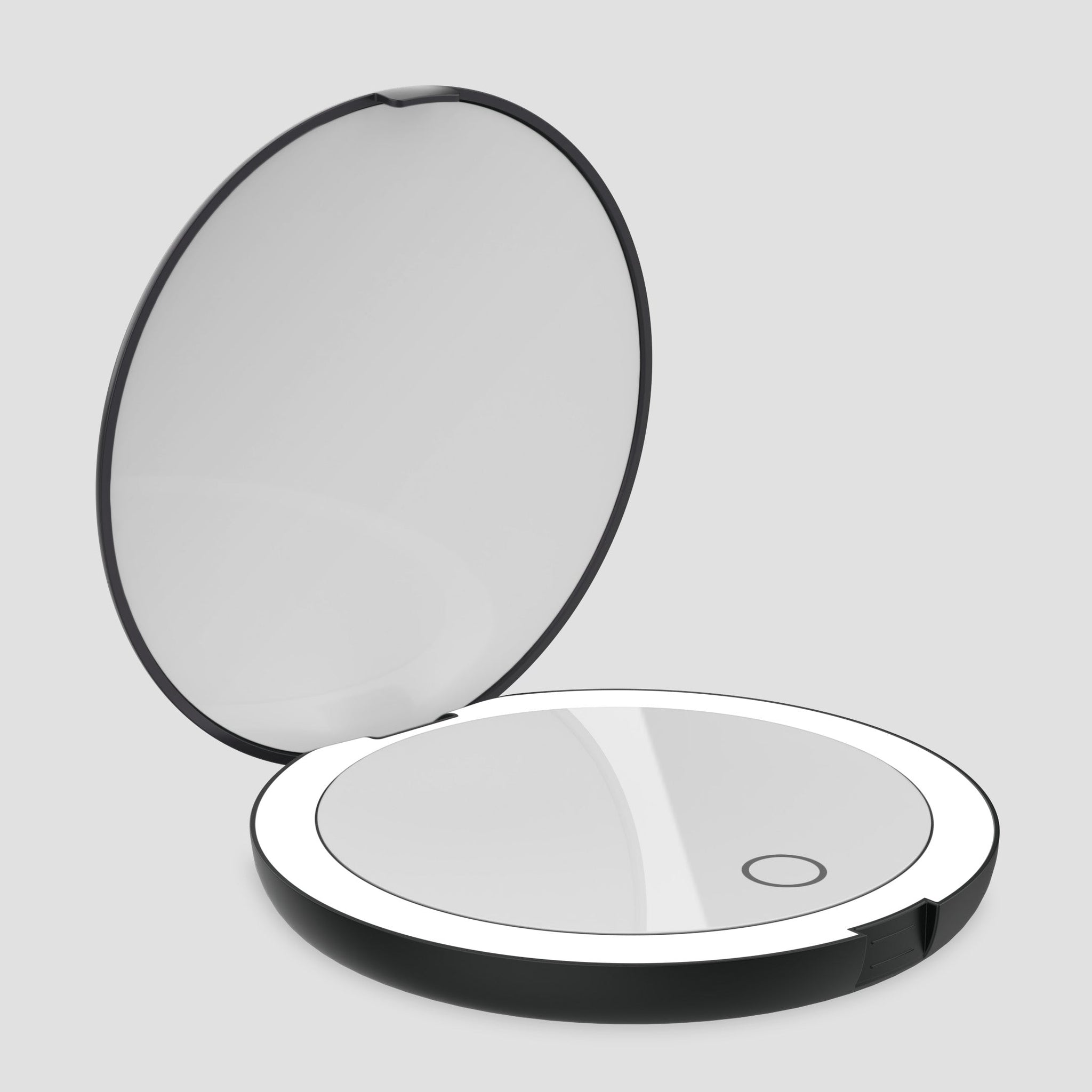
Keep the touch-up small, clear and controlled
Summer makeup usually needs quick correction, not a full redo. COMPACT 2.0 gives you a normal mirror view, 7x magnification for lipstick edges or mascara transfer, and three light modes for checking makeup away from home.
Keep COMPACT 2.0 close for summer touch-ups →FAQs
How do I stop makeup melting in summer?
Use lighter skin prep, let SPF settle, apply thin base layers, powder only high-movement areas and finish with setting spray. The biggest mistake is adding more product every time shine appears. Blot first, then correct only what actually needs correcting.
Should I use powder or setting spray for heat-proof makeup?
Use both, but for different jobs. Powder controls movement and oil in targeted zones. Setting spray helps the layers settle together and reduces a dry, powdery finish. Too much of either can make makeup break down badly.
Can SPF setting spray replace normal sunscreen?
Usually no. Treat SPF setting spray as a helpful reapplication option over makeup, not as your only sunscreen step. Apply proper broad-spectrum SPF first, then reapply according to the product instructions and your level of sun exposure.
Related links
- COMPACT 2.0 Matte Black
- ORBIT Phantom Black
- ECLIPSE Matte Black
- Compact Travel Makeup Mirror: What Actually Helps on the Go
- Bad Lighting Ruins Makeup Fast: The Easy Fixes That Help
- Explore the LUNA London blog

Leave a comment
This site is protected by hCaptcha and the hCaptcha Privacy Policy and Terms of Service apply.