
Last updated: 3rd April 2026
In a hurry? TL;DR
- If the darkness changes when you tilt your face, it is often shadow, not just pigment.
- Cold first, concealer second. Puffiness makes circles look deeper than they are.
- Keep the under-eye smooth and lightly hydrated, not greasy and not dry.
- Tinted SPF helps when visible light or sun exposure is making pigmentation look worse.
- Use less concealer, place it lower, and blend upward only where the shadow sits.
- Check your result in honest, front-facing light before adding more.
| If you notice... | It usually means... | Fix first |
|---|---|---|
| Darkness looks worse only under bathroom lights | Shadow and contrast | Change the light before changing your makeup |
| Under-eyes look swollen in the morning | Fluid retention or puffiness | Cold compress, head elevation, less salt late at night |
| Concealer turns crepey fast | Dryness, too much product, or poor placement | Hydrate lightly, then use thinner layers lower on the hollow |
| Darkness stays even when puffiness is down | Pigment or chronic discolouration | Daily sun protection and very light correction, not heavy coverage |

A Better Way to Make Dark Circles Look Lighter Without Heavy Concealer
Not all dark circles are the same. Some are pigment. Some are puffiness. Some are hollows that cast a shadow. Some are simply the result of dry skin and a brutal overhead bulb. That matters, because the fix changes depending on what you are actually seeing. Mayo Clinic notes that mild to moderate dark circles often improve with simple self-care such as cold, sleep, sunscreen, and treating underlying issues. In other words, this is usually a “small adjustments” problem, not a “buy thicker concealer” problem.
If your under-eyes also make your whole face look more drained, pair this guide with 5 Quick Fixes to Wake Up a Tired Face. It covers the puffiness-and-shadow side of the problem especially well.
1. Reduce puffiness before you try to cover anything
If you wake up looking darker than you did the night before, start by assuming some of the problem is swelling. Puffiness makes the lower eye area project forward, which deepens the shadow underneath. It can make a mild circle look much more dramatic.
Cleveland Clinic recommends cool compresses, less salt, and enough sleep to help reduce puffiness. Mayo Clinic also advises cool compresses and sleeping with your head slightly raised to reduce fluid pooling. That means your first move should be boring but effective: 60 to 120 seconds of cool compress, then a few minutes upright before you decide you need makeup at all.
⚡ PRO INSIGHT: If the darkness changes when you lift your chin or move closer to a window, you are looking at shadow. Fixing the puffiness or the light usually beats adding another layer of product.
2. Stop stripping the under-eye area
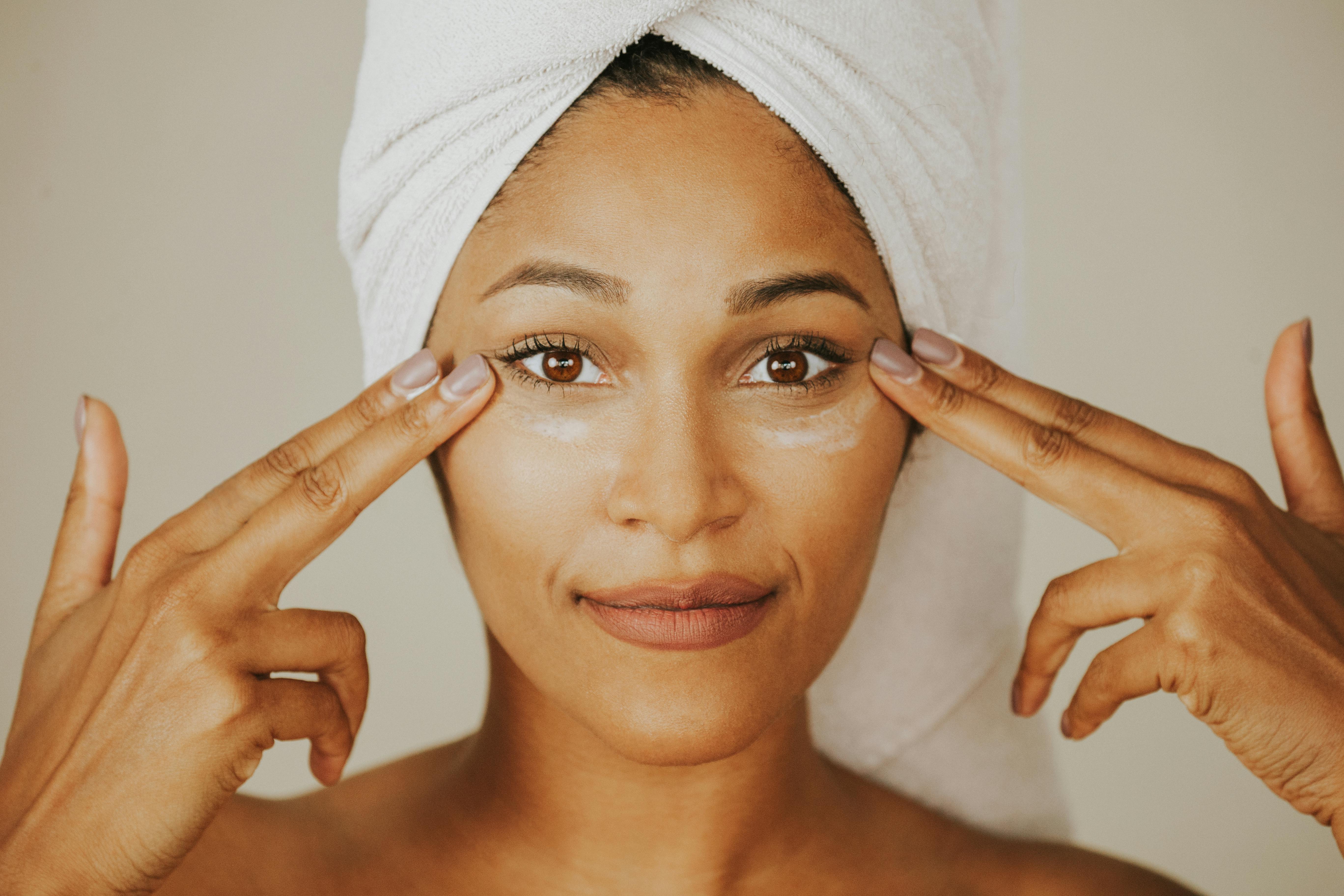
Many under-eye makeup problems start earlier than people think. If the skin is tight, over-cleansed, or a bit irritated, product will grip in the wrong places and make circles look older, drier, and more obvious.
The American Academy of Dermatology advises gentle cleansing with fingertips, not scrubbing, plus careful moisturiser application around the eyes. Keep that area lightly cushioned. You do not want it slick, but you also do not want it thirsty.
A simple rule works well here: use a gentle cleanser, rinse with lukewarm water, pat dry, then add the smallest amount of eye cream or light moisturiser you can get away with. Wait a minute before makeup. If you usually go straight from strong actives to concealer, this one change alone can make tired eyes makeup look cleaner.
“Applying eye cream immediately after cleansing ensures the more delicate skin is not affected by higher-concentration actives.”
— Dr Natalia Jiménez, dermatologist, Vogue (2025)
3. Use tinted SPF if the darkness is partly pigment
If your circles stay visible even after puffiness drops, some of what you are seeing may be pigment rather than shadow. That is where daily sun protection helps, especially if your skin tends to develop stubborn dark patches.
The AAD notes that visible light can worsen dark spots caused by the sun, and that tinted sunscreens add protection against visible light as well as UVA and UVB. This is a useful under-eye point that gets missed. When the goal is to cover dark circles naturally, prevention matters as much as camouflage.
So before you think “I need more concealer,” ask a blunter question: am I protecting this area daily, especially if I already run pigment-prone? A lightweight tinted SPF under the eye-adjacent area often makes the whole face look more even, which means you need less correction later.

4. Correct once, and only where the darkness actually sits
The common under-eye makeup mistake is treating the whole zone as equally dark. It rarely is. Usually the deepest colour lives at the inner corner or along the hollow, while the puffier part needs less coverage than you think.
That is why the best natural-looking fix is targeted placement. Use the tiniest amount of corrector or concealer where the shadow is deepest, then blend outward and upward. If you want a more exact step-by-step method, our concealer-without-creasing guide explains why thin layers placed lower on the hollow tend to look cleaner than product pushed right into the fine-line zone.
| Under-eye mistake | Better move | Why it looks more natural |
|---|---|---|
| Blanketing the whole under-eye in product | Correct only the deepest inner shadow first | Keeps brightness where you need it, not everywhere |
| Using thick layers to “cancel” darkness | Use one thin layer, then reassess in better light | Prevents creasing and the grey, chalky look |
| Pulling concealer to the lash line immediately | Place lower, then tap upward lightly | Lets the thinnest skin stay more flexible |
5. Change the light before you change your face

This is the fix people skip because it feels too simple. Bad light makes dark circles look darker, dryness look rougher, and minimal shadows look like a crisis. Overhead bathroom bulbs are especially bad for this because they push shadow down into the tear trough.
If your result always looks different in daylight, that is the clue. Compare your routine under a window, then under a front-facing mirror light. You will usually see that the “problem” was partly the environment. This guide on LED mirror vs natural light explains the trade-off well, and it pairs naturally with our 7x magnifying mirror explainer if you also struggle with precision.
⚡ PRO INSIGHT: Honest front-facing light is the fastest way to stop over-correcting. Most under-eye spirals happen because people trust the darkest mirror in the house.
| If your main issue is... | What to look for | Here’s Our Favourite |
|---|---|---|
| Final under-eye check before work or going out | Bright, even, front-facing light without magnification overload | ECLIPSE - clean, consistent lighting for a calmer final check |
| Home setup with optional close-up precision | 1x view plus optional 7x when you need to spot details | ORBIT - use the 7x mini attachment for targeted checks only |
| Travel or desk touch-ups | Portable light plus built-in close-up help | COMPACT 2.0 - handy if tired eyes make precision harder later in the day |
If puffiness is part of your morning pattern, a gentle drainage routine can help before makeup. This follow-along video is a good calm option to try.
6. Brighten the surrounding area, not just the circle
Natural-looking coverage often comes from shifting attention, not masking every trace of darkness. A softly groomed brow, a slightly brighter inner corner, a touch more light on the upper cheek, and better lash separation can open the eye area enough that the under-eye reads lighter without looking overdone.
This is also why tidy detail work matters. If your brows are muddy or uneven, the whole eye area can look heavier. Our eyebrow tweezing guide is useful here, especially if you tend to miss baby hairs in weak light.
7. Know when dark circles are not really a makeup problem
Some circles are genetic. Some are anatomy. Some come with eczema, allergies, irritation, hollows, or persistent swelling. Some get worse when you are short on sleep. Cleveland Clinic notes that sleep deprivation can show up as dark undereye circles, drooping lids, and puffiness, which is why “just sleep more” feels partly true but never complete.
It is still worth tightening that basic routine. Aim for around seven to nine hours when you can, keep salt and alcohol sensible if you wake puffy, and protect the area daily. But if the darkening is one-sided, new, itchy, painful, or keeps worsening, stop treating it like a beauty problem. Mayo Clinic advises getting persistent or worsening one-sided changes checked.

A simple 5-minute natural dark-circle routine
- Cool compress for 60 to 120 seconds.
- Apply a tiny amount of light moisturiser or eye cream and let it sit for a minute.
- Use tinted SPF if you are prone to under-eye pigmentation or dark spots.
- Place a small amount of corrector or concealer only where the shadow is deepest.
- Check the result in even, front-facing light, then stop.
That last step is the one people ignore. It is also the one that saves the whole look.
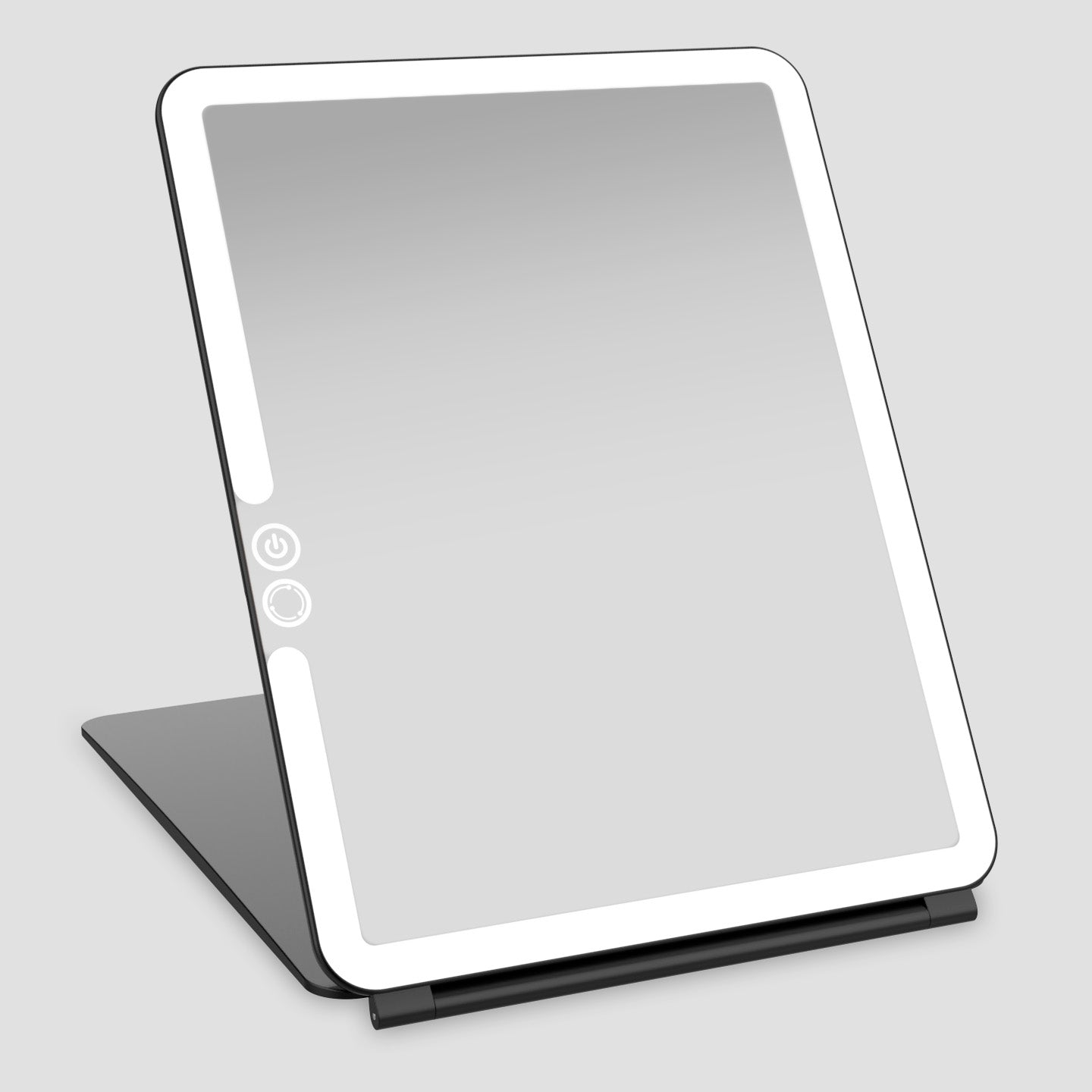
A more honest under-eye check
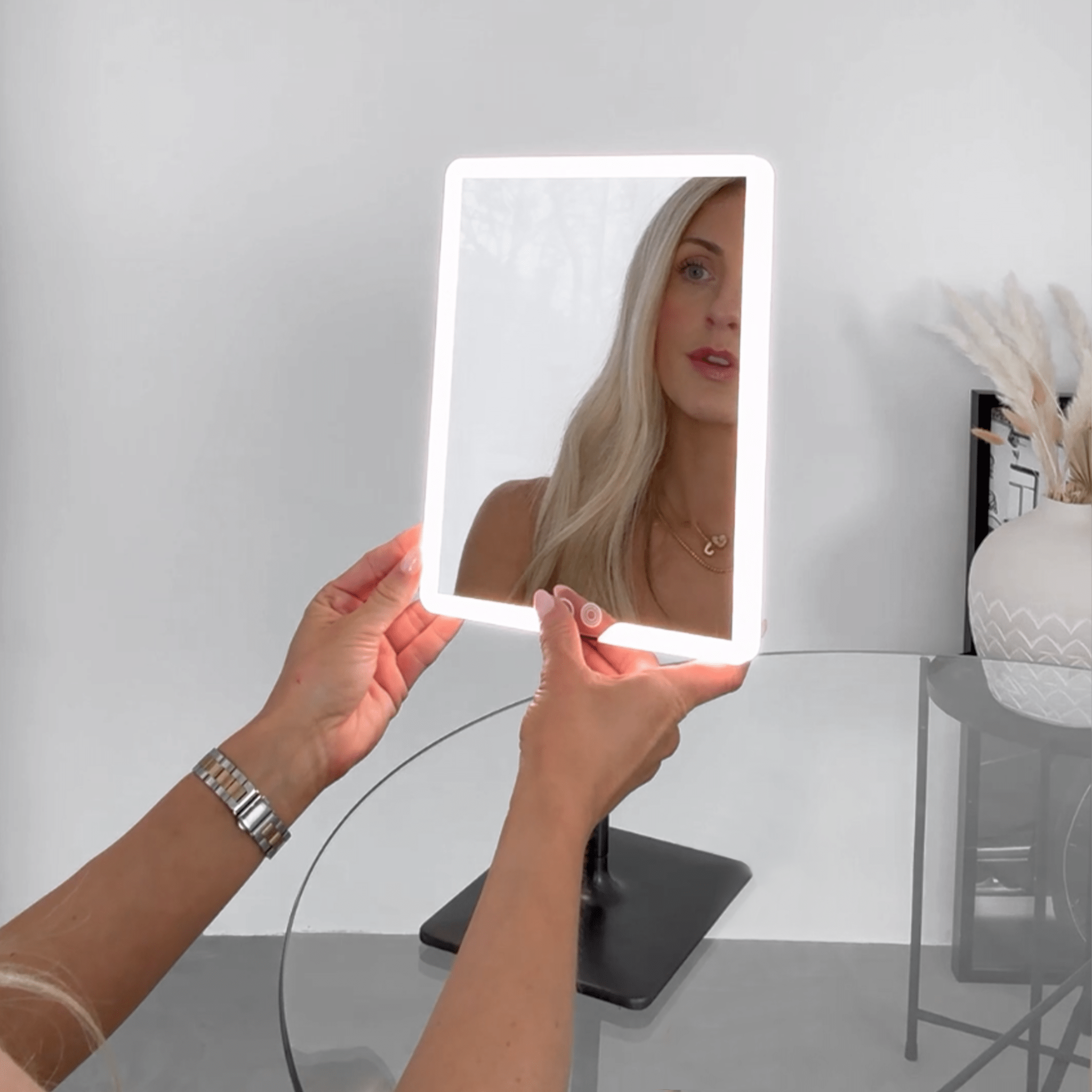
If your bathroom mirror keeps pushing you into heavier correction, a cleaner light source helps you stop earlier. ECLIPSE gives you a bright, even final check so you can see shadow and texture more clearly without piling on product.
Discover ECLIPSE lighting →FAQs
How can I cover dark circles naturally without heavy concealer?
Start by reducing puffiness, smoothing dryness, and changing the light. Then use the smallest amount of correction only where the deepest shadow sits.
Are dark circles always caused by lack of sleep?
No. Sleep can make them look worse, but pigment, hollows, ageing changes, allergies, irritation, and puffiness can all contribute too.
Why do my under-eyes look worse in some mirrors than others?
Overhead or warm lighting deepens shadows and exaggerates texture. Front-facing, even light usually gives a truer read.
Does caffeine actually help under-eye puffiness?
It can help temporarily for many people, especially when puffiness is mild. Think of it as a small assist, not a full solution.
Is colour corrector better than concealer for dark circles?
If the darkness is strong or blue-purple, a tiny amount of corrector under a light layer of concealer often looks more natural than concealer alone.
Can sunscreen really help dark circles?
It can help when pigment is part of the issue. Daily broad-spectrum protection, especially tinted SPF, helps limit worsening from sun and visible light.
When should I get dark circles or puffiness checked?
If the change is one-sided, sudden, painful, itchy, or keeps worsening, get medical advice rather than treating it like a normal cosmetic issue.
Related links
- ECLIPSE Matte Black
- ORBIT Soft Stone
- COMPACT 2.0 Matte Black
- 5 Quick Fixes to Wake Up a Tired Face
- How to Apply Concealer Without Creasing
- LED Mirror vs. Natural Light: Which One Is Best for Skincare Routines?
- The Best Mirror for Eyebrow Tweezing, According to Beauty Experts

Leave a comment
This site is protected by hCaptcha and the hCaptcha Privacy Policy and Terms of Service apply.