

Last updated: 3rd April 2026
In a hurry? TL;DR
- Most light-up mirrors are already LED, so the name alone tells you very little.
- If a mirror does not list brightness, colour modes, or colour quality, do not assume the lighting is good.
- For makeup, skincare, shaving, and brows, front-facing diffused light usually beats a backlit halo.
- For ageing eyes or precision work, magnification matters as much as lighting.
- For travel, stable light and easy charging matter more than bulky size or gimmicks.
How to Tell Whether a Lighted Mirror Will Actually Help You
People usually search “light-up mirrors vs LED mirrors” because they are trying to solve something practical: makeup that looks different outside, skincare checks that feel inconsistent, or shaving and brow work that is harder than it should be. If that is the real problem, do not get stuck on the wording. “Light-up” is broad. “LED” is specific, but still incomplete. The buying decision sits in the specs and the setup.
If you want a stronger baseline before choosing a mirror, it helps to understand how warm, cool and natural light change makeup, and why indoor lighting can make your face look different outdoors. Those two issues are usually doing more damage than the product label itself.
⚡ PRO INSIGHT: If a mirror page only says “LED” or “light-up” but avoids brightness, colour modes, or colour-quality language, that is not a premium detail. It is missing buying information.

What Actually Changes Your Reflection
1) Brightness and dimming
Brightness matters because you cannot correct what you cannot see. The U.S. Department of Energy explains that lumens are the measure of brightness, not a vague “strong light” claim. For detailed work, DOE also notes in its lighting terms guide that 200 footcandles or more can improve accuracy and reduce eyestrain. That does not mean your face needs to feel blasted, but it does mean dim, flat lighting is a real handicap.
Dimming is just as important. A fixed bright mirror can create glare and make skin texture look harsher than it is. A good mirror lets you turn brightness up for detail, then soften it slightly once the work is done.
2) Colour temperature, measured in Kelvin
Colour temperature changes how warm or cool your face looks. That means it changes how you judge foundation depth, blush intensity, redness, beard shadow, and even whether your under-eyes look grey or peach. If you need a practical walkthrough, this vanity mirror vs ring light guide shows why front-facing light tends to be more honest for everyday work than a setup designed mainly for camera-facing glow.
3) Colour accuracy, usually described as CRI
CRI is not the whole story, but it is still one of the fastest shorthand checks you have. The Illuminating Engineering Society defines CRI as a measure of the colour shift objects undergo under a light source compared with a reference source. In plain English: if colour accuracy is poor, you can think your base matches when it really does not.
“Having good light makes all the difference.”
— Amanda Thesen, New York City-based professional makeup artist, NBC Select (2025)
That sounds obvious, but it cuts through a lot of bad buying logic. A mirror can be LED and still render skin badly. It can also be technically bright and still mislead you if the colour is off.
4) Front-lit versus backlit
Backlit mirrors look sleek. That does not automatically make them better for faces. Front-facing light tends to reduce shadows under the eyes, nose, jawline and chin, which is why it is usually the safer choice for makeup, shaving and skincare checks. Backlit designs can work beautifully as room ambience, but they often light the wall more than the face.
If you keep seeing patchiness or over-blending, read these common makeup mistakes caused by bad lighting. A lot of them are really shadow problems disguised as technique problems.
5) Magnification, when the job demands it
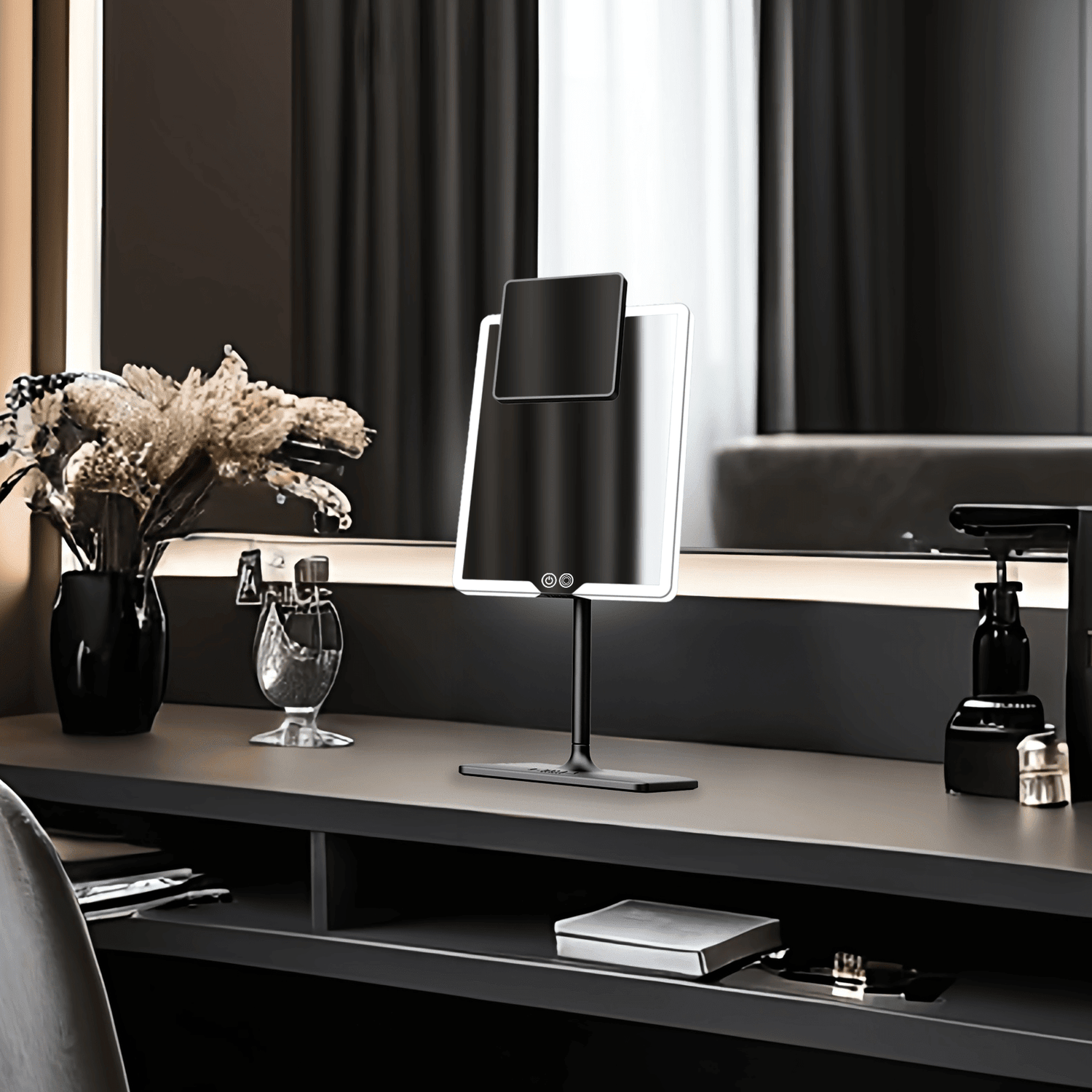
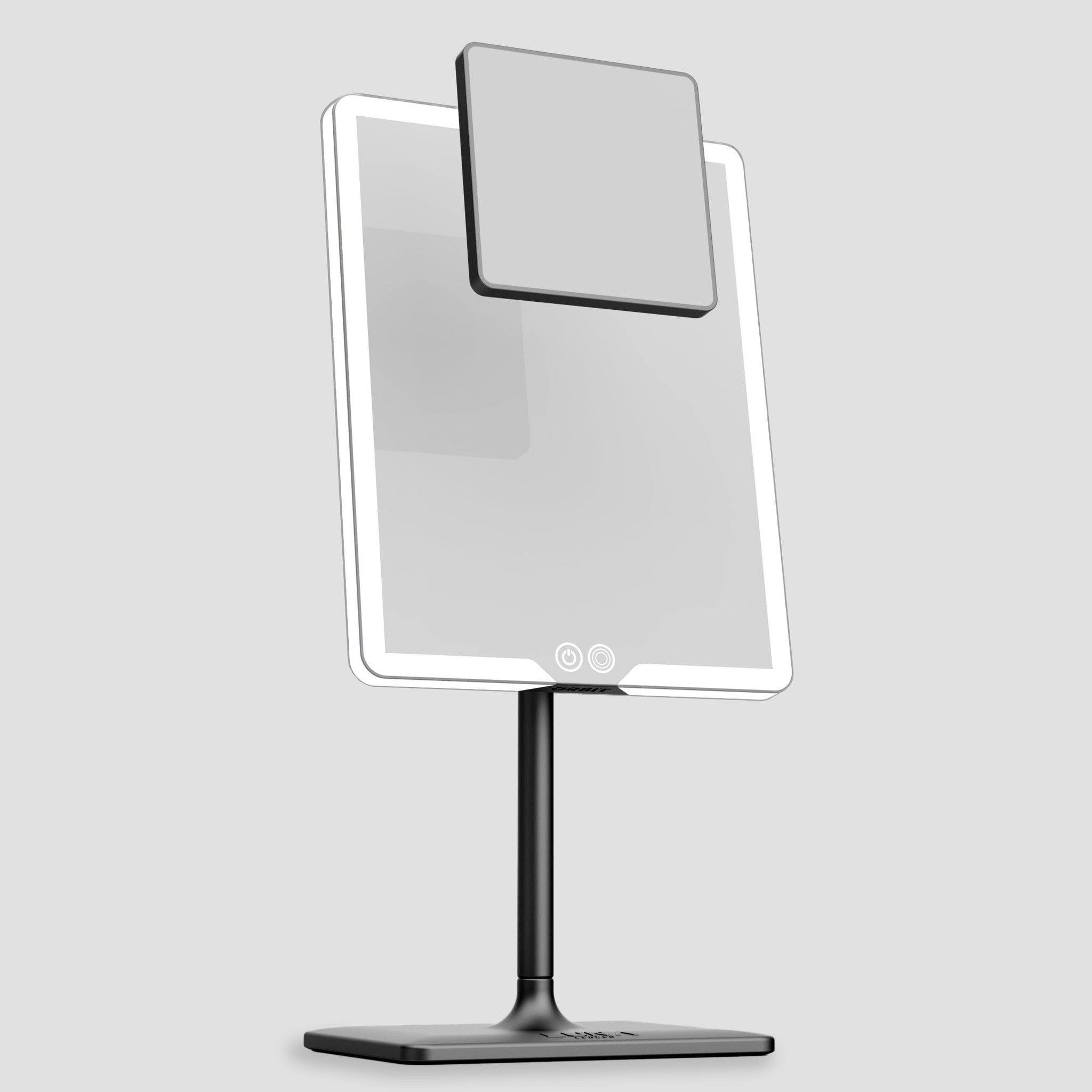
This is where the buying decision becomes more concrete. If you only need an overall face check, magnification is optional. If you shape brows, insert contact lenses, apply eyeliner, or shave close around edges, it becomes much more important. That is also where the current LUNA range separates clearly: ORBIT includes a 7x magnified attachment, COMPACT 2.0 includes 7x and 1x panels, and ECLIPSE is lighting-focused with no magnification.
Which Setup Fits Which Job?
If you want the broader category picture, this LED mirror guide is a good companion read, and this LED mirror vs natural light piece is useful if your main concern is skincare checks rather than makeup application.

⚡ PRO INSIGHT: If you are over 45 and fine detail has quietly become harder, do not let vanity language talk you out of magnification. Precision tasks become easier faster when the mirror fits the job.
The 30-Second Shopping Check
If you are standing on a product page and want a fast way to judge it, use this:
- Check what “light-up” actually means: Is it front-lit, backlit, or just a halo image with no explanation?
- Check brightness control: One fixed setting is usually a compromise, not a feature.
- Check colour modes: You want at least some ability to switch between warmer and more daylight-like viewing.
- Check colour fidelity language: If the brand mentions CRI or colour accuracy, good. If not, proceed more cautiously.
- Check whether the mirror suits your real task: Full-face routines, detail work, or travel all need different things.
The Biggest Buying Mistake
The most common mistake is buying on the label and the silhouette instead of the outcome. People see “LED mirror” and assume premium. They see “light-up mirror” and assume it is a vague older term. In reality, both labels can sit on excellent products or mediocre ones. The better question is simpler: Will this mirror help me see clearly, consistently, and in the situations I actually care about?
That question is also why the answer differs by person. Someone doing a quick skincare check in a bright bedroom does not need the same mirror as someone doing brow clean-up at 6am in a dim bathroom, or someone packing for hotel mornings that never have usable light.
When the real issue is lighting honesty
If this comparison has made one thing clearer, it is that better results come from better lighting, not smarter label-reading. ORBIT is the strongest fit when you want a full-size, face-level mirror that helps makeup, skincare and grooming look more consistent across real environments.
Explore ORBIT lighting →FAQs
Is a light-up mirror the same as an LED mirror?
Usually, almost. “Light-up mirror” describes the feature, built-in lighting. “LED mirror” describes the light source. Since most modern light-up mirrors use LEDs, the real comparison is quality of light, not terminology.
Does LED automatically mean better for makeup?
No. LED technology can be excellent, but it does not guarantee good lighting by itself. Brightness control, colour modes, diffusion and colour accuracy still decide whether your makeup looks consistent in real life.
What colour temperature is best for applying makeup?
For most people, a neutral to daylight-like mode is the safest starting point for foundation and undertone checks. Warmer settings can still be useful for previewing evening environments, but they are usually less reliable for matching base products.
What CRI should I look for in a lighted mirror?
Higher is generally safer when you care about colour accuracy. If a brand discloses CRI, that is usually a good sign. If it does not disclose anything about colour quality, you are relying much more heavily on guesswork and reviews.
Is backlit or front-lit better for skincare and shaving?
For most detail tasks, front-facing diffused light is more helpful because it reduces shadows on the face. Backlit mirrors can look elegant, but they are often better at lighting the wall than showing skin texture, beard edges or makeup blending.
Do I need magnification in a lighted mirror?
Only if your routine includes precision work. Brows, eyeliner, contact lenses, close shaving and ageing eyes are the clearest cases where magnification makes a real difference. For a general whole-face check, it is optional.
Which LUNA mirror fits which job best?
ORBIT is the strongest all-rounder for home routines and full-face visibility, COMPACT 2.0 is the best fit when 7x precision matters, and ECLIPSE is the travel-first option when you want controlled light without magnification.

Leave a comment
This site is protected by hCaptcha and the hCaptcha Privacy Policy and Terms of Service apply.