
Last updated: 3rd July 2026
Why Some Makeup Looks Different Outside, Under Flash or in Bathroom Light
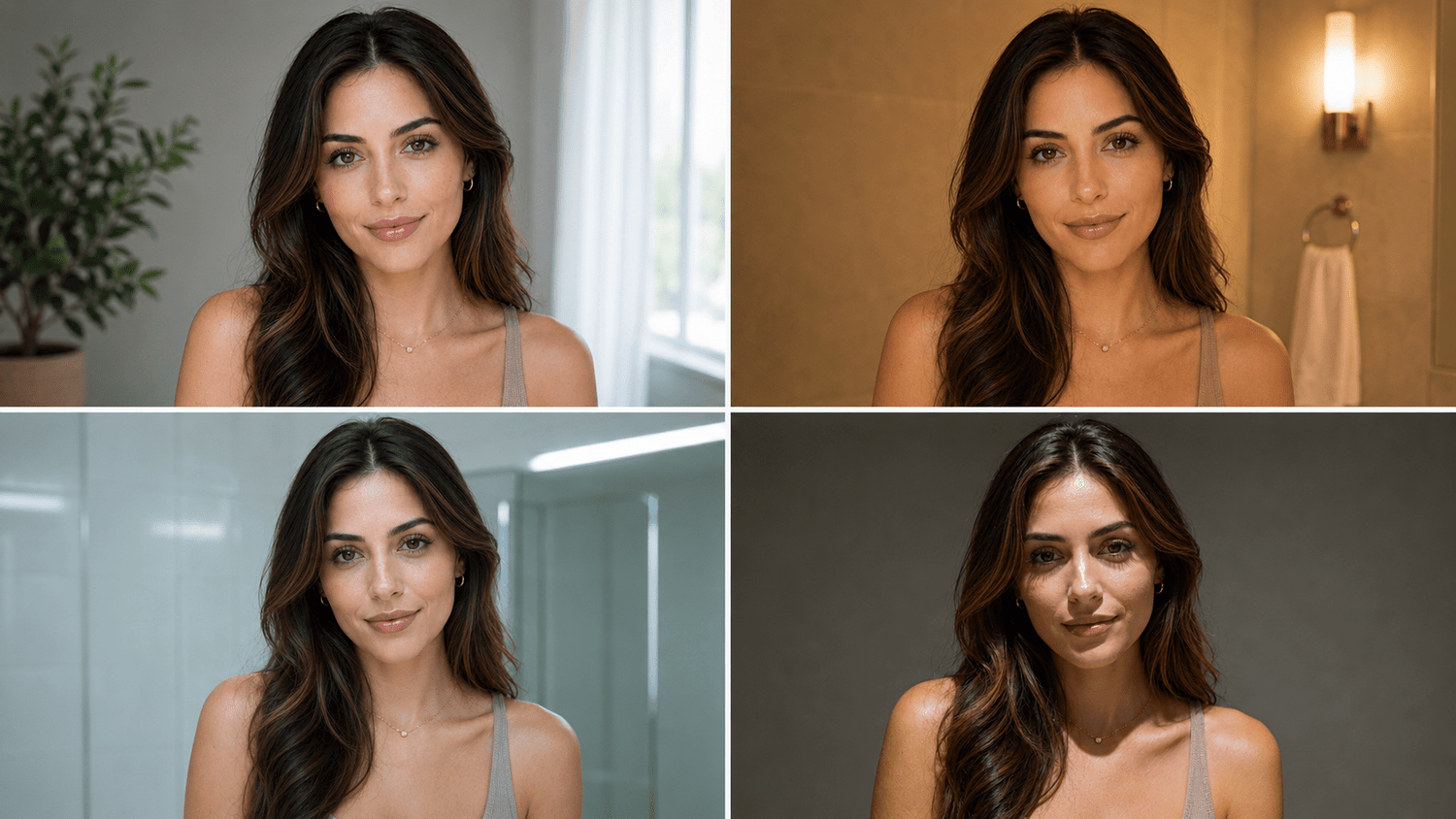
There is a lazy answer to this problem: blame the product. Sometimes that is fair. A foundation can oxidise, a powder can flash back, and a highlighter can be too metallic. But if the same makeup looks fine in one mirror and strange everywhere else, your lighting is probably giving you poor feedback while you apply it.
That matters because makeup is colour work. The Illuminating Engineering Society defines colour rendering index as a way to describe how much colours shift under a light source compared with a reference source. In simpler beauty terms: a bulb can make your skin, foundation, blush and bronzer read warmer, greyer, flatter or shinier than they really are.
This is also why LUNA’s guide to makeup mistakes under bad lighting focuses on feedback, not just technique. You can blend beautifully and still leave the house with a foundation line if the mirror light hid the mismatch.

Quick diagnosis: which product is your lighting exposing?
| What you notice | Likely product | What the lighting did | Fast test |
|---|---|---|---|
| Face looks orange or grey outside | Foundation | Warm or cool light hid the undertone problem | Jawline check in neutral light, then daylight |
| Under-eyes look chalky in photos | Concealer | Dim light encouraged too much brightening | Step back and check both eyes together |
| Skin looks dry, dusty or flat | Powder | Soft lighting hid texture and build-up | Angle your face, check cheeks and nose folds |
| Contour looks muddy | Bronzer or contour | Overhead shadows made placement misleading | Check face-on, then from each side |
| Blush disappears or looks clownish | Blush | One light source distorted colour strength | Switch from daylight-style to warm preview |
| Glow turns stripy or oily | Highlighter | Mirror light was too flattering from one angle | Move your head slowly side to side |
| White cast or pilling appears later | Tinted SPF or SPF reapplication | Bad light hid residue around hairline and brows | Check edges in front-facing light before leaving |
⚡ PRO INSIGHT: Do not judge base makeup by brightness alone. Bright overhead light can still be bad makeup light if it casts shadows down the face. The cleaner test is even, front-facing light that shows the jawline, nose folds and under-eyes at the same time.
1. Foundation: the first product to look wrong in bad light
Foundation is usually where makeup lighting mistakes become obvious. Warm bathroom bulbs can make a base look softer and more golden than it really is. Cool shop lighting can make the same shade look flat or grey. Step outside, and suddenly the jawline tells the truth.
Makeup artist Rose Siard told Vogue India: “Try it to match your foundation to your jawline, neck and chest, not the back of your hand.” That advice is boring in the best possible way, because it stops you choosing a foundation from a part of the body that is not actually your face.
“Try it to match your foundation to your jawline, neck and chest, not the back of your hand.”
— Rose Siard, makeup artist and founder of Rose and Ben Beauty, Vogue India, 2026
The test: apply a thin swatch along the jawline, wait 5 to 10 minutes, then check it in a neutral or daylight-style light. If it only matches in warm light, it does not match. If it only matches when you lean very close to the mirror, step back. Your face is not worn at 10cm distance.
For deeper foundation troubleshooting, LUNA’s older guide to foundation matching mistakes is worth linking as a supporting read, but the short version is this: one flattering mirror is not enough evidence.
2. Concealer: where shadows trick you into over-applying
Concealer looks worse in the wrong light because it is usually applied to the most shadow-prone part of the face. Overhead lighting creates darkness under the brow bone, nose and lower eye area. You see a shadow and think, “I need more concealer.” Then daylight shows a pale crescent of product sitting on top of the skin.
The fix is not automatically a darker concealer. It is better order and better distance. Apply a small amount, blend it out, then look at both eyes together in the mirror. If one eye is brighter than the other, correct lightly. If both under-eyes still look textured, more concealer will probably make it worse.
3. Powder: the product that can look invisible until it is not
Powder is dangerous under soft bathroom lighting because it can look beautifully blurred while you are indoors, then dusty in daylight. This is especially common around the sides of the nose, the centre of the forehead and the smile lines.
The basic rule: powder where makeup moves, not everywhere the light makes you nervous. If shine is the issue, blot first. Then use powder in controlled areas. If you powder your whole face because the mirror makes your skin look uneven, you may be fixing the light, not the makeup.
Confidence before you leave
A proper mirror for products that punish bad lighting
“My hubby likes to use it when shaving as he finds the light really helpful as our bathroom is quite dark.”
4. Bronzer and contour: when warmth turns into mud
Bronzer is meant to warm the face. Contour is meant to create structure. They are not the same job, and the wrong light blurs that distinction. Yellow light can make bronzer look more natural than it is. Overhead light can exaggerate cheek shadows, so you place contour too low or too heavily.
The test: after applying bronzer or contour, turn your face slightly left and right. If the product looks like a stripe from the side, diffuse the edge. If it disappears entirely under warm light but looks muddy in daylight, the undertone is wrong or the product is too heavy.
5. Blush: the product most people under-estimate indoors
Blush is emotional. It can make the whole face look healthier, but it also shifts dramatically between lighting environments. Cool light can make pinks look sharper. Warm light can make peach and coral blush look softer, sometimes too soft. That is why blush often either disappears outside or looks much stronger than you expected in photos.
Do not judge blush only close up. Apply, blend, then step back. You want the blush to register as part of the face, not as a separate patch. For more on choosing the right light mode by step, read LUNA’s guide to warm, cool and natural light for makeup.
6. Highlighter: where flattering light lies the most
Highlighter is the product most likely to flatter you in one mirror and betray you in another. A soft front light can make shimmer look smooth. A side light, camera flash or bright daylight can reveal a metallic stripe, visible texture or glitter particles you did not realise were there.
The test is movement. Do not stare at highlighter straight-on only. Slowly turn your head. If the glow becomes a hard line, use a clean brush or sponge to soften the edge. If it emphasises pores, keep it higher on the cheekbone and avoid the centre of the face.
⚡ PRO INSIGHT: Magnification is useful for edges, not for judging the whole face. Use close-up checks for liner, lipstick, brows and tiny blending mistakes, then always step back to 1x before deciding whether to add more product.
7. Tinted SPF and SPF reapplication: the quiet white-cast problem
Tinted SPF sits between skincare and makeup, so it often gets judged too casually. The wrong light can hide white cast around the hairline, brows, ears and jaw. It can also hide pilling when SPF is reapplied over moisturiser, foundation or powder.
This part matters beyond aesthetics. The American Academy of Dermatology recommends broad-spectrum SPF 30 or higher and reapplication every two hours outdoors, especially after swimming or sweating. If you wear makeup, that means your mirror check needs to include texture and edges, not just colour.
The test: after SPF or tinted SPF, look around the brows, nostrils, hairline and jaw. These are the places residue hides. If you are reapplying over makeup, press rather than drag, then check in a compact mirror before assuming it has settled cleanly.
The 3-light test before you leave
You do not need a studio setup. You need consistency. Here is the simple version.
| Step | Light to use | What to check | Common mistake caught |
|---|---|---|---|
| 1. Base check | Neutral or daylight-style light | Foundation depth, jawline, redness, concealer balance | Foundation wrong colour or over-concealing |
| 2. Detail check | Closer mirror or short magnification check | Lip edges, liner, mascara marks, nose folds, brow gaps | Small mistakes you only spot later |
| 3. Real-life preview | Warm indoor light, window light or phone camera | Overall balance, shine, blush strength, highlighter texture | Makeup that only works in one room |
This is the same logic behind a good makeup mirror with lights: the mirror is not there to make you look prettier while you apply. It is there to make the feedback more honest.
For handbag and desk checks
Keep a close-up light check where bad lighting usually finds you
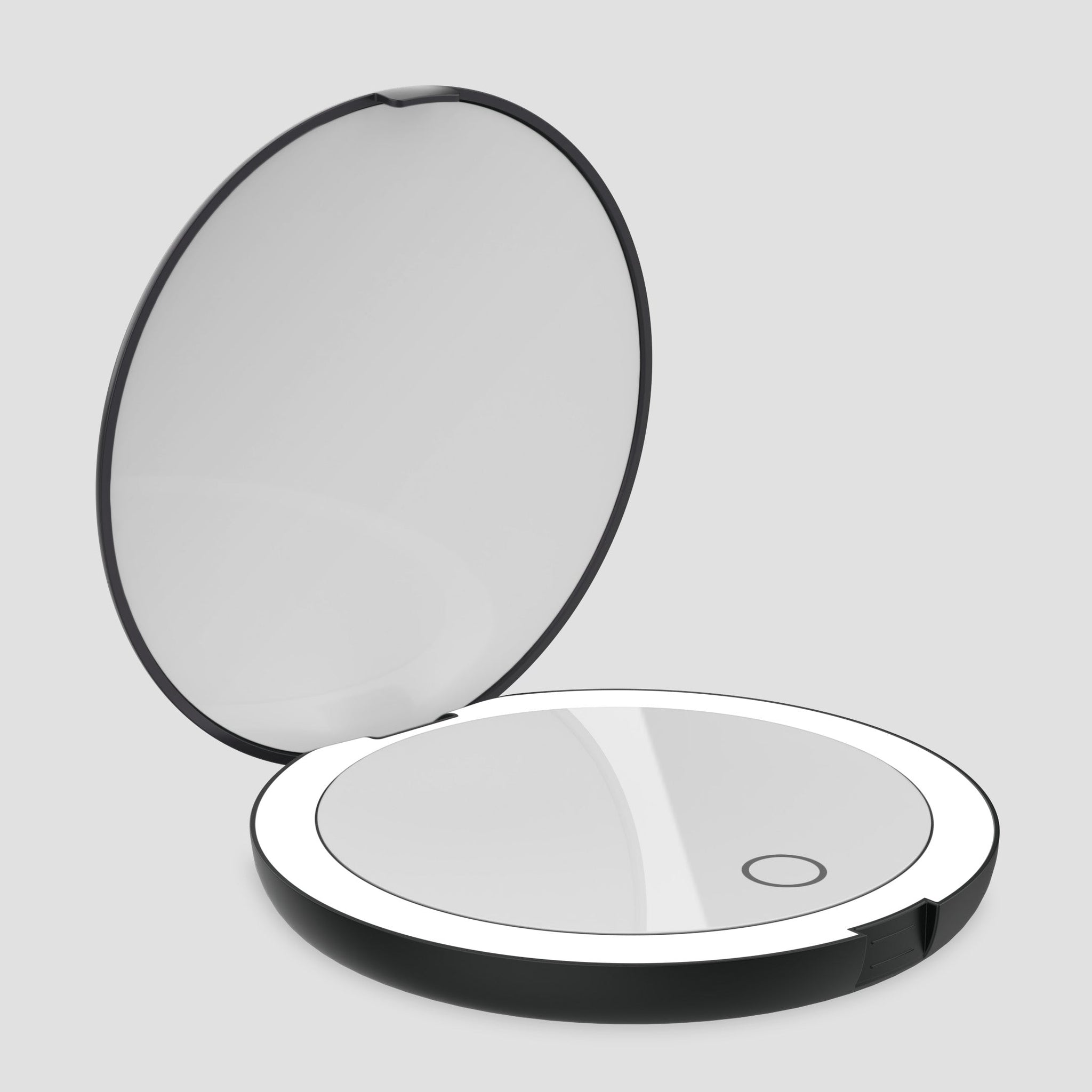
COMPACT 2.0 is useful for lipstick edges, SPF residue, mascara marks and quick corrections away from home. It has a 7x magnification mirror, 3 LED brightness settings and a USB C rechargeable design.
What not to assume
Do not assume expensive products behave better in bad lighting. Some premium base products are beautiful, but they still need the right shade, undertone and texture match. Do not assume natural light is the only useful light either. Natural light is excellent for foundation, but you still need to preview the environments where you will actually be seen: office light, evening light, car mirrors, restaurant bathrooms and camera flash.
The more useful question is not “Which product is bad?” It is “Which product changes most when the light changes?” That is the product to test before you buy another shade.

If your makeup only looks wrong after you leave, check the light first
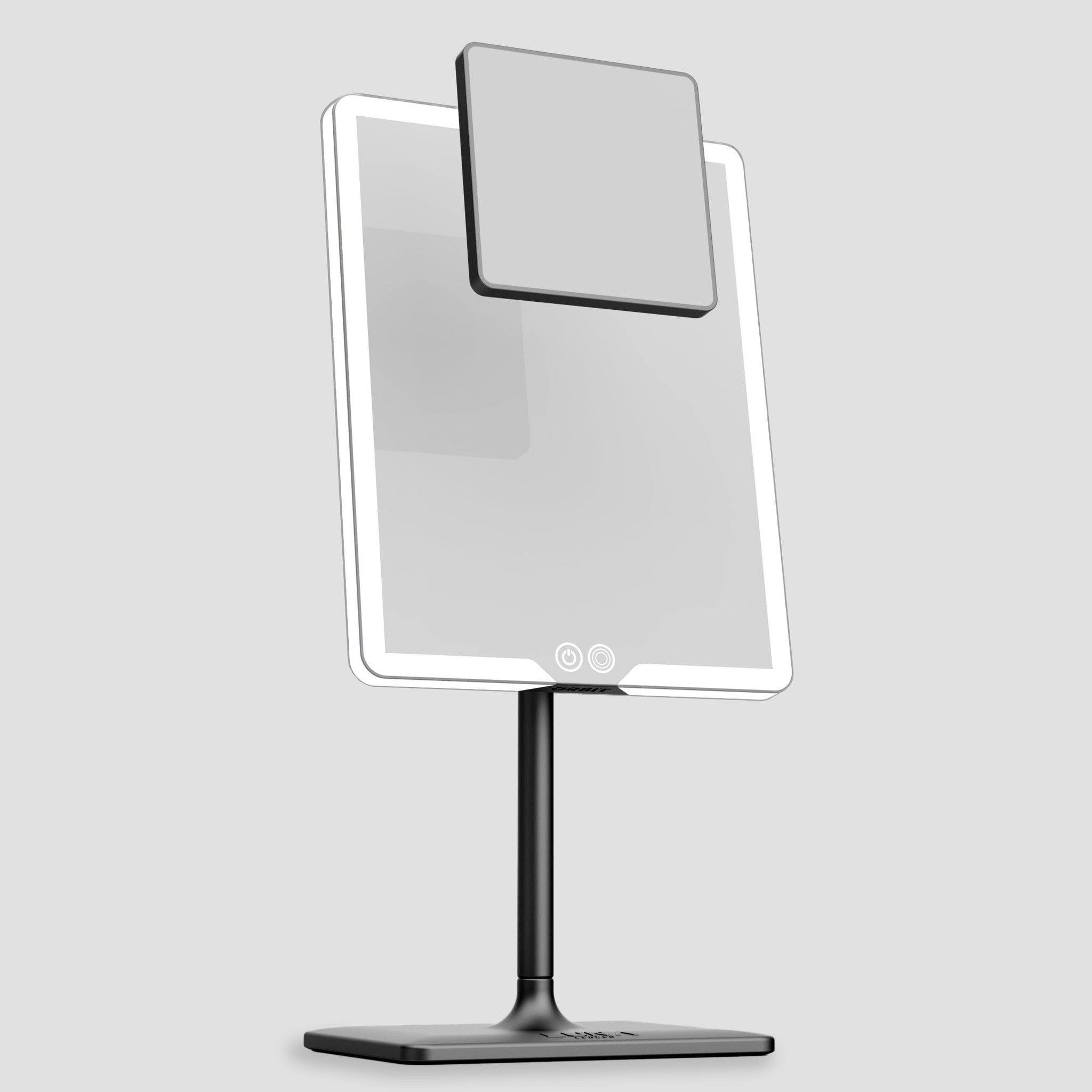
ORBIT gives you a larger lit mirror face for full-routine checks, plus a 7x magnification add-on for the tiny details that bad lighting loves to hide. Use it for foundation, blush, brows, liner and final exit checks at home.
Use ORBIT for better mirror checks →Order today and receive tomorrow in:
 USA
USA
 UK
UK
 EU
EU
FAQs
Why does my makeup look bad in lighting but fine at home?
Your home mirror may be using warm, dim or overhead light that hides shade mismatch, texture, powder build-up or harsh edges. When you move into daylight, office light or flash, those hidden issues become more visible.
What makeup product usually looks worst in the wrong light?
Foundation is usually first because it covers the largest area and has to match your face, neck and undertone. Concealer, powder, bronzer and highlighter are also unforgiving because they respond strongly to shadows and shine.
How do I stop foundation looking the wrong colour outside?
Test foundation along the jawline, not the hand. Let it sit for 5 to 10 minutes, then check it in neutral or daylight-style light. Blend toward the neck and avoid judging the shade under one warm bathroom bulb only.
Related links
- ORBIT Phantom Black LED vanity mirror with 7x magnification add-on
- COMPACT 2.0 Matte Black LED compact mirror with 7x magnification mirror
- ECLIPSE Matte Black fold-flat travel makeup mirror with lights
- Bad Lighting Ruins Makeup Fast: The Easy Fixes That Help
- Warm, Cool or Natural Light for Makeup? What Looks Best?
- Read more LUNA London beauty lighting guides

Leave a comment
This site is protected by hCaptcha and the hCaptcha Privacy Policy and Terms of Service apply.