
Last updated: 8 May 2026
Why Mature Skin Makeup Can Look Tired, Even When You’ve Done More
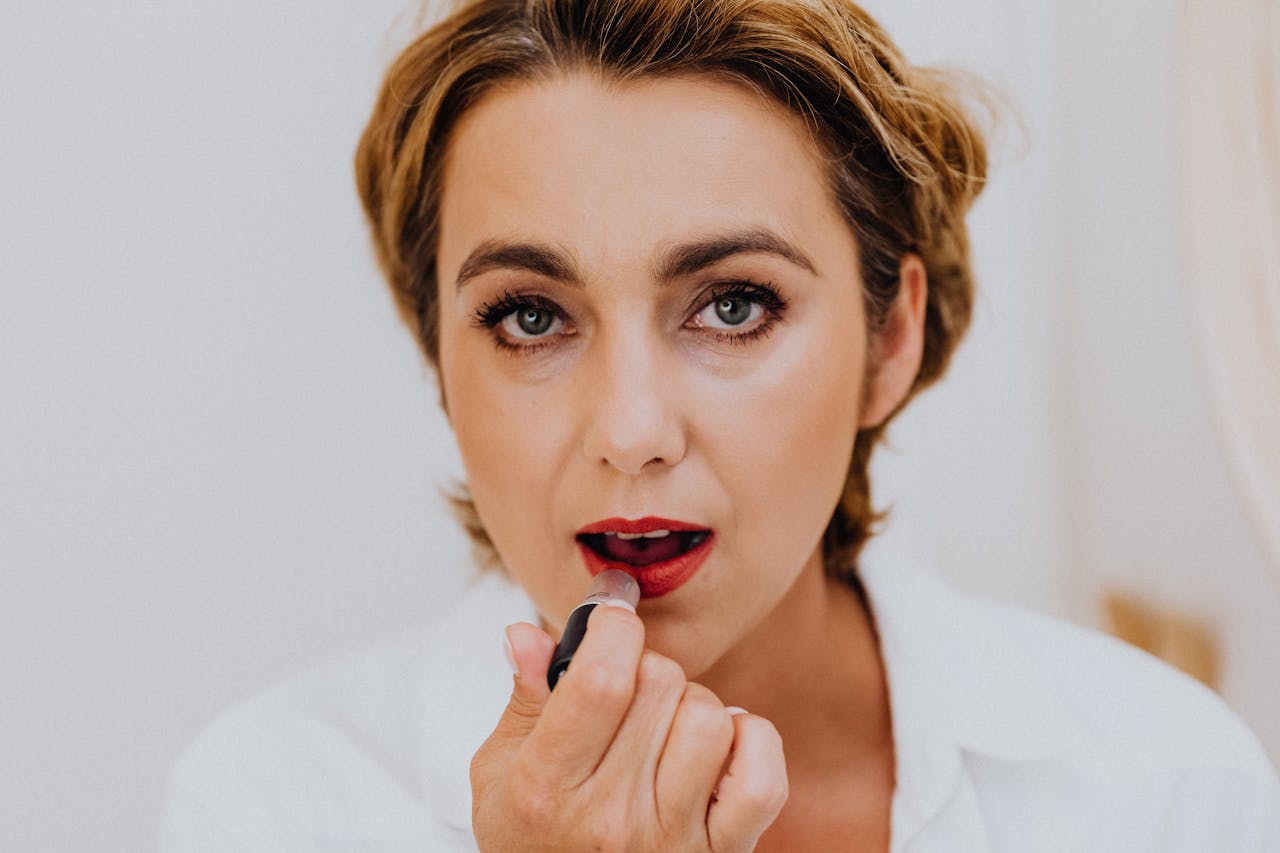
Mature skin does not need boring makeup. It does, however, punish heavy-handed makeup more quickly than younger skin. Fine lines, dryness, texture, shifting facial volume and changing close-up vision all make small placement mistakes more visible.
That is not a reason to give up foundation, eyeliner or colour. The lazy assumption is that makeup over 50 should always be beige, minimal and “age appropriate”. Not quite. The better rule is this: keep the impact, reduce the weight.
Dermatologists note that menopause and ageing can make skin drier, thinner and less firm, while Harvard Health explains that collagen, elastin and oil production decline over time. That changes how foundation, powder and concealer sit on the face, especially around the eyes and mouth. For close-up application, the National Eye Institute’s presbyopia guidance is also relevant: near vision usually becomes harder after 45, which is exactly when liner, brows and concealer start needing more precision.
If your base looks dry by lunchtime, your eyeliner suddenly feels harsh, or your concealer seems to find lines you did not know existed, start with the seven fixes below. For a deeper routine around skin-like base, LUNA’s no-makeup makeup guide for winter skin pairs well with this checklist.
In a hurry? The quick mature skin makeup check
1. Using foundation like a mask
The most common mature skin makeup mistake is using foundation everywhere, at the same thickness, because that worked years ago. It may still photograph nicely for one minute, but in real life it can collect around the nose, mouth and under-eyes.
Makeup artists increasingly recommend targeted coverage for mature skin. In Glamour’s 2025 guide to foundation on mature skin, pro artists stress hydration, lighter formulas and avoiding one heavy layer all over the face.
⚡ PRO INSIGHT: Apply foundation to the centre of the face first, then blend outward until there is almost nothing on the perimeter. Mature skin often looks fresher when the jawline, hairline and cheek edges still look like skin.
Try this instead: use a thin layer where redness or uneven tone is strongest, then spot-conceal only what remains. If your main problem is cakiness, use LUNA’s cakey makeup troubleshooting guide as your base-layer reset.
2. Skipping skin prep, then blaming the foundation
Dryness is not always obvious before makeup. Skin can look fine bare, then cling to pigment once foundation goes on. The American Academy of Dermatology notes that skin can become dry, slack and thin during menopause, which is why moisturiser and waiting time matter more than another layer of base.
“Dry skin clings to pigment, leading to cracking, patchiness, and dullness.”
— Christian Briceno, Makeup Artist, Glamour (2025)
The simple fix: cleanse gently, moisturise, wait two to five minutes, then apply makeup. If you use SPF in the morning, give it time to settle too. Rushing products on top of each other is a quiet reason makeup pills, grabs or looks older than it should.
3. Powdering the whole face out of habit
Powder is useful. Powder everywhere is usually not. On mature skin, a full matte veil can flatten the face and make natural texture look more pronounced. It can also turn luminous foundation into something dull and chalky.
Instead, powder only where movement or oil breaks makeup: the sides of the nose, under the glasses bridge, the centre of the forehead, and very lightly under the eyes if concealer creases. Keep the high points of the cheeks softer.
4. Taking dark liner too far under the eyes

Dark lower-lash liner can be chic, but it is unforgiving when the under-eye area already has shadow, puffiness or fine lines. It can pull the face downward and make the eyes look smaller.
Try a softer brown, grey or taupe pressed into the outer third only. Keep the inner lower lash line clean, then add a tiny lift at the outer corner. If eyeliner feels harder because close-up tasks are blurrier than they used to be, LUNA’s guide to the best magnifying mirror for older eyes explains why sensible 5x to 7x magnification is often easier than chasing the strongest zoom.
5. Forgetting that brows frame a tired face
Brows thin, fade or become patchy over time, but the answer is not always a harder brow pencil. A severe brow can look as ageing as no brow at all.
Use short strokes, not a single drawn line. Fill the tail lightly, soften the front, then brush through. If your brows have become cooler or greyer, avoid overly warm pencil shades. They can look red in daylight and make the makeup feel disconnected from your face.
6. Putting shimmer exactly where texture is strongest
Shimmer is not banned after 50. That rule is tired. The problem is placement. Frosty shimmer on crepey lids, dry cheek texture or deep smile lines can catch light in a way that exaggerates texture.
Use sheen strategically: a satin cream shadow on the mobile lid, a soft glow high on the cheekbone, or a small highlight on the inner corner. Avoid chunky sparkle where skin moves most.
7. Trusting bathroom lighting too much
This one is brutally common. Your makeup can look warm, smooth and flattering in yellow bathroom light, then suddenly too heavy, too pink or uneven outside. LUNA’s guide to warm, cool and natural white lighting for makeup explains why neutral-to-daylight style light is usually more reliable for shade matching and blending.
⚡ PRO INSIGHT: Do your final check in two views: 1x for balance, then 7x only for detail. If you stay magnified too long, you can overcorrect tiny things nobody sees in normal conversation.
The 5-minute mature skin makeup reset
- Hydrate and wait: apply moisturiser, then give it time before makeup.
- Start thin: foundation goes on the centre first, not automatically everywhere.
- Spot-correct: use concealer only where foundation has not done enough.
- Lift softly: brows, liner and blush should move slightly upward, not outward and down.
- Powder selectively: set movement zones, not the whole face.
- Check the light: use neutral front-facing light before judging the final result.
Which mirror setup helps mature skin makeup most?
You do not need to turn this into a gadget problem. That would be lazy. But if your makeup mistakes come from poor visibility, bad bathroom light or difficulty seeing close-up detail, the right mirror setup can remove a lot of guesswork.
| Mirror | Best for | Key features | Here’s Our Favourite |
|---|---|---|---|
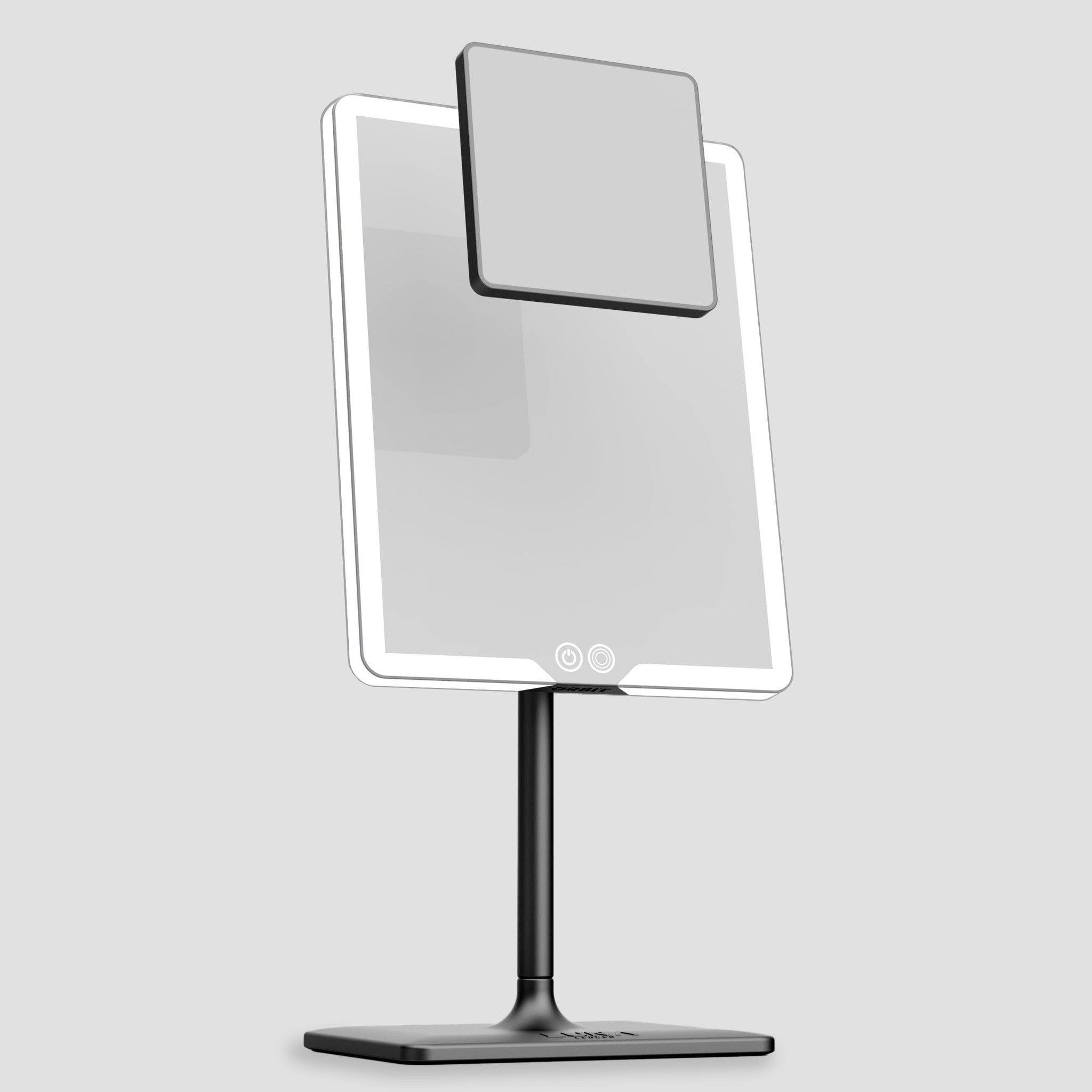 |
ORBIT Dressing table makeup, fuller face checks and precision details. |
Large 11-inch mirror face, detachable 7x magnifying attachment, 360° adjustability and USB-C charging. | Best all-round setup for mature skin makeup because you can check the whole face first, then use 7x only for brows, liner and concealer edges. Shop ORBIT |
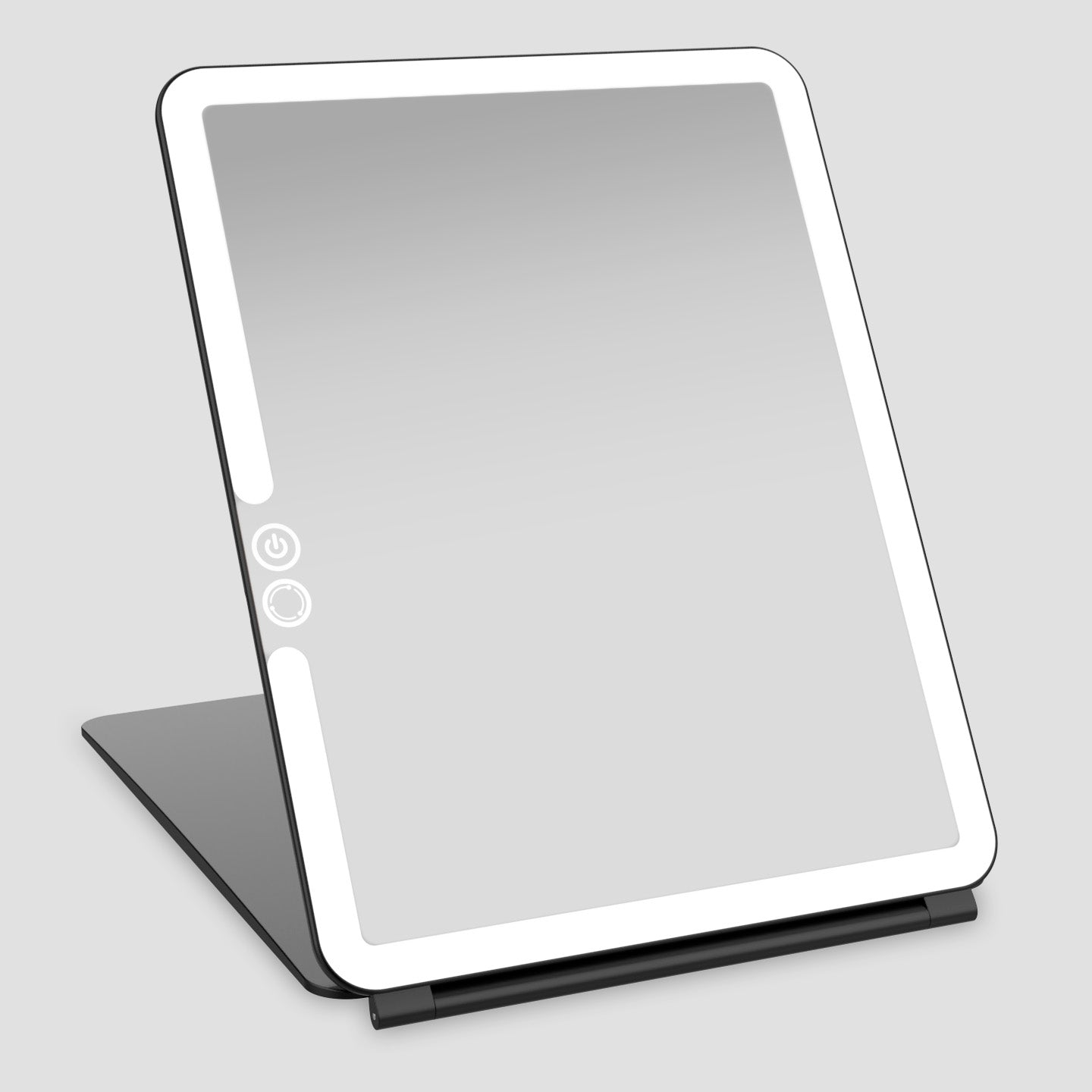 |
ECLIPSE Travel, desks, hotel rooms and quick shade checks. |
3 dimmable light modes, fold-flat design, USB rechargeable and travel ready. No magnification. | Best if your biggest problem is inconsistent lighting rather than close-up detail. Useful for checking foundation tone before leaving home or a hotel room. Shop ECLIPSE |
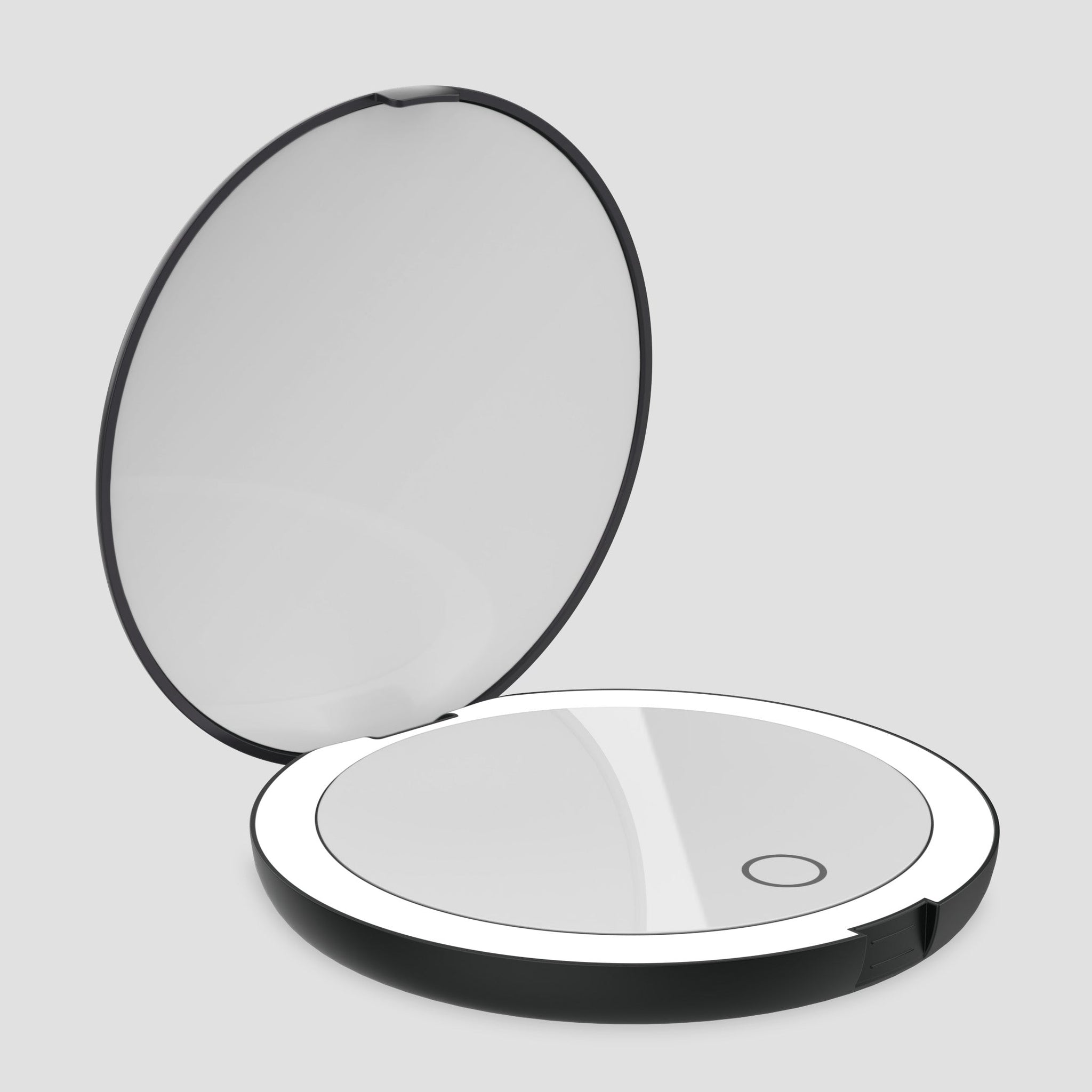 |
COMPACT 2.0 Handbag touch-ups, travel and close-up corrections. |
1x and 7x magnification, 3 dimmable light modes, USB-C rechargeable and compact 5-inch mirror face. | Best for lipstick edges, concealer checks and small corrections when you are not near your dressing table. Shop COMPACT 2.0 |
The final “does this make me look tired?” test
Before leaving, ask three better questions than “does my makeup look good?”
- Does my skin still look like skin around the mouth and under the eyes?
- Do my brows and liner lift the face, or drag attention downward?
- Does the makeup still work in neutral light, not just warm bathroom light?
This is where mature beauty gets more interesting, not less. The goal is not to hide every line. It is to stop makeup from adding heaviness where your face naturally has movement, shadow or texture.
A calmer setup for detail work after 45
ORBIT suits mature skin makeup because it gives you a large full-face view first, then a detachable 7x magnifying attachment only when detail matters. That helps with brows, liner and concealer edges without forcing your whole routine into magnification mode.
Explore ORBIT for precision checks →FAQs
What are the most common makeup mistakes for mature skin?
The most common mistakes are using too much foundation, skipping hydration, powdering the whole face, using dark lower-lash liner, overfilling brows, placing shimmer on textured areas and applying makeup in poor lighting.
What makeup makes mature skin look less tired?
Thin, hydrating base layers, soft brow definition, lifted blush placement, gentle eye definition and selective powder usually help most. The aim is to brighten and define without adding weight around the eyes, mouth and cheeks.
Is magnification helpful for makeup over 50?
Yes, if it is used carefully. A 5x to 7x view can help with brows, eyeliner and concealer edges, especially as near vision changes. But check the whole face again in 1x before leaving, because staying magnified too long can lead to overcorrection.
Related links
- No-makeup makeup for winter skin
- How to stop makeup looking cakey
- Good lighting for makeup: warm, cool or natural white?
- Best magnifying mirror for older eyes
- ORBIT Phantom Black
- COMPACT 2.0 Matte Black


Leave a comment
This site is protected by hCaptcha and the hCaptcha Privacy Policy and Terms of Service apply.