
The Ultimate 2026 Self-Care & Beauty Resolution Guide
New year beauty resolutions sound easy until real life shows up... work, travel, late nights, hormones, winter skin, and the classic “I’ll restart on Monday.” This pillar guide gives you a resolution builder that works in messy, normal weeks, plus skincare goals you can measure without turning your bathroom into a lab.
A Resolution Builder for New Year Beauty Resolutions That Actually Stick
Let’s challenge the default idea that “new year, new me” needs a full overhaul. Most people don’t fail because they lack motivation. They fail because the plan is vague (“better skin”), too fragile (“every day, no exceptions”), or impossible to recover after a slip.
If you only take one principle from this guide, take this: design your 2026 self-care plan for the weeks you can’t control. The point is not perfection. The point is a system that restarts quickly.
Step 1: Pick Your “Minimum Routine” (The One You Can Do On a Bad Day)
The fastest way to sabotage new year beauty resolutions is to set a routine that only works when you’re fresh, calm and unbusy. Instead, define a minimum routine you can do in under 3 minutes. You can always add extras on good days, but your minimum keeps the streak alive.
- Skincare minimum: gentle cleanse (or rinse), moisturiser, SPF in the morning.
- Hair minimum: 60 seconds of detangling, protective style if needed.
- Body minimum: moisturise hands + body “hotspots” (elbows, shins) after shower.
- Makeup minimum: optional, but keep it simple: concealer + brows + lip balm.
The internet pushes complexity because complexity looks impressive on camera. Dermatologists keep repeating the opposite: most routines should be simpler than TikTok suggests. In an AP News piece, Yale dermatologist Dr. Kathleen Suozzi said, “skincare regimens have become way overcomplicated.” Source.
Expert note (Dermatology):
“Skincare regimens have become way overcomplicated.”
Dr. Kathleen Suozzi, Professor of Dermatology, Yale School of Medicine (via AP News)
Step 2: Use This 2026 Resolution Builder (Copy, Paste, Fill It In)
Your resolution builder needs four ingredients: a cue (when), a behaviour (what), a friction reducer (how you’ll make it easy), and a metric (how you’ll know it happened). If you like structure, “if–then” planning is a proven approach in behaviour research because it removes decision fatigue.
| Goal | Minimum habit | If–then plan (cue) | Make it easier | Track |
|---|---|---|---|---|
| Skincare goals | Cleanse + moisturise + SPF (AM) | If I brush my teeth, then I apply SPF. | Keep SPF next to toothpaste. | 7-day tick box |
| Hair health | 60s detangle | If I get home, then I detangle before sofa-time. | Brush in a visible place. | Minutes/week |
| Body care | Moisturise “hotspots” | If I towel-dry, then I moisturise elbows/shins. | Lotion by the towel. | Skin comfort 1–5 |
| Confidence basics | Brows + lip balm | If I make coffee, then I do brows. | Keep products together. | Days used |
Want the “shopping version” of this without getting lost in influencer noise? Use category pages and keep it boring: face cleansers, SPF 30 sun protection, and (if you’re building a starter set for someone) skincare sets.
Step 3: Set Skincare Goals That Aren’t Vague (And Don’t Fight Your Skin)
“Better skin” is not a plan. A good skincare goal is specific, gentle, and measurable. Try these examples:
- Dryness: “My skin feels comfortable (not tight) 5 days a week.”
- Breakouts: “I follow my minimum routine for 20 days this month.”
- Texture: “I keep actives consistent (2–3 nights/week) for 8 weeks before changing anything.”
- Sun care: “SPF at least SPF 30 every weekday morning.”
How to add actives without wrecking consistency
Actives (like retinoids, exfoliating acids, vitamin C) can be useful, but they are also where people blow up their routine. The biggest mistake is introducing multiple new products at once, then having no idea what caused irritation.
- Add one thing at a time and keep it for 2–4 weeks before adding another.
- Start with frequency, not strength: once or twice a week is a valid starting point.
- Protect the baseline: cleanser, moisturiser, SPF stays non-negotiable.
- Track one signal: irritation (yes/no) or comfort (1–5). If comfort drops, simplify.
Step 4: Hair, Body, and “Feeling Put Together” Goals for Busy Weeks
For most people, “self-care” collapses because it’s treated as a weekend luxury. The fix is to treat it like maintenance, not a spa day. Small daily actions beat occasional big ones.
Hair goals that don’t require a new identity
If your hair routine feels like a whole event, shrink it. A detangling habit is one of the easiest wins because it prevents breakage and saves time later. If you want a simple benchmark, aim for: “60 seconds of detangling, 4–5 days a week.”
If you’re shopping, stick to category pages so your routine doesn’t depend on one product being in stock: detangling hair brushes.
Body care: pick one “high impact” moment
Here’s a simple question: when is your body care most likely to happen? For most people it’s after a shower, or right before bed. Choose one and attach a micro-step to it. Example: moisturise hands and shins only. Done.
Step 5: Your 30–60–90 Day Plan (So January Doesn’t Carry the Whole Year)
The reason January feels like a make-or-break month is because people load the entire year into 2 weeks. A better approach is phased progress, where your only job in month one is consistency with the minimum routine.
| Phase | Focus | What success looks like | Common trap |
|---|---|---|---|
| Days 1–30 | Minimum routine | You hit the baseline 70–80% of days | Adding too much, too soon |
| Days 31–60 | One upgrade | You add one “level up” step (e.g., active 2x/week) | Switching products constantly |
| Days 61–90 | Refine + simplify | You cut what’s not working, keep what is | Chasing “perfect” routines |
If you want inspiration for self-care actions that are genuinely simple (and not performative), the NHS has a straightforward list of starting points: self-care ideas to get you started.
Step 6: Build Your Environment So Your Routine Happens Automatically
This is the part most guides skip because it’s not glamorous. Your environment decides whether your resolution builder works. If your products are scattered, your lighting is harsh, and nothing is where you need it, consistency becomes a daily negotiation.
Use the “one place, one kit” rule
Put your minimum routine in one visible place. Not five drawers, not two different bags, not “some in the bathroom, some in the bedroom.” One place, one kit. That alone cuts friction.
Optional: upgrade your routine setup with better lighting and magnification
This is optional, but it’s a practical upgrade if your skincare or grooming accuracy matters, especially if you’re dealing with uneven indoor light. If you want a deeper dive, our guide on fixing patchy foundation with better lighting explains how warm vs daylight settings change what you see.
Quick guide: which LUNA mirror suits which routine?
| Your routine | Best fit | Why it works | Here’s Our Favourite |
|---|---|---|---|
| Daily vanity routine at home | ORBIT | A consistent station makes habits easier to keep. | ORBIT for a “set it once” ritual setup. |
| Travel, gym bag, hotel lighting | ECLIPSE | Portable consistency, same routine anywhere. | ECLIPSE for reliable lighting on the move. |
| Touch-ups, handbag, quick checks | COMPACT 2.0 | Fast confidence moments without overthinking. | COMPACT 2.0 for everyday, low-effort upkeep. |
Step 7: Track Progress Without Turning It Into Homework
Tracking should make your routine easier, not guiltier. Here are three simple options:
- Tick-box tracking: a weekly grid (7 boxes) for your minimum routine.
- One metric: skin comfort 1–5, or “irritation: yes/no”.
- Photo check-in: once every 4 weeks, same lighting, same time of day.
If you want your new year beauty resolutions to survive February, build a reset rule now: miss one day, restart the next day. No punishment, no “I’ve ruined it.”
Watch: A quick routine reset you can copy
Sometimes it’s easier to see what “simple and consistent” looks like. Here’s a short routine-style video you can use as a reference for keeping the setup calm and repeatable.
A calmer routine starts with a consistent setup
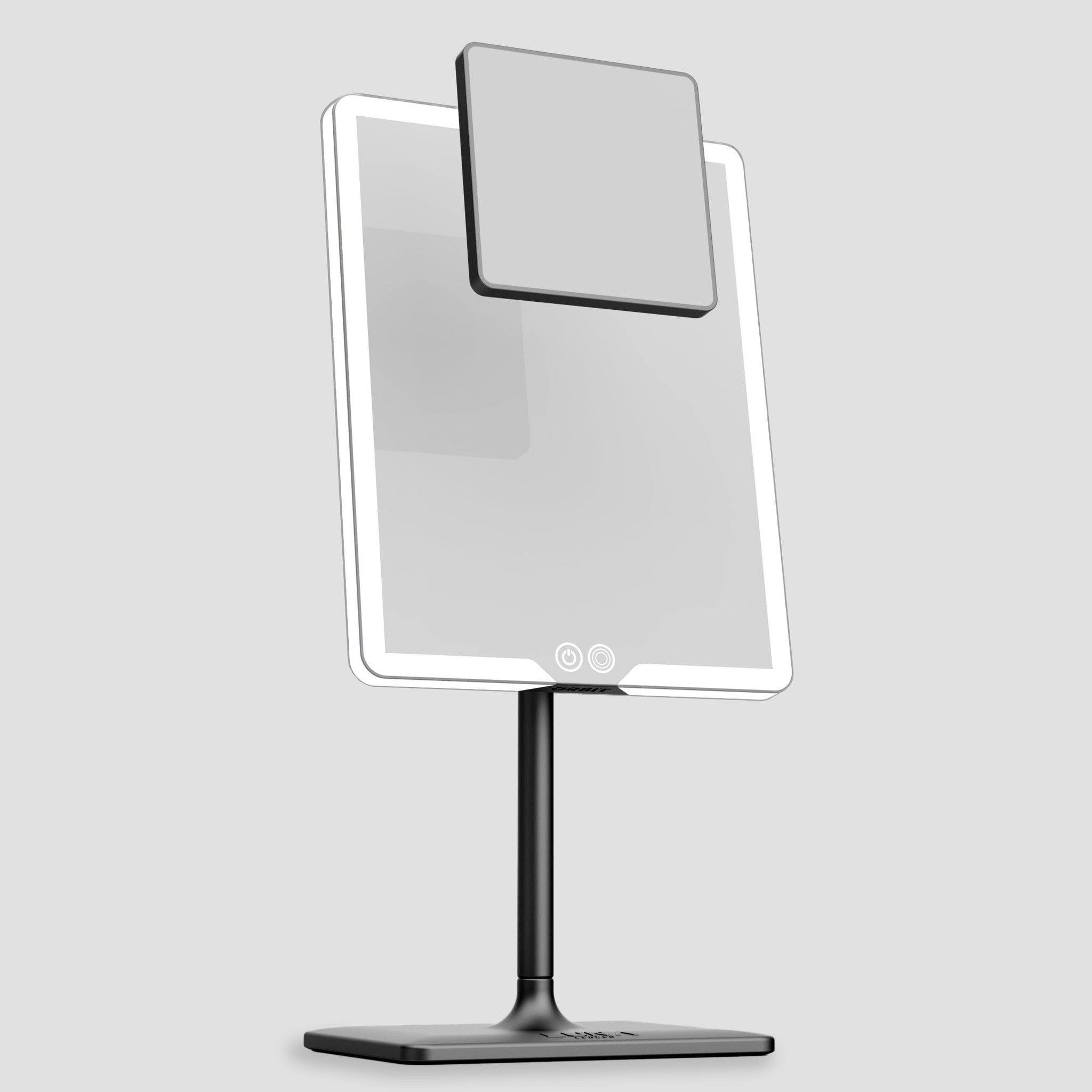
If your 2026 self-care plan is about doing the basics consistently, a dedicated vanity station can remove daily friction. ORBIT is designed to make routine checks feel easy and repeatable, especially on busy mornings.
FAQs
What are the best new year beauty resolutions for 2026?
The best new year beauty resolutions are the ones you can repeat. Start with a minimum routine (cleanse, moisturise, SPF in the morning) and one extra habit you actually enjoy. Then measure something simple, like “days completed” or “skin comfort 1–5.”
How do I set skincare goals without buying loads of products?
Set a goal around consistency and comfort first. Pick a gentle cleanser, a moisturiser that suits your skin, and SPF 30+ for daytime. If you add actives, add only one change at a time and keep it for a few weeks before deciding if it’s helping.
How long does it take for a beauty habit to feel automatic?
It varies a lot. Research summaries show many habits take weeks to months to become more automatic, not just a couple of weeks. That’s why a 30–60–90 day plan tends to beat a “January sprint.”
What if I miss a week and ruin my progress?
You didn’t ruin it, you paused it. Use a reset rule: miss one day (or week), restart the next day. The goal is a routine that recovers quickly, not one that never slips.
What’s a realistic self-care routine if I’m always busy?
Keep a 3-minute minimum routine and let “extras” be optional. If you can only do one thing, do the minimum. Most of the impact comes from repeated basics, not occasional intensive routines.
Is it better to simplify my skincare routine or add more steps?
For most people, simplify first. Build consistency with a small set of steps and only add new products when you can keep the baseline stable. Dermatologists repeatedly warn that overcomplication can increase irritation and confusion.



Leave a comment
This site is protected by hCaptcha and the hCaptcha Privacy Policy and Terms of Service apply.