
Last updated: 13 March 2026
How to Reset Your Makeup Kit for Spring Without Wasting Good Products
There is a lazy version of “spring cleaning” that sounds productive but usually is not: empty the drawer, panic at the mess, bin a random third of it, then buy half the same things again next month. That is not an audit. That is retail therapy wearing a linen shirt.
A real spring makeup audit is simpler. You are checking four things: what is expired, what is contaminated, what still works, and what keeps slowing your routine down. Once you separate those, the mess becomes far easier to handle.
This matters because cosmetic shelf life is not always obvious on-pack. The FDA notes that cosmetics are not required to carry uniform expiration dates, which is why smell, texture, performance and storage conditions matter so much. If you are also wondering why your base suddenly looks wrong from room to room, that is often a lighting issue rather than a product issue, which we cover in this guide on daylight makeup vs indoor lighting.
In a hurry? TL;DR
- Do not throw products out by season alone. Throw out what smells off, separates, flakes, irritates, or no longer performs properly.
- Liquid and eye-area products usually need the closest scrutiny. Powders often last longer if stored well.
- Brushes need cleaning far more often than most people think, and damp sponges are the fastest route back to a dirty routine.
- A 15-minute reset works best when you sort into four groups: keep, clean, toss, and test-this-week.
- If your makeup keeps looking fine at home but odd outside, pair this audit with a lighting reset, not another foundation purchase.
1. Start with the audit, not the bin bag
The useful question is not “How old is this?” It is “Would I trust this on my face today?” Sometimes the answer is obviously no. Sometimes it is a cautious maybe. That is where most people get sloppy.
Cleveland Clinic highlights the main red flags clearly: if makeup changes in smell, texture, colour or performance, it is time to stop romanticising it and throw it away. The same piece notes that dry products usually last longer than wet ones, while mascaras, cream products and anything repeatedly touched by fingers are higher-risk.
| Category | Audit rule | What usually sends it to the bin |
|---|---|---|
| Mascara, liquid liner, cream eye products | Be strict. Eye-area products are not the place for optimism. | Drying out, flaking, smell changes, eye irritation, recent eye infection |
| Liquid foundation, concealer, cream blush, cream bronzer | Check texture, separation, pump hygiene and skin reaction. | Oil separation, odd colour shift, pilling, sour smell, breakouts after use |
| Powders | Usually longer-lasting if kept dry and used with clean tools. | Hard pan, strange film, poor blend, smell, contamination after illness |
| Lip products | Be stricter if you have had irritation or a cold sore. | Waxy smell, sweating, grainy texture, irritation, recent infection |
| Products with SPF | Treat expiry seriously. Sun protection is not the place to gamble. | Past expiry, heat exposure, texture change, uncertain storage history |
⚡ PRO INSIGHT: Create a “quarantine tray” instead of doing instant toss-or-keep decisions. Anything uncertain goes there for one week. If you do not reach for it, or it performs badly when you do, the decision is made for you.
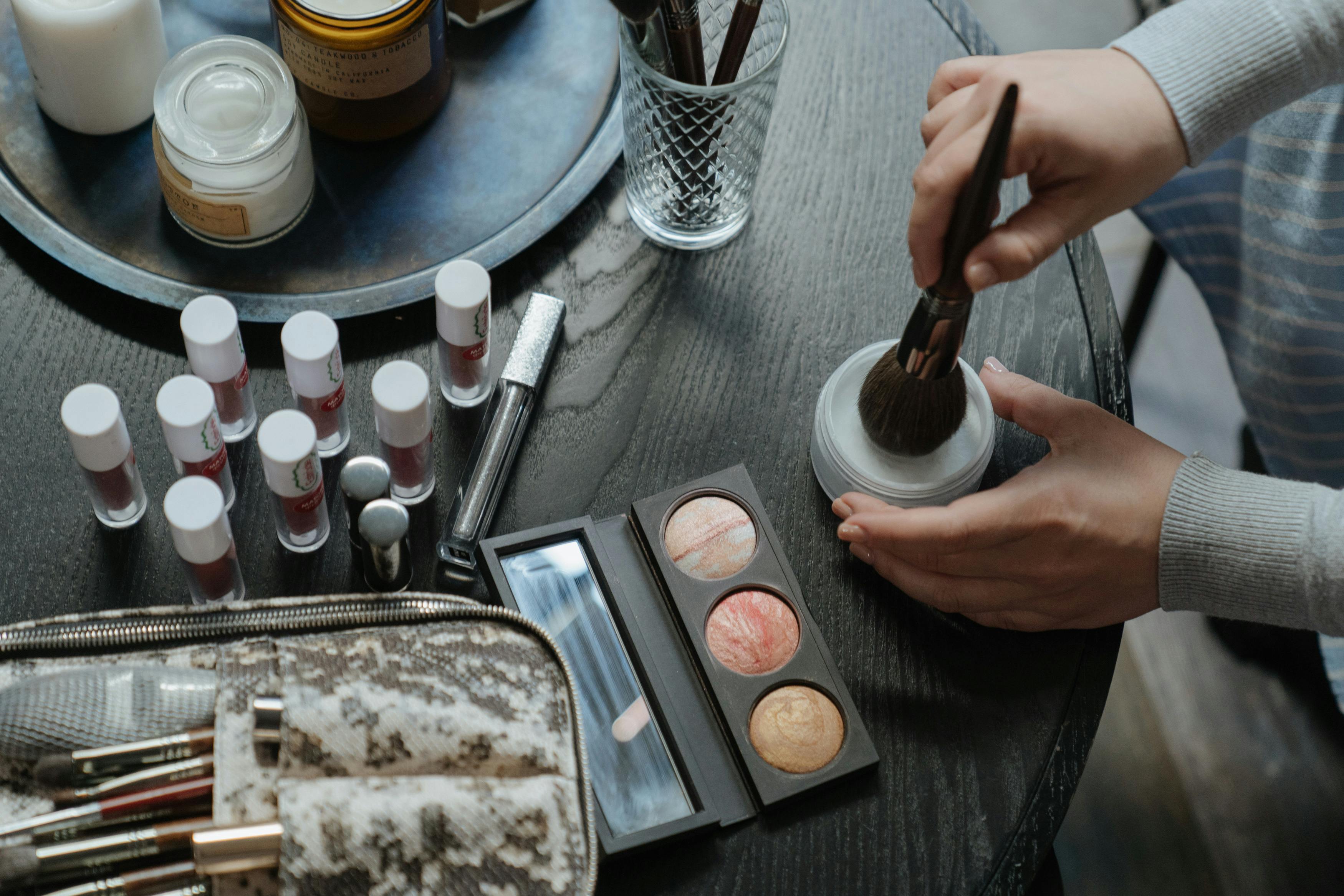
If your audit also reveals that products look heavier than they used to, read that carefully. Sometimes the product is old. Sometimes the formula is fine and your application environment is the problem. These are worth separating before you rebuy anything. For that angle, see how to fix patchy foundation with better lighting and how to prevent cakey makeup with better lighting.
2. Clean the tools properly, or the reset is fake
This is the part people skip because it is boring. Unfortunately, it is also the part that decides whether your “fresh start” lasts longer than three days.
The American Academy of Dermatology recommends washing makeup brushes every 7 to 10 days. Cleveland Clinic gets even more specific: brushes used with wet products should generally be washed weekly, eye brushes every two weeks, and many dry-product brushes about monthly, depending on use and condition. Sponges need even closer attention because moisture sits inside them. Here is Cleveland Clinic’s brush-cleaning breakdown.
“Clean brushes or sponges at least weekly because they’re touching your powder and skin every time you use them.”
— Dr. Shilpi Khetarpal, Dermatologist, Cleveland Clinic (2026)
That quote matters because it kills a lazy assumption: that dirty brushes only affect finish. They affect skin, too. Cleveland Clinic notes that one study found 90% of used makeup products contained abundant bacteria, and dirty tools can contribute to irritation, acne and eye infections. If you want a spring reset that actually helps your skin, brush hygiene is not optional.
How to clean brushes and sponges without wrecking them
- Use lukewarm water, not hot.
- Cleanse with a gentle soap or shampoo.
- Keep water away from the ferrule and glue where possible.
- Rinse until water runs clear.
- Dry brushes flat, never standing upright while wet.
- Clean sponges more aggressively, and let them dry fully before storing.
The AAD also notes that dirty tools can lead to rashes and infections, and that sponges should be cleaned after every use. That sounds fussy until you remember how often they stay damp in zipped bags.
3. Do the 15-minute reset, not the all-day vanity spiral

You do not need a Sunday lost to acrylic drawers and labelling tape. You need a quick system that removes friction. Fifteen focused minutes is enough if you stop making sentimental decisions about half-used glosses from three summers ago.
| Time | What to do | Goal |
|---|---|---|
| 0-3 mins | Empty one category only, such as base products or eye products. | Avoid overwhelm and random decisions |
| 3-6 mins | Sort into Keep, Toss, Clean, Test This Week. | Create fast, honest groups |
| 6-9 mins | Wipe surfaces, sharpen pencils, wash one brush batch, bin obvious rubbish. | Reset hygiene and visibility |
| 9-12 mins | Put daily-use products at front, occasional products behind, backups elsewhere. | Make the routine easier tomorrow morning |
| 12-15 mins | Note what actually needs replacing, then stop. | Prevent panic shopping and duplicate buying |
⚡ PRO INSIGHT: Organise by frequency of use, not by product category purity. Your everyday face should be reachable in one motion. Everything else can earn its place later.
4. Storage mistakes that quietly shorten product life
A lot of makeup does not “expire suddenly”. It degrades because the storage is bad. The FDA points out that cosmetics kept under poor conditions, including heat and humidity, can go off sooner. That makes the bathroom a questionable long-term home for half your routine, especially if you shower hot and keep products open on the counter.
Common mistakes include:
- Storing everything in the bathroom regardless of formula
- Leaving lids loose or compacts half-open
- Putting damp sponges back into closed pouches
- Keeping “backups” mixed in with daily-use items
- Using the same grimy pouch for months without wiping it out
If your setup itself is part of the problem, this article on vanity mirror and dressing table setup is useful because it treats the routine like a workspace, not a pile. And if you are trying to judge skin or makeup more consistently after your reset, this guide on morning sunlight vs LED for skin checks is a good follow-on.
5. Replace less, but replace smarter
A spring reset should make you buy better, not just buy more. When you finish this audit, your shopping list should be short and boring:
- One or two tools you genuinely use daily
- Any hygiene replacement that is clearly overdue
- Only the complexion or eye products that have truly failed the audit
What you do not need is a full aesthetic overhaul because a drawer looked messy for ten minutes. Usually the smarter fix is fewer open products, cleaner tools, and better visibility while applying them. If your skin-first routine matters as much as your makeup routine, you may also find this guide on better lighting for applying skincare useful after the audit.
The point of all this is not minimalism theatre. It is accuracy. You should be able to see what you own, trust what you keep, and get ready without using clutter as a personality trait.
When the kit is cleaner, the light should be clearer too
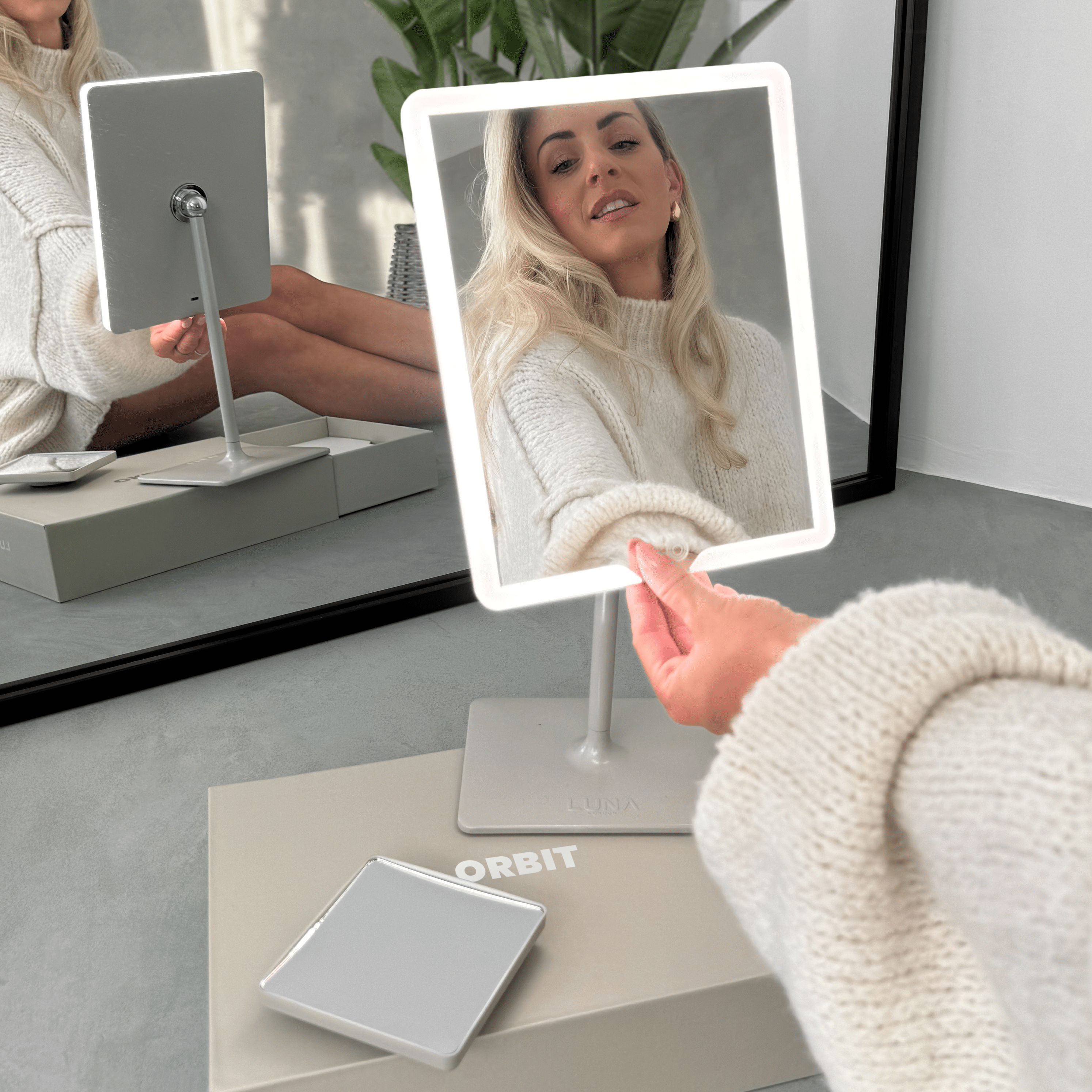
A makeup audit works better when you can actually see texture, buildup, and over-application clearly. ORBIT gives you stable front-facing light for the part after the declutter, when you want to use less product, not more.
See ORBIT in Phantom Black →FAQs
How can I tell if makeup is expired when there is no printed date?
Look for practical signs first: smell changes, texture changes, colour shift, separation, poor performance, or irritation after use. The FDA does not require a universal expiry system for all cosmetics, so packaging symbols and real-world product behaviour matter.
Which products should I be strictest with during a spring makeup audit?
Be strictest with mascara, liquid liner, cream eye products, makeup sponges, and liquid complexion products that smell off or separate. Eye-area products and damp tools are usually where optimism backfires fastest.
How often should I wash makeup brushes?
The American Academy of Dermatology recommends every 7 to 10 days as a general rule. Cleveland Clinic suggests weekly for brushes used with wet products, around every two weeks for eye brushes, and roughly monthly for many dry-product brushes.
Do I really need to clean makeup sponges after every use?
Yes, ideally. Sponges trap moisture and product, which makes them a poor place for bacteria and yeast to linger. If you will not clean them after each use, you are better off rotating fewer sponges more carefully rather than keeping a drawer full of damp ones.
Is it okay to keep powder products for longer than liquids?
Usually, yes, if they are stored well and used with clean tools. Powders tend to last longer because they contain less moisture, but that is not a free pass. Hard pan, smell, film, contamination, or poor performance still mean it is time to stop using them.
Does storing makeup in the bathroom make it go bad faster?
It can. Heat and humidity can shorten product life and make contamination more likely. If your bathroom gets hot and steamy, keep only daily-use essentials there and store the rest somewhere cooler and drier.
What should a 15-minute spring reset actually achieve?
It should leave you with a cleaner workspace, a smaller daily-use edit, one batch of freshly cleaned tools, and a short replacement list based on real need. If it ends in a three-hour reorganisation and an online haul, the system has failed.
Related links
- Fix Patchy Foundation with Better Lighting
- How to Prevent Cakey Makeup With Better Lighting
- Daylight Makeup: Why Indoor Light Changes Your Look
- Morning Sunlight vs LED for Skin Checks
- Vanity Mirror With Lights: Dressing Table Setup Guide


Leave a comment
This site is protected by hCaptcha and the hCaptcha Privacy Policy and Terms of Service apply.