
Last updated: Monday 20 July 2026
Summary: The best bathroom lighting for shaving is even, face-level and adjustable. A single ceiling light, mixed bulb colours, backlighting and excessive brightness can hide stubble or create false shadows. Fix the light first, map beard lines in a normal 1x view, then use magnification only for the final detail check.
You finish shaving, everything looks clean, then daylight reveals a missed strip under the jaw or two beard lines that do not quite match. It is tempting to blame the razor. Often, the bathroom lighting is giving you bad information.
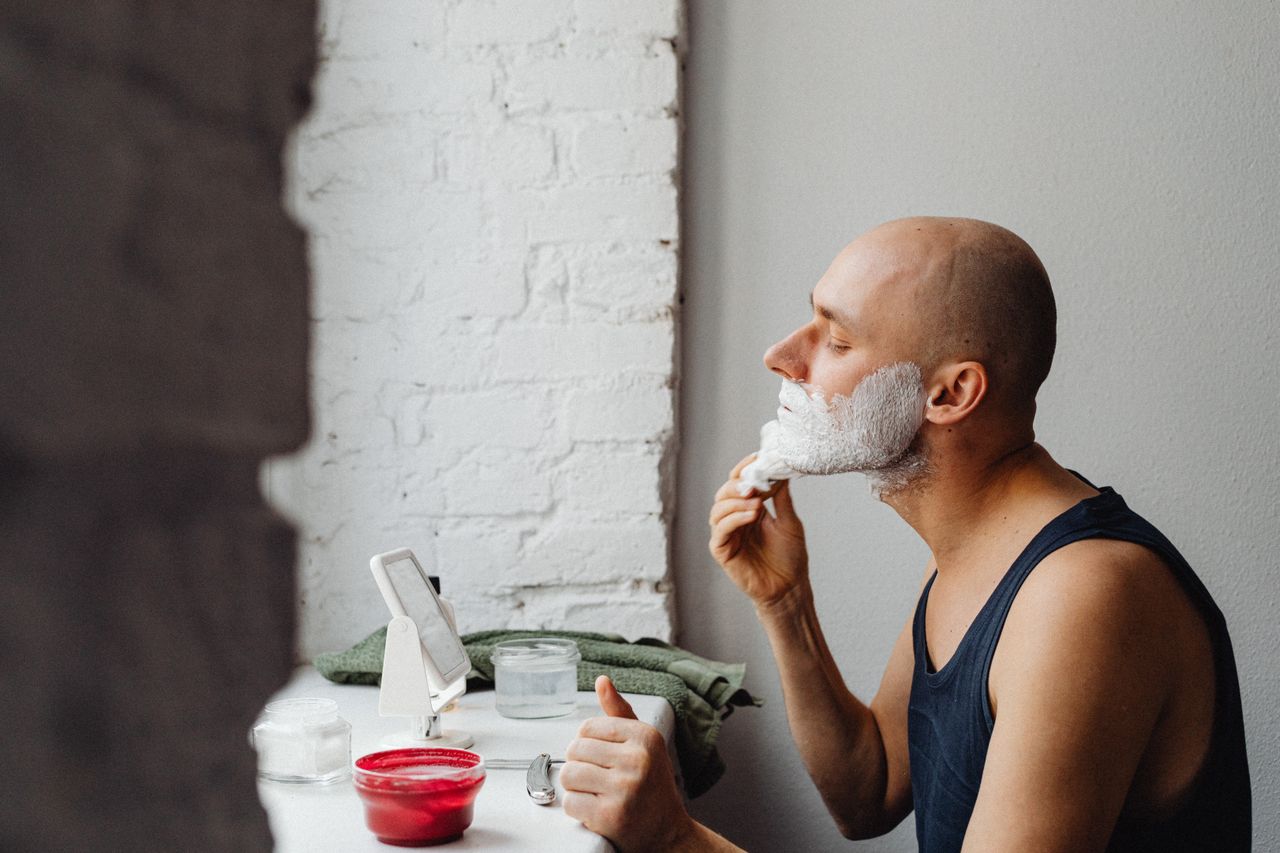
Overhead shadows change how dense stubble appears. Warm bulbs soften edges. Excessive brightness makes normal skin texture look like something that needs fixing. The result is a familiar cycle: shave, inspect, correct, over-correct.
In a hurry? Diagnose your bathroom lighting first
⚡ PROFESSIONAL PRINCIPLE: Use light to reveal the beard’s overall shape, not to inspect every pore. If something only looks wrong with your face inches from the mirror, it probably does not need another pass.
1. Relying on one ceiling light
This is the most common bathroom lighting mistake because the room can feel bright while the face remains badly lit. A ceiling light hits the forehead, nose and cheekbones first. The jaw, moustache and neck sit beneath them, creating shadows exactly where shaving requires the clearest view.
Those shadows can resemble remaining stubble. You keep shaving an area that is already clean, while a genuinely missed patch stays hidden farther under the jaw.
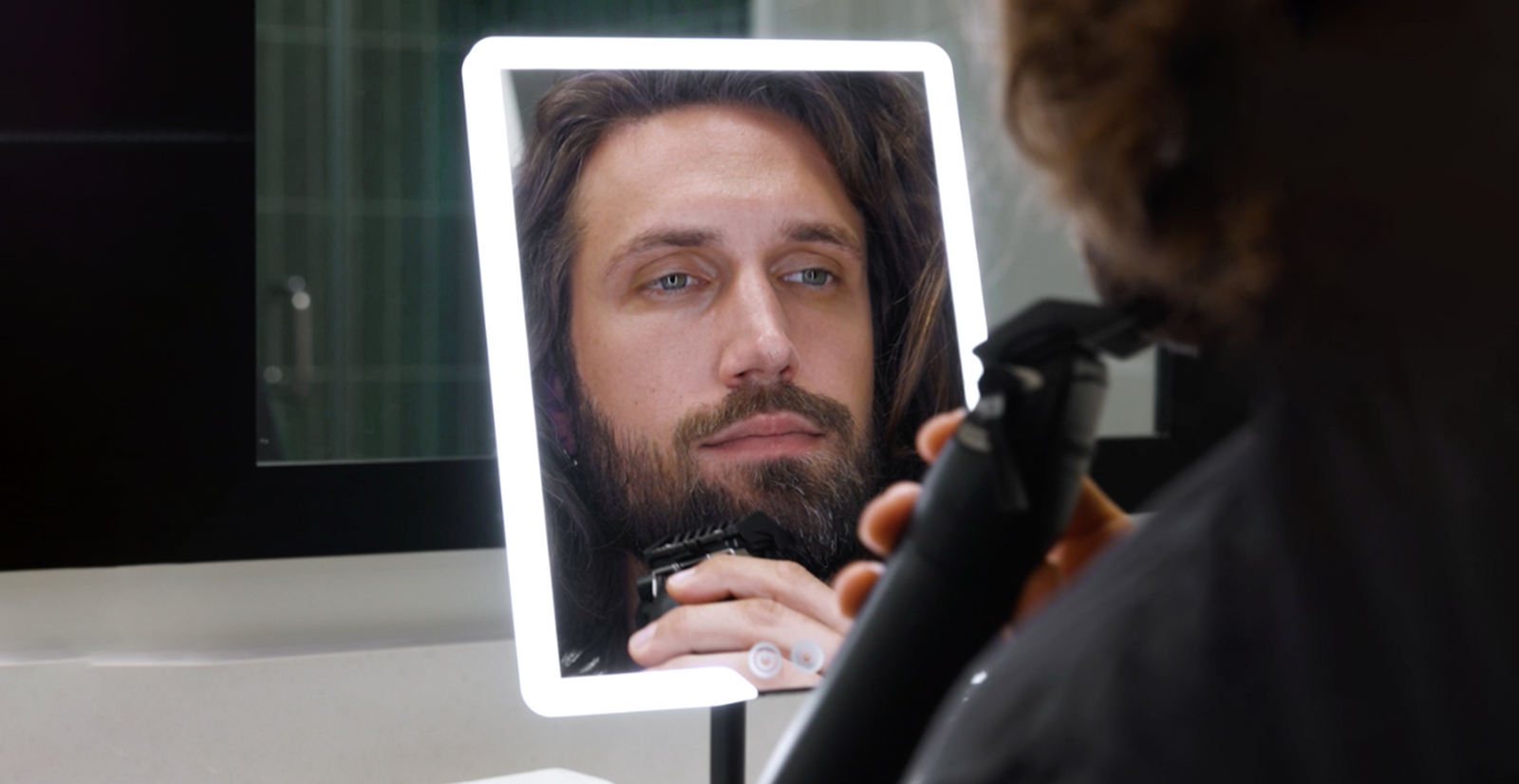
The fix: use a light source in front of your face or positioned evenly around it. Set the mirror close to eye level and adjust the angle until you can see the neck without stretching your chin towards the ceiling.
2. Standing with a window or bright doorway behind you
Natural light is useful only when it reaches your face. If the window is behind you, your reflection sits between the mirror and the brightest part of the room. Your face becomes comparatively dark, even if the bathroom itself looks sunny.
A bright doorway can cause the same problem. One side of the beard may appear lighter, softer or less dense, encouraging you to trim the darker side more aggressively.
The fix: face the window where possible. If the layout will not allow it, close the door or blind and use one controlled light in front of you. Consistency is more useful than a mixture of daylight and artificial light arriving from different directions.
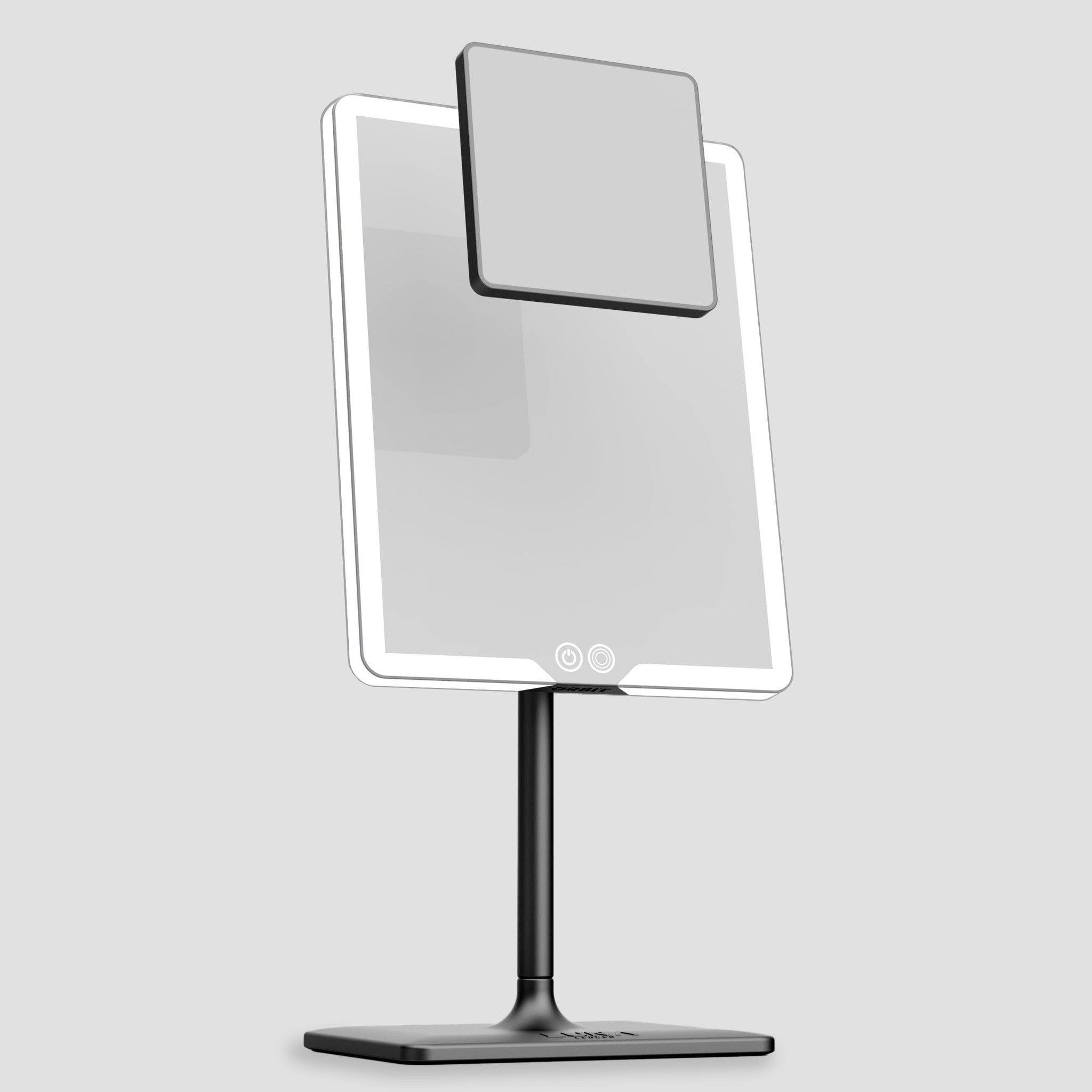
When the bathroom is bright but your face is not
ORBIT places adjustable light in front of the face, helping reveal jaw shadows, beard edges and missed hairs without relying on the ceiling light.
See ORBIT in Phantom Black →3. Mixing warm, cool and daylight sources
A warm ceiling bulb, cool mirror light and daylight from a side window do not combine into one accurate view. They create different-looking zones across the face.
Warm light can soften the contrast between dark stubble and skin. Cooler light may make the same stubble appear stronger. If each side of your face receives a different mixture, beard density and redness can look uneven even when the shave is balanced.
The fix: simplify the setup. Turn off whichever light creates the strongest colour conflict and shave using one consistent neutral or daylight-style source. Once you have finished, a brief warm-light check can help you notice irritation, but it should not determine the beard shape.
4. Assuming maximum brightness means maximum accuracy
Brighter is not automatically better. Excessively harsh light exaggerates pores, dry patches, razor bumps and tiny hairs that are invisible at normal conversational distance. That can turn a clean shave into an unnecessary hunt for microscopic imperfections.
The practical risk is repeated blade passes. Poor visibility can make you miss hair, but excessive visibility can persuade you to keep shaving skin that has already had enough.
The fix: start at a comfortable medium brightness. Increase it briefly for difficult corners, then step back and reassess. If the beard line looks clean in a full-face view, stop.
5. Moving closer every time something looks uneven
Leaning into the mirror changes both the viewing angle and the way light hits the face. One cheek moves towards the light, your head tilts and the full beard disappears from view. You then compare two small areas that were never viewed under the same conditions.
This is how minor beard line mistakes become larger ones. You lower one side, notice that the other now looks high, then continue correcting until both sides are shorter than planned.
The fix: decide the overall shape at normal distance in a 1x view. Move closer only for isolated hairs, moustache corners and neckline clean-up. For a fuller workflow, use LUNA’s guide to checking beard symmetry before trimming.
Watch: a practical at-home beard line-up
The useful lesson in a line-up demonstration is not to copy somebody else’s exact beard shape. Watch how the overall outline is established before small corners and stray hairs are refined.

6. Shaving through steam, splashes and mirror residue
Lighting cannot reveal detail through a fogged or dirty surface. Steam softens edges, while water spots and shaving-product residue create small bright reflections that can resemble pale skin or missing sections of beard.
Wiping a steamed mirror with your hand often makes the problem worse by leaving streaks directly across the working area.
The fix: shower first if warm water helps soften the hair, then allow the mirror to clear before shaving. Keep a dry microfibre cloth nearby and clean the central viewing area properly. LUNA’s LED mirror care guide explains how to remove residue without damaging the surface.
7. Skipping the second-light check
No single bathroom recreates every environment you will enter. That does not mean you need to inspect your face in five different rooms. It means a ten-second second-light check can expose an obvious missed patch before you leave.
After shaving, rinse away loose hair, pat the skin dry and step towards a window or differently lit room. Look at the beard from normal distance. Check the jaw, sideburn height and the central section under the chin.
Do not restart the entire shave because one light makes your skin look more textured. Correct only visible missed hairs or a genuinely uneven edge.
Skin note: Clear lighting does not replace sensible shaving technique. The American Academy of Dermatology recommends wetting the skin and hair, using shaving cream and shaving in the direction the hair grows to help reduce irritation.
The five-minute bathroom lighting reset
- Remove the conflicting light. Turn off an excessively warm, cool or badly positioned ceiling light if it distorts the view.
- Put light in front of the face. Avoid leaving the brightest window or doorway behind you.
- Set the mirror around eye height. Keep your shoulders level and your chin relaxed.
- Use neutral or daylight-style light for the main shave. Adjust brightness until the beard is clear without making every pore look alarming.
- Make shape decisions in 1x. Use magnification only for brief checks around corners, strays and the neckline.
- Finish in a second light. Correct visible missed hairs, then stop.

The final verdict
Good bathroom lighting for shaving is not simply a brighter bulb. It is a repeatable view with light reaching the face evenly, minimal colour conflict and enough control to see the beard without turning normal skin texture into a crisis.
Fix the room before changing your razor or cutting the beard shorter. You may find that the “shaving mistake” was a shadow all along.
Quick tracked delivery available in:
 USA
USA
 UK
UK
 EU
EU
FAQs
What type of bathroom lighting is best for shaving?
Use even light positioned in front of the face or balanced on both sides. A neutral or daylight-style setting is generally the clearest working option because it shows stubble, beard edges and missed hairs without the softening effect of very warm light.
Why do I miss hairs under my jaw when shaving?
A ceiling light can cast a strong shadow beneath the jaw, while lifting the chin too far changes the neckline you are trying to inspect. Use face-level light, tilt the mirror towards the neck and check the area with your chin in a relaxed position.
Is warm or cool light better for shaving?
Neutral or daylight-style light is the more reliable starting point for the main shave. Warm light can be useful afterwards when checking redness, but it may soften the contrast between dark stubble and the skin.
Do I need magnification for beard lines?
Not for the overall shape. Set cheek lines, sideburn height and neckline balance in a normal 1x view. Use magnification briefly for moustache corners, isolated strays and small sections under the jaw.
Can brighter bathroom lighting reduce shaving mistakes?
Only if the light is positioned properly. A very bright ceiling bulb can still leave the neck in shadow, while excessive close-up brightness may encourage unnecessary repeat passes. Direction, evenness and adjustability matter more than raw brightness.


Leave a comment
This site is protected by hCaptcha and the hCaptcha Privacy Policy and Terms of Service apply.