
Last updated: 7 June 2026
How to Choose a Beard Trimming Mirror That Makes Both Sides Match
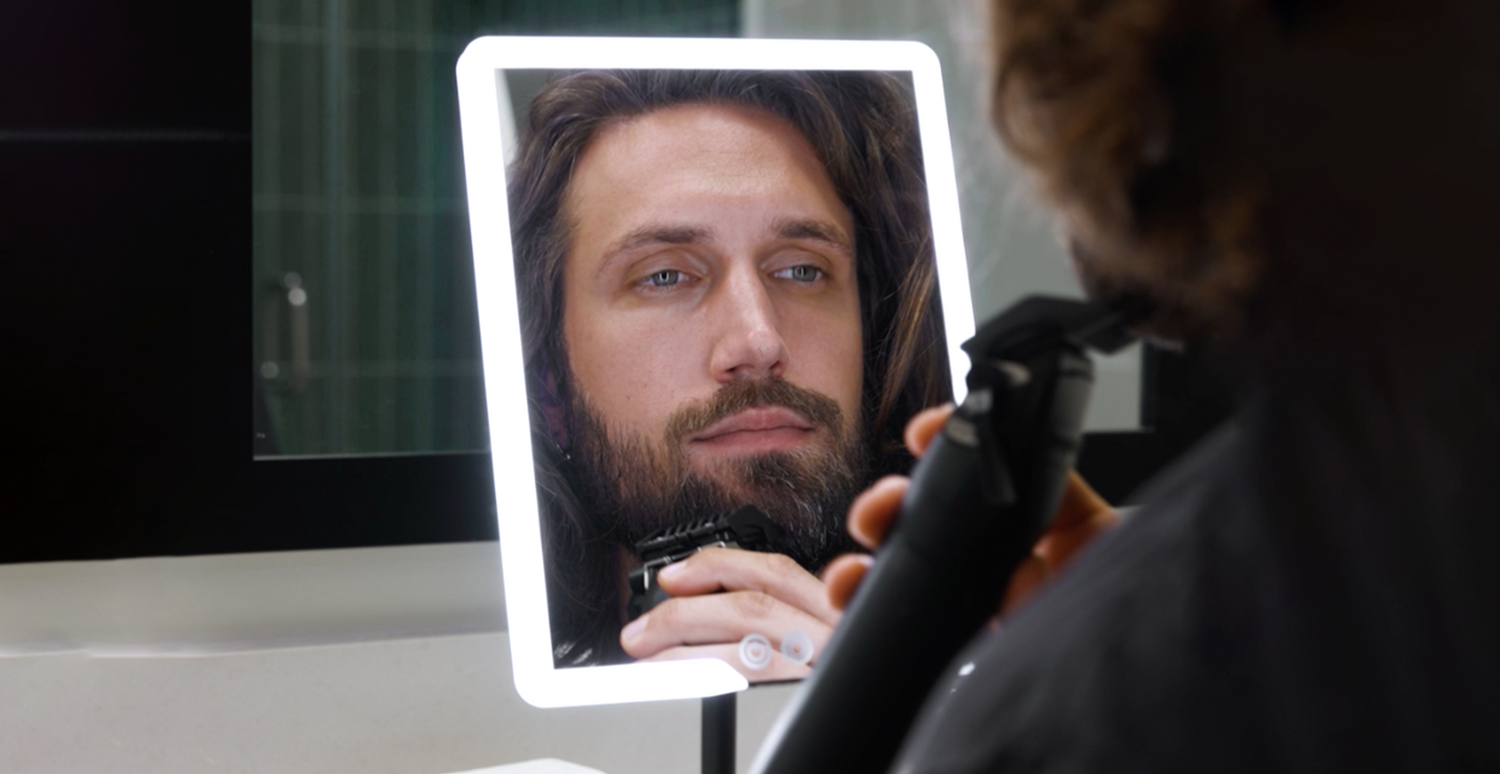
If your beard looks balanced in the bathroom but wonky in daylight, the issue is not always your trimmer. It is often the mirror setup. Overhead lighting casts shadows under the jaw, small mirrors force you to lean in, and high magnification can tempt you into correcting one tiny section until the whole shape drifts.
A proper beard trimming mirror should help you see the full shape first, then the fine detail second. That is why a normal wall mirror alone is rarely ideal, and why a tiny close-up mirror is not enough either. For beard symmetry, you need controlled light, a repeatable viewing angle and a way to check detail without designing the entire beard at 7x.
That is also why this is separate from a clean shaving guide. If you are removing everything, the job is mainly skin prep and blade control. If you are trimming a beard, the job is shape, line, balance and restraint. For clean-shave technique, see LUNA’s guide to shaving cleanly with the right grooming mirror. For beard trimming, the mirror has to help you judge symmetry before you touch the trimmer.

In a hurry? The best mirror setup for beard trimming
- Use 1x first: map the whole beard shape before zooming in.
- Choose face-level lighting: avoid relying only on ceiling lights.
- Keep the mirror stable: a wobbling handheld mirror makes symmetry harder.
- Use 7x briefly: check corners, strays and neckline details, then step back.
- Repeat the same angle: trimming from a new angle every time causes uneven lines.
⚡ PRO INSIGHT: Do your shape decisions at 1x, not 7x. Magnification is brilliant for checking a corner, but it can make a tiny uneven patch look like a crisis and push you into over-trimming.
Why beard symmetry goes wrong at home
Most at-home beard mistakes come from three things: inconsistent head position, poor lighting and correcting too much on one side. You trim the left cheek line, turn your head, trim the right from a slightly different angle, then try to “even it up”. Five minutes later, the beard is shorter than planned and still not quite right.
The smarter approach is to make your mirror setup boringly repeatable. Same position. Same distance. Same light. Same first pass. That is why a dedicated men’s grooming mirror can be more useful than simply buying a better trimmer. The trimmer cuts. The mirror tells you where not to cut.
There is a skin comfort angle too. The American Academy of Dermatology advises shaving in the direction hair grows to reduce razor bumps and burn, while Cleveland Clinic recommends softening hair with warm water and shaving cream before using a sharp razor. A clearer mirror does not replace good technique, but it does help you avoid repeated passes in the same irritated area because you could not see what you were doing.

The best beard trimming mirror is not always the most magnified one
This is where a lot of buying advice gets lazy. More magnification is not automatically better. A strong close-up mirror can help with stray hairs, moustache edges and neckline checks, but it is a poor way to judge the overall beard shape. Symmetry is a full-face decision.
For most men, the better setup is a two-stage view: normal 1x for the outline, then short magnified checks for details. LUNA’s article on when 7x magnification actually helps makes the same point across brows, grooming and contact lenses: magnification should support precision, not take over the whole routine.
This becomes more important with age. NIH News in Health notes that people in their 60s may need around three times more light for comfortable reading than people in their 20s. If beard trimming feels harder than it used to, it may not be clumsiness. You may simply need better light and a clearer setup.
How to use a mirror for cleaner beard symmetry
The best mirror only helps if the workflow is sensible. This is the routine worth repeating before any proper beard trim.
1. Start dry, brushed and standing straight
Trim your beard when it is dry and brushed into its natural position. Wet hair sits differently, and a flattened beard can make you take off too much. Stand square to the mirror, shoulders level, chin relaxed.
2. Set the light before you set the line
Use even front-facing light, not just the bathroom ceiling. If the light is above you, the moustache, jaw and neckline cast shadows that make one side look heavier. A face-level LED mirror makes density easier to read before you trim.
3. Map the cheek line in 1x
Look at the whole beard first. Decide whether you are keeping a natural cheek line, cleaning only the strays, or creating a sharper edge. Be careful here. A hard cheek line can look smart, but if you cut too low, it can make the beard look thinner.
4. Use the centre point for the neckline
For neckline symmetry, choose a centre point first, then work outward in small sections. Wahl’s beard line-up guidance recommends using the Adam’s apple area as a natural centre reference before working towards the ears. You do not need to copy that exactly, but the principle is sound: start from a centre reference, do not freehand both sides separately.
5. Check corners in 7x, then step back
Once the shape is set, use magnification for the annoying bits: under the lip, moustache corners, neckline strays, cheek-line flyaways. Then step back into 1x before making another shape decision.
⚡ PRO INSIGHT: If you keep “fixing” one side, stop trimming for 60 seconds and look straight ahead in 1x. Most beard symmetry mistakes happen when you compare tiny close-up patches instead of the full face.
“Shave in the direction that the hair grows.”
— American Academy of Dermatology, dermatologist shaving guidance
What to look for before buying a beard mirror
A decent mirror for beard line work should make the routine easier, not add more fiddly steps. Use this buying checklist before you pay for anything.

ORBIT vs COMPACT 2.0 vs ECLIPSE for beard trimming
For a home beard trimming station, ORBIT is the clear first choice. COMPACT 2.0 can be useful for travel, desk drawers and quick checks, while ECLIPSE is better when the issue is portable lighting rather than magnified detail. The mistake would be pretending they all solve the same problem equally. They do not.
Which LUNA mirror fits your beard trimming routine?
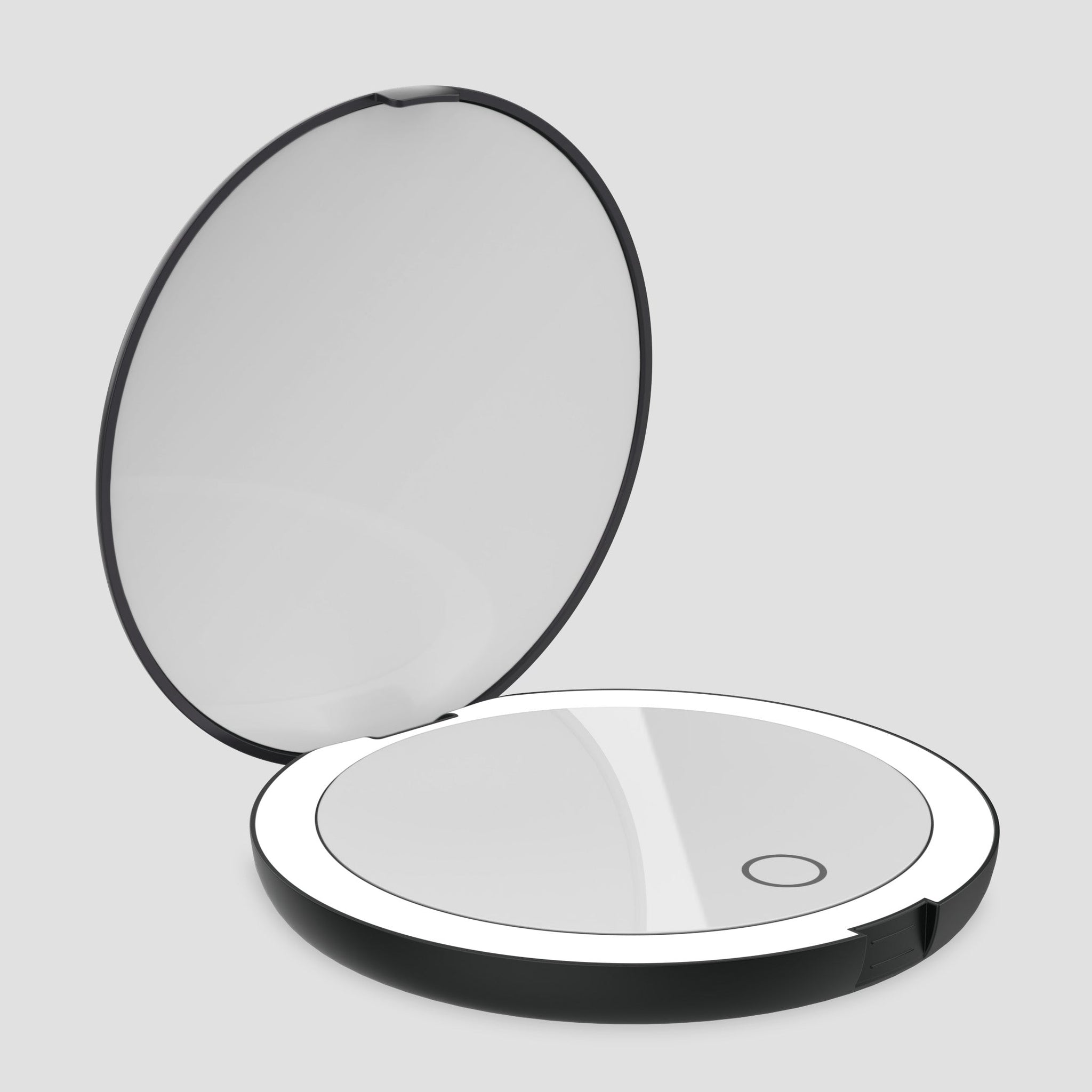
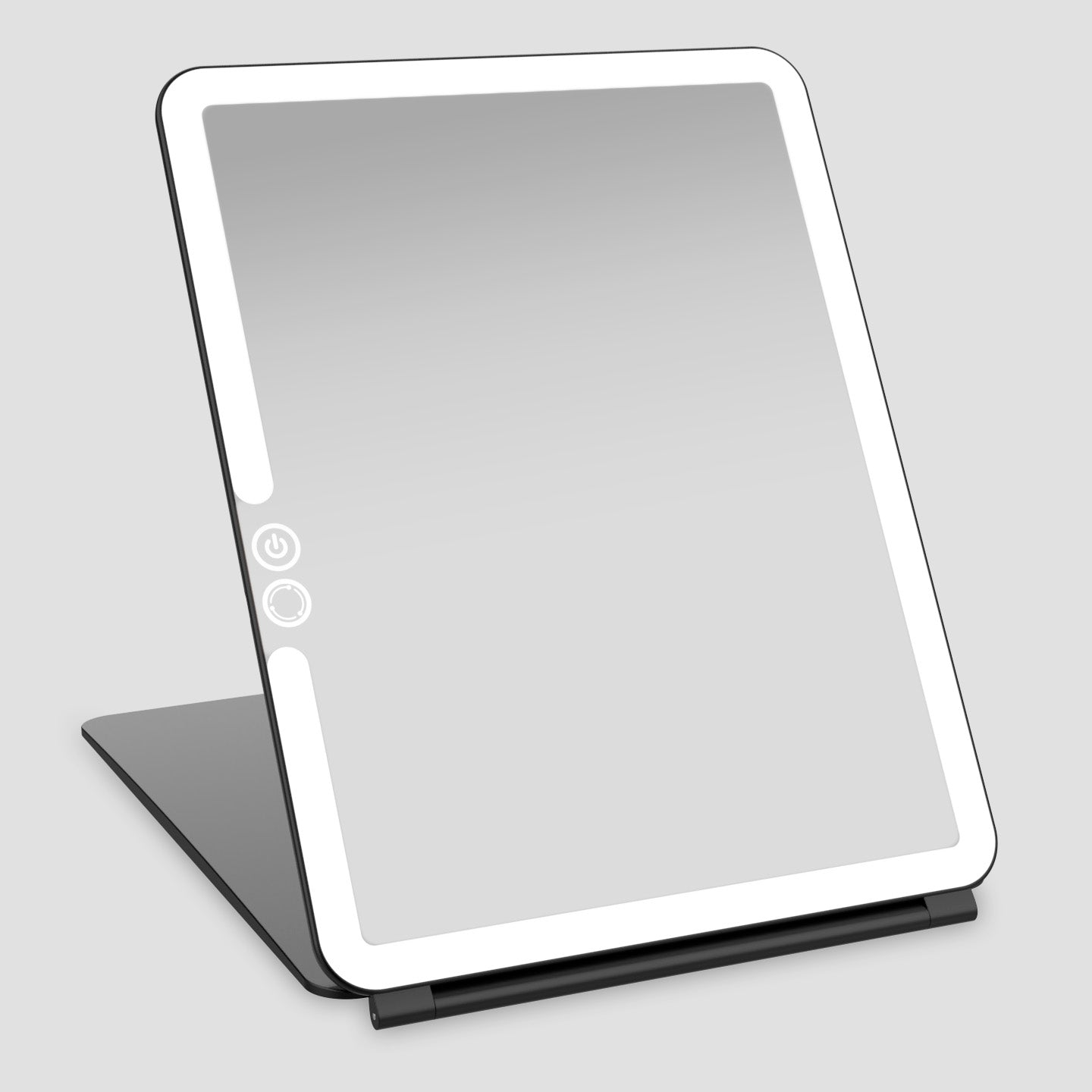
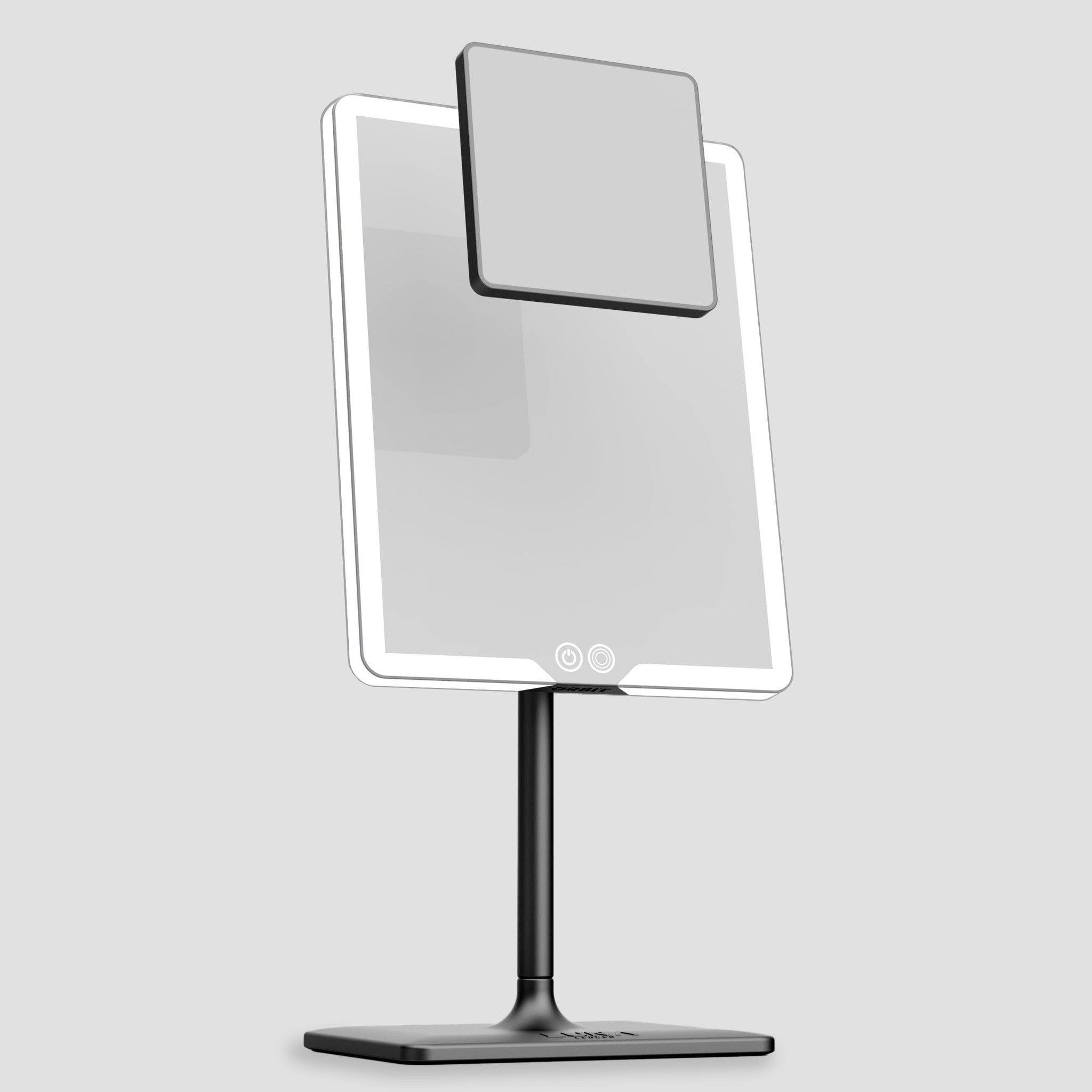
For beard symmetry, start with the mirror you can trust
ORBIT gives you the full 1x view for shape, controlled LED light for clearer edges, and a 7x magnification add-on for the final detail check. That combination is exactly what most beard trimming setups are missing.
Explore ORBIT for grooming →Quick tracked delivery available in:
 USA
USA
 UK
UK
 EU
EU
FAQs
What is the best mirror for beard trimming?
The best mirror for beard trimming has a large 1x view, even LED lighting, adjustable angles and optional magnification for detail checks. ORBIT is the best LUNA choice for home beard trimming because it gives you a full mirror face for symmetry and a 7x magnification add-on for corners, strays and neckline detail.
Should I use magnification to trim my beard?
Use magnification only after you have set the main shape in 1x. A 7x mirror can help with moustache edges, cheek-line strays and neckline corners, but using magnification for the whole beard can make you over-correct small patches and lose the overall shape.
Why does my beard look uneven after trimming?
Your beard may look uneven because of shadows, inconsistent head position, different growth direction, or trimming each side from a different angle. A stable grooming mirror with face-level light helps you repeat the same setup and judge both sides more fairly before cutting.



Leave a comment
This site is protected by hCaptcha and the hCaptcha Privacy Policy and Terms of Service apply.