
Last updated: 2nd March 2026
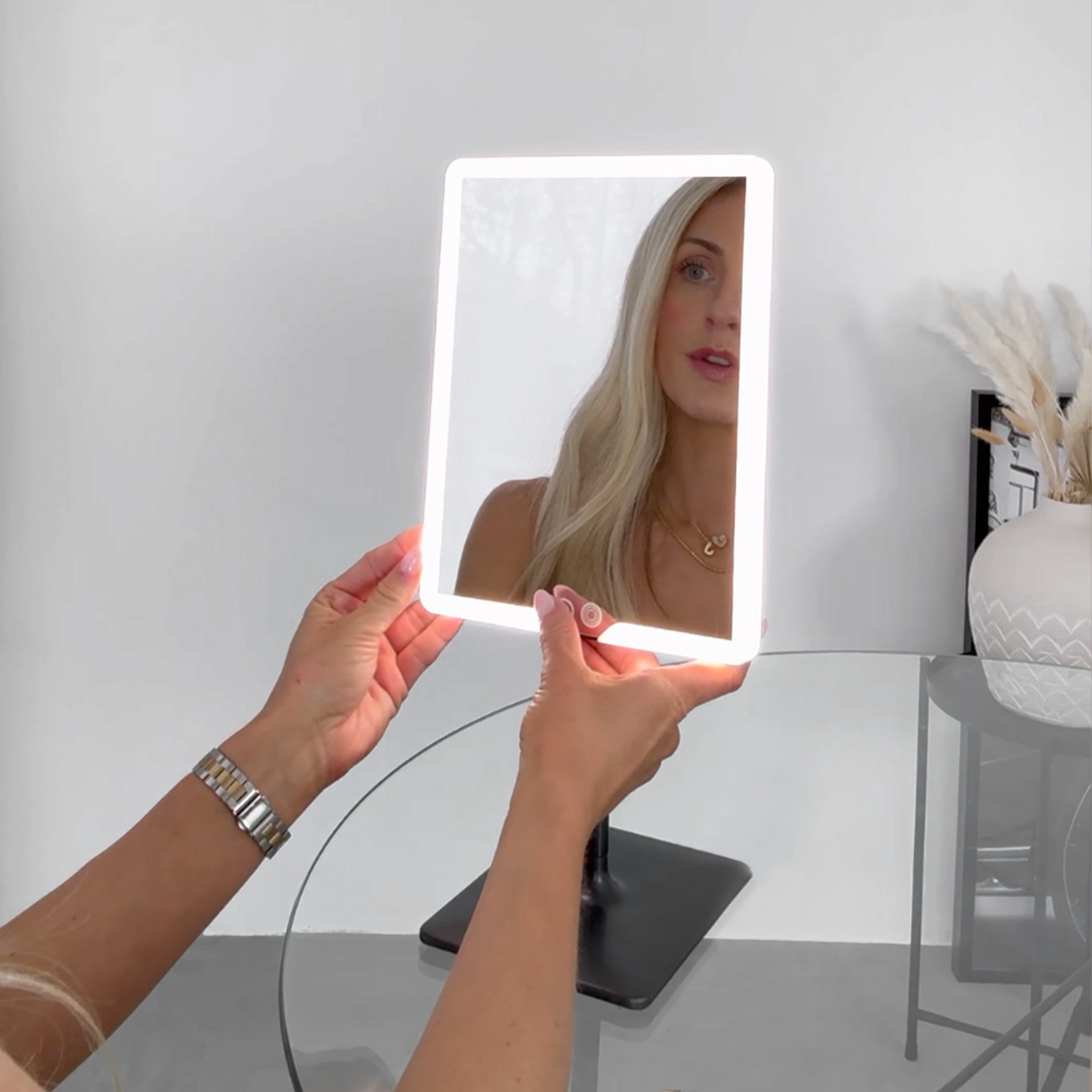
Summary: The best makeup mirror in 2026 is defined by three things: (1) lighting that hits your face evenly from the front (not one harsh overhead bulb), (2) strong colour accuracy (CRI is a starting point, not the whole story), and (3) magnification that helps with precision without distorting your sense of proportion. If you want one mirror that covers everyday makeup, detail work, and “ageing eyes” practicality, focus on adjustable lighting modes, stable positioning, and a smart magnification option.
How to Choose a Makeup Mirror That Makes Your Makeup Look Right Everywhere
Here’s the uncomfortable truth: most “best makeup mirror” lists quietly assume that more features automatically means a better result. That’s how people end up with a mirror that’s bright but unflattering, magnified but disorientating, or “daylight” that still makes their base look odd outdoors.
This buying guide is the opposite. It’s a simple filter for what actually changes outcomes: the way light lands on your face, whether colours render truthfully, and whether magnification helps you do better makeup (or just do bigger mistakes). If you’re battling bad bathroom lighting, you’ll also recognise the problem described in this guide to harsh mirror lighting.
In a hurry? TL;DR:
- Prioritise even, front-facing light over “brightest”. Overhead light creates shadows that you correct with too much product.
- Look for adjustable modes (warm, neutral, daylight-style). Real life is mixed lighting, your mirror should be too.
- Use CRI as a minimum bar, then sanity-check with a simple at-home colour test (you’ll do it in 60 seconds below).
- Choose magnification for the task. 1x for full-face balance, higher magnification for brows, liner, contact lenses, and tweezing.
⚡ PRO INSIGHT: If you only change one thing, change where the light comes from. A mirror that lights your face evenly from the front reduces the urge to over-apply coverage to “fix” shadows.
Before we get into CRI and magnification, you need a quick mental model: makeup is basically colour + texture + symmetry. Lighting affects all three, so it’s the foundation of the foundation.

1) Lighting: what matters more than “brightness”
Most people shop for a makeup mirror with lights by looking for “super bright” and “daylight”. That’s not wrong, but it’s incomplete. Two mirrors can be equally bright and still produce totally different makeup results because of lighting geometry.
What “good lighting geometry” looks like
- Front-facing illumination at face height, so shadows under eyes and around the nose are reduced.
- Even spread, not hotspots. Hotspots trick you into chasing coverage and texture that isn’t really there.
- Dimmer control, because “maximum brightness” at 7am is not the same as “usable brightness” at 7pm.
If you want the practical breakdown of warm vs cool vs “natural” modes, there’s a helpful companion piece here: the best light settings for makeup, explained.
What to ignore (or treat with suspicion)
- “10,000 lux” claims with no context. Lux depends on distance. If they don’t tell you the measurement distance, it’s marketing fog.
- Smart features that don’t change the light, speakers, apps, Bluetooth. They can be nice, but they don’t fix colour or blending.
- “Daylight” as a label. It’s not a standard. You still need to test how it renders your actual products and skin.
⚡ PRO INSIGHT: Treat lighting modes like a three-step workflow: apply base in daylight-style mode, detail-check in cooler light, then preview warmth for evening ambience.
If your base goes patchy or “heavy” in some rooms, it’s often not the formula. It’s the lighting setup. Start with this guide on fixing patchy foundation with better lighting, then come back here to choose the right mirror specs.
2) CRI: useful, but not the full truth
CRI (Colour Rendering Index) is a rough score of how faithfully a light source reveals colours compared with a reference. It’s widely used, but it’s not perfect, especially for some LED spectra. The CIE (International Commission on Illumination) explicitly notes CRI’s limitations for certain LED sources and recommends moving towards improved metrics like its General Colour Fidelity Index (Rf), while encouraging parallel reporting during the transition: CIE Position Statement on Colour Quality Metrics (2025).
Translation into normal-person language: CRI is a helpful minimum bar, but you still need to see how your skin, concealer, and blush look under that light. That’s why the best buying approach is “specs + a simple test”.
Expert quote
“ANSI/IES TM-30 provides a robust suite of metrics that convey much more information than any previous attempt at characterizing color rendering.”
— Jason Livingston and Tony Esposito, PhD, Illuminating Engineering Society (IES), FIRES
If you want a clear, plain-English refresher on what colour temperature and CRI mean (without buying hype), the U.S. Department of Energy has a straightforward overview: Lighting principles and terms (DOE). And if you want the critical view of CRI’s shortcomings, NIST summarises why CRI can fall short for newer lighting technologies: Approaches to color rendering measurement (NIST).
The 60-second at-home CRI reality check
- Hold your foundation, concealer, and a red-toned product (lip or blush) next to your face.
- Look in the mirror in your “daylight-style” mode, then switch to warm, then cool.
- If your undertone flips wildly (pink to grey, warm to sallow), the colour quality is suspect, even if it’s labelled “daylight”.
3) Magnification: the part people get backwards
Magnification feels like a cheat code, until you’ve used too much and suddenly your eyeliner is perfect but your whole face looks unbalanced. That’s because magnification changes your decision-making. You stop seeing the face as a whole, and start optimising tiny areas.
The rule is simple: use 1x for balance, and magnification for precision. If you’re choosing magnification specifically for brows, tweezing, and detail work, this guide goes deeper on the trade-offs: 5x vs 10x vs 15x magnification, explained.
Magnification also becomes more relevant with age. Presbyopia (the gradual loss of up-close focusing) is a normal part of ageing, and typically becomes noticeable in your 40s and beyond: American Academy of Ophthalmology: What is presbyopia?
| Task | Practical magnification range | Common mistake |
|---|---|---|
| Full face makeup (base, blush placement, overall symmetry) | 1x | Using high magnification and over-correcting texture or pores. |
| Brows, liner, lash line, precision concealing | 5x to 7x | Going too strong, then struggling to keep proportions natural in 1x. |
| Tweezing, ingrowns, contact lens insertion, close grooming | 7x to 10x (only if you’re comfortable) | Leaning too close, losing depth perception, over-tweezing. |
A simple “best makeup mirror” spec checklist (2026 edition)
Use this as your buying filter. If a mirror doesn’t clear these, it’s probably not the best mirror for makeup, even if it photographs well on the listing. If you want the bigger “LED vs light-up mirrors” breakdown (and what those labels actually mean), see: light-up mirrors vs LED mirrors, real differences.
| What to prioritise | Why it matters | Here’s Our Favourite |
|---|---|---|
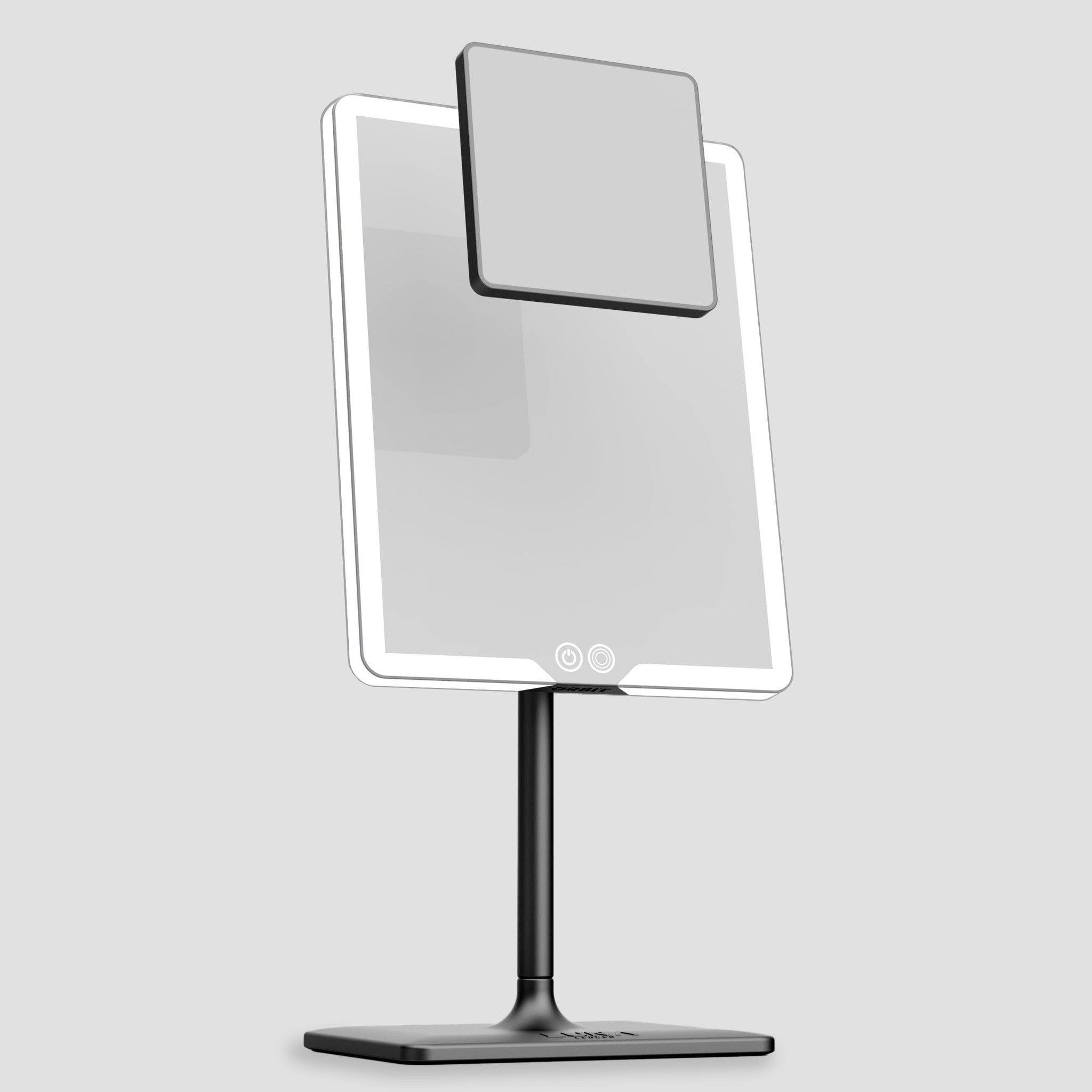
| Even, front-facing lighting + dimmer | Reduces shadows that cause over-application and patchiness, improves blending judgement. | ORBIT for stable, face-height lighting with simple brightness control. |
| Multiple lighting modes (warm, neutral, daylight-style) | Lets you preview your look across real environments instead of guessing. | ORBIT to “try on” your makeup in three lighting moods without moving rooms. |
| A sensible magnification option for detail work | Helps with brows, liner, and ageing eyes without forcing you into an all-day magnified view. | ORBIT includes a 7x add-on for precision, then you switch back to 1x for balance. |

Buying a makeup mirror as a gift (especially for ageing eyes)
If you’re buying for someone else, the trap is assuming they want “the fanciest mirror”. What they usually want is: makeup that looks the same in every room, and a way to see details without squinting.
- Do they complain about bathroom lighting? Prioritise even front lighting and multiple modes.
- Do they wear reading glasses or struggle up close? Prioritise a practical magnification option.
- Do they hate clutter? Prioritise a stable mirror that lives on the vanity and is quick to use.
- Is it shared (partner uses it too)? Prioritise simple controls and flexible angles.
Our “best makeup mirror” pick for 2026: ORBIT

For a single, do-it-all vanity mirror, ORBIT checks the boxes that matter: stable positioning, multiple lighting modes for real-world previewing, and a 7x add-on for precision moments. It’s also a strong gifting choice because it’s easy to use without a learning curve.
A calmer way to get ready
If your makeup keeps changing between rooms, you’re probably fighting lighting, not technique. ORBIT makes it easy to apply in daylight-style light, detail-check in cooler light, and preview warm indoor ambience from one mirror.
FAQs
What is the best light setting for applying makeup?
Start in daylight-style (balanced) light for foundation and concealer, then use cooler light briefly for precision checks, and warm light to preview evening ambience.
Is CRI 90+ important for a makeup mirror?
It’s a good minimum bar for colour accuracy, but it’s not a magic guarantee. Always do a quick at-home colour check with your own products and skin tone.
What magnification is best for ageing eyes?
Use 1x for full-face balance, then use 5x to 7x for brows, liner, and close-up grooming. Higher magnification can be useful, but it can also distort proportions.
Why does my foundation look different in every room?
Mixed lighting changes how undertones and texture appear. Overhead bulbs create shadows that you “fix” with more product, then daylight reveals the real result.
What should I avoid when buying a makeup mirror with lights?
Avoid mirrors that are only bright (no dimmer), only one lighting tone, or that have no clear information about colour quality. Also be cautious with extreme magnification as your default view.
Related Links
- The best light settings for makeup: warm vs cool vs natural
- Fix patchy foundation with better lighting
- Best magnification for makeup and grooming (5x vs 10x vs 15x)
- Light-up mirrors vs LED mirrors: real differences
- Why hotel bathroom lighting fails you (and what to do about it)
- Visit the LUNA Blog Hub


Leave a comment
This site is protected by hCaptcha and the hCaptcha Privacy Policy and Terms of Service apply.