
Last updated: 29 May 2026
How to Fix Oily Scalp and Dry Ends Without Stripping Your Hair
If your roots look oily by day two but your ends feel rough, fluffy or straw-like, the tempting answer is usually a harsher shampoo. That is often the wrong move. The real fix is more boring, more useful and much closer to what hairdressers do at the basin: treat the scalp and the ends as two different zones.
Your scalp produces oil. Your ends do not. So when you scrub the whole length, condition the roots, blast it with heat, then panic-add dry shampoo, you can make both problems worse. The American Academy of Dermatology advises washing based on how dirty or oily the hair gets, applying shampoo to the scalp rather than the whole length, and placing conditioner where the hair needs moisture.
This is also why greasy roots, dry ends is not a “bad hair” personality trait. It is usually a routine mismatch.
In a hurry? The 5-point fix
- Shampoo the scalp, not the ends. Let the rinse-down clean the lengths lightly.
- Condition from mid-length to ends only. Keep rich conditioner away from the roots.
- Use dry shampoo as a stopgap, not a wash replacement.
- Brush gently to move natural oils down the hair shaft. Detangle ends first.
- Check your hair in honest light before adding more product. Shadows can make roots look flatter and ends look rougher.
The quick diagnosis: what is actually causing the imbalance?
The routine change hairdressers make first
At home, most people wash their hair as if every strand needs the same treatment. Hairdressers usually do the opposite. They cleanse where oil and buildup sit, then protect the areas most likely to dry out.
Step 1: Wet the hair properly
Give your scalp and lengths a proper soak before shampoo. A rushed splash makes shampoo harder to spread, which can make you use too much. That matters if your roots get oily but your ends are already fragile.
Step 2: Shampoo the scalp only
Work shampoo into the scalp with fingertips, not nails. Focus on the hairline, crown, behind the ears and nape. These are the areas that hold sweat, sebum and styling residue. Your ends do not need the same scrub. The Cleveland Clinic makes the same practical point: shampoo belongs on the scalp, while conditioner belongs on the ends.
⚡ PRO INSIGHT: If roots still feel greasy after one shampoo, do not automatically switch to a stronger formula. Try a second small scalp-only cleanse first. The first pass loosens oil and product; the second cleans more evenly.
Step 3: Condition where the hair is oldest
Your ends have survived brushing, heat, pillow friction, colour, sun and styling. They need slip and moisture. Your roots usually do not. Apply conditioner from mid-length to ends, comb it through gently with your fingers, then rinse well.

Confidence before you leave the mirror
A clearer mirror check for roots, partings and flyaways
“The light really helped in our darker bathroom.”
ORBIT is not a hair product, and it will not fix oil production. What it does do is make the final check easier: roots, partings, flyaways, face-framing pieces and dry ends are simpler to see in front-facing light.
The “combination hair” wash routine
Try this for two weeks before buying five new products. It is structured enough to reveal what is actually helping.
Wash day
- Brush before washing. Detangle ends first, then brush gently from roots down if your hair type tolerates it.
- Shampoo the scalp. Massage for 45 to 60 seconds.
- Rinse thoroughly. Many “greasy roots” are partly leftover product.
- Repeat only if needed. Use less shampoo the second time.
- Condition mid-lengths and ends. Keep conditioner off the scalp unless your hair type genuinely needs it.
- Blot, do not rough-dry. A towel scrub makes dry ends look worse.
- Use heat protection if styling. Keep heat lower around already-dry ends.
Non-wash day
If roots are a little oily, use dry shampoo sparingly at the scalp only. The AAD explains that dry shampoo absorbs oil but does not clean the hair, so it should not replace proper washing. If you need it every single day, the wash routine or product weight is probably off.
The brushing step people skip

Brushing is not just about detangling. Used gently, it can help move oil away from the root area and through the lengths. In Marie Claire UK’s 2025 feature on oily roots and dry ends, hair experts point to brushing as a simple overlooked step because it helps redistribute natural oils along the hair shaft.
Do not turn that into a hundred-stroke ritual. That is romantic, not always useful. Start at the ends, remove tangles, then brush slowly from root to tip if your hair type allows. For curls, coils or very fragile hair, finger detangling or a wide-tooth comb with conditioner may be kinder.
“Shampoo should be applied to the scalp and conditioner should be applied to the ends of your hair.”
— Shilpi Khetarpal, MD, dermatologist, Cleveland Clinic (2025)
When oily roots are not just a routine issue
A little oil is normal. A sore, red, flaky or intensely itchy scalp is different. The NHS advises seeing a GP if dandruff symptoms remain after using anti-dandruff shampoo for a month, if symptoms are severe, or if the scalp is red or swollen.
That matters because throwing more dry shampoo, oils or clarifying washes at an irritated scalp can make the whole cycle messier. Treat routine problems like routine problems. Treat scalp symptoms like scalp symptoms.
The product mistakes that keep the cycle going
⚡ PRO INSIGHT: The fastest way to overload combination hair is to fix roots and ends with the same product. Use scalp products on the scalp, conditioning products on the ends, and keep styling creams away from the crown unless you need hold there.
For desks, hotels and quick checks
When the room lighting is the problem, bring your own
ECLIPSE folds flat and gives you 3 LED brightness settings for the moments when bathroom, hotel or desk lighting makes hair look flatter than it really is. It is a lighting tool, not a magnifying mirror, which makes it a cleaner fit for quick overall checks.

The balanced routine to follow for two weeks
Keep the test simple. Wash when your scalp actually needs it. Shampoo the scalp. Condition the ends. Use dry shampoo once or twice between washes, not endlessly. Brush gently. Use less heat. Look at your hair in decent light before deciding it needs another product.
Also be sceptical of any routine that tells everyone to wash less. For oily scalps, that advice can be lazy. The AAD says wash frequency should depend on how oily or dirty your hair gets, and Cleveland Clinic notes that some people may need to wash more often than others. Your scalp does not care what the internet thinks your “wash day” should be.
Which LUNA mirror fits this kind of routine?
A mirror is not the fix for greasy roots or dry ends. The fix is the routine. But a better mirror can stop you making the classic final mistake: adding more product because your room lighting is exaggerating oil, separation or frizz.
Choose by where you check your hair
The calmer way to match the mirror to the routine
| Mirror | Best for | Key features | Here’s Our Favourite |
|---|---|---|---|
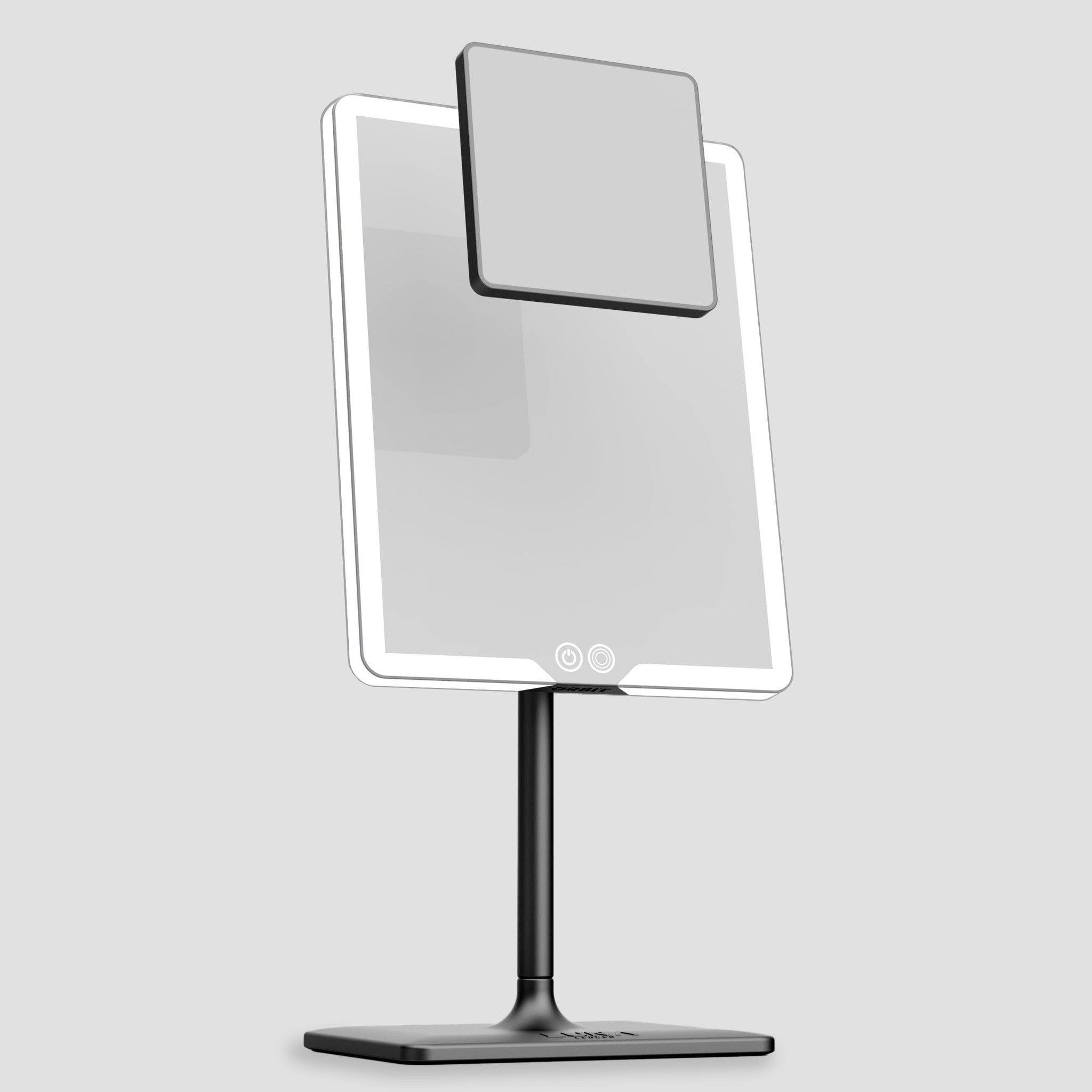 |
ORBIT Home hair, skincare and grooming checks |
Large 11 inch mirror face, 3 LED brightness settings, USB C rechargeable, 7x magnification add-on |
Shop ORBIT Best if your routine happens at a bathroom shelf or dressing table. |
|
ECLIPSE Travel, desk drawers and hotel lighting |
Fold-flat design, 3 LED brightness settings, USB C rechargeable |
Shop ECLIPSE Best if poor room lighting is your main issue away from home. |
 |
COMPACT 2.0 Small touch-ups and close detail checks |
7x magnification mirror, 3 LED brightness settings, USB C rechargeable |
Shop COMPACT 2.0 Best for bags, lenses, brows and precise checks on the go. |
Final practical note: start with the routine before buying anything. If the hair still looks greasy at the roots and dry at the ends after two consistent weeks, then reassess shampoo strength, conditioner weight, styling residue and scalp comfort.
Quick tracked delivery available in:
 USA
USA
 UK
UK
 EU
EU
FAQs
Why do I have greasy roots and dry ends?
Greasy roots happen because the scalp produces oil, while dry ends happen because the oldest parts of the hair lose moisture and take the most wear. The fix is usually a split routine: cleanse the scalp properly and condition the mid-lengths and ends.
Should I wash my hair every day if my roots are oily?
It depends on your hair type, scalp and lifestyle. The AAD says wash frequency should be based on how dirty or oily the hair gets. If daily washing helps your scalp but dries your ends, focus shampoo on the scalp and protect the lengths with conditioner.
Does dry shampoo fix greasy roots?
No. Dry shampoo can absorb oil and buy you time, but it does not clean the scalp. If you rely on it repeatedly without washing, buildup and irritation can become more likely.



Leave a comment
This site is protected by hCaptcha and the hCaptcha Privacy Policy and Terms of Service apply.