


Last updated: 1 March 2026
Summary: For everyday makeup that looks right in daylight, office lighting, and real life (not just on camera), a vanity mirror with lights is usually the better choice than a ring light. Ring lights can look flattering and “smooth” on video, but they’re designed for camera-facing light, not precision blending at close range. If you film content or do Zoom calls, the best setup is often both: mirror lighting for accuracy, ring light for camera polish.
In a hurry? TL;DR:
- Choose a lighted vanity mirror if you want accurate foundation match, blending, and undertones (especially in mornings and low daylight).
- Choose a ring light if you mainly do camera-facing makeup (filming, Zoom, TikTok, tutorials).
- For most people, the “right” answer is: mirror first, ring light second.
- Look for adjustable colour temperature and prioritise higher colour accuracy (CRI) so your makeup matches what you’ll see outside.
- If your eyes are ageing or you’re doing detail work, light first, then add moderate magnification for short tasks.
How to choose the right everyday lighting setup (so your makeup holds up outside)
The reason this comparison matters is simple: most makeup “fails” aren’t product problems. They’re lighting problems. In one light your base looks seamless, in another it suddenly looks orange, grey, patchy, or over-powdered.
A vanity mirror with lights is built for accuracy at close range. A ring light is built to make you look good to a camera. Those goals overlap sometimes, but they’re not the same.
Vanity mirror with lights vs ring light: what they’re actually designed to do
| Feature | Vanity mirror with lights | Ring light |
|---|---|---|
| Best for | Everyday makeup accuracy, blending, undertones, edges | Camera-facing looks, filming, Zoom, content creation |
| Light alignment | Light sits close to your face and follows your viewing angle | Light sits around the camera, prioritising how you appear on-screen |
| Shadow behaviour | More controlled close-up shadows, easier to see texture and blending | Can flatten features and “smooth” on camera, masking real-life blending issues |
| Colour accuracy | Often better when built for makeup (look for higher CRI) | Varies widely; many are tuned for flattering video rather than true colour |
| Practicality | Stable routine tool, hands-free, repeatable daily setup | Best when you have space and want a consistent filming setup |
⚡ PRO INSIGHT: If you only choose one for everyday use, pick the tool that reveals mistakes before you leave the house. For most people, that’s a mirror with adjustable lighting and good colour accuracy, not a ring light designed to flatter on video.
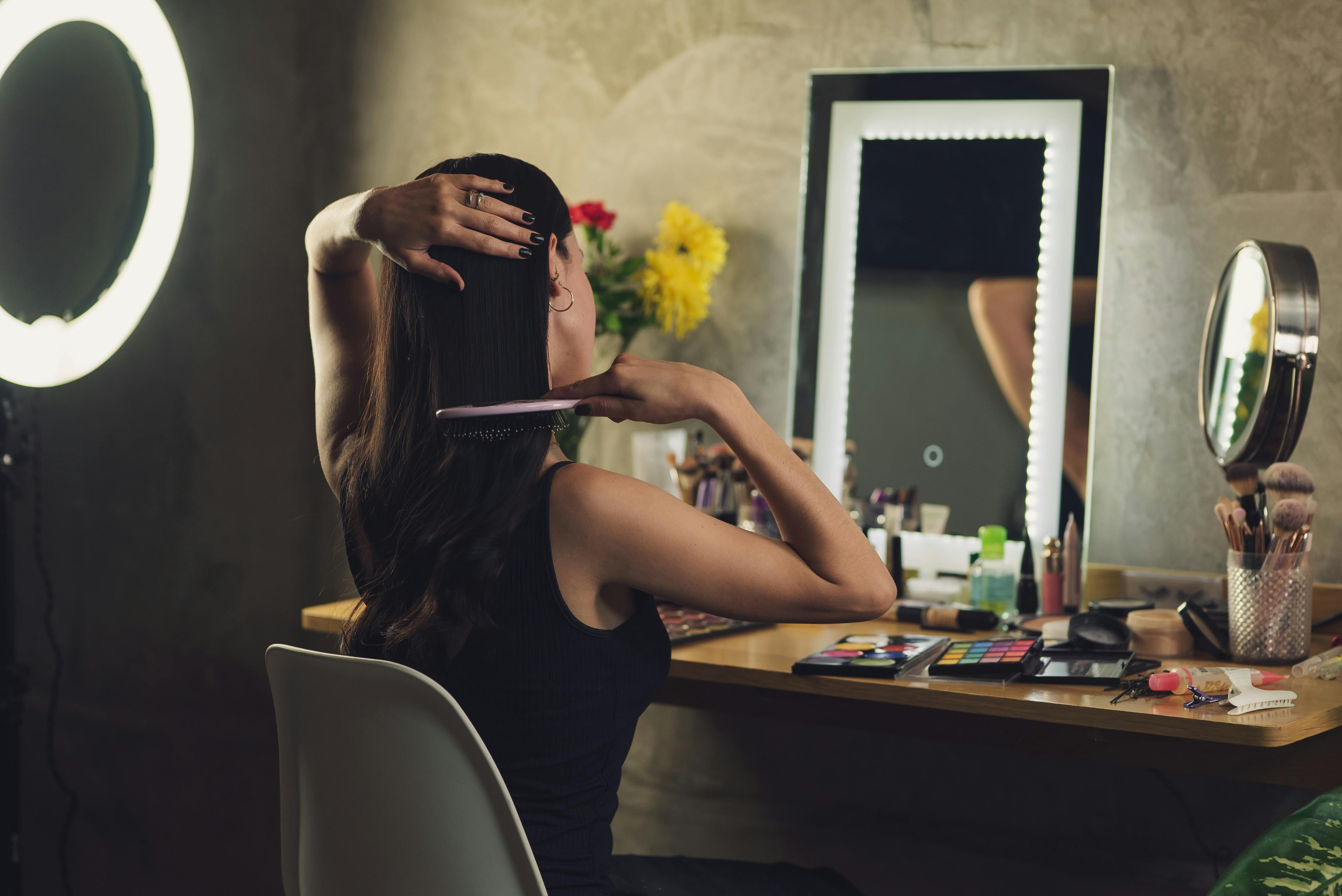
When a ring light is actually the better choice
A ring light makes sense if your makeup routine is tied to a camera. Think:
- Zoom calls where you want your face evenly lit without moving your desk lamp around.
- Content creation where camera-facing light consistency matters more than real-life accuracy.
- Filming tutorials where you need reliable illumination for the lens and your background.
Independent reviews of ring lights tend to focus on brightness levels, colour modes, and mounts because they’re treated as filming gear rather than beauty tools. If you’re going this route, use a proper buying guide and avoid the ultra-cheap no-name options that drift in colour temperature. Tom’s Guide’s ring light roundup is a solid starting point for what “good” looks like in that category.
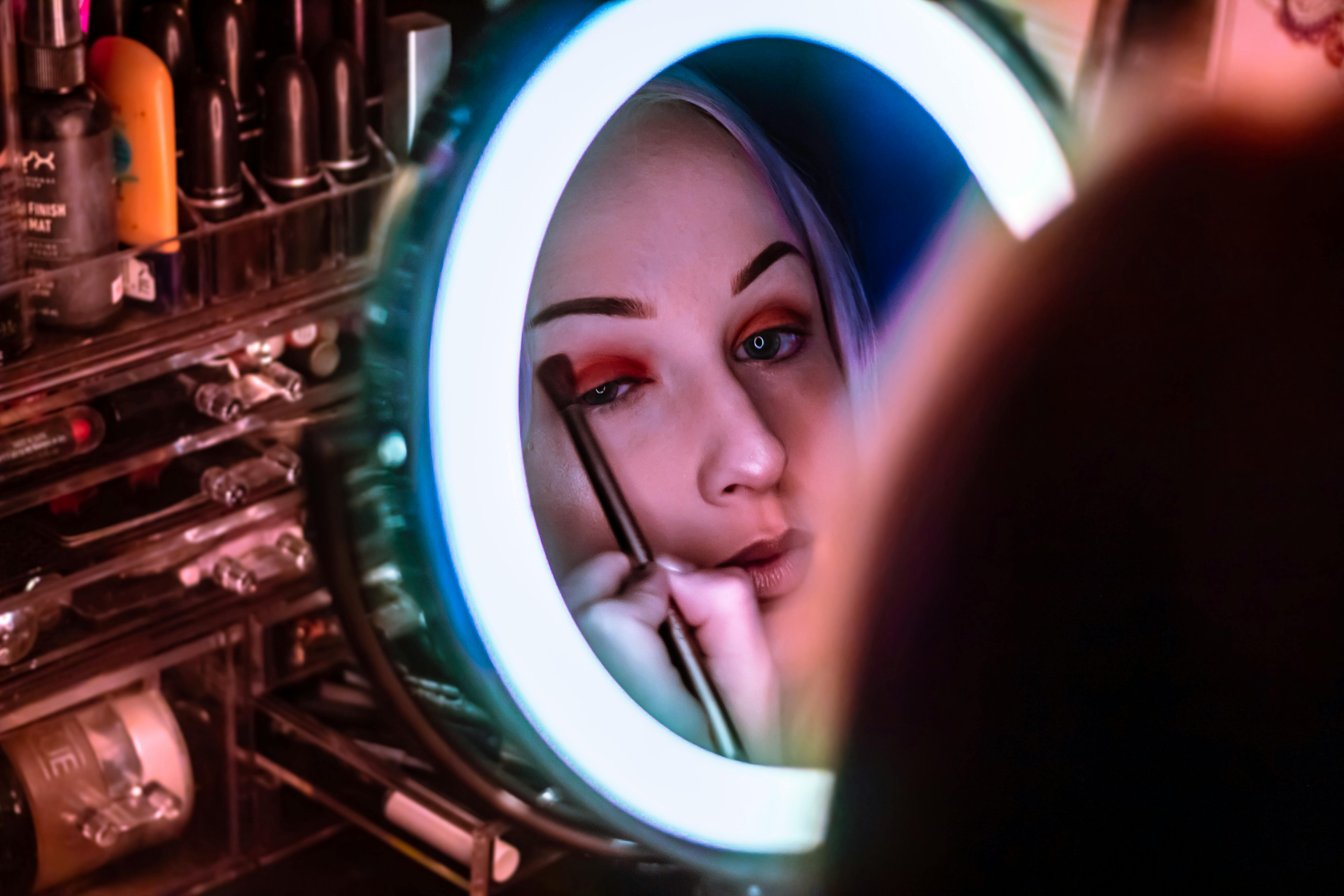
When a vanity mirror with lights wins (which is most mornings)
If you do makeup to look good in the real world, a lighted mirror is usually the more honest tool. You’re looking at your face at the distance you actually work from, and you can check:
- Foundation undertone (too warm, too cool, too grey)
- Blend lines at the jaw, hairline, and around the nose
- Texture from powder, concealer, and dryness
- Symmetry for brows, liner, and blush placement
And in 2026, there’s a bigger reason: many of the most frustrating “why does my makeup look different outside?” problems come down to colour rendering, not brightness.
Two specs most people ignore: colour temperature and CRI
1) Colour temperature (warm vs cool vs “daylight”)
Colour temperature changes how you perceive warmth and coolness in your base and blush. If your light is too warm, you’ll often over-correct and end up too pale outside. If it’s too cool, you can end up over-warming your base and looking orange later.
If you want a practical walkthrough (and the “what setting should I use today?” logic), link into our guide: The best light settings for makeup: warm vs cool vs natural.
2) CRI (Colour Rendering Index)
CRI is a 1–100 scale used to describe how accurately a light source renders colour compared to a reference like daylight. Higher CRI generally means more faithful colour appearance. The U.S. Department of Energy explains CRI as a measure of how a light source renders colours compared with sunlight. DOE: lighting principles and terms (CRI)
⚡ PRO INSIGHT: Bright light can still be “wrong” light. If you’ve ever matched foundation indoors and then stepped outside and hated it, you’ve experienced low-quality colour rendering.
Magnification: helpful, but only if you use it like a tool
Magnification is where people accidentally sabotage themselves. High magnification makes you hyper-focus on tiny details and over-correct, then your overall face looks heavy in normal view.
Expert quote (contextual reality check):
Allure’s Shopping Director Shanna Shipin sums up the best use-case for stronger zoom: 10x is for tiny detail work, not full-face living. Allure: best lighted makeup mirrors (Shipin quote)
If you want the practical breakdown of what each level is actually for, use these:

A simple decision framework (based on what you actually do)
| If you mostly… | Choose… | Why |
|---|---|---|
| Get ready for work, errands, dinners, daylight life | Vanity mirror with lights | Better close-range accuracy for undertones and blending |
| Film GRWM, tutorials, content, Zoom-heavy days | Ring light | Camera-facing consistency and flattering front light |
| Do both regularly | Both (mirror first) | Mirror checks reality, ring light polishes for camera |
| Have ageing eyes or do detail work | Mirror + optional magnification | Light reduces strain; magnification helps briefly for precision |
Everyday setup tips that stop the “looks good here, bad there” problem
- Match your light to where you’ll be seen. Morning office day? Neutral is safer. Evening dinner? Warmer can be fine, but check both.
- Step back to 1x before you finish. Detail checks are useful, but final balance should be in normal view.
- Do a 10-second daylight check when possible. It catches undertone problems faster than any product swap.
- Take breaks if you’re squinting. Eye strain can creep up with close work and screens. Mayo Clinic: eye strain guidance
So… which is better in 2026?
If you’re choosing a single tool for everyday makeup: a vanity mirror with lights is usually better. It’s a routine tool built for accuracy, not a filming tool built for flattering camera output.
If you’re camera-forward: a ring light can be worth it. Just don’t confuse “looks amazing on screen” with “will look the same under daylight and office lighting”.
If you want the modern best-of-both setup: mirror for accuracy, ring light for camera. The mirror keeps you honest. The ring light makes you look polished on calls.
Our everyday pick (accuracy-first)
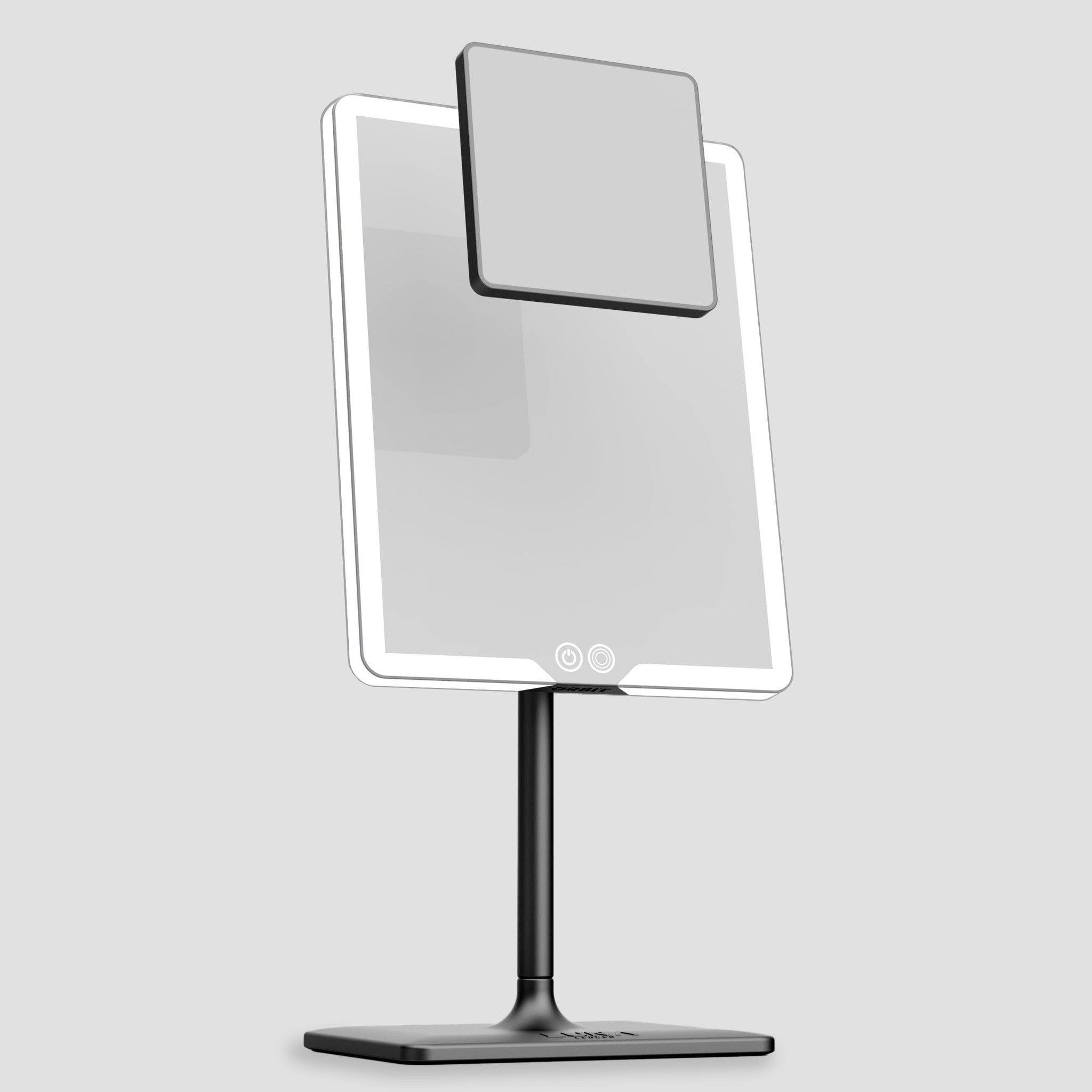
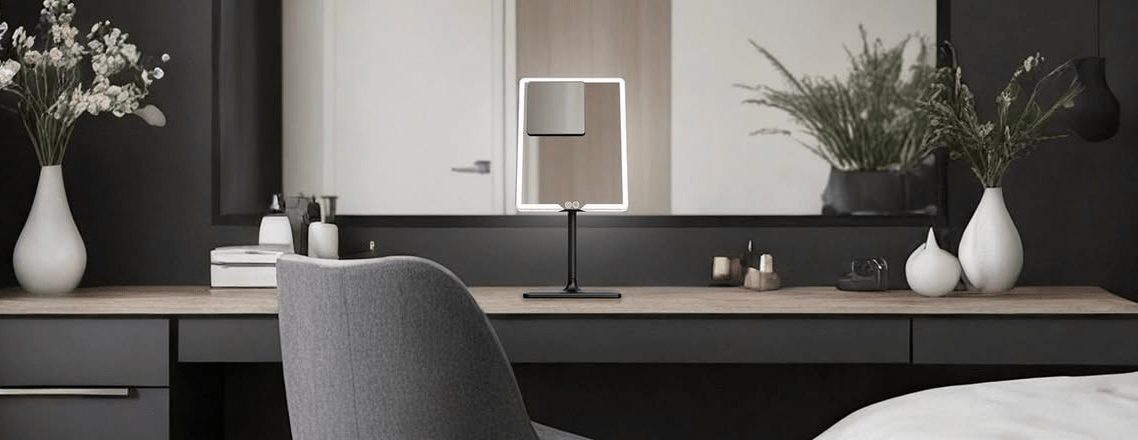
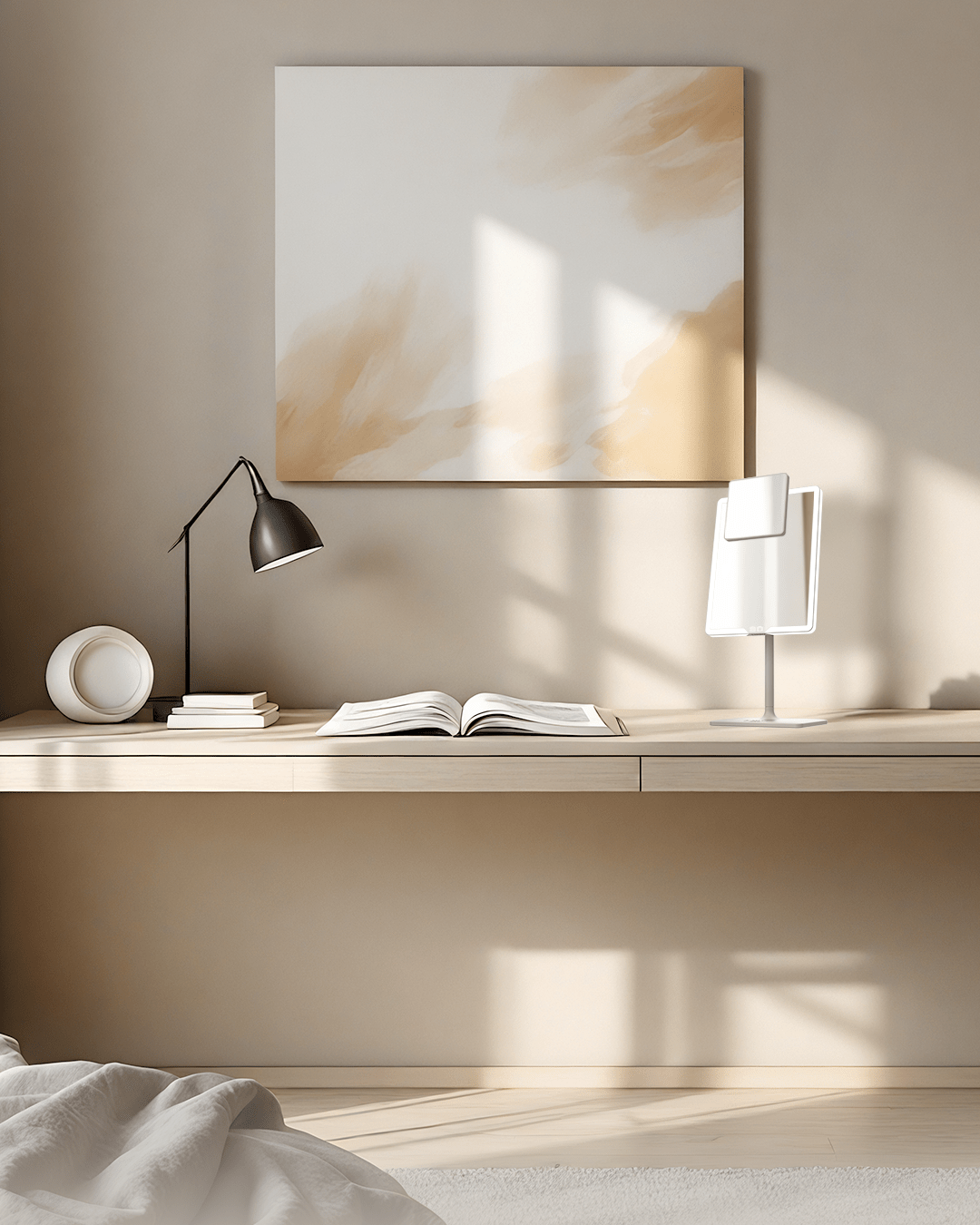
If you want a vanity mirror with lights that’s designed to get your makeup right across environments, ORBIT is built for daily use with adjustable lighting and a stable, close-up mirror view. Use magnification for short detail tasks, then step back to normal view to keep everything balanced.
When you want everyday makeup to look the same outside
If you’re tired of getting ready under “nice” light and then seeing different undertones later, prioritise adjustable lighting and a stable mirror setup built for accuracy.
FAQs
Is a ring light good for everyday makeup?
It can be, but it’s optimised for camera-facing light. For everyday accuracy (undertone match, blending, texture), a lighted vanity mirror is usually more reliable.
Why does my foundation look different in daylight?
Usually because indoor lighting shifts colour perception. Colour temperature and colour rendering can make undertones look warmer, cooler, or duller than they are.
What matters more: brightness or CRI?
Brightness helps you see, but CRI helps you see colour truthfully. A bright light can still mislead you if colour rendering is poor.
Should I do makeup in warm or cool light?
Use the light that matches where you’ll be seen. Neutral is a safe baseline, then sanity-check in warmer or cooler settings if you’re going out at night or filming.
Do I need magnification for makeup?
Not for full-face makeup. It’s best for short precision tasks (brows, liner details, tweezing), then step back to 1x so you don’t over-correct.
Is a vanity mirror with lights better for ageing eyes?
Often yes, because controlled, even light reduces squinting and strain. Add magnification only when needed, and keep sessions short for detail work.
Related links
- Best mirror for influencers: the viral GRWM lighting secret (2026)
- The best light settings for makeup: warm vs cool vs natural
- Best magnification for makeup and grooming (5x vs 10x vs 15x)
- Do I need a 7x magnifying mirror?
- Why hotel bathroom lighting fails you (and how to fix it)
- LED mirror vs natural light: which is best for skincare routines?

Leave a comment
This site is protected by hCaptcha and the hCaptcha Privacy Policy and Terms of Service apply.