


Last updated: 16th March 2026
How to Build a Men’s Grooming Station That Actually Reduces Mistakes
If your beard line looks sharp in the bathroom but odd in daylight, that is usually a setup problem, not a talent problem. A better men’s grooming mirror setup gives you three things at once: light that shows the grain clearly, a stable angle that stops the neckline “moving”, and enough close detail to tidy strays without encouraging over-correction. That matters even more from your 40s onward, when many people start noticing more glare sensitivity and slower adjustment to changing light levels. The American Academy of Ophthalmology notes that ageing eyes commonly become more sensitive to glare and changing light, which is exactly why overhead bathroom shadows start to sabotage precision tasks.
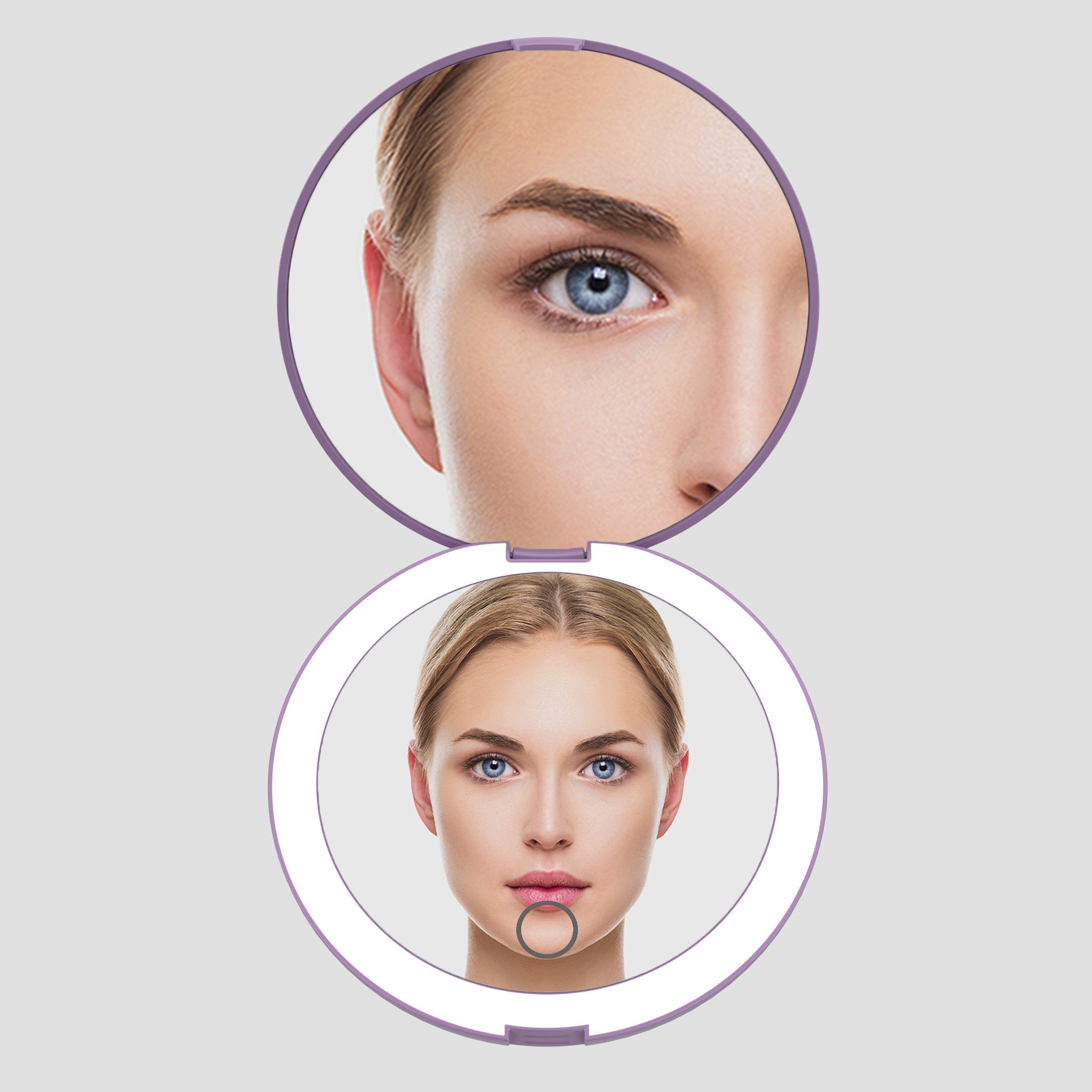
For this consolidation, the core idea stays simple: use ORBIT when you want a stable home station, ECLIPSE when the problem is poor travel or shared-bathroom lighting, and COMPACT 2.0 when you want 1x plus 7x for quick beard, brow, or stray-hair checks on the go.

In a hurry? TL;DR
- Do the main shave or trim in 1x at a normal distance. Use 7x only to confirm corners, strays, or brow edges.
- Set the mirror around eye height and tilt until shine disappears from the jaw and neck.
- Use neutral or daylight-style light for mapping lines, then warm light only as a quick irritation check.
- Patchy beard? Do not chase density with harsher lines. Trim for balance first, density second.
- Hot weather or sensitive skin? Fewer passes, lighter beard products, and more frequent blade changes matter more than “closer” shaving.
| If you mostly do... | What matters most | Here’s Our Favourite | Why? |
|---|---|---|---|
| Daily home shaving, beard lines, sideburn balance | Stable angle, bigger view, face-level light | ORBIT | Best for a fixed home station, plus the magnetic 7x mini for brief detail checks. |
| Travel, gym, office, dim hotel bathrooms | Portable lighting, slim storage, quick setup | ECLIPSE | Solves bad ambient light without needing a full station. |
| Brow tidy-ups, moustache corners, quick detail checks | Fast switch between overall view and precision | COMPACT 2.0 | 1x plus built-in 7x is ideal for edge checks without dragging a bigger mirror around. |
⚡ PRO INSIGHT: Most men use magnification backwards. Map the shape in 1x, then use 7x only as a confirmation tool. If you design your whole beard line or brow shape under magnification, you usually end up removing more than you meant to.

The 60-second setup that changes the whole shave
Before you touch a razor or trimmer, fix the view. Set the mirror around eye height, stand square to the light, and tilt until the jaw and neck stop reflecting glare. American Academy of Dermatology guidance is clear that prep and technique reduce irritation, but good technique falls apart when you cannot see the grain properly.
For beard lines and brows, neutral or daylight-style light is the most useful starting point because it shows flat hairs, uneven density, and missed corners more honestly. Warm light has a place, but it is better as a quick final check for redness or irritation than as your main working mode. If you want a deeper no-mess station setup, this newer guide on beard-mirror trimming setups for men 45+ is worth keeping in the cluster.
A 7-minute shave + beard + brows routine you can repeat
- Minute 0-1: Warm water or a warm towel. This softens hair and reduces drag. Cleveland Clinic recommends warm prep plus a proper shaving cream or gel for smoother shaving.
- Minute 1-2: Apply cream or gel, then look straight on in 1x. Check sideburn height, cheek lines, moustache balance, and where the neck growth changes direction.
- Minute 2-5: Do the main shave or trim with the grain first, using short, low-pressure strokes. If your neck grows diagonally, follow that pattern rather than forcing one direction.
- Minute 5-6: Step back. Re-check symmetry in 1x. This is the truth distance.
- Minute 6-7: Use 7x only for corners, strays, or brow tidy-up. Then return to 1x and stop the moment it looks clean at normal distance.

“Razor blades tend to last for up to five to 10 shaves, and some may last a month or longer, depending on how often you use them.”
— Dr Shilpi Khetarpal, Dermatologist, Cleveland Clinic
That matters because dull blades create a fake “need” for more pressure. Then the mirror gets blamed for irritation that actually came from tugging. If razor bumps are a recurring issue, AAD’s razor-bump prevention guidance and the 2025 JAAD Reviews narrative review on hair-removal practices both support gentler technique, better prep, and smarter shaving frequency rather than endlessly trying to shave closer.
How this master article absorbs the donor topics properly
1) Patchy beard? Trim for balance, not false density
The old patchy-beard donor was right about one thing: many men make patchiness worse by over-trimming too early. Your mirror setup should help you keep the overall silhouette believable, not over-sharpen every weak area. Use a softer cheek line, avoid carving too high into sparse zones, and keep the neckline consistent. If you need to see density honestly, step back into 1x before making any “repair” decision.

2) Hot weather and humidity? Do less, not more
The summer-beard donor also had a useful core idea: heat, sweat, and facial hair reward lighter routines. In warm weather, use fewer passes, lighter beard products, and a quicker rinse-and-wipe reset. Heavy oil, over-brushing, and aggressive detailing usually create irritation faster than they create sharpness.
3) Clear skin and grooming belong together
The clear-skin donor deserved to survive, just not as a separate page. If shaving is part of your daily routine, the basics are still cleanse, moisturise, and SPF. For men 45+ especially, this article pairs well with the fuller midlife skincare routine guide, because calmer skin makes every shave easier and every beard line look cleaner.
Weekly maintenance so the setup stays honest

| When | What to do | Why? |
|---|---|---|
| After every session | Wipe the mirror and clear loose hair | Film and stubble hide detail and make you over-correct next time. |
| Weekly | Do a proper two-cloth clean and check charging | Consistent light matters more than “maximum” light. See Mirror Maintenance 101. |
| Every 5-10 shaves | Swap the blade or reassess sharpness | Tugging creates pressure, repeat passes, and more irritation. |
⚡ PRO INSIGHT: If your reflection looks “worse” only under the mirror lights, that usually means the mirror is showing residue, patchiness, or uneven lines that room light hid. Fix the residue or the technique, not the mirror.
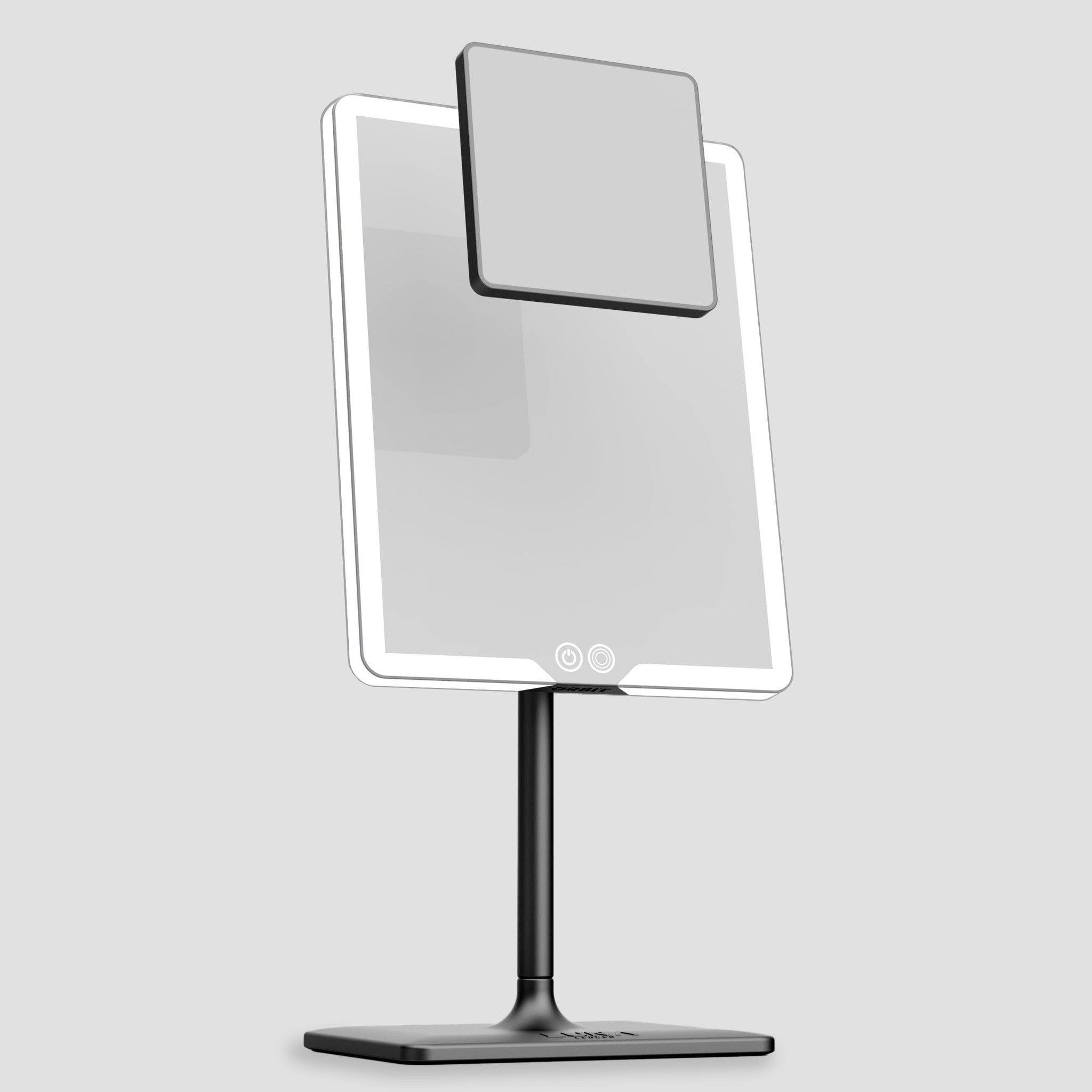
A more reliable home grooming station
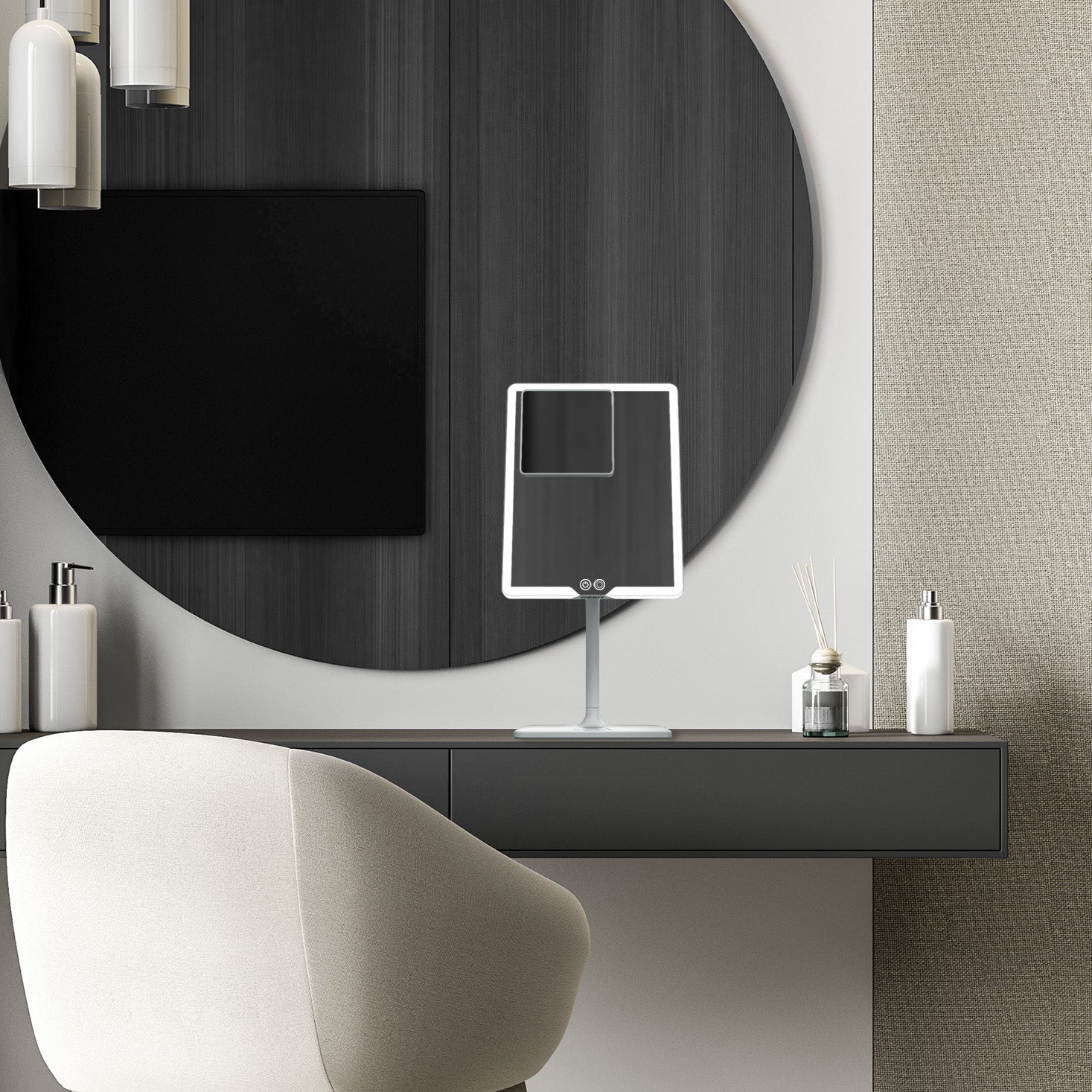
If your main issue is inconsistent bathroom light, ORBIT gives you a stable home setup with a wider view for symmetry and a quick 7x check for corners. It suits shaving, beard maintenance, and brows without turning the routine into a faff.
Explore ORBIT for home grooming →FAQs
What is the best men’s shaving mirror setup?
The best setup uses face-level light, a stable mirror at eye height, and a two-step viewing pattern: 1x for shape and symmetry, then brief 7x checks for detail. Most “bad shaves” are really shadow and angle problems.
Is ORBIT or ECLIPSE better for shaving?
Choose ORBIT for a stable home station and broader view. Choose ECLIPSE if your main problem is poor lighting when travelling, sharing a bathroom, or moving between rooms.
Do I actually need magnification for beard lines?
Not for the whole job. Use 1x for the main shape, then magnification briefly for corners, moustache edges, or isolated strays. This guide on when 7x helps and how to use it explains why overusing magnification usually makes grooming worse.
Which light mode is best for shaving and brows?
Neutral or daylight-style light is usually best for the working phase because it shows grain, stubble, and stray hairs more clearly. Warm light is better as a final redness or irritation check.
How do I stop getting razor bumps on my neck?
Soften hair first, use proper lubrication, shave with the grain, keep pressure light, and avoid too many repeat passes. The AAD and Cleveland Clinic guidance both support gentler technique and sharper blades over harsher “closer” shaving.
What if my beard is patchy?
Do not trim for fantasy density. Trim for believable balance. Keep the cheek line softer, avoid pushing the neckline too high, and check the result from a normal distance before making corrections.
Why does this matter more after 45?
Because lighting and glare tolerance often change with age. If you need more light, take longer to adjust to changing brightness, or find yourself leaning in for detail work, a better mirror setup reduces guesswork and usually reduces irritation too.

Leave a comment
This site is protected by hCaptcha and the hCaptcha Privacy Policy and Terms of Service apply.