

Last updated: 13th April 2026
A smarter workday skincare routine for tight, dull, air-conditioned skin

Office skin can be confusing because it rarely looks dry in a simple, textbook way. By mid-afternoon, cheeks may feel tight, the under-eye area can look papery, makeup starts clinging to texture, and yet the T-zone might still turn shiny. That combination makes people do the wrong thing fast: more powder, another cleanse, harsher blotting, or a mist that feels nice for 30 seconds and then vanishes.
It is worth challenging the lazy assumption here. If your skin looks worse at work, it is not automatically because you “need to drink more water” or because your morning skincare failed. In many offices, the environment itself is part of the problem. The American Academy of Dermatology defines dry skin simply: skin that has lost too much water. The NHS notes that low humidity can worsen irritation, and the Canadian Centre for Occupational Health and Safety says office humidity below 20% can dry the skin, eyes, and mucous membranes. That is not a small comfort issue. It is enough to make your face behave differently by 3pm than it did at 9am.
If this pattern sounds familiar, it usually helps to think in terms of skin barrier stress, not just “dryness.” Your skin is trying to hold onto water while dealing with recycled air, repeated temperature changes, screen heat, coffee, central air, bathroom hand soap, and sometimes too much morning exfoliation carried over from the night before. This is also why readers who struggle with puffiness or texture often see overlap between this problem and LUNA’s guides on looking less puffy and winter skincare routines that actually stick.
| What you notice at work | What is probably happening | What helps more |
|---|---|---|
| Tight cheeks, dull skin, fine lines looking worse | Water loss, low humidity, barrier strain | Small amount of bland hydration, pressed in gently |
| Foundation suddenly looks patchy or cakey | Texture is drier than it looked in the morning, plus poor office lighting | Reset texture first, then only minimal makeup correction |
| Forehead shiny but cheeks feel dry | Oil and dehydration happening at the same time | Blot selectively, do not powder the whole face |
| Skin feels irritated after washing in the office bathroom | Over-cleansing, hot water, harsh hand soap splash-back | Skip re-washing unless you genuinely need to remove sweat or product |
⚡ PRO INSIGHT: Midday dryness and midday shine are not opposites. Very often they show up together. Treat the tight zones first, then control shine only where it is actually visible.
The 5-minute midday reset that actually helps

This routine is designed for real workdays, not fantasy lunch breaks with 14 products. It works best when you stop trying to make your face look freshly done and instead aim to make it look comfortable, even, and believable again.
Step 1: Stop before you add anything
Do not start by powdering flaky areas or layering more base over tight skin. First, look closely and ask a more useful question: is the problem colour, oil, or texture? If it is mostly texture, makeup is not your first fix.
Step 2: Blot only the places that are genuinely shiny

Use a tissue or blotting paper only on the forehead, sides of the nose, or chin if needed. Keep it light. The goal is to remove excess surface oil, not flatten the whole face into a dry sheet. If you wear makeup, this step often gives you enough clarity to see the real issue underneath.
Step 3: Add a small amount of hydration where skin feels tight
If you are bare-faced, wash your hands, dampen fingertips very slightly, then press in a pea-sized amount of hydrating serum or light cream. If you are wearing makeup, do not spray your whole face and hope for magic. Instead, warm a tiny amount of bland moisturiser between clean fingers and press it only into the tight zones, usually around the mouth, under the eyes, or on dry patches near the nose.
The logic here is simple: humectants work better when there is some water for them to hold onto. As Dr Angela Lamb told TODAY, applying these products on slightly damp skin helps them “lock in hydration” and prevent tightness.
“Use on slightly damp skin to help product lock in hydration. This gives the hyaluronic acid immediate moisture to grab onto to help plump, hydrate longer and prevent tightness.”
— Dr Angela Lamb, Dermatologist, TODAY (2025)
Step 4: Rebalance the finish, not the entire face
Once texture feels calmer, then decide whether you actually need makeup correction. Often the answer is less than you think: a tiny amount of concealer where coverage has broken, a cream blush tapped back in, or no extra product at all. If patchiness is a recurring issue, LUNA’s guide on good lighting for makeup is worth reading because office bathrooms often make people overcorrect in the wrong direction.
Step 5: Reapply SPF only if you are going back outside
If your lunch break or commute involves daylight, finish with sensible sun protection. If you are staying indoors and already applied properly in the morning, this is not the moment to panic-layer unrelated products. A reset should reduce friction, not create a second routine at your desk.
What to keep at your desk, and what to stop carrying
Many office skincare routines fail because the product mix is wrong. People often carry too much, then reach for the most aggressive or most cosmetic-looking item instead of the most useful one.
| Keep at your desk | Why it earns the space | Skip or rethink |
|---|---|---|
| Blotting papers or plain tissue | Lets you remove surface shine without drying the whole face | Heavy all-over powder |
| Small fragrance-free moisturiser or gel-cream | Supports the barrier and calms tight zones fast | Strong acid pads or exfoliating toners |
| One hydrating serum if your skin really likes it | Useful on bare skin or under tiny targeted touch-ups | Random face mists with fragrance and no follow-up |
| A mirror with even, front-facing light | Stops you overcorrecting under bad office lighting | Checking everything in harsh overhead bathroom light |
There is also a bigger home-versus-office split that matters. The Mayo Clinic recommends a humidifier when hot, dry indoor air worsens flaking, which is a smart home fix, but not one you can control at your desk. That is why a good office routine should focus on what you can influence directly: less stripping, smarter hydration, and more honest lighting.
⚡ PRO INSIGHT: If a face mist leaves you feeling better for one minute and worse ten minutes later, it is probably functioning as a sensation, not a solution. In dry office air, mist without follow-up hydration often just evaporates.
Why better light often helps more than more product
One of the least discussed reasons office air dry skin feels so annoying is that bad lighting makes you misread it. Overhead bathroom lights exaggerate under-eye hollows, side shadows make cheeks look rougher, and fluorescent light can make skin look both flatter and oilier than it really is. Then you respond with more correction than the skin actually needed.
That is exactly why LUNA’s article on morning sunlight versus LED for skin checks matters for skincare, not just makeup. Honest light helps you separate dryness from shadow, and texture from colour. If your routine regularly moves between desk, commute, and shared office bathroom, that shift alone can stop a lot of pointless midday product layering.
| Office scenario | What matters most | Here’s Our Favourite | Why |
|---|---|---|---|
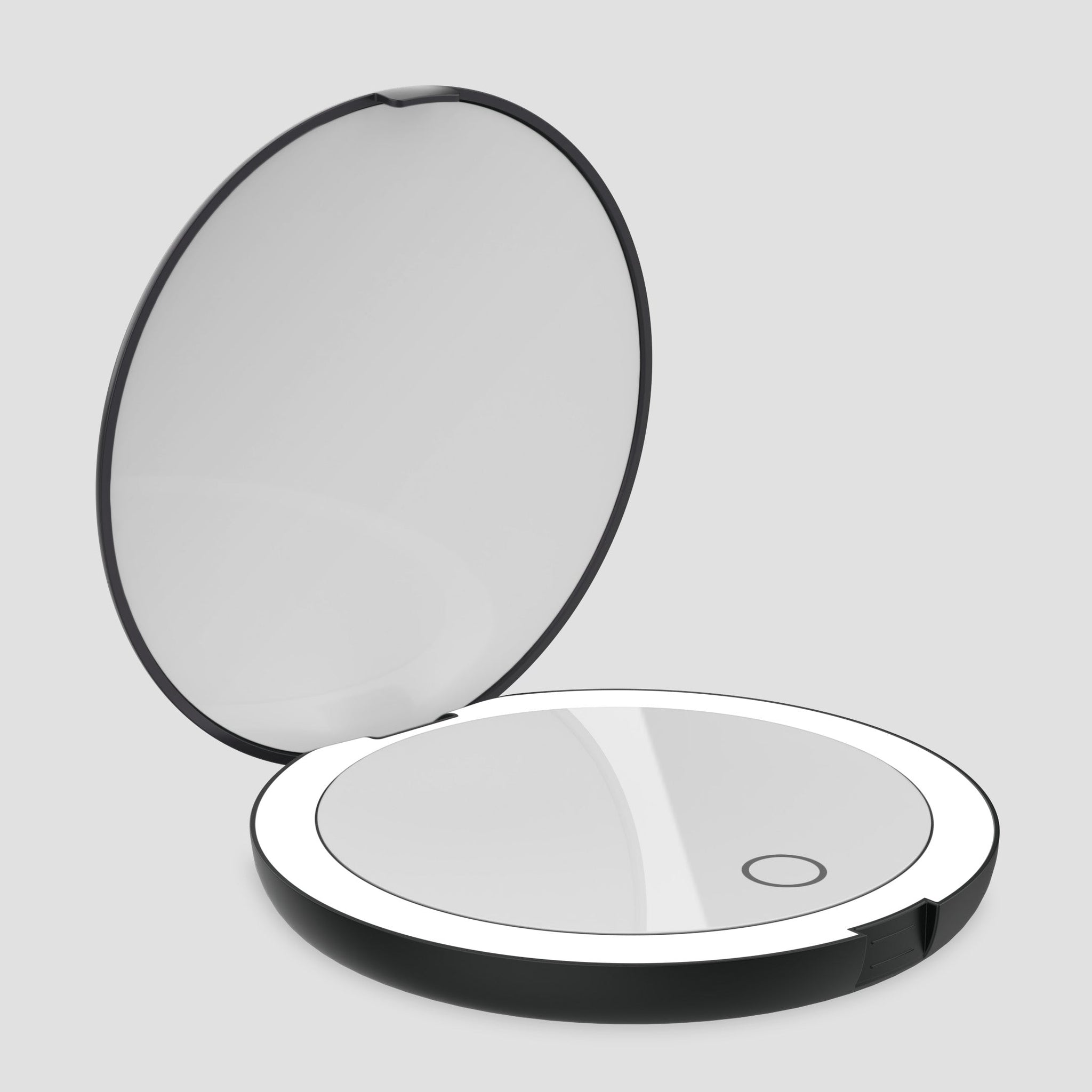
| Handbag, commute, shared office bathroom, fast touch-ups | Portable light plus both full-face and detail view | COMPACT 2.0 | 1x plus 7x, three light modes, rechargeable, easy to keep in a work bag |
| Desk drawer or fold-flat mirror for regular workday use | Slim setup, portable, no-fuss lighting | ECLIPSE | Fold-flat and rechargeable, ideal if your main problem is poor office or travel lighting |
| Permanent home office or dressing-table setup | Stable angle, larger view, better routine consistency | ORBIT | Best when you want a fixed station with a broader view and a separate 7x add-on for detail work |
For most readers dealing specifically with office air dry skin, COMPACT 2.0 is the practical winner because it fits the actual problem. It is not trying to be a full vanity setup. It simply makes it easier to assess tightness, makeup breakdown, and detail work in decent light during a normal workday. If travel is also part of your week, LUNA’s guide to the best travel makeup mirrors connects neatly with the same use case.
A calmer way to check skin at work
If your office bathroom lighting keeps making texture look worse than it is, COMPACT 2.0 gives you a more honest read before you pile on product. It is small enough for a handbag or desk drawer, but useful enough to earn daily use when skin feels tight, dull, or uneven by mid-afternoon.
Explore COMPACT 2.0 for workday touch-ups →FAQs
Why does office air make my skin feel dry and oily at the same time?
Because dehydration and oil production are not opposites. Dry air can leave parts of the face tight and rough while other areas, especially the T-zone, still produce oil. That is why selective blotting plus targeted hydration usually works better than full-face powder.
Should I use a face mist during the workday?
Sometimes, but not blindly. A mist can feel refreshing, but in dry office air it often evaporates quickly. It works better when followed by a small amount of moisturiser or when used on bare skin rather than over a full face of makeup.
What is the best office skincare routine if I wear makeup?
Blot only the shiny zones, press a tiny amount of hydration into the tight areas, then correct makeup only where it has genuinely broken down. Do not restart your whole face unless you actually need to remove it and begin again.
Related links
- ORBIT Soft Stone
- ECLIPSE Matte Black
- COMPACT 2.0 Matte Black
- How to Look Less Puffy
- Morning Sunlight vs LED for Skin Checks

Leave a comment
This site is protected by hCaptcha and the hCaptcha Privacy Policy and Terms of Service apply.