
Last updated: 20 March 2026
Why your base looks dry, patchy or weirdly “peely” before the makeup is even the problem
Not every flaky-looking base is a hydration problem. That is the lazy assumption, and it often makes things worse. Sometimes you really do need more moisturiser. Sometimes you need less product overall. Sometimes the real culprit is that your sunscreen, primer and foundation are fighting each other before you have even picked up the brush.
If your makeup usually looks fine at first, then starts catching around the nose, mouth or chin, think in three buckets: dryness, layering friction, and bad visibility. Those three problems can look almost identical on the face, but the fix is different for each. That is why a generic “glowy prep” routine from social media often fails.
Dermatologists consistently recommend keeping your routine gentle and practical rather than piling on trendy steps. The Cleveland Clinic’s guide to a simple daily routine and the American Academy of Dermatology’s everyday skin advice both land in roughly the same place: cleanse, moisturise as needed, protect with SPF, then stop overcomplicating it.
⚡ PRO INSIGHT: If your skin feels tight and shiny but your foundation still breaks apart, that is not always “dewy”. It can be a sign you have stripped the barrier, then tried to fix it by stacking too many products on top.
In a hurry? TL;DR
- Use a gentle cleanse, not a squeaky-clean one.
- Apply moisturiser to slightly damp skin, then let it settle.
- Do not use a 10-step skincare routine before a 10-minute makeup routine.
- Keep textures compatible: heavy cream + gripping primer + matte base is a common disaster.
- Exfoliate on non-makeup nights, not right before foundation.
- Use thinner layers of base and correct only where needed.
- Check the finish in neutral, front-facing light before you leave the house.
The fastest diagnosis table
| What you see | Most likely cause | What usually fixes it |
|---|---|---|
| Foundation catching on flaky areas | Dryness, over-cleansing, over-exfoliation | Gentler cleanse, barrier-friendly moisturiser, lighter base |
| Little rolls or balls when blending | Pilling from too many layers or incompatible textures | Fewer layers, more time between them, texture matching |
| Base looks fine indoors, rough outdoors | Poor lighting and shadow-heavy application | Check under neutral or daylight-style front light |
| Foundation disappears from nose or chin | Too much slip underneath, too much rubbing on top | Let skincare set, then press base in lightly |
The 7 fixes that actually change the finish
1. Cleanse for comfort, not for that “stripped” feeling
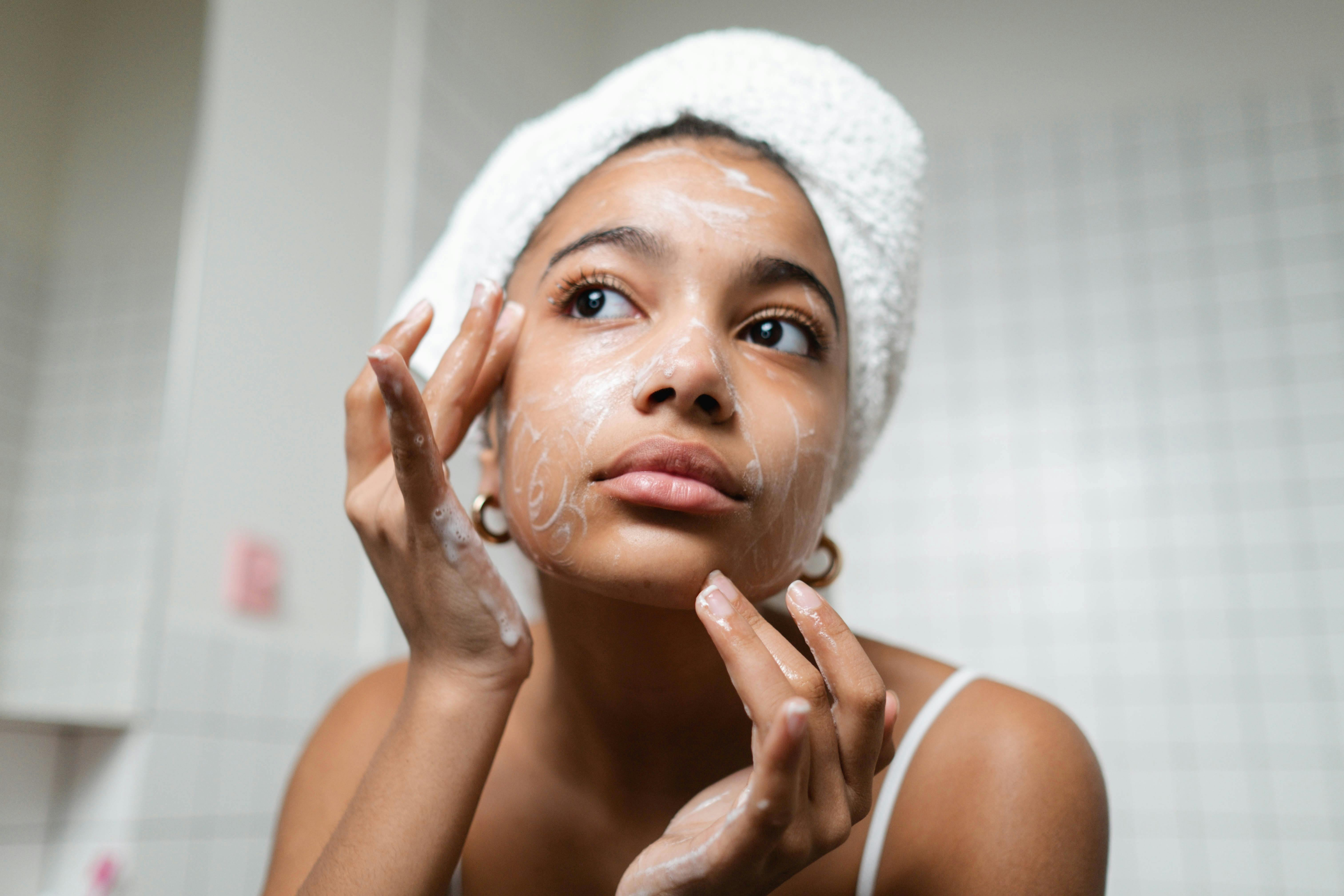
If your face feels squeaky after cleansing, you have probably gone too far. That tight feeling is not cleanliness, it is often early irritation. The Cleveland Clinic’s advice on dry facial skin is blunt on this: use products made for the face and keep them fragrance-free where possible. That matters because irritated skin does not hold makeup well. It grabs it.
In real life, this means skipping aggressive foaming cleansers on mornings when your skin already feels dry, and avoiding hot water. If you wake up reasonably clean, a quick rinse or very gentle cleanse is often enough before moisturiser and SPF.
2. Put hydration where it helps, then stop
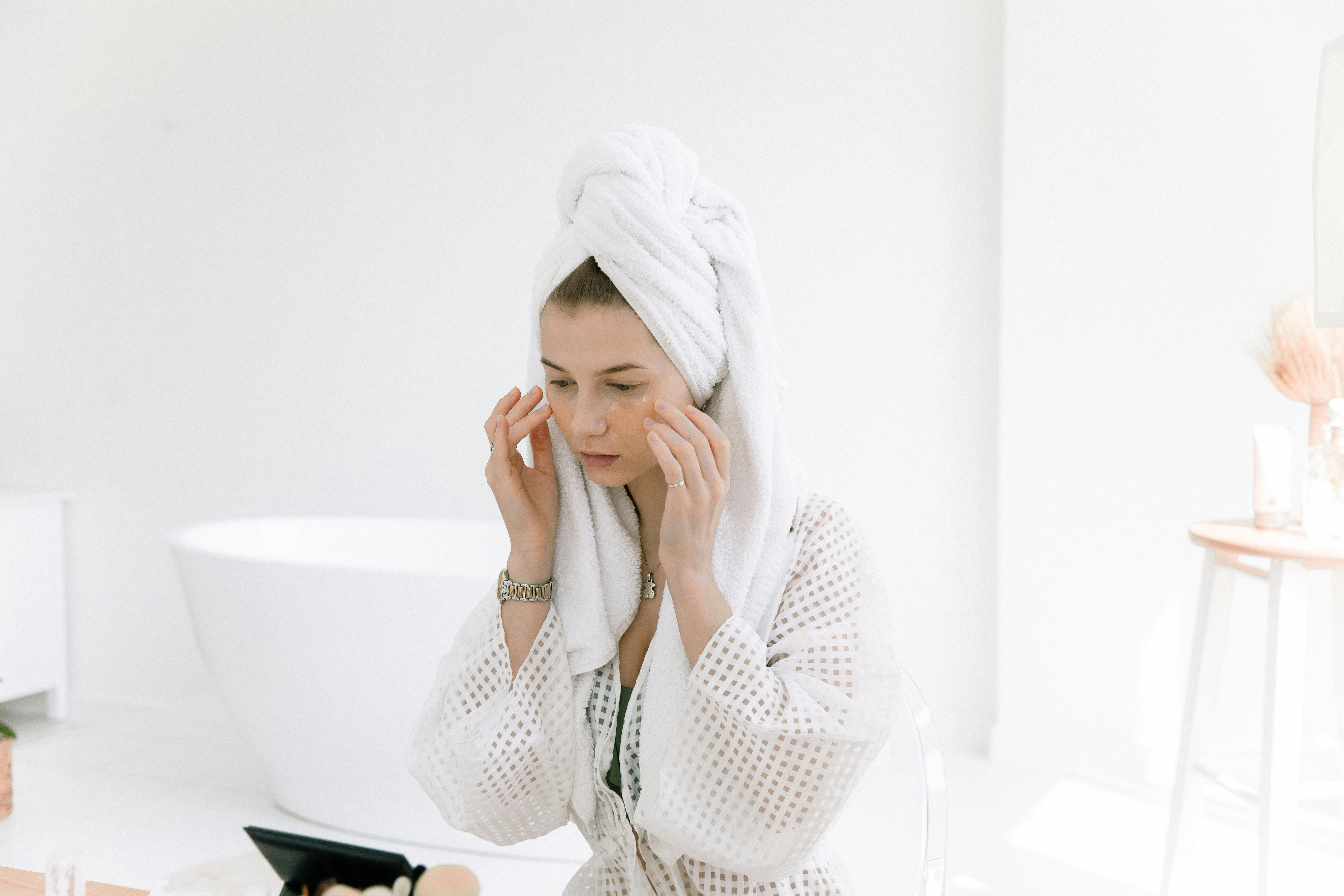
Dry patches usually need water plus a seal, not five random hydrating layers. The AAD’s dry-skin guidance recommends moisturising regularly and protecting the skin barrier. Practically, that means applying a moisturiser while skin is still slightly damp, then letting it settle instead of immediately piling on primer.
If you are dry, a thin hydrating serum under a cream can work. But if your sunscreen is already moisturising, adding serum, cream, oil and gripping primer is often overkill. More prep is not automatically better prep.
3. Let each layer absorb before the next one
Pilling is often a timing issue disguised as a product issue. If your fingers can still feel slip or residue, your next layer is probably going to drag it around rather than sit neatly on top.
“Only use as much skin care as you have time to let absorb.”
— Karol Rodriguez, makeup artist, Allure (2025)
That is a far better rule than blindly copying a full skin-prep routine from someone filming under studio lights. If you have ten minutes, build a ten-minute routine. Not a fantasy one.
4. Match textures instead of mixing everything with everything
A very rich cream under a gripping primer and a long-wear matte foundation is a classic route to clumping. The same goes for piling silicone-heavy products on top of each other without enough time in between. If your sunscreen already pills when rubbed, foundation will not save it.
Texture pairing that usually works better
| Last skincare layer | Base that usually pairs well | Risky combo |
|---|---|---|
| Light gel-cream or lotion | Serum or skin-tint style base | Heavy gripping primer you do not need |
| Richer cream | Thin, flexible foundation in light layers | Matte, fast-set base buffed aggressively on top |
| Moisturising sunscreen | Foundation only, or concealer where needed | Another moisturiser plus primer plus heavy base |
5. Exfoliate on the right day, not in panic mode
Yes, built-up dead skin can make foundation catch. No, that does not mean scrubbing your face five minutes before makeup. When skin is already dry or reactive, panic exfoliation usually creates a smoother face for ten minutes and a worse barrier by lunch.
Think maintenance, not rescue. Gentle exfoliation on a non-makeup night can help texture long term. Right before makeup, the safer move is usually a soft cloth, a very mild prep pad only if your skin tolerates it, or simply more strategic moisturising and less base.
6. Use less foundation than you think, then correct only where needed
Many people are not under-prepped. They are over-applying. A thin, flexible layer pressed into the skin almost always looks better on dry or textured areas than a full blanket of medium-to-full coverage base. If you need extra coverage, add concealer only where you genuinely need it.
This is also where technique matters. Pressing or patting is often kinder than sweeping, which can create friction and drag half-set layers around. If you want a more detailed breakdown, our guides on fixing patchy foundation with better lighting and preventing cakey makeup show how much application errors and visibility errors overlap.
7. Judge the finish in honest light, not flattering chaos
Overhead bathroom bulbs can hide edges, exaggerate shadows, and trick you into “correcting” things that do not need correction. That often leads to too much concealer, too much powder, and an overly worked base. Neutral or daylight-style front lighting gives you a truer read on dryness, redness and coverage.
That is why it helps to understand warm vs cool vs natural light settings for makeup and why we keep coming back to the value of a consistent LED mirror for applying skincare or checking the final finish. Natural daylight is useful, but it changes constantly. Our piece on morning sunlight vs LED for skin checks explains why repeatability matters.
⚡ PRO INSIGHT: Do base makeup in your most neutral light, then do a final 10-second check in warmer room light if you are going out at night. Do not reverse that order.
One final note on SPF, because this is where people get sloppy. The British Association of Dermatologists recommends at least SPF 30 with UVA protection, and experts cited by The Guardian note that SPF 30 blocks about 97% of UVB rays while SPF 50 blocks about 98%. So the practical gap is often application quality, not endlessly chasing a higher number while applying too little.
A simple 5-minute skincare-before-makeup routine
- Cleanse lightly: rinse or use a gentle cleanser if needed.
- Hydrate: apply one hydrating layer only if your skin needs it.
- Moisturise: use a face-appropriate cream or lotion, then wait a minute or two.
- Protect: apply a separate facial SPF if your base products do not provide enough protection.
- Check the surface: if skin still feels wet or slippery, wait. If it feels calm and settled, start makeup.
That routine is not glamorous, but it works. And crucially, it gives you a repeatable baseline. Once that is working, then you can decide whether you actually need primer, extra hydration, or a different foundation texture at all.
When the issue is visibility, not just skincare
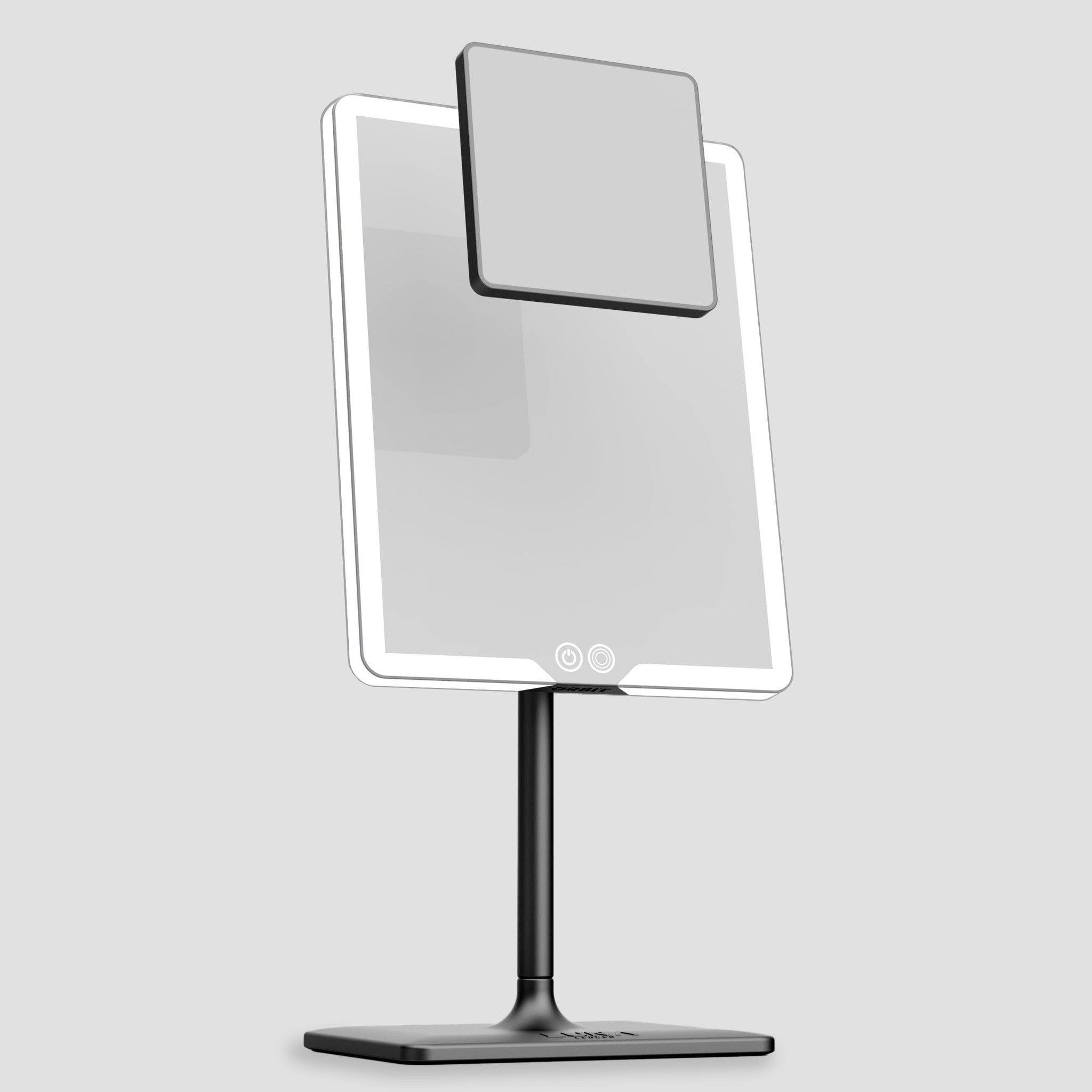
If your base looks different every time because the room lighting changes, a stable front-facing mirror can help you separate real texture from bad shadows. ORBIT is the better fit for home routines where you want even lighting first, with 7x only when you actually need close detail.
See ORBIT in Phantom Black →FAQs
Why does foundation cling to dry patches even after moisturiser?
Because moisturiser alone does not fix every cause. The cling may be coming from barrier irritation, over-exfoliation, too much product underneath, or a base formula that is too matte for your skin that day.
How long should I wait between skincare and makeup?
A minute or two is often enough for lighter layers, but the real test is feel, not the clock. If skin still feels wet, greasy or slippery, give it longer.
Should I use primer if my makeup pills?
Not automatically. Primer can help, but it can also add another friction point. If your sunscreen and moisturiser are already sitting well, you may not need primer at all.
Is exfoliating before makeup a good idea?
Only if your skin tolerates it well and the exfoliation is very gentle. For many people with dry patches, exfoliating right before foundation is too aggressive and makes the barrier less stable.
What order should skincare go in before makeup?
Keep it simple: cleanse, optional light hydration, moisturiser, SPF, then makeup. Extra steps only earn their place if they improve the finish consistently.
Can sunscreen make foundation pill?
Yes. Some sunscreens are more film-forming or silicone-heavy than others, and they can roll when layered with incompatible primer or foundation textures. Letting SPF set properly helps.
What kind of light is best for checking makeup texture?
Neutral or daylight-style front-facing light is usually best. It shows true texture and coverage more honestly than warm overhead bathroom lighting.
Related links
- ORBIT Phantom Black
- ECLIPSE Matte Black
- COMPACT 2.0 Matte Black
- Fix Patchy Foundation With Better Lighting
- The Best Light Settings for Makeup: Warm vs Cool vs Natural



Leave a comment
This site is protected by hCaptcha and the hCaptcha Privacy Policy and Terms of Service apply.